

Where Does Water Come From? Water Sources and RO Treatment 2026
Water is the most abundant substance on Earth, covering over 70% of the planet’s surface, yet only about 2.5% is freshwater suitable for human consumption. Understanding water sources and RO treatment is essential for selecting the right purification technology. From the Earth’s ancient water formation through volcanic eruptions that released water vapor from crystalline hydrates to modern reverse osmosis systems that purify water from rivers, lakes, and groundwater wells, the journey of water reveals why quality varies by source and how RO technology delivers safe drinking water.
Understanding Water Sources and RO Treatment for Safe Drinking Water
The Earth formed approximately 4.6 billion years ago from the aggregation of interstellar matter differentiated from the solar nebula. Solid dust particles containing crystalline hydrates – water molecules locked inside mineral structures – were released as water vapor under the extreme heat inside the early Earth. Intense volcanic eruptions ejected massive amounts of water vapor into the primordial atmosphere. As the Earth’s surface cooled, this water vapor condensed into clouds and fell as rain over millions of years, filling low-lying areas to form lakes, rivers, and ultimately the oceans. The total volume of water on Earth today is approximately 1.386 billion cubic kilometers, with 96.5% in oceans and 1.7% in glaciers and ice caps. This ancient water cycle continues to this day, constantly moving and renewing through evaporation, precipitation, and runoff. Understanding the origin of water sources and RO treatment needs helps explain why different water types require different purification approaches.
Understanding Different Drinking Water Sources and Their Quality Profiles
Drinking water is drawn from three primary sources: surface water (rivers, lakes, reservoirs), groundwater (aquifers accessed through wells), and rainwater collection. Each source carries a distinct water quality profile that directly impacts the design of water treatment systems. Surface water typically contains suspended solids, organic matter, bacteria, and seasonal variations in turbidity ranging from 1 to 1,000 NTU. Groundwater generally has stable temperature and composition but higher dissolved solids (TDS 100-1,000 ppm), hardness (50-400 ppm as CaCO3), and potential iron or manganese contamination. Rainwater is naturally soft but may contain atmospheric pollutants and requires pH adjustment. These variations influence the pretreatment and RO membrane configuration needed for effective purification.
Key Quality Differences Across Major Water Sources
| Parameter | Surface Water | Groundwater | Rainwater |
| TDS (ppm) | 50-500 | 100-1,000 | 5-30 |
| Hardness (ppm CaCO3) | 20-200 | 50-400 | 0-10 |
| Suspended Solids | High (1-1,000 NTU) | Low (0-5 NTU) | Low to medium |
| Microbial Risk | High | Low to medium | Low |
| Iron/Manganese | Low | Common (0.5-10 ppm) | None |
| Organic Matter | High (TOC 2-10 ppm) | Low (TOC 0.5-2 ppm) | Low |
| pH Range | 6.5-8.5 | 6.0-8.0 | 5.0-6.5 |
Selecting the appropriate pretreatment and RO membrane configuration depends on these source-specific parameters. Surface water requires multimedia filtration and chlorination pretreatment, while groundwater with high hardness needs softening or antiscalant dosing before RO membranes to prevent scaling and fouling.
The Risks of Stored and Aged Water
Water that remains static for extended periods undergoes physical and chemical changes that reduce its quality. Scientific research shows that water stored at room temperature for more than 3 days develops increased nitrite levels – from 0.017 mg/L in fresh deep well water to 0.914 mg/L after 3 days of storage. After 20 days, nitrite levels can reach 0.73 mg/L, and nitrites can be converted into carcinogenic nitrosamines. The molecular structure of water changes when not in motion: water molecules form a chain-like structure that expands and extends in static conditions, producing what is commonly known as “dead water” or aging water. Bottled water that has been stored from manufacturing to consumption often exceeds 3 days in a static state, significantly reducing its quality compared to freshly treated water. This is why on-demand water purification systems like RO provide a superior alternative to stored bottled water for daily drinking needs.
How Reverse Osmosis Systems Deliver Fresh Purified Water
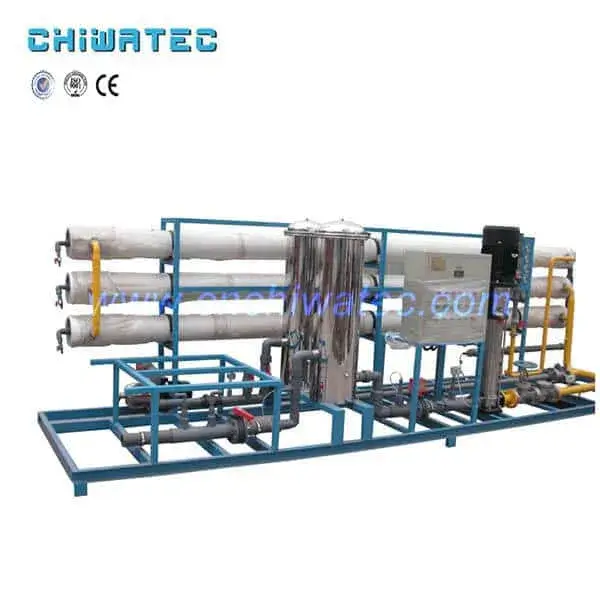
Reverse osmosis systems address water source quality challenges by removing up to 99% of dissolved solids, contaminants, and microorganisms regardless of the source water composition. An RO system operates by forcing water through a semi-permeable membrane with pore sizes of approximately 0.0001 microns, effectively blocking dissolved salts (NaCl, CaCO3), heavy metals (lead, arsenic, mercury), bacteria, viruses, and organic compounds. Modern RO systems achieve recovery rates of 50-85% depending on feed water TDS and system design. For surface water sources, pretreatment with multimedia filtration and activated carbon is recommended to protect the RO membrane from fouling. For groundwater with high hardness, ion exchange softening or antiscalant dosing extends membrane life. The result is consistent, high-quality purified water with TDS below 10-50 ppm, suitable for drinking, industrial processes, and pharmaceutical applications.
RO Systems vs Bottled Water: Quality and Cost Comparison
On-demand RO purification offers significant advantages over bottled water. While bottled water undergoes initial treatment and ozonation, it degrades during storage and transportation. RO systems produce water at the point of use, eliminating storage-related quality deterioration. On a cost basis, RO-treated water costs approximately USD 0.02-0.10 per gallon compared to USD 0.50-2.00 per gallon for bottled water – a 5- to 100-fold savings. Environmentally, RO systems eliminate the plastic waste associated with bottled water consumption, which accounts for over 8 million tons of plastic entering oceans annually. For households and businesses requiring consistent water quality, installing an RO system provides fresh, purified water on demand without the risks of aging or the costs of bottled alternatives.
Selecting the Right Water Sources and RO Treatment for Your Application
The selection of a water treatment system must begin with comprehensive source water analysis. Key parameters to test include TDS, hardness, pH, iron/manganese, turbidity, and total organic carbon (TOC). For surface water with turbidity above 10 NTU, pretreatment with multimedia filters and ultrafiltration is recommended before RO. For groundwater with TDS above 500 ppm, high-rejection RO membranes (99.5%+ rejection rate) are necessary. For rainwater collection systems, pH adjustment and UV sterilization combined with RO provide comprehensive treatment. CHIWATEC offers customized RO systems designed for specific source water conditions, from small-scale residential units processing 100 L/h to industrial systems handling 100+ m3/h. Each system includes appropriate pretreatment, RO membranes, and post-treatment components matched to the source water quality and application requirements.
Frequently Asked Questions
Where does the water we drink primarily come from?
Most municipal drinking water comes from surface water sources (rivers, lakes, reservoirs) accounting for approximately 60% of global supply, while groundwater from wells and aquifers supplies about 30%, and the remaining 10% comes from other sources including rainwater collection and desalination. Each source requires specific treatment approaches, with RO systems being one of the most versatile technologies for producing consistent quality drinking water from any source.
Is stored bottled water safe to drink?
Bottled water is generally safe immediately after bottling, but studies indicate that quality deteriorates during storage. Nitrite levels in bottled water can increase from 0.017 mg/L to 0.914 mg/L after 3 days of storage at room temperature. While regulatory limits on nitrites (typically 1 mg/L for drinking water) are not immediately exceeded, long-term storage promotes bacterial growth and chemical changes. RO-purified water consumed fresh eliminates these storage concerns.
What is the best way to purify water from different sources?
Reverse osmosis is the most comprehensive single technology for purifying water from all source types. RO removes dissolved solids (99%+), bacteria (99.9%+), viruses, heavy metals, and organic compounds. For optimal results, source-specific pretreatment is recommended: multimedia filtration for surface water, softening or antiscalant for hard groundwater, and pH adjustment for rainwater. CHIWATEC provides integrated RO systems with tailored pretreatment for every source water type.
Can RO systems treat all types of water sources?
Yes, RO systems can effectively treat water from surface water, groundwater, and rainwater sources when properly configured with appropriate pretreatment. The key requirement is that the feed water TDS is below 45,000 ppm for seawater RO membranes or below 10,000 ppm for brackish water RO membranes. For most freshwater sources (TDS under 2,000 ppm), standard brackish water RO membranes deliver excellent performance with 50-85% recovery rates.
How does RO compare to bottled water for daily drinking?
RO systems provide superior water quality at 5-100 times lower cost per gallon compared to bottled water, with the added benefit of zero plastic waste. RO water is consumed fresh at the point of use, avoiding the quality deterioration that occurs during bottled water storage and transportation. For households and businesses, installing an RO system is both economically and environmentally preferable to relying on bottled water.
Conclusion and Call to Action
Understanding water sources and RO treatment is essential for ensuring safe, high-quality drinking water. From the Earth’s ancient water formation through volcanic eruptions to modern purification challenges, the quality of water varies significantly by source. Aging and storage further degrade water quality, making on-demand RO purification the most reliable solution for consistent drinking water. Xi’an CHIWATEC Water Treatment Technology is a high-tech enterprise specialized in various water processing devices, including RO systems, water softeners, UF membrane systems, and complete water treatment solutions. Whether you need a residential RO system or a large-scale industrial water treatment plant, our engineering team designs customized solutions based on your source water analysis and quality requirements.
Contact us today to discuss your water treatment project:
[email protected]
[email protected]
Do you have a water treatment project we can help with
* Designing,machining,installing,commissioning, customize and one-stop service






 English
  Spanish
  Portuguese




