

Water Softener Maintenance Schedule: Weekly, Monthly, and Annual Care Guide 2026
A water softener is a long-term investment in water quality — protecting pipes, boilers, water heaters, and industrial equipment from scale damage. But like any mechanical system, it requires regular attention. Without a consistent water softener maintenance schedule, resin beds become fouled, salt bridges form in the brine tank, control valves jam, and the system slowly loses its ability to remove hardness. This guide provides a complete maintenance schedule covering weekly, monthly, quarterly, and annual tasks to keep your water softening equipment operating at peak efficiency. CHIWATEC supplies industrial and commercial water softening systems with comprehensive maintenance support.
Water Softener Maintenance Schedule: Why Routine Care Is Essential
Most water softener problems develop gradually — a slow decline in resin capacity, a gradual buildup of iron fouling, a creeping salt bridge in the brine tank. By the time softened water hardness exceeds acceptable levels, significant scale may have already deposited in downstream equipment. A structured water softener maintenance schedule catches these issues early, before they cause system failure or costly repairs. The table below summarizes the complete maintenance timeline:
| Frequency | Key Tasks | Time Required | Skill Level |
| Weekly | Brine tank level check, salt bridge inspection, hardness spot test | 5-10 minutes | Basic |
| Monthly | Clean brine tank, inspect resin bed, check valve operation, verify regeneration cycle | 20-30 minutes | Intermediate |
| Quarterly | Clean injector and venturi, inspect brine line, clean brine float valve, test water hardness | 30-45 minutes | Intermediate |
| Annually | Full resin bed inspection, clean and rebuild control valve, replace O-rings and seals, deep clean brine tank | 1-2 hours | Advanced |
| Every 3-5 years | Resin replacement or deep cleaning with resin cleaner | 3-4 hours | Professional |
Weekly Water Softener Maintenance Tasks
Weekly checks are quick visual inspections and simple tests that catch developing problems before they escalate.
- Check salt level in the brine tank. The salt level should always be above the water level, ideally at least half-full. If the salt level is low, add more salt. Do not overfill — the tank should be no more than two-thirds full to leave room for the salt to separate during regeneration. Use only recommended water softener salt (evaporated salt, solar salt, or pellet salt) — rock salt contains insoluble impurities that foul the resin.
- Inspect for salt bridges. A salt bridge is a hard crust that forms above the water level, creating an air gap that prevents the brine solution from forming. Gently probe the salt with a broom handle — if you hit a hard crust within 15-20 cm of the top, you have a salt bridge. Break it up carefully with the handle and remove the crust pieces.
- Check for salt mushing. If the bottom of the brine tank contains a sludge of undissolved salt (salt mush), it may indicate the wrong type of salt, excessive humidity, or infrequent regeneration. Salt mush should be removed during monthly cleaning.
- Perform a quick hardness spot test. Use a water hardness test strip on the treated water. If the hardness exceeds your system’s design target (typically <1 gpg or <17.1 mg/L as CaCO₃), investigate immediately — the resin may be exhausted, or the regeneration cycle may be failing.
- Listen for unusual sounds. Hissing, clicking, or grinding noises from the control valve may indicate mechanical wear or a stuck component.
Monthly Water Softener Maintenance Tasks
Monthly maintenance goes beyond visual checks to include deeper inspection and cleaning of key components:
- Clean the brine tank. Once a month, remove any remaining salt, scrub the interior walls with a mild detergent solution, and rinse thoroughly. Remove salt mush from the bottom. A clean brine tank prevents bacterial growth, iron bacteria buildup, and ensures consistent brine concentration.
- Inspect the resin bed through the top distributor. Look for signs of fouling (discoloration — brown or black indicates iron or manganese fouling), channeling (preferential flow paths that reduce contact efficiency), and resin loss (reduced bed height). If the resin is heavily fouled, a resin cleaner treatment may be needed.
- Verify the regeneration cycle. Manually initiate a regeneration cycle and observe each stage: backwash, brine draw, slow rinse, fast rinse, and brine tank refill. Verify that the ejector is drawing brine (you should see the water level in the brine tank drop during brine draw) and that the rinse water runs clear at the end.
- Check the bypass valve. Ensure the bypass valve operates freely and seals properly when in normal operation mode. A leaking bypass allows hard water to mix with softened water.
Quarterly Water Softener Maintenance
Quarterly maintenance addresses components that wear gradually and need periodic attention:
| Component | Inspection Point | Common Issue | Action Required |
| Injector / Venturi assembly | Screen filter, throat, nozzle | Clogging by debris or salt impurities | Disassemble and clean with warm water and soft brush; replace if worn |
| Brine line | Hose from brine tank to control valve | Cracks, kinks, or blockages | Replace if cracked; flush if blocked |
| Brine float valve | Valve seat and float mechanism | Sticking or failing to shut off | Clean valve seat; replace if float does not seal |
| Water meter / flow meter | Reading accuracy | Fouled turbine or sensor | Clean sensor window; verify against known flow volume |
| Treated water quality | Hardness test | Gradual hardness increase | If >1 gpg, perform full resin and brine system diagnosis |
Annual Water Softener Maintenance and Overhaul
Annual maintenance is the most comprehensive — it includes all weekly, monthly, and quarterly tasks plus a thorough system overhaul:
- Full control valve rebuild. Disassemble the control valve, inspect all seals, O-rings, pistons, and spacers. Replace any worn or hardened seals. Lubricate moving parts with silicone-based valve grease (never petroleum-based — it damages rubber seals).
- Deep clean the resin bed. For iron-fouled resin (brown/black color), use a resin cleaner specifically designed for iron removal. Follow the manufacturer’s dosage and soak time instructions. For normal municipal water applications, a simple backwash with increased frequency during the annual cycle is sufficient.
- Inspect and clean the top and bottom distributors. Remove the control valve, lift the top distributor basket, and inspect for cracks or clogged slots. Flush the bottom distributor with clean water. Replace any damaged distributor components.
- Deep clean the brine tank. Empty the tank completely, scrub with a diluted bleach solution (1:10 ratio) to kill any bacterial growth, and rinse thoroughly. Check the salt grid plate for corrosion or damage.
- Test all system parameters. Measure flow rate, backwash rate, brine draw rate, and rinse flow rates against the system design specifications. Adjust flow control buttons as needed.
- Check the resin volume. Measure the resin bed depth and compare to the original fill specification. If more than 20% of the resin has been lost (through backwash carryover or attrition), top up with fresh resin.
Signs your water softener needs immediate maintenance…
Signs Your Water Softener Needs Immediate Maintenance
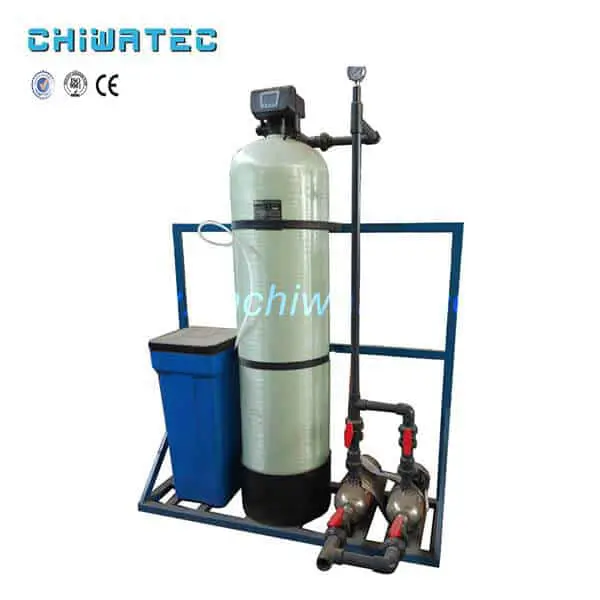
- Hard water breakthrough — Treated water hardness exceeds 1 gpg. Check salt level, regeneration settings, and resin condition.
- Salt bridges or mush — System runs through regeneration without consuming salt. Break salt bridge or clean brine tank.
- Low water pressure — Restricted flow through the resin bed. Check for resin fouling, channeling, or a clogged distributor.
- Excessive salt consumption — Salt usage significantly above normal. Check for leaking brine valve, incorrect regeneration frequency, or over-regeneration settings.
- Continuous water to drain — Valve stuck in regeneration or rinse position. Inspect control valve piston and seals.
- Brown or rusty water after regeneration — Iron fouling of the resin bed. Perform resin cleaning with iron-specific resin cleaner.
- Salt tank overflowing with water — Brine refill valve stuck open or brine float valve failing to shut off. Clean or replace the brine float assembly.
Frequently Asked Questions
How often should I add salt to my water softener?
Salt consumption depends on water hardness and daily water usage. Check the brine tank weekly and add salt when the level drops below half-full. A typical household with 10 gpg hardness uses approximately one 40-lb bag of salt per month. Industrial systems with high flow rates may require weekly salt additions.
Can I use any type of salt in my water softener?
No. Only use salt specifically labeled for water softeners: evaporated salt, solar salt, or pellet salt. Rock salt contains high levels of insoluble calcium sulfate and magnesium compounds that foul the resin and clog the injector. Salt with high iron content can stain resin and plumbing fixtures.
How do I know if my water softener resin needs replacement?
Resin typically lasts 10-15 years under normal conditions. Signs that replacement is needed: hardness breakthrough despite proper salt levels and regeneration settings, visibly fouled resin (black or brown) that does not respond to cleaning, reduced resin bed height (20%+ loss), and increased pressure drop across the resin tank. A resin sample test at a water treatment laboratory can confirm whether replacement is necessary.
What is a salt bridge and how do I fix it?
A salt bridge is a hard crust of re-crystallized salt that forms above the water level in the brine tank, creating an empty air pocket between the crust and the water. The system regenerates without consuming salt because the brine solution cannot form. To fix: gently break the crust with a long handle, remove the broken pieces, and break up the remaining salt. To prevent: maintain proper humidity control and use high-purity evaporated salt.
Do I need to professionally service my water softener annually?
For residential systems, a thorough owner-performed annual maintenance (control valve inspection, brine tank cleaning, resin inspection) is usually sufficient for systems with good water quality. For commercial and industrial systems, professional annual service is strongly recommended — the cost of a service visit is far less than the cost of an unplanned shutdown or system failure. CHIWATEC offers comprehensive maintenance contracts for all sizes of water softening equipment.
Conclusion & Call to Action
A consistent water softener maintenance schedule is the most cost-effective way to protect your investment and ensure reliable, scale-free water. Weekly checks take just minutes; monthly and quarterly tasks require a bit more time but prevent the most common causes of system failure. Annual overhaul keeps the system operating at peak efficiency for its full design life. Neglecting maintenance is the single most common cause of premature water softener failure — and it is entirely preventable.
Need help setting up a water softener maintenance schedule for your facility? Contact CHIWATEC for professional support. Email us at [email protected] or [email protected] for a customized maintenance plan and replacement parts.
Related Resources and Further Reading
- Water Softener Technology Description and Softening Principle Overview
- What Are the Core Components of a Household Water Softener?
- Boiler Water Softener Maintenance: Why Routine Care Matters for Automatic Systems
- Water Softening Equipment Working Process: Step-by-Step Ion Exchange Guide
- Water Softening System Products
Do you have a water treatment project we can help with
* Designing,machining,installing,commissioning, customize and one-stop service






 English
  Spanish
  Portuguese




