Water Softener System Working Principle: Complete Guide to Ion Exchange Water Softening
Water softener systems utilize advanced ion exchange technology to remove hardness-causing calcium and magnesium ions from water, replacing them with sodium ions through specialized resin beads. The global water softener market reached $10.8 billion in 2025, with residential and commercial softening systems growing at 7.3% CAGR, driven by increasing awareness of scale prevention, appliance protection, and water quality improvement across industrial, commercial, and household applications.
Understanding the water softener working principle is essential for selecting appropriate water treatment solutions, optimizing system performance, and ensuring long-term equipment protection. This comprehensive guide explores ion exchange mechanisms, regeneration processes, system configurations, and 2026 industry innovations in water softening technology.
Key Technical Parameters
- Hardness Removal Capacity: 15,000 – 80,000 grains (residential), 100,000+ grains (commercial)
- Flow Rate: 10-40 GPM (residential), 50-500+ GPM (industrial)
- Resin Type: Strong acid cation (SAC) polystyrene divinylbenzene
- Regeneration Efficiency: 3,000-4,000 grains per pound of salt
- Operating Pressure: 20-120 PSI (typical range)
- Water Temperature: 40-100°F (4-38°C)
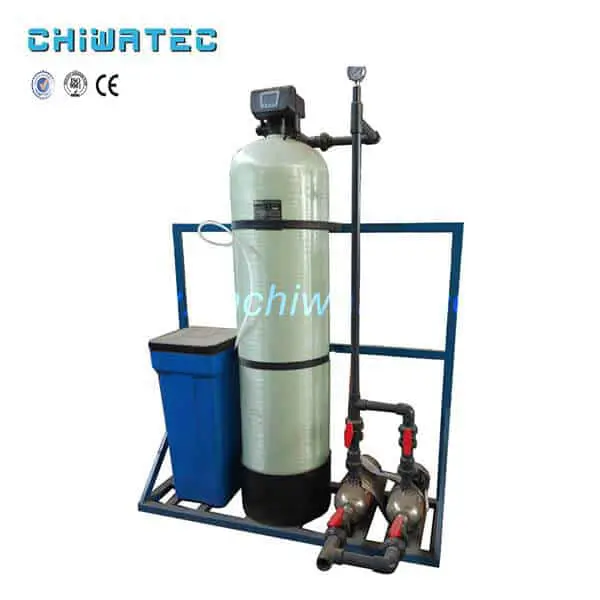
Understanding Water Softener Systems: Fundamentals and Applications
What is a Water Softener?
A water softener is a water treatment device that removes hardness minerals—primarily calcium (Ca²⁺) and magnesium (Mg²⁺)—from water through ion exchange processes. Hard water, defined as water containing more than 7 grains per gallon (gpg) or 120 mg/L of dissolved calcium and magnesium, causes scale buildup in pipes, water heaters, and appliances, reducing efficiency and lifespan.
According to 2026 Water Quality Association (WQA) standards, water hardness classifications are:
- Soft: 0-1 gpg (0-17 mg/L)
- Slightly Hard: 1-3.5 gpg (17-60 mg/L)
- Moderately Hard: 3.5-7 gpg (60-120 mg/L)
- Hard: 7-10.5 gpg (120-180 mg/L)
- Very Hard: >10.5 gpg (>180 mg/L)
How Water Softeners Work: The Ion Exchange Process
The water softener working principle centers on ion exchange technology, where hardness ions are exchanged for sodium or potassium ions within a resin bed:
- Service Cycle (Softening): Hard water flows through the resin tank containing negatively charged cation exchange resin beads preconditioned with sodium ions (Na⁺). Calcium and magnesium ions, carrying stronger positive charges (+2) than sodium ions (+1), displace sodium ions and bind to resin exchange sites.
- Ion Exchange Reaction: 2R-Na + Ca²⁺ → R₂-Ca + 2Na⁺ (where R represents resin matrix)
- Soft Water Output: Water exiting the resin tank contains sodium ions instead of calcium/magnesium, eliminating scale-forming potential.
- Resin Exhaustion: Over time, all exchange sites become occupied by calcium and magnesium ions, requiring regeneration.
Modern ion exchange water softeners achieve 95-99% hardness removal efficiency when properly sized and maintained, providing consistent soft water for residential, commercial, and industrial applications.
Water Softener Resin: The Heart of Ion Exchange Systems
Resin Composition and Structure
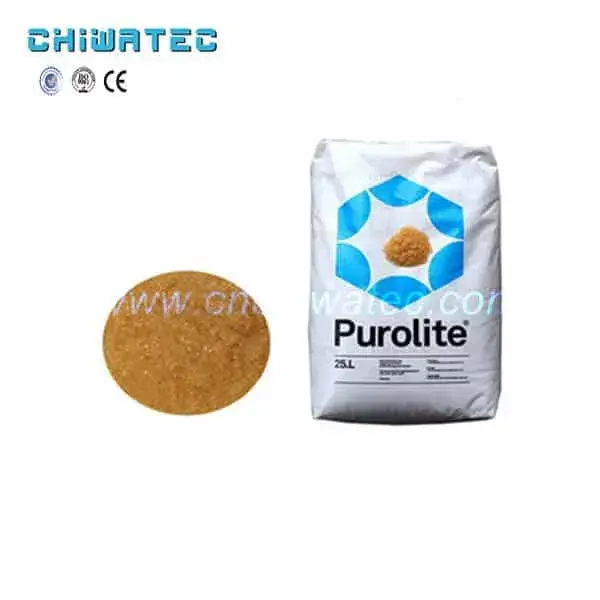
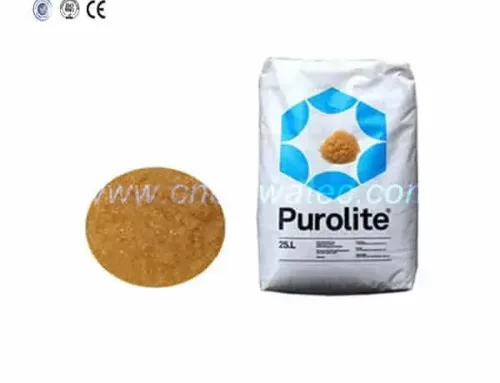
Water softener resin consists of porous, insoluble polystyrene-divinylbenzene (PS-DVB) copolymer beads, typically 0.3-1.2 mm in diameter. Each bead contains millions of negatively charged sulfonate (-SO₃⁻) functional groups that attract and hold positively charged cations.
Key Resin Characteristics:
- Exchange Capacity: 30,000-45,000 grains per cubic foot (standard SAC resin)
- Bead Uniformity: Ensures consistent flow distribution and optimal exchange efficiency
- Physical Stability: Resists osmotic shock and attrition during repeated regeneration cycles
- Chemical Resistance: Stable across pH 0-14 and temperatures up to 150°C
- Lifespan: 10-15 years with proper maintenance (2,000-3,000 regeneration cycles)
Resin Selectivity and Ion Affinity
Cation exchange resin exhibits preferential binding based on ionic charge and hydrated radius:
- Higher Charge Preference: Ca²⁺, Mg²⁺ (+2 charge) bind more strongly than Na⁺, K⁺ (+1 charge)
- Larger Hydrated Radius: Among same-charge ions, larger hydrated ions bind more weakly
- Selectivity Series: Fe³⁺ > Al³⁺ > Ca²⁺ > Mg²⁺ > K⁺ > Na⁺ > H⁺
This selectivity enables softeners to preferentially remove hardness ions during service cycles while allowing concentrated brine (high Na⁺ concentration) to displace accumulated Ca²⁺/Mg²⁺ during regeneration.
Regeneration Process: Restoring Resin Capacity
Why Regeneration is Necessary
As water softener resin becomes saturated with calcium and magnesium ions, exchange capacity diminishes until no further softening occurs. Regeneration restores resin to sodium form, enabling continued operation.
Four-Stage Regeneration Cycle
Stage 1: Backwash (10-15 minutes)
- Upward water flow (10-12 GPM per ft²) expands resin bed 40-50%
- Removes accumulated sediment, iron particles, and resin fines
- Reclassifies resin beads for uniform flow distribution
- Prevents channeling and pressure drop issues
Stage 2: Brine Draw/Slow Rinse (30-60 minutes)
- Concentrated NaCl solution (10-15% brine) drawn from salt tank
- Brine flows downward through resin bed at 0.5-1 GPM per ft²
- High sodium concentration (millions of Na⁺ ions) displaces fewer Ca²⁺/Mg²⁺ ions via mass action
- Regeneration reaction: R₂-Ca + 2Na⁺ → 2R-Na + Ca²⁺
- Typical salt dosage: 6-15 lbs per cubic foot of resin
Stage 3: Fast Rinse (10-20 minutes)
- Rapid downward water flow removes residual brine and displaced hardness ions
- Prevents salty taste in softened water
- Compacts resin bed for service operation
Stage 4: Brine Tank Refill (5-10 minutes)
- Fresh water added to salt tank for next regeneration cycle
- Typical fill volume: 12-15 gallons (creates saturated brine ~26% NaCl)
Regeneration Efficiency Optimization
2026 industry data shows regeneration efficiency varies with salt dosage:
| Salt Dosage (lbs/ft³) | Capacity (grains/ft³) | Efficiency (grains/lb salt) |
|---|---|---|
| 6 | 20,000 | 3,333 |
| 9 | 27,000 | 3,000 |
| 12 | 32,000 | 2,667 |
| 15 | 35,000 | 2,333 |
Best Practice: 6-9 lbs/ft³ provides optimal efficiency for most residential applications, balancing capacity with salt consumption and environmental impact.
Water Softener System Configurations
Single-Tank Systems
Single-tank water softeners use one resin vessel for both service and regeneration:
- Advantages: Lower cost, compact footprint, simple operation
- Limitations: No soft water available during regeneration (typically 2-3 hours)
- Applications: Residential, small commercial
Twin-Tank (Alternating) Systems
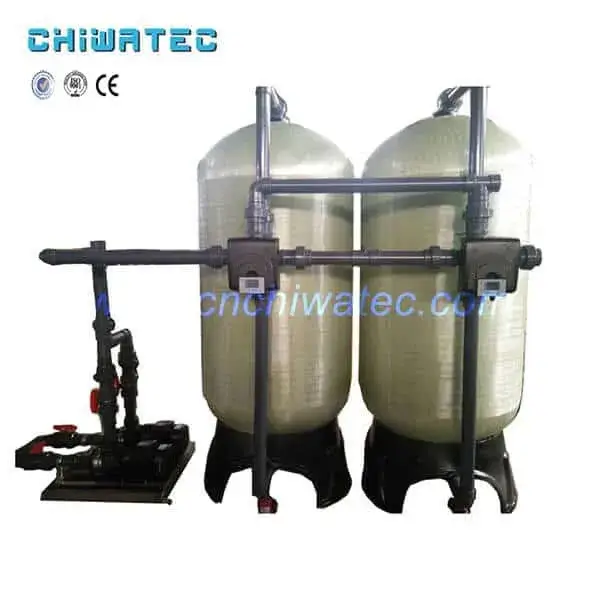
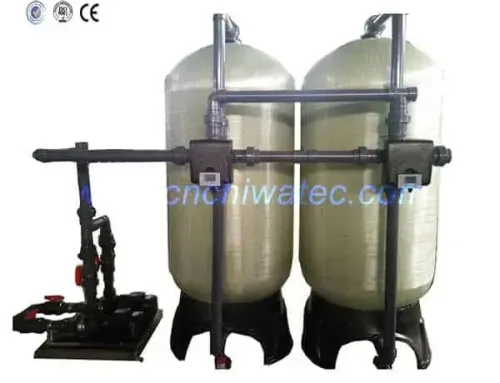
Twin-tank softeners employ two resin vessels operating alternately:
- Advantages: Continuous soft water supply, on-demand regeneration, extended resin life
- Operation: One tank in service while other regenerates or stands by
- Applications: Large residential, commercial, light industrial
Commercial/Industrial Systems
Large-scale industrial water softeners feature:
- Multiple vessels in parallel or series configurations
- Automated control valves with programmable logic controllers (PLC)
- High-capacity brine systems with separate storage tanks
- Flow rates from 50 to 5,000+ GPM
- Integration with reverse osmosis, deionization, or other treatment processes
Specialized Salt for Water Softening: Regeneration Chemical Requirements
Salt Purity and Performance
Regeneration effectiveness depends critically on water softener salt quality. 2026 industry standards require:
- Minimum Purity: 99.0% NaCl (residential), 99.5% NaCl (commercial/industrial)
- Insolubles: <0.5% (prevents resin fouling and valve clogging)
- Calcium/Magnesium: <0.1% (avoids re-hardening during regeneration)
- Iron: <5 ppm (prevents resin iron fouling)
Salt Types Comparison
| Salt Type | Purity | Pros | Cons |
|---|---|---|---|
| Evaporated Pellets | 99.6-99.9% | Highest purity, minimal residue, food-grade | Higher cost |
| Solar Crystals | 99.0-99.4% | Natural, cost-effective | Moderate insolubles |
| Rock Salt | 95-98% | Lowest cost | High insolubles, frequent cleaning |
| Potassium Chloride | 99.0%+ | Sodium-free, eco-friendly | 3-4x cost, lower capacity |
Advanced Salt Formulations (2026)
Recent innovations include specialized salt tablets with:
- Enhanced Impurity Removal: Food-grade additives that sequester iron, manganese, and heavy metals
- Resin Protection: Anti-fouling agents extending resin lifespan by 20-30%
- Moisture-Resistant Packaging: Prevents clumping and maintains effectiveness
- Uniform Tablet Shape: Eliminates bridging, ensures consistent brine concentration
Industry testing shows premium salt formulations provide 2x impurity removal capacity and 5-10% higher regeneration efficiency compared to standard rock salt.
Water Softener Applications and Benefits
Residential Applications
- Appliance Protection: Extends water heater, dishwasher, washing machine lifespan by 30-50%
- Energy Savings: Prevents scale in water heaters, maintaining 95%+ efficiency (vs. 70% with hard water)
- Plumbing Protection: Eliminates scale buildup in pipes, fixtures, and valves
- Cleaning Efficiency: Reduces soap/detergent usage by 40-60%, improves lathering
- Skin/Hair Benefits: Softer water reduces dryness, improves soap rinsing
Commercial Applications
- Hospitality: Hotels, restaurants benefit from spot-free dishes, softer laundry, improved guest experience
- Healthcare: Sterilization equipment, laundries require consistent soft water
- Laundromats: Significant detergent savings, better cleaning results
Industrial Applications
- Boiler Feedwater: Prevents scale in steam boilers, critical for safety and efficiency
- Cooling Towers: Reduces scale and corrosion in heat exchange systems
- Manufacturing: Process water for food/beverage, pharmaceuticals, textiles, electronics
- RO Pre-treatment: Protects reverse osmosis membranes from hardness fouling
Latest Industry Trends and Innovations (2026)
Smart Water Softeners with IoT Connectivity
Modern water softener systems incorporate advanced monitoring and control:
- Real-time hardness monitoring with automatic adjustment
- Remote diagnostics and service alerts via smartphone apps
- Usage-based regeneration scheduling (demand-initiated vs. timer-based)
- Cloud-based analytics for predictive maintenance
- Integration with home automation systems (Alexa, Google Home)
2026 market analysis indicates smart softeners growing at 12.5% CAGR, with 40% reduction in salt/water consumption through optimized regeneration cycles.
High-Efficiency (HE) Softeners
- Counterflow Regeneration: Brine flows opposite to service flow, improving efficiency by 15-20%
- Variable Brine Draw: Adjusts salt dosage based on actual hardness removal
- Low-Waste Designs: Reduces regeneration wastewater by 30-50%
- Certification: NSF/ANSI 44 and 410 standards for efficiency and performance
Alternative Softening Technologies
Emerging non-ion-exchange solutions include:
- Template Assisted Crystallization (TAC): Converts hardness minerals to non-scaling crystals
- Electromagnetic/Electronic Descalers: Alters crystal structure to prevent adhesion
- Chelation Systems: Sequesters hardness ions without removal
While these alternatives avoid sodium addition and brine discharge, they don’t technically “soften” water (remove hardness) and show variable effectiveness depending on water chemistry.
Water Softener Selection and Sizing
Sizing Calculation Method
Proper water softener sizing ensures adequate capacity between regenerations:
- Determine Daily Water Usage: 60-100 gallons per person per day (typical residential)
- Measure Water Hardness: Grains per gallon (gpg) or mg/L as CaCO₃
- Calculate Daily Hardness Removal: Gallons/day × Hardness (gpg) = Grains/day
- Select Regeneration Frequency: Every 3-7 days recommended (prevents resin fouling)
- Required Capacity: Grains/day × Days between regeneration
Example: Family of 4, 80 gal/person/day, 15 gpg hardness, 5-day regeneration
Daily usage: 4 × 80 = 320 gallons
Daily hardness: 320 × 15 = 4,800 grains
Required capacity: 4,800 × 5 = 24,000 grains (minimum)
Installation Considerations
- Location: Near main water entry, protected from freezing, adequate drainage
- Bypass Valve: Allows system isolation for maintenance
- Pre-filtration: Sediment filter (5-20 micron) protects resin from fouling
- Iron Removal: For iron >0.3 ppm, consider iron filter or specialized resin
- Drain Connection: Air gap required to prevent backflow contamination
Maintenance and Troubleshooting
Routine Maintenance Tasks
- Salt Level: Check monthly, maintain ½-¾ full (never below water level)
- Resin Bed Cleaning: Annual resin cleaner treatment removes iron, manganese, organic fouling
- Brine Tank Cleaning: Annual removal of salt mush/bridging, rinse with mild bleach solution
- Control Settings: Verify time, hardness setting, regeneration schedule quarterly
- Water Testing: Test softened water hardness monthly (should be 0-1 gpg)
Common Problems and Solutions
| Problem | Possible Cause | Solution |
|---|---|---|
| Hard water at fixtures | Salt depleted, bypass open, resin exhausted | Refill salt, close bypass, check regeneration cycle |
| Salty taste in water | Incomplete rinse, brine valve leak | Run manual rinse cycle, inspect brine valve |
| Low water pressure | Resin fouling, clogged inlet screen | Clean resin with iron remover, inspect/clean screen |
| Excessive salt usage | Incorrect settings, brine tank overfilling | Verify hardness setting, adjust refill time |
| Resin in drain | Damaged underbedding, excessive backwash | Inspect distributor tube, reduce backwash flow |
Conclusion
Water softener systems remain the gold standard for hardness removal, providing reliable, cost-effective protection against scale formation across residential, commercial, and industrial applications. Understanding the water softener working principle—ion exchange between resin-bound sodium ions and hardness-causing calcium/magnesium ions—enables informed system selection, optimal operation, and effective troubleshooting.
As we progress through 2026, innovations in smart controls, high-efficiency regeneration, and advanced salt formulations continue to enhance water softening technology performance while reducing environmental impact through lower salt and water consumption. Whether protecting household appliances, ensuring boiler safety, or maintaining industrial process water quality, properly sized and maintained ion exchange water softeners deliver measurable returns through extended equipment life, reduced energy costs, and improved water quality.
For water treatment professionals and end-users alike, mastering water softener fundamentals provides an essential foundation for achieving optimal water quality objectives while maximizing system longevity and operational efficiency.
FAQ: Water Softener Systems
Q1: How often should a water softener regenerate?
Water softener regeneration frequency depends on water usage, hardness level, and system capacity. Most residential units regenerate every 3-7 days. Demand-initiated regeneration (triggered by actual water usage) is more efficient than timer-based schedules. Regenerating too infrequently risks hard water breakthrough; too frequently wastes salt and water. Modern smart softeners automatically optimize regeneration timing based on usage patterns.
Q2: Can I use potassium chloride instead of salt?
Yes, potassium chloride (KCl) can replace sodium chloride (NaCl) for regeneration, producing potassium-softened water suitable for low-sodium diets. However, KCl costs 3-4 times more than NaCl and provides approximately 10-15% lower exchange capacity. Potassium softeners also require more frequent regeneration. For most applications, sodium chloride remains the most cost-effective choice, with softened water contributing minimal sodium to diet (typically <50 mg/L).
Q3: Does softened water corrode copper pipes?
Properly softened water is generally not corrosive to copper plumbing. However, aggressive softening (very low hardness, high sodium) combined with low pH (<7.0) and high dissolved oxygen can increase corrosivity. Best practice: maintain 1-3 gpg residual hardness (blending some hard water) or add corrosion inhibitors. If corrosion occurs, test water chemistry and consider pH adjustment or alternative treatment.
Q4: How much salt does a water softener use?
Typical residential water softeners consume 40-80 lbs of salt monthly, depending on hardness, usage, and efficiency settings. High-efficiency models using 6-9 lbs/ft³ salt dosage can reduce consumption by 30-50% compared to older systems using 12-15 lbs/ft³. Monthly salt costs typically range from $5-$20, significantly less than appliance replacement or energy costs from scale buildup.
Q5: Can water softeners remove iron?
Standard ion exchange resin can remove soluble ferrous iron (Fe²⁺) up to 2-5 ppm, but iron fouling reduces resin capacity and lifespan. For iron >0.3 ppm, use:
- Iron-fouling resistant resin (fine mesh, high cross-linking)
- Pre-oxidation filtration (converts Fe²⁺ to filterable Fe³⁺)
- Dedicated iron filters (Birm, Greensand, catalytic carbon)
- Regular resin cleaner treatments (citric acid or specialized products)
Q6: Is softened water safe to drink?
Yes, softened water is safe for drinking for most people. Sodium increase is minimal: 15 gpg hardness adds approximately 120 mg/L sodium (compared to 2,300 mg/day recommended limit). However, individuals on strict sodium-restricted diets (<500 mg/day) may prefer:
- Potassium chloride regeneration
- Separate unsoftened drinking water tap
- Reverse osmosis system for drinking water
Consult healthcare providers for specific medical concerns.
Further Reading – Related Articles
- The Role of Specialized Salt in Water Softening Equipment – Comprehensive guide to regeneration salt quality and performance
- Ion Exchange Resin Classification: Complete Guide to Water Treatment Resins 2026 – Detailed overview of resin types and applications
- Optimizing Parameters for Fully Automatic Water Softening Equipment: A Comprehensive Guide – Best practices for system configuration and operation
Do you have a water treatment project we can help with
* Designing,machining,installing,commissioning, customize and one-stop service
 English
  Spanish
  Portuguese