Water Softener Selection Parameters: Complete Guide to Choosing Boiler Softening Equipment 2026
Selecting the right water softener requires a clear understanding of water softener selection parameters — from controller type and resin tank material to flow rate, raw water hardness, and system configuration. This guide explains each water softener selection parameter in detail, helping you gather the right information before contacting a supplier for a properly sized and configured system. CHIWATEC provides customized water softening solutions for industrial, commercial, and boiler applications worldwide.
Understanding Key Water Softener Selection Parameters
The water softener selection parameters that determine the right system include: controller type, resin tank specifications, control valve configuration, flow rate requirements, and source water quality. Each parameter affects the size, cost, and performance of the softening system. Below is a summary of the primary selection factors:
| Parameter | Options / Range | Impact on Selection |
|---|---|---|
| Controller Type | FLECK, AUTOTROL, AQUAMATIC | Determines reliability and service availability |
| Resin Tank Material | RFP composite, PE-lined metal, stainless steel | Pressure rating and chemical compatibility |
| Control Mode | Flow type, Time type | Regeneration trigger and water usage tracking |
| System Configuration | Single/single, single/double, double/double, multi-bed | Continuous supply capability and redundancy |
| Flow Rate (m3/h) | 0.5–100+ m3/h | Vessel sizing and valve capacity |
| Raw Water Hardness | 50–1000+ mg/L as CaCO3 | Resin volume and regeneration frequency |
Understanding these water softener selection parameters is the first step in specifying the right equipment for your boiler or process water application.
Controller Selection: FLECK, AUTOTROL, and AQUAMATIC Options
The controller is the brain of the water softener, managing regeneration cycles, flow monitoring, and system diagnostics. Three major brands dominate the industrial water softening market:
- FLECK (USA): The most widely used brand globally, known for reliability, simple mechanical design, and extensive dealer network. Ideal for residential to large commercial systems (0.5–50 m3/h)
- AUTOTROL (USA): Electronic control with advanced features including days override, immediate regeneration, and remote monitoring. Suitable for commercial and light industrial applications
- AQUAMATIC (USA): Heavy-duty industrial controllers designed for continuous operation in demanding environments. Features include NEMA 4X enclosures and 4–20 mA signal output for SCADA integration
The controller brand is a critical water softener selection parameter that affects long-term maintenance costs and spare parts availability in your region.
Resin Tank Materials: RFP Composite vs PE-Lined Metal
The resin tank houses the ion exchange resin and must withstand operating pressure and repeated regeneration cycles. Common tank options include:
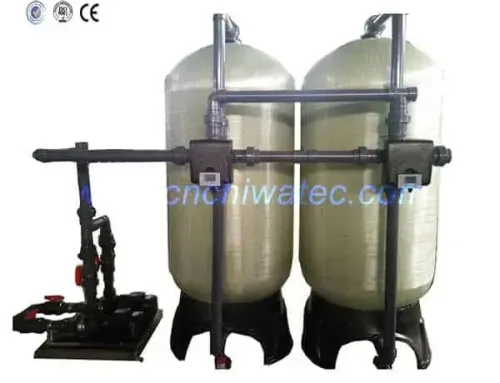
- RFP (Reinforced Fiberglass Polymer) composite tanks: Lightweight, corrosion-resistant, pressure-rated to 10 bar (150 psi). Widely used for residential and commercial softeners. Available from domestic manufacturers and imported brands (Stello)
- PE-lined metal tanks (polyethylene-lined carbon steel): Higher pressure rating (10–20 bar), suitable for industrial boiler applications where operating pressure exceeds RFP limits. The PE lining protects against corrosion
- Stainless steel tanks: For high-temperature applications or corrosive environments, though significantly more expensive
Tank material selection depends on operating pressure, water temperature, and budget — all key water softener selection parameters that must be defined before ordering.
Control Modes: Flow Type vs Time Type Regeneration
The regeneration control mode determines when the softener initiates the regeneration cycle:
| Control Mode | Operation Principle | Best Application |
|---|---|---|
| Flow Type (L) | Regenerates after a preset volume of water is treated | Variable water demand, all supply systems |
| Time Type (S) | Regenerates at a set time interval (e.g., every 24 hours) | Stable, predictable water demand |
- Flow-type controllers track actual water usage with a turbine meter, initiating regeneration only when the resin’s exchange capacity is consumed. This is the most efficient method for variable-demand applications
- Time-type controllers regenerate on a fixed schedule regardless of actual water usage. They are simpler and less expensive but less efficient for variable loads. The minimum regeneration interval is typically 24 hours
Choosing between flow and time control is one of the most important water softener selection parameters for optimizing salt and water efficiency.
Equipment Configurations: Single Bed, Dual Bed, and Multi-Bed Systems
System configuration is a key water softener selection parameter that determines whether water supply is continuous or intermittent:
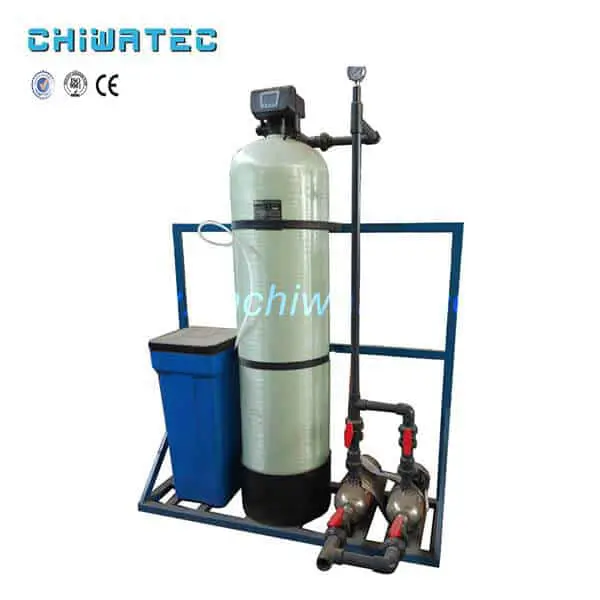
- Single control, single bed: Simplest configuration. Water supply stops for 2 hours during regeneration, or raw water bypasses the softener (hard water bypass). Suitable for batch processes where intermittent soft water is acceptable
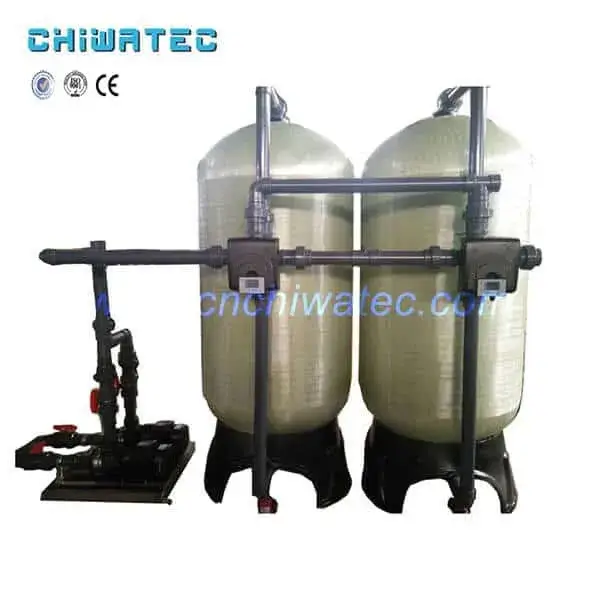
- Single control, double bed: One valve controls two resin tanks in an alternating mode — one is in service while the other stands by. Provides continuous soft water with one-use-one-standby operation
- Double control, double bed: Each tank has its own valve. Two operating modes: alternating (one use, one standby) or simultaneous supply with staggered regeneration
- Multiple control beds: Three or more resin tanks operating in parallel, suitable for large flow rates exceeding 50 m3/h. Provides maximum flexibility and redundancy
Critical Information Required for Boiler Softening Equipment Selection
To accurately specify a water softener, the following information must be gathered — these are the essential prerequisites for defining water softener selection parameters:
- Application type: Process water, heating system make-up, cooling tower replenishment, steam boiler, steel smelting, chemical/pharmaceutical industry, or other
- System operating hours: Daily running time (hours), hourly water consumption, average flow, and peak flow rate
- Continuous supply requirement: Does the system need uninterrupted soft water? If yes, a single-valve dual-tank or dual-control dual-bed configuration is required
- Raw water hardness: Total hardness as CaCO3 (mg/L). Also identify water source: municipal, groundwater, or surface water. Higher hardness requires more resin volume and may necessitate an enlarged softener model
- Required soft water flow rate: Unit flow rate in tons per hour (m3/h). This determines valve size, pipe connections, and vessel dimensions
- Cycle water volume setting: Based on resin exchange capacity and raw water hardness, determine the volume of water that can be treated between regenerations
For raw water hardness exceeding 8 meq/L (400 mg/L as CaCO3), model selection should prioritize high-capacity resin beds and reduced regeneration intervals.
Sizing Considerations for Water Softeners
Proper sizing ensures the softener operates efficiently without excessive regeneration frequency. Key water softener selection parameters for sizing include:
- Resin volume: Calculated from flow rate (m3/h) × hardness (mg/L) / resin exchange capacity (typically 1.0–1.5 eq/L for standard cation resin)
- Vessel diameter: Determined by flow rate and linear velocity (typically 20–40 m/h for downflow service)
- Regeneration frequency: Target 1–3 regenerations per day for optimal resin life. Frequent regeneration (more than 3/day) indicates undersized equipment
- Salt dosage per regeneration: Typically 80–240 g/L of resin, depending on resin type and desired regeneration efficiency
When raw water hardness is high, the periodic water production per cycle decreases, leading to more frequent regeneration. In such cases, increasing resin volume (choosing an enlarged model) reduces regeneration frequency and extends resin life.
Frequently Asked Questions
Q1: What are the most important water softener selection parameters?
The most important water softener selection parameters are: required flow rate (m3/h), raw water hardness, whether continuous supply is needed, controller type preference (FLECK, AUTOTROL, AQUAMATIC), and available space for equipment installation.
Q2: How do I determine the right water softener size for my boiler?
Calculate the required resin volume based on: flow rate (m3/h) × operating hours per day × raw water hardness / resin exchange capacity. Then select a vessel diameter that maintains a linear velocity of 20–40 m/h during service flow.
Q3: What is the difference between single and double bed water softeners?
Single bed softeners stop water production during regeneration (typically 2 hours). Double bed systems alternate between tanks — one regenerates while the other produces soft water, enabling uninterrupted supply. Double control double bed systems provide the highest redundancy.
Q4: Which controller is better, FLECK or AUTOTROL?
FLECK controllers are preferred for their mechanical simplicity, long service life, and ease of maintenance. AUTOTROL controllers offer electronic features like remote monitoring and advanced scheduling. The choice depends on application complexity and operator preference.
Q5: Can I use a residential water softener for boiler feed water?
Residential softeners are designed for low-flow intermittent use and may not meet the continuous flow or pressure requirements of boiler systems. Industrial softening equipment with properly sized valves, tanks, and controls is recommended for boiler feed water applications.
Conclusion & Call to Action
Defining the correct water softener selection parameters is the foundation of a successful water softening project. By gathering information on flow rate, hardness, application type, and system configuration requirements, you enable your equipment supplier to recommend the most cost-effective and reliable solution. For expert assistance with water softener selection parameters and customized boiler softening equipment, contact CHIWATEC today. Email us at [email protected] or [email protected] for a free consultation and equipment quotation.
Do you have a water treatment project we can help with
* Designing,machining,installing,commissioning, customize and one-stop service
 English
  Spanish
  Portuguese