Automatic Water Softener Benefits: 6 Key Advantages for Industrial and Boiler Applications 2026
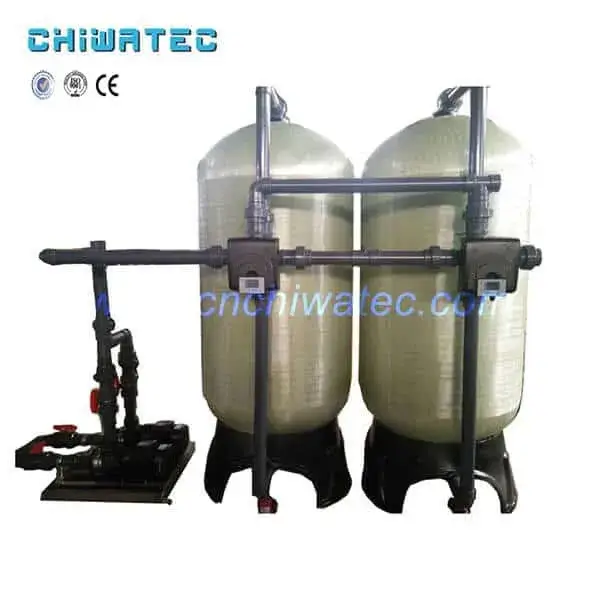
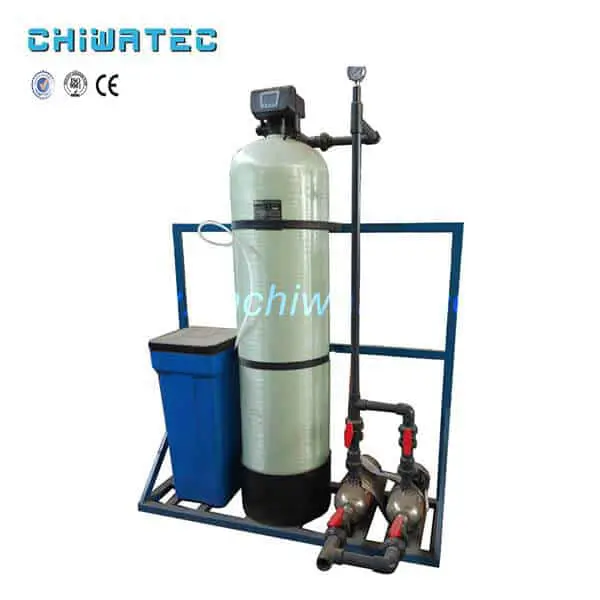
Automatic water softeners have revolutionized industrial water treatment by eliminating the manual labor and guesswork associated with traditional softening systems. Using computer-controlled multi-pass servo valves, microprocessors, and self-priming ejectors, these systems deliver consistent softened water quality with minimal operator intervention. Understanding the automatic water softener benefits — from fully automated operation and advanced control technology to compact design and dramatically reduced operating costs — helps facility managers and plant engineers make informed decisions about their water treatment infrastructure. CHIWATEC supplies industrial-grade automatic water softening systems with advanced FLECK and AUTOTROL control valves.
Automatic Water Softener Benefits: Overview of 6 Key Advantages
| # | Advantage | Key Benefit | Impact |
| 1 | Fully automatic operation | Computer online monitoring, continuous regeneration, no manual interference | Saves water, salt, electricity, and labor |
| 2 | Advanced technology, stable operation | Microcomputer control, multi-pass servo valve, non-volatile memory (NOVRAM) | Low failure rate, precise control, data retention on power loss |
| 3 | No special salt system needed | Self-priming ejector uses inlet water pressure for brine draw | Eliminates salt pump, pipelines, and dedicated brine tank room |
| 4 | Compact structure | Integrated design, lightweight, no special foundation required | 1 T/H system occupies only 2 m²; installation in 1-2 days |
| 5 | Simple operation and management | Set once, run automatically; only periodic salt replenishment needed | No dedicated operator required; boiler workers can manage |
| 6 | Extremely low operating cost | Annual savings of 10,000-20,000+ yuan per 1 T/H system | ROI recovered within the first year |
Fully Automatic Operation: Set and Forget
The most significant of all automatic water softener benefits is true hands-free operation. The system uses computer online monitoring to control the entire regeneration cycle — backwash, brine draw, slow rinse, fast rinse, and brine tank refill — without any manual intervention. Each process step is executed at precisely the correct time, with no advance or lag. The switching between stages is nearly synchronous, making the entire regeneration process accurate, reliable, and efficient.
The practical result: the system automatically regenerates based on actual water consumption (meter-initialized) or elapsed time (timer-initialized), always at the optimal point. The computer tracks remaining capacity and initiates regeneration only when needed. This intelligence eliminates waste — no regenerating too early (wasting salt and water) or too late (allowing hardness breakthrough). The savings in water, salt, electricity, and labor are substantial, and the cost per cubic meter of treated water is minimized.
Advanced Technology for Stable, Reliable Operation
Automatic water softeners incorporate several technological innovations that ensure stable, long-term operation:
- Multi-pass servo valve — Central control component with integrated timer and flow meter. Each valve body is made of durable plastic steel with self-pressure or pump-assisted sealing technology that prevents leakage, blockage, and corrosion. The sealing technology also prevents exchange resin contamination.
- Modern microcomputer control system — Provides centralized operation with sophisticated programming capabilities. The system automatically adjusts remaining water volume calculations based on the average daily consumption over the past seven days, comparing it to the current residual capacity before issuing the regeneration command. This adaptive algorithm keeps the system running at its optimal efficiency point.
- Non-volatile memory (NOVRAM) — All computer data is preserved during power outages. When power is restored, the system automatically resumes operation from exactly where it stopped, with no data loss and no need for reprogramming.
- Schedule optimization — Regeneration can be programmed to occur during off-peak hours (e.g., 2:00 AM), avoiding disruption to daytime operations and taking advantage of lower energy rates.
No Special Salt Brine System Required
Traditional water softeners require a dedicated salt dissolution system — salt storage tank, salt pump, transfer pipelines, and often a separate room. Automatic water softeners eliminate all of this through an ingeniously designed self-priming ejector built into the multi-way servo valve.
The ejector uses the inlet water pressure to create suction that draws brine directly from a compact salt tank. It automatically absorbs salt and replenishes water according to the programmed regeneration schedule — no pumps, no valves, no complex piping. The salt tank itself is portable, typically 500-1000 mm in diameter and 1000 mm in height, placed conveniently near the exchange tank with a compact water level controller. This design eliminates the need for:
- A dedicated salt pond or brine tank room
- Salt pumps and associated electrical connections
- Dedicated brine transfer pipelines and distribution systems
- Additional investment in a specialized water treatment room
Compact Structure and Minimal Space Requirements
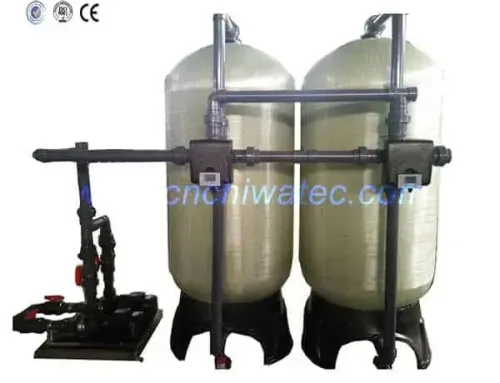
Automatic water softeners are designed with integration in mind. The entire assembly is compact, lightweight, and can be installed on a standard flat concrete floor with no special foundation work. A 1 T/H (ton per hour) water softening system occupies only about 2 square meters of floor space — a fraction of the space required by traditional systems with separate brine tanks and pumps.
Standardized component assembly means that commissioning and training can be completed in just 1-2 days. The system arrives largely pre-assembled and pre-tested, requiring only connection to the incoming water supply, drain, and electrical outlet to begin producing softened water. Modular design allows for easy capacity expansion by adding parallel units.
Simple Operation and Easy Management
Once the initial data settings are programmed into the microcomputer controller, the system operates faithfully according to the established program with no further adjustments needed. Day-to-day operator tasks are limited to monitoring the computer display screen and periodically adding salt to the salt tank. Ordinary operators can quickly learn these tasks with minimal training.
The practical result: most facilities do not assign a dedicated operator to the water softening system. In boiler rooms, the system is typically managed by the existing boiler operators (furnace workers) as a secondary responsibility. This eliminates the labor cost of a dedicated water treatment operator while still ensuring consistent softened water quality.
Annual Operating Cost: Verified Savings
| Parameter | Value | Notes |
| Cost savings per m³ of softened water | ~2.61 yuan/m³ | Compared to traditional water treatment methods |
| Annual savings (1 T/H, year-round boiler) | ~20,120 yuan/year | 8,760 hrs × 0.8 load factor × 1.1 safety factor × 2.61 yuan |
| Annual savings (1 T/H, seasonal heating boiler) | ~10,336 yuan/year | 3,600 hrs × 1.1 safety factor × 2.61 yuan |
| Initial equipment investment recovery | Same year | Annual savings exceed equipment cost for typical installations |
The cost savings come from four sources: reduced water consumption (optimized regeneration cycles), reduced salt consumption (meter-initiated regeneration only when needed), reduced electricity consumption (efficient valve design), and eliminated labor costs (no dedicated operator). Based on operational data from hundreds of installations with different capacities, the savings are consistent and verifiable. The initial investment in automatic water softening equipment is typically recovered within the first year of operation.
Frequently Asked Questions
What is the main advantage of an automatic water softener over a manual system?
The main advantage is fully automated operation — the microprocessor controls the regeneration cycle based on actual water consumption, eliminating the need for manual valve operation, timer adjustments, and constant monitoring. This saves labor, reduces chemical waste, and ensures consistent water quality.
How much space does an automatic water softener need?
A 1 T/H automatic water softener requires approximately 2 square meters of floor space, with no special foundation needed. The salt tank is compact and portable (500-1000 mm diameter), and the entire system can be installed in 1-2 days. This is significantly less space than traditional systems with separate brine tanks and pumps.
Can an automatic water softener handle power outages?
Yes. Automatic water softeners use non-volatile memory (NOVRAM) that preserves all programming data during power loss. When power is restored, the system automatically resumes operation from the exact point it stopped — no reprogramming, no data loss, and no missed regenerations.
What kind of maintenance does an automatic water softener require?
Maintenance is minimal. The primary daily task is checking the salt level in the brine tank and adding salt as needed. Periodic inspection of the control valve, injector, and resin bed should be performed according to the manufacturer’s schedule. Most facilities find that existing boiler operators can manage the system without dedicated water treatment staff.
How long does it take to recover the investment in an automatic water softener?
Based on operational data from hundreds of installations, the annual operating cost savings (approximately 10,000-20,000 yuan for a 1 T/H system) typically recover the initial equipment investment within the first year of operation. The combination of reduced water, salt, electricity, and labor costs makes the ROI highly attractive for boiler and industrial applications.
Conclusion & Call to Action
The automatic water softener benefits are clear and data-supported: fully automated operation eliminates manual labor, advanced microcomputer control ensures consistent water quality and adaptive regeneration, the integrated self-priming ejector eliminates the need for a dedicated brine system, the compact design saves valuable floor space, and the annual operating cost is dramatically lower than traditional methods — with investment payback typically within the first year. For any facility using boiler feed water, process water, or industrial water that requires hardness removal, automatic water softening equipment is the most cost-effective solution available.
Ready to realize these automatic water softener benefits in your facility? Contact CHIWATEC for professional recommendations and a customized cost analysis. Email us at [email protected] or [email protected] for a quote on automatic water softening equipment tailored to your requirements.
Related Resources and Further Reading
- Automatic Water Softening Equipment: Complete Guide to Productivity and Operation
- Introduction to the Working Principle of Softened Water Equipment
- Benefits of Water Softening Equipment: 7 Key Advantages for Home and Industry
- Water Softener Selection Parameters: Complete Guide to Choosing Boiler and Industrial Systems
- Water Softening System Products
Do you have a water treatment project we can help with
* Designing,machining,installing,commissioning, customize and one-stop service

 English
  Spanish
  Portuguese