Small Automatic Water Softener 2026: 100-150L/H Compact System Features and Specifications
A small automatic water softener is an ideal solution for light commercial applications, small boilers, and point-of-use softening where space is limited and flow requirements are modest. The 100-150L/H capacity automatic softener combines ion exchange technology, automatic regeneration control, and compact design to deliver consistent soft water with minimal maintenance. This guide covers the working principle, technical specifications, key features, and applications of small automatic water softener systems.
Small Automatic Water Softener Overview
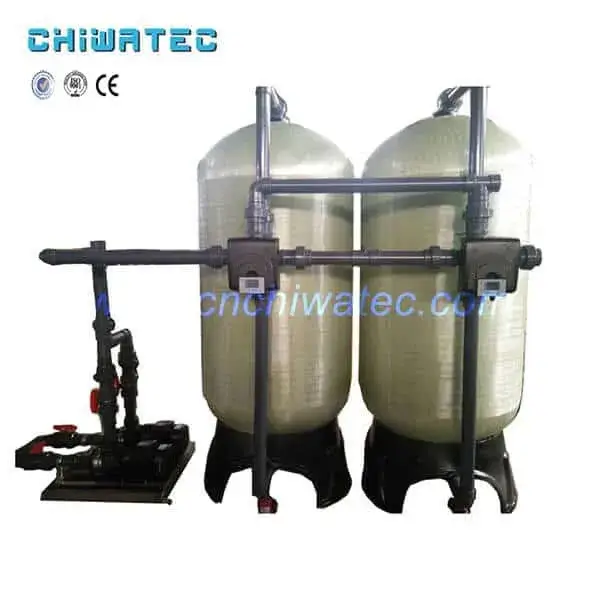
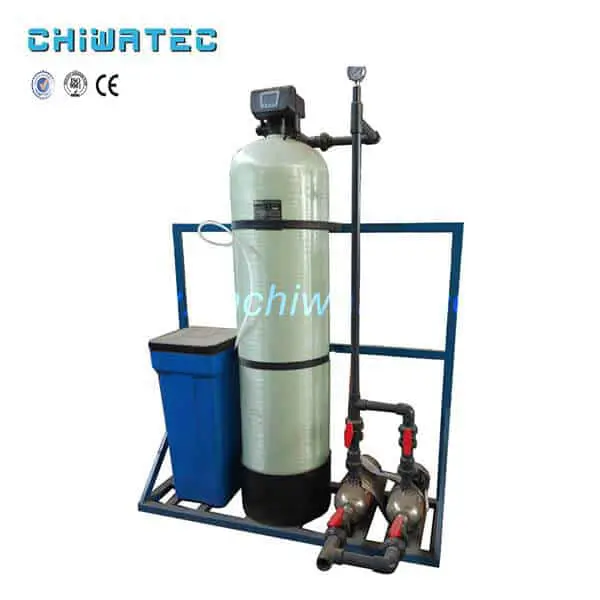
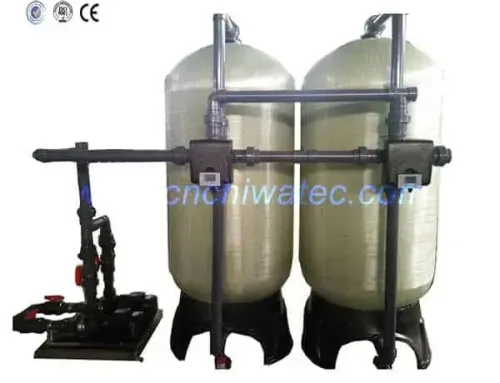
A small automatic water softener operates on the principle of sodium ion exchange, using strong acid cation exchange resin to remove calcium (Ca²⁺) and magnesium (Mg²⁺) ions — the primary components responsible for water hardness and scale formation. The system consists of three integrated subsystems: the ion exchange resin tank where softening occurs, the brine tank for salt storage and regeneration, and the automatic control valve that manages the service and regeneration cycles.
For applications requiring 100-150 liters of softened water per hour, this compact unit delivers effluent hardness consistently below 0.03 mmol/L, protecting downstream equipment from scale damage while operating with minimal energy consumption at just 10W.
Working Principle of Small Automatic Water Softener Systems
The ion exchange process follows a simple chemical reaction. Raw water passes through the sodium-form cation exchange resin (RNa), and hardness ions are exchanged for sodium ions:
2RNa + Ca²⁺ → R₂Ca + 2Na⁺
2RNa + Mg²⁺ → R₂Mg + 2Na⁺
As the resin absorbs calcium and magnesium, its exchange capacity gradually decreases. The system automatically initiates regeneration using a brine solution (NaCl), which displaces the accumulated hardness ions and restores the resin to its sodium form:
R₂Ca + 2NaCl → 2RNa + CaCl₂
R₂Mg + 2NaCl → 2RNa + MgCl₂
The automatic controller uses time-clock or meter-initiated regeneration, ensuring the system always has fresh resin available for softening without manual intervention.
Technical Specifications of 100-150L/H Automatic Water Softeners
The following table summarizes the key technical parameters for a standard small automatic water softener with 100-150L/H capacity:
| Parameter | Specification |
|---|---|
| Water treatment capacity | 100-150 L/H |
| Raw water hardness (max) | ≤8 mmol/L |
| Effluent residual hardness | ≤0.03 mmol/L |
| Working pressure | 0.2-0.6 MPa |
| Inlet water temperature | 2-38°C |
| Working temperature | 2-60°C |
| Power supply | 220V 50Hz, 10W |
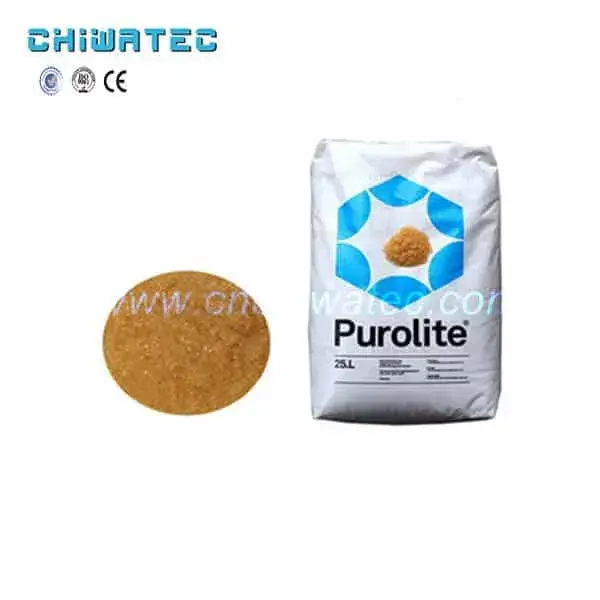
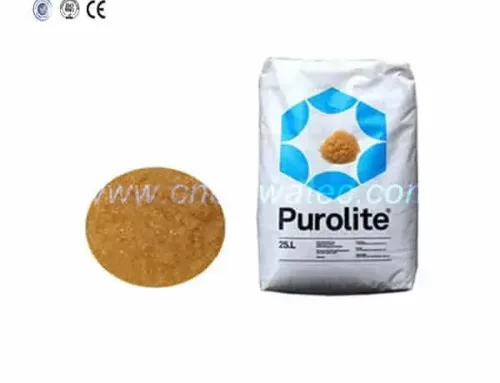
| Resin model | 001×7 strong acid cation (≈18 kg) |
| Regeneration method | Dynamic downstream (countercurrent) |
| Salt consumption | 160-250 g/mol (adjustable) |
| Water consumption for regeneration | <2% of production |
| Dimensions (L×W×H) | 480×280×1150 mm |
| Weight | 35 kg |
| Control method | Time-clock type, automatic regeneration |
| pH range | 1-14 |
| Total pressure loss | 0.03 MPa |
Key Features of Compact Water Softener Systems
Small automatic water softener units offer several advantages for light commercial and industrial applications:
- Space-saving design: Compact footprint (480×280×1150 mm) fits easily into tight mechanical rooms and equipment cabinets.
- Simplified piping: Integrated manifold design reduces installation complexity and plumbing requirements.
- Automatic regeneration: Time-clock control eliminates the need for manual regeneration scheduling and monitoring.
- Low operating cost: Salt consumption of 160-250 g/mol and power consumption of only 10W keep ongoing expenses minimal.
- Reliable ion exchange: 001×7 strong acid cation resin provides consistent hardness removal with >99% efficiency.
- Wide pH tolerance: Operating range of pH 1-14 makes the system suitable for various feed water conditions.
Applications for 100-150L/H Water Softeners
Due to its compact size and moderate capacity, the small automatic water softener is widely used in:
- Small industrial boilers: Prevents scale formation in boiler tubes, improving heat transfer efficiency and extending equipment life.
- Heat exchangers: Protects plate and shell-and-tube heat exchangers from calcium carbonate scaling.
- Central air conditioning: Prevents scale buildup in cooling towers and chilled water systems.
- Food processing: Ensures consistent water quality for washing, rinsing, and ingredient preparation.
- Pharmaceutical and laboratory: Provides pretreated water for equipment protection and consistent process water quality.
- Electronics manufacturing: Supplies soft water for rinsing and cleaning applications where mineral deposits could affect product quality.
Installation and Maintenance Tips
Proper installation and routine maintenance are essential for maximizing the service life of a small automatic water softener:
- Inlet pressure: Ensure feed water pressure is between 0.2-0.4 MPa. If below 0.2 MPa, install a booster pump.
- Pre-filtration: Install a sediment filter upstream to remove suspended solids that could foul the resin bed.
- Brine tank: Maintain adequate salt levels and check for salt bridging or mushing every month.
- Resin inspection: Check resin condition annually; replace every 3-5 years or when exchange capacity drops significantly.
- Control valve: Clean the control valve and injector assembly during annual maintenance to prevent clogging.
- Sanitization: Sanitize the resin bed and brine tank annually using chlorine bleach or specialized resin cleaner to prevent bacterial growth.
FAQ
What is the difference between a small automatic water softener and a manual softener?
An automatic water softener uses a time-clock or meter-initiated control valve to trigger regeneration automatically without operator intervention. Manual softeners require the operator to initiate backwash, brine draw, rinse, and service cycles by turning a handle or lever. Automatic systems are preferred for consistent water quality and reduced labor requirements.
How often does a 100-150L/H water softener regenerate?
For a time-clock controlled unit with 001×7 resin (≈18 kg), regeneration typically occurs every 2-7 days depending on feed water hardness and daily water consumption. Higher hardness levels and higher usage volumes reduce the interval between regeneration cycles.
Can a small automatic water softener handle high-hardness water?
Yes, the system can treat raw water with hardness up to 8 mmol/L. For water exceeding this level, a two-stage softening configuration or additional pretreatment is recommended. Always conduct a water analysis before system selection to ensure proper sizing and configuration.
How much salt does a small automatic water softener consume?
Salt consumption ranges from 160-250 grams per mole of hardness removed, adjustable based on water quality and desired effluent hardness. Lower salt settings reduce operating costs but may result in slightly higher residual hardness.
What is the lifespan of a 100-150L/H automatic water softener?
With proper maintenance, the system has a service life of 10-15 years. The resin should be replaced every 3-5 years, and the control valve seals and O-rings may need replacement after 5-8 years of operation.
Conclusion
A small automatic water softener with 100-150L/H capacity provides an efficient, cost-effective solution for light commercial and industrial softening applications. By combining ion exchange technology with automatic regeneration control and compact design, these systems deliver reliable soft water while minimizing operator attention and maintenance requirements. For assistance selecting the right water softening system for your application, contact our team. Email: [email protected] or [email protected]
Related Resources and Further Reading
Do you have a water treatment project we can help with
* Designing,machining,installing,commissioning, customize and one-stop service
 English
  Spanish
  Portuguese