

Introduction of Automatic Water Softener Equipment
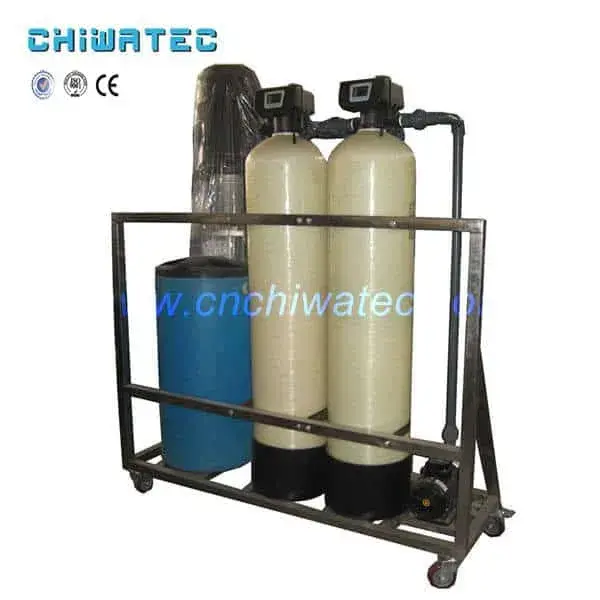
Automatic water softener equipment is widely used in industrial and commercial water treatment systems to effectively remove calcium and magnesium ions that cause water hardness. Through advanced control systems and high-efficiency ion exchange technologies, automatic softeners ensure reliable, continuous, and high-quality soft water production with minimal manual intervention.
1. Features of Automatic Water Softener Equipment
High Degree of Automation
The system integrates advanced programmable controllers (PLC or multi-port valves) to automatically complete all softening steps, including service, backwashing, brining (regeneration), slow rinse, and fast rinse.
This eliminates manual operations and ensures consistent water quality.
Stable Operation and Reliable Control
The equipment uses a precision program-controlled valve to guarantee accurate regeneration cycles and high repeatability. By automating the switching process, the equipment maintains stable output hardness even under fluctuating inlet water conditions.
High Efficiency & Low Energy Consumption
The optimized resin bed design maximizes ion exchange capacity, reducing salt and water consumption during regeneration.
The use of jet-type salt absorption replaces traditional salt pumps, significantly lowering energy use and maintenance costs.
Compact Structure, Small Footprint
The system is designed for:
- Easy installation
- Minimal civil engineering requirements
- Simple operation and daily maintenance
- Long-term reliability and equipment lifespan
It is ideal for limited installation spaces such as boiler rooms, RO pre-treatment areas, HVAC systems, and factory utility rooms.
2. Water Quality Requirements for Inlet Water
To ensure long-term stable operation, raw water must meet the following parameters:
| Parameter | Requirement |
|---|---|
| Residual Chlorine | <0.1 ppm |
| Turbidity | <2 NTU |
| Iron (Fe) | <0.3 ppm |
| Manganese (Mn) | <0.3 ppm |
| Total Dissolved Solids | <500 ppm |
3. Technical Specifications
Operating Conditions
- Working pressure: 0.15–0.6 MPa
- Operating temperature: 5–50 ℃
- Power supply: 220V, 50Hz
- Power consumption: ≤10W
Performance Parameters
- Water production capacity: 1–110 m³/h
- Outlet water hardness: ≤0.03 mmol/L (when raw water hardness ≤8 mmol/L)
- Regeneration method: Upflow or downflow regeneration
- Control mode: Time-based / Flow-based / Hydraulic non-electric control
- Salt consumption: ≤100 g/mol
- Regenerated water consumption: ≤2% × water production
Material Options
- Valve body: High-strength plastic or lead-free brass
- Tank body: FRP wound tank / carbon steel with anti-corrosion lining / stainless steel
- Resin: High-grade imported cation exchange resin
Connection Types
- Pipe thread connection
- ABS flange connection
4. Installation Requirements
Automatic water softener equipment can be installed without a special foundation, but the following conditions must be met:
- Installed on a flat concrete floor
- A drainage ditch or drain point must be provided within 1 meter
- Ensure proper ventilation and avoid direct sunlight
- Place salt tank and resin tank in accessible locations for maintenance
Conclusion
Automatic water softener equipment provides an efficient, stable, and economical solution for removing hardness from industrial and commercial water systems. With advanced automatic control, high-performance resins, low energy consumption, and flexible installation options, these systems ensure consistent soft water output for boilers, RO systems, HVAC equipment, power plants, battery manufacturing, pharmaceuticals, and more.
By combining proper pre-treatment and correct configuration, users can greatly extend equipment lifespan and improve water treatment reliability.
FAQ
1. What industries commonly use automatic water softener equipment?
Industries include power plants, food and beverage, pharmaceuticals, boilers, HVAC, chemical production, and RO pre-treatment systems.
2. How often does the softener regenerate?
The regeneration frequency depends on hardness, water consumption, and whether the system uses flow-based or time-based control. Flow-controlled systems regenerate based on actual usage, improving efficiency.
3. Do I need pre-treatment before the softener?
Yes, if raw water contains high chlorine, turbidity, iron, or manganese. Pre-treatment filters help protect the resin and improve performance.
4. How long does ion exchange resin last?
With proper operation and pre-treatment, high-quality resin typically lasts 5–10 years.
5. Can this system be integrated into RO systems?
Absolutely. Automatic water softeners are a key pre-treatment step to protect reverse osmosis membranes.
Xi’an CHIWATEC Water Treatment Technology is a high-tech enterprise specialized in various water processing devices. Aside from these individual products, which cover a number of types and series, we can also help with related comprehensive engineering projects. Thanks to our hard work and dedication upon our founding, we are now one of the fastest-developing water treatment equipment manufacturers in Western China.
Further reading:
- Introduction to the advantages of automatic water softeners, water softeners, and water softening equipment
- The maintenance of the water softener should be carried out on a weekly, monthly, and yearly basis?
- How to select water softener and boiler softening equipment?
- Automatic water softener 100-150L per hour
- Notes on the selection of automatic water softeners
- Matters needing attention in Fleck’s automatic water softener
- Water softener
- What are the core components of a household water softener?
- Principle of water softener
- Introduction of water softener product features
- Introduction of automatic water softener equipment
- Pentair Water Softener Tank
- Fleck 2850 water softener
- Required selection of water softener and softener equipment selection
- Water softener technology description and softening principle overview
FOLLOW US
Do you have a water treatment project we can help with
* Designing,machining,installing,commissioning, customize and one-stop service






 English
  Spanish
  Portuguese




