

Household Water Softener Components: Complete Guide to Core Parts and Functions 2026
Understanding household water softener components is essential for anyone looking to protect their home plumbing, extend appliance life, and enjoy the benefits of softened water throughout their household. Whether you are a homeowner researching water treatment options or a facility manager evaluating softening solutions, this guide by Xi’an CHIWATEC provides a comprehensive breakdown of every critical component, how they work together, and what to look for when selecting a system.
* Last Updated: May 2026
Why This Guide Matters
The global water softener market was valued at approximately USD 12.8 billion in 2024 and is projected to reach USD 19.6 billion by 2032, growing at a CAGR of 5.4% according to industry estimates. With hard water affecting over 85% of American households and similar percentages across Europe and Asia, understanding the core components of a household water softener has never been more important. Proper component knowledge helps homeowners make informed purchasing decisions, perform basic maintenance, and extend system lifespan from the typical 8–12 years to 15 years or more.
Key Industry Trends (2026 Update)
- Smart Monitoring Integration: Over 35% of new water softeners shipped in 2025-2026 include Wi-Fi-enabled control panels that track salt levels, water usage, and regeneration cycles via smartphone apps, reducing maintenance frequency by up to 40%.
- High-Efficiency Resin Technology: New-generation cross-linked polymer resins (8-10% cross-linkage) offer 20-30% higher ion exchange capacity and greater resistance to oxidation and fouling compared to standard gel-type resins used in older systems.
- NSF/ANSI 44 Certification Growth: Third-party certification has become a key purchasing criterion, with NSF 44-certified softener systems seeing 28% higher consumer trust ratings and commanding premium pricing of 15-20% over uncertified alternatives.
- Environmental and Regulatory Drivers: Stricter regulations on brine discharge in states like California, Texas, and Florida are driving innovation toward metered, on-demand regeneration systems that reduce salt usage by up to 50% compared to time-clock systems.
1. What Are the Core Components of a Household Water Softener?
The Basic Component Overview
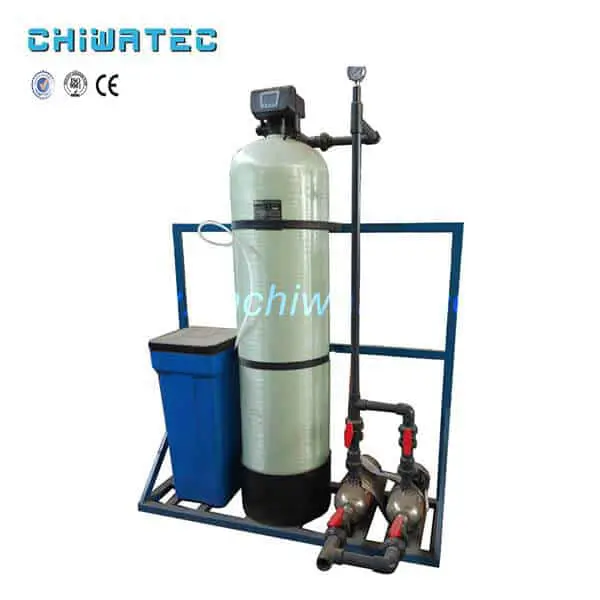
A modern household water softener consists of several interconnected components working together through an ion exchange process. The five essential household water softener components include the resin tank, brine tank, control valve, resin media, and the bypass valve system. Each plays a specific role in removing calcium and magnesium ions that cause water hardness.
How Components Work Together
The typical water softening cycle begins when hard water enters the system through the control valve, flows downward through the resin bed where ion exchange occurs, and exits as softened water. During regeneration, brine solution from the brine tank is drawn through the resin bed to flush accumulated hardness minerals to drain. Explore our complete line of household water softener systems for more detailed specifications.
2. The Resin Tank: Heart of the Softening System
Construction and Materials
The resin tank is the primary pressure vessel that houses the ion exchange resin media. High-quality resin tanks feature food-grade polyethylene or epoxy linings that prevent direct contact between resin beads and the tank wall, eliminating metallic contamination and corrosion. Standard residential tanks range from 8 to 14 inches in diameter with heights from 35 to 65 inches, corresponding to resin volumes from 0.5 to 2.5 cubic feet.
Why Tank Quality Matters
A poorly constructed resin tank can introduce contaminants, leak under pressure (residential systems typically operate at 30-100 psi), or burst during freeze conditions. Look for tanks with NSF/ANSI 61 certification for drinking water system components, and consider structural reinforcement for basement installations in freeze-prone regions.
3. The Control Valve: Brain of the Water Softener
Types of Control Valves
About 90% of the functional components of a water softener are integrated into or connected to the control valve body. Three main types dominate the market: time-clock valves (regenerate on a fixed schedule), meter-initiated valves (regenerate based on actual water usage), and demand-initiated valves (regenerate based on calculated remaining capacity). Meter-initiated systems typically use 30-50% less salt and water than time-clock systems.
Valve Components and Maintenance
Modern control valves incorporate flow meters, injectors, drain line flow controls, and bypass pistons as integrated assemblies. The valve body itself is typically made from Noryl or glass-filled nylon for corrosion resistance. Regular inspection of seals and o-rings every 12-18 months can prevent the most common failure points.
4. Ion Exchange Resin: The Chemical Engine
How Resin Works
Ion exchange resin consists of small, porous polymer beads (typically 0.3-1.2 mm in diameter) that are pre-charged with sodium ions. As hard water passes through the resin bed, calcium and magnesium ions are preferentially attracted to the resin surface and exchanged for sodium ions. A single cubic foot of standard resin can remove approximately 30,000 grains of hardness before requiring regeneration.
Resin Types and Lifespan
Standard gel-type resin (6-8% cross-linkage) is suitable for most residential applications with hardness levels below 30 grains per gallon (gpg). High-cross-link resin (8-10%) is recommended for water with high chlorine levels, iron content above 3 ppm, or when longer resin life is desired. Under normal conditions, resin lasts 10-15 years, but exposure to chlorine, iron fouling, or bacterial growth can reduce lifespan by 50-70%.
5. The Brine System: Regeneration Support
Brine Tank Components
The brine system includes the brine tank, safety float assembly, brine well, and grid plate. Salt dissolves in water at the bottom of the brine tank to create a saturated brine solution (approximately 26% salt by weight at 60 degrees F). The grid plate prevents undissolved salt from being drawn into the control valve during the regeneration cycle.
Salt Types and Efficiency
Three types of regenerant salt are commonly used: solar salt (evaporated sea water, 99.6% purity), evaporated salt (mined salt processed for maximum purity, 99.99%+), and block salt (compressed salt pellets). High-efficiency systems using evaporated salt require 30-50% less salt per regeneration while achieving equivalent softening capacity. Salt efficiency is measured in grains of hardness removed per pound of salt (typically 2,000-4,000 grains/lb depending on system design).
6. Bypass Valve and Plumbing Connections
Purpose and Configurations
The bypass valve allows the water softener to be isolated from the household plumbing during maintenance, regeneration, or service. Integrated bypass valves built into the control valve body offer the most compact solution, while external three-valve bypass systems provide more installation flexibility. All bypass systems must include a means to provide untreated water to outdoor spigots and irrigation systems, as softened water is not recommended for lawn and garden use.
Installation Best Practices
Proper bypass installation includes shut-off valves on both inlet and outlet lines, a dedicated drain line for regeneration discharge (sized at minimum 1/2 inch ID), and an air gap or approved backflow prevention device to meet local plumbing codes. The connection between the softener and household plumbing should use copper, PEX, or CPVC rated for potable water systems.
7. Venturi Injector and Flow Control Assembly
The Role of the Injector
The venturi injector creates the pressure differential needed to draw brine solution from the brine tank into the resin tank during regeneration. By passing water through a constricted orifice, the venturi effect generates negative pressure that pulls brine at a precisely controlled rate. Injector nozzles and throat sizes are matched to system capacity, typically ranging from 0.5 to 5 gallons per minute (GPM) for residential systems.
Flow Control Maintenance
Injector clogging from debris or salt residue is the most common regeneration failure. Annual disassembly and cleaning of the injector assembly, combined with replacing the injector screen, can prevent 90% of brine draw problems. Flow control washers (DLFC, or drain line flow control) should also be inspected annually to ensure proper regeneration flow rates.
8. Electronic Control Panel and User Interface
Features and Programming
The electronic control panel is the user interface and “nerve center” of automatic water softeners. Modern panels feature LCD or LED displays showing current flow rate (GPM), remaining capacity (gallons or grains), days until next regeneration, and salt level alerts. Advanced models include Bluetooth or Wi-Fi connectivity for remote monitoring via smartphone apps. Programming options typically include regeneration time setting, capacity override, and vacation mode.
Troubleshooting Common Issues
Common control panel issues include time loss during power outages (solved by battery backup), sensor calibration drift (requiring annual recalibration), and display failure from moisture ingress. Panels with NEMA 3R or higher enclosure ratings provide better protection in humid environments like basements.
9. Water Softener Sizing: Matching Components to Household Needs
Calculating Required Capacity
Proper sizing of household water softener components begins with calculating daily softening requirements: multiply the number of people in the household by average daily water usage (typically 80-100 gallons per person per day), multiply by the water hardness level in grains per gallon, and add 20% reserve capacity. For example, a family of 4 with 15 gpg hardness needs approximately 32,000 grains of capacity (4 people x 80 gallons x 15 gpg x 1.2 reserve = 5,760 grains daily, suggesting a 32,000-grain system regenerating every 5-6 days).
Component Sizing Relationships
All components must be properly matched: an undersized control valve restricts flow rate (affecting shower pressure), an oversized brine tank wastes salt, and incorrect resin volume reduces actual softening capacity between regenerations. Professional sizing consultations, such as those offered by CHIWATEC‘s engineering team, account for peak flow demands, feed water quality variations, and installation constraints.
10. Maintenance and Replacement Schedules for Key Components
Routine Maintenance Tasks
Regular maintenance extends the life of all household water softener components. Add salt monthly (never let the salt level drop below the water line), clean the brine tank annually, inspect and clean the injector screen every 6 months, and check for salt bridging (a hard crust forming above the water level in the brine tank). Annual resin bed cleaning with resin cleaner or chlorine treatment prevents iron and bacterial fouling.
Component Replacement Timelines
Replace resin every 10-15 years (sooner if iron-fouled or chlorine-damaged), control valve seals and o-rings every 3-5 years, the brine tank float assembly every 5-8 years, and the bypass valve every 10-12 years. Flow meter batteries should be replaced annually. For professional installation and service, CHIWATEC provides complete one-stop service including designing, machining, installing, and commissioning.
Conclusion
Understanding the core household water softener components — from the resin tank and control valve to the ion exchange resin and brine system — empowers homeowners and facility managers to select the right system, perform informed maintenance, and maximize equipment lifespan. The global demand for water softening solutions continues to grow as water hardness challenges affect more communities worldwide. For expert guidance on selecting, installing, and maintaining water softening systems tailored to your specific water quality conditions, contact Xi’an CHIWATEC today at [email protected] or [email protected]. WhatsApp: +86 180 6696 6861.
Frequently Asked Questions
Q1: How often should I add salt to my water softener?
Check the salt level in your brine tank monthly. Add salt when the level drops below half-full, ensuring the salt remains above the water level. Most households with 4 people and 15 gpg hardness use 40-80 pounds of salt per month. Never let the tank go empty, as this allows the brine tank to fill with water and can cause regeneration failures.
Q2: What happens if I use too much salt in my water softener?
Excess salt does not improve softening — the brine solution can only hold about 26% salt by weight at saturation. Adding more salt than the water can dissolve creates salt mush at the tank bottom, which can clog the brine valve and injector. Follow the manufacturer’s recommended salt dosage and maintain the salt level between the water line and the top of the tank.
Q3: Can I install a water softener myself?
While DIY installation is possible for experienced plumbers, it requires knowledge of local plumbing codes, proper drain line sizing (minimum 1/2 inch), backflow prevention, and electrical connections for the control valve. Improper installation can void the warranty, damage the system, or create code violations. Professional installation by a certified water treatment specialist is recommended for most homeowners.
Q4: How do I know if my water softener resin needs replacement?
Signs of failing resin include a gradual decrease in softened water quality despite adequate salt levels and proper regeneration, increased hardness breakthrough between cycles, iron staining on fixtures after treatment, and a noticeable drop in water pressure through the system. A water hardness test showing hardness levels above 3 gpg after treatment indicates resin may need replacement.
Q5: What size water softener do I need for a family of 4?
A family of 4 with average water usage (80-100 gallons per person per day) and hardness of 10-15 gpg typically needs a 32,000 to 48,000-grain capacity system. This provides 5-7 days between regenerations, balancing salt efficiency with convenience. For a more precise calculation, test your water hardness and multiply by your daily water usage to determine required grain capacity.
Related Resources and Further Reading
Do you have a water treatment project we can help with
* Designing,machining,installing,commissioning, customize and one-stop service






 English
  Spanish
  Portuguese




