Water Softener Technology Description and Softening Principle Overview
This comprehensive guide explores water softener technology, its softening principles, and the science behind ion exchange systems. Learn how modern softeners effectively remove calcium and magnesium ions from hard water to prevent scale buildup, protect household appliances, and improve water quality for residential, industrial, and commercial use.
1. Why Water Softening Is Essential
Hard water contains high concentrations of calcium (Ca²⁺) and magnesium (Mg²⁺) ions, which cause scaling, soap inefficiency, and plumbing issues. When hard water evaporates or is heated, it leaves behind mineral deposits that damage pipes, boilers, and household appliances. Over time, this leads to reduced heating efficiency, clogged plumbing, and increased maintenance costs.
In many regions — especially the United States, Europe, and industrialized areas of Asia — domestic water softeners are widely adopted to improve water quality for bathing, cooking, and cleaning.
2. Understanding Water Hardness
Water is categorized as hard or soft based on its mineral content:
- Soft Water: Contains less than 10 mg/L of calcium carbonate.
- Hard Water: Contains a high concentration of calcium and magnesium salts.
- Temporary Hardness: Caused by bicarbonates (Ca(HCO₃)₂, Mg(HCO₃)₂).
- Permanent Hardness: Caused by sulfates and chlorides (CaSO₄, MgCl₂).
Hard water reacts with soap to form insoluble scum, reducing soap’s cleaning efficiency. It can also block skin pores, irritate the skin, and accelerate aging due to poor rinsing effects. In contrast, soft water makes washing, bathing, and laundry more effective while prolonging the lifespan of fabrics and plumbing systems.
3. Health and Environmental Impact of Hard Water and Pollutants
Beyond minerals, organic pollutants in water pose serious health risks. Studies show that exposure to certain organics (including trihalomethanes formed during chlorination) can lead to carcinogenic, teratogenic, and mutagenic effects. These contaminants can be absorbed not only through drinking but also via skin and respiratory pathways during bathing.
According to environmental studies:
- 1/3 of harmful water substances are ingested orally.
- 1/3 are absorbed through the skin.
- 1/3 are inhaled through vapor and mist during showers.
Thus, comprehensive water treatment, not limited to drinking water, is essential for overall health protection.
4. Industrial Water Softening and Ion Exchange Technology
In industrial and commercial sectors, ion exchange technology is the most widely used method for demineralizing and softening water.
How Ion Exchange Works
Ion exchangers use resin beads to swap hardness ions (Ca²⁺, Mg²⁺) with sodium ions (Na⁺) or hydrogen ions (H⁺). This process effectively reduces water hardness without altering the overall chemical composition of the water.
Softening Reactions:
Temporary Hardness Removal:
Ca(HCO₃)₂ + 2NaR → CaR₂ + 2NaHCO₃
Mg(HCO₃)₂ + 2NaR → MgR₂ + 2NaHCO₃
Permanent Hardness Removal:
CaSO₄ + 2NaR → CaR₂ + Na₂SO₄
MgCl₂ + 2NaR → MgR₂ + 2NaCl
Here, NaR represents the sodium form of the cation exchange resin.
5. Regeneration Process of the Water Softener
As the resin becomes saturated with calcium and magnesium ions, its exchange capacity diminishes. To restore functionality, the softener undergoes a regeneration cycle using sodium chloride (NaCl) solution (brine). During regeneration, sodium ions replace the hardness ions trapped in the resin, flushing out Ca²⁺ and Mg²⁺ as soluble chlorides.
Regeneration Reactions:
CaR₂ + 2NaCl → 2NaR + CaCl₂
MgR₂ + 2NaCl → 2NaR + MgCl₂
A backwash step precedes regeneration to remove suspended solids and loosen the resin bed for better efficiency. Modern water softeners employ automatic control systems that handle the entire process — softening, backwashing, salt absorption, and brine refill — without manual intervention.
6. How Water Softeners Work
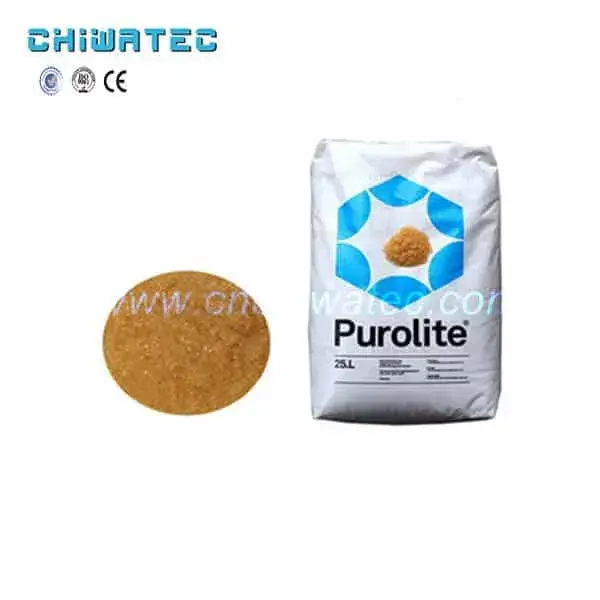
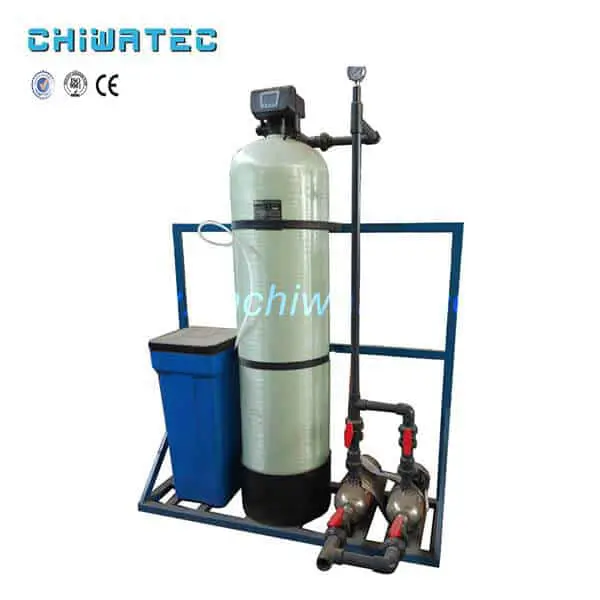
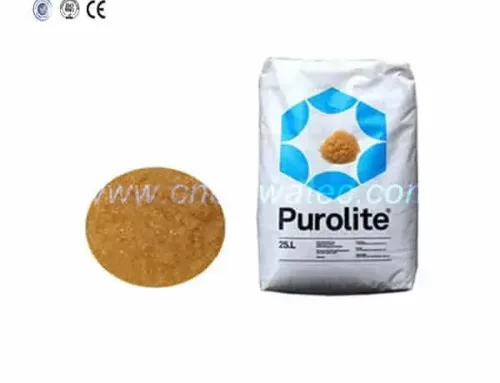
A water softener uses a special food-grade resin made of tiny, smooth beads that remove hard minerals from water through a process called ion exchange.
As hard water flows through the resin bed, calcium (Ca²⁺) and magnesium (Mg²⁺) ions — the main causes of water hardness — are replaced with sodium (Na⁺) ions. The result is soft water with very low hardness levels.
Over time, the resin becomes saturated with calcium and magnesium ions and must be regenerated. During regeneration, a salt (brine) solution flushes through the resin, replacing the trapped hardness ions with sodium ions and restoring the resin’s softening capacity.
Before regeneration, the system performs a backwash to clean the resin bed. Backwashing loosens the resin, removes trapped particles, and ensures efficient operation.
Modern water softeners feature automatic control systems that handle the entire process — including softening, backwashing, brine absorption, rinsing, and refilling — without manual intervention.
7. Domestic Water Softener Applications
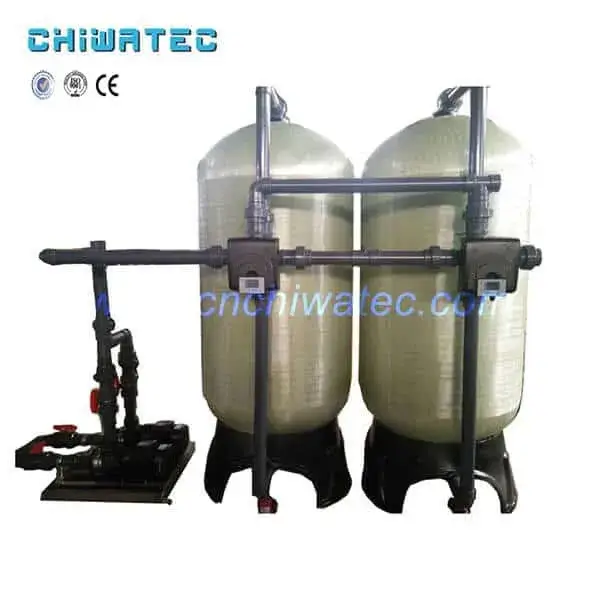
Residential water softeners utilize food-grade synthetic resin beads. When hard water passes through the resin, calcium and magnesium ions are replaced with sodium ions, producing soft, low-hardness water ideal for:
- Bathing and showering — smoother skin and healthier hair.
- Laundry — reduced detergent use and longer fabric life.
- Kitchen and appliances — no scaling or residue.
- Plumbing systems — extended service life and reduced energy costs.
High-efficiency softeners also help minimize environmental pollution by reducing detergent waste and lowering water heater energy consumption.
Conclusion
Water softener technology is a critical innovation in modern water treatment systems. By using ion exchange resin, these systems effectively eliminate calcium and magnesium ions that cause scaling and hardness. Whether in households, industrial plants, or commercial facilities, softeners play an essential role in ensuring water quality, equipment longevity, and human health protection.
Investing in a high-quality water softening system improves efficiency, reduces maintenance costs, and provides a sustainable solution for managing hard water.
FAQ
Q1: What is the main principle behind water softening?
Water softening is based on ion exchange, where hardness ions (Ca²⁺ and Mg²⁺) are replaced by sodium (Na⁺) or hydrogen (H⁺) ions in the resin, producing soft water.
Q2: How often should a water softener regenerate?
Typically, household water softeners regenerate every 7–14 days, depending on water hardness and usage volume.
Q3: Is softened water safe to drink?
Yes. The sodium content added during softening is minimal and safe for most people. However, individuals on low-sodium diets may prefer partial-softening systems or reverse osmosis drinking water units.
Q4: What type of salt should I use for regeneration?
Use high-purity sodium chloride (NaCl) — commonly called water softener salt pellets — to ensure effective regeneration and minimize system fouling.
Q5: How does water softening help save energy?
Softened water prevents scale buildup on heating elements, improving heat transfer efficiency and reducing energy consumption by up to 15% in water heaters and boilers.
Xi’an CHIWATEC Water Treatment Technology is a high-tech enterprise specialized in various water processing devices. Aside from these individual products, which cover a number of types and series, we can also help with related comprehensive engineering projects. Thanks to our hard work and dedication upon our founding, we are now one of the fastest-developing water treatment equipment manufacturers in Western China.
Further reading:
FOLLOW US
Do you have a water treatment project we can help with
* Designing,machining,installing,commissioning, customize and one-stop service
 English
  Spanish
  Portuguese