Activated Carbon Filter: Complete Guide to Use, Working Principles, and Applications 2026
Understanding how to use an activated carbon filter effectively is critical for any water treatment system. This comprehensive guide explores the working principles, adsorption mechanisms, proper operation, maintenance procedures, and diverse applications of activated carbon filters in water purification. Whether you are protecting reverse osmosis membranes, removing chlorine and organic contaminants from drinking water, or treating industrial process water, mastering the activated carbon filter is essential for system performance and longevity.
*Last Updated: May 2026 | Verified Technical Data
Why This Guide Matters
The global activated carbon market was valued at approximately USD 5.4 billion in 2024 and is projected to reach USD 9.8 billion by 2034, growing at a CAGR of 6.1%. Water treatment applications account for over 35% of total activated carbon consumption, driven by increasingly stringent drinking water regulations, growing demand for chlorine-free process water in food and beverage manufacturing, and the critical role of activated carbon in protecting downstream RO membrane systems from chlorine damage and organic fouling. Proper selection, operation, and maintenance of activated carbon filters directly impacts water quality, equipment lifespan, and operating costs across virtually every water treatment system.
Key Industry Trends (2026 Update)
- Shift toward reactivated carbon — Thermal reactivation of spent granular activated carbon reduces carbon footprint by 30-40% compared to virgin carbon production and lowers material costs by 20-30% for large industrial users.
- Specialty impregnated carbons expanding — Silver-impregnated, catalytic, and acid-washed activated carbons are gaining market share for specific applications such as bacteriostatic control, chloramine removal, and heavy metal adsorption.
- NSF/ANSI 61 and 53 certification becoming mandatory — Drinking water applications increasingly require certified activated carbon products meeting NSF/ANSI 61 (extraction safety) and NSF/ANSI 53 (contaminant reduction) standards, particularly in municipal and commercial installations.
- IoT-enabled filter monitoring — Smart sensors that track cumulative flow, pressure differential, and effluent chlorine breakthrough enable predictive carbon replacement scheduling, reducing premature change-outs by 25-35%.
1. What Is an Activated Carbon Filter and How Does It Work?
Working Principle of Activated Carbon Filtration
An activated carbon filter removes contaminants from water through two primary mechanisms: physical adsorption and, to a lesser extent, chemical reduction. Activated carbon is processed from carbonaceous source materials — typically coconut shells, coal, or wood — through thermal or chemical activation that creates an extensive internal pore structure. One gram of activated carbon particles possesses a specific surface area of approximately 1,000 square meters (10,760 square feet), equivalent to the area of two basketball courts. This enormous surface area provides countless binding sites where contaminants adhere through van der Waals forces, a process known as physical adsorption.
Physical and Chemical Adsorption Mechanisms
The micropores (pore diameter below 2 nanometers), mesopores (2-50 nanometers), and macropores (above 50 nanometers) in activated carbon create a hierarchical pore structure that captures contaminants of varying molecular sizes. Physical adsorption dominates for non-polar organic molecules, including chlorine, chloramines, volatile organic compounds (VOCs), pesticides, and taste and odor compounds. Additionally, the carbon surface contains functional groups such as hydroxyl (-OH), carboxyl (-COOH), and carbonyl (C=O) groups that enable chemical adsorption of specific organic compounds through hydrogen bonding and electron donor-acceptor interactions. For a deeper understanding of activated carbon media, refer to our guide on the definition and physical properties of activated carbon.
2. What Contaminants Does an Activated Carbon Filter Remove?
Chlorine and Chloramine Removal
Free chlorine (HOCl and OCl-) is rapidly and efficiently removed by catalytic reduction on the carbon surface, converting it to harmless chloride ions through the reaction: C + 2Cl2 + 2H2O → 4HCl + CO2. This dechlorination capacity is typically 0.9-1.0 grams of chlorine per gram of activated carbon under standard conditions. Chloramine (NH2Cl) removal is slower and requires longer empty bed contact time (EBCT) — typically 6-10 minutes versus 2-4 minutes for free chlorine. This dechlorination function is the single most critical application of activated carbon filters in RO pretreatment systems, as polyamide RO membranes are rapidly and permanently damaged by free chlorine concentrations as low as 0.1 ppm. For a comprehensive discussion of water treatment filtration, see our article on practical applications of activated carbon in water treatment.
Organic Compound and TOC Reduction
Granular activated carbon effectively removes natural organic matter (NOM), humic and fulvic acids, synthetic organic chemicals (SOCs), and total organic carbon (TOC) from water. Typical removal rates include 63-86% of colloidal organic substances, approximately 50% of iron, and 47-60% of total organic compounds. The removal efficiency depends on the empty bed contact time (EBCT), carbon type (coconut shell, bituminous, or lignite), and the molecular weight distribution of the organic compounds present. Coconut shell-based carbons with high micropore volume are particularly effective for low-molecular-weight organic compounds.
Taste, Odor, and Color Removal
Activated carbon filters excel at removing compounds that cause unpleasant taste, odor, and color in drinking water, including geosmin (earthy odor), 2-methylisoborneol (MIB, musty odor), and various industrial and agricultural chemicals. Chlorine and chloramine reduction also directly improves taste by eliminating the characteristic swimming-pool odor of chlorinated tap water. Color-causing organic compounds, particularly humic substances that give water a yellow or brown tint, are adsorbed with 60-90% efficiency depending on contact time and carbon dose.
3. What Are the Different Types of Activated Carbon Filters?
Granular Activated Carbon (GAC) Filters
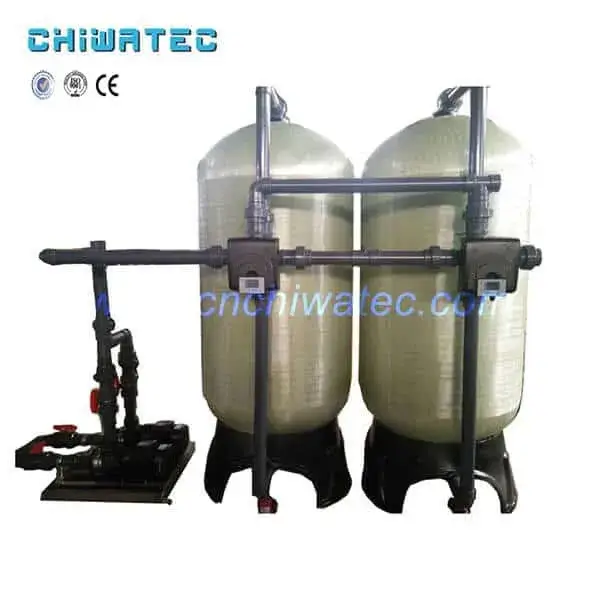
Granular activated carbon (GAC) filters consist of irregularly shaped carbon particles ranging from 0.2 to 5 millimeters in diameter, packed in a pressure vessel or gravity-fed contactor. GAC filters are the most common configuration for industrial and municipal water treatment, offering long service life (12-24 months between media replacement) and the ability to be thermally reactivated. They are available in fixed-bed, expanded-bed, and moving-bed configurations. The standard GAC filter vessel in RO pretreatment systems features a gravel underbed support layer, top and bottom distribution systems for even water distribution during service and backwash cycles, and a backwash outlet for media cleaning.
Powdered Activated Carbon (PAC) Systems
Powdered activated carbon (PAC) consists of particles smaller than 0.075 millimeters (75 microns) that are dosed as a slurry directly into the water stream and later removed by downstream clarification or filtration. PAC is typically used for seasonal taste and odor events or emergency contaminant removal rather than continuous operation, because the spent carbon cannot be reactivated and is disposed of with treatment plant sludge. For applications comparing different carbon types, see our article on the difference between activated carbon filter and activated sand filter.
Activated Carbon Block (CBC) Filters
Carbon block filters are formed by compressing powdered or fine-mesh activated carbon with a polymeric binder into a solid cylindrical block. They combine adsorption and mechanical filtration in a single stage, effectively removing both dissolved contaminants and particulate matter down to 0.5-5 microns. Carbon block filters are widely used in point-of-use (POU) drinking water systems, under-sink filters, and countertop units where space is limited and consistent effluent quality is required.
4. What Are the Key Performance Parameters of Activated Carbon Filters?
Empty Bed Contact Time (EBCT)
Empty bed contact time — the volume of the carbon bed divided by the flow rate — is the single most important design parameter for activated carbon filter performance. Recommended EBCT values by application: chlorine removal 2-4 minutes, chloramine removal 6-10 minutes, TOC and organic reduction 10-20 minutes, taste and odor control 5-15 minutes, and VOC removal 15-30 minutes. Insufficient EBCT results in contaminant breakthrough before the carbon is fully exhausted, requiring premature media replacement.
Linear Velocity and Pressure Drop
Hydraulic loading rate (linear velocity) for GAC filters typically ranges from 8-15 meters per hour (5-10 GPM per square foot) during service flow. Higher velocities increase mass transfer but also increase pressure drop and may cause fluidization of the bed. Clean bed pressure drop for GAC media is typically 0.1-0.3 psi per foot of bed depth at 10 m/h. As the bed accumulates particulate matter, pressure drop increases, signaling the need for backwashing when it doubles from baseline values. For specifications on activated carbon quality specifications, refer to our detailed reference guide.
Iodine Number and Methylene Blue Index
Carbon quality is characterized by two key indices: Iodine number (mg/g) measures the carbon’s micropore content and correlates with capacity for low-molecular-weight compounds (drinking water carbons typically have iodine numbers of 900-1,100 mg/g). Methylene blue index measures mesopore content relevant for medium-molecular-weight organic compound removal. Coconut shell carbons typically have higher iodine numbers but lower methylene blue indices compared to coal-based carbons, making them preferable for small-molecule removal like chlorine and VOCs.
5. How to Operate and Maintain an Activated Carbon Filter?
Backwashing Procedure
Although activated carbon filters primarily remove contaminants through adsorption, particulate matter inevitably accumulates in the media bed during operation. Regular backwashing is essential to remove trapped particles, redistribute the media, and prevent channeling — the formation of preferential flow paths that reduce contact efficiency. The standard backwash procedure: first, backwash at 15-25 m/h (10-15 GPM per square foot) for 10-15 minutes or until effluent runs clear, expanding the bed by 30-50%. Second, allow the bed to settle for 1-2 minutes. Third, forward rinse (service flow direction) for 5-10 minutes to reclassify the bed and stabilize the filter layer. Backwashing is typically performed weekly or when pressure drop indicates fouling. For proper maintenance procedures, consult our guide on the role of granular activated carbon in water purifiers.
Media Replacement Schedule
Activated carbon media has a finite service life determined by adsorption capacity exhaustion. Replacement frequency depends on: (1) influent chlorine and organic loading — typical municipal water systems require replacement every 12-24 months; (2) operating flow rate and EBCT — shorter contact times exhaust carbon faster; (3) water temperature — higher temperatures increase adsorption kinetics but may reduce equilibrium capacity; and (4) biological activity — warm, nutrient-rich water can promote bacterial growth on carbon surfaces, requiring more frequent replacement even if adsorption capacity is not exhausted. Monitoring effluent chlorine concentration is the most reliable indicator for replacement — once chlorine breakthrough exceeds 0.1 ppm, the carbon bed is exhausted.
6. How to Select the Right Activated Carbon for Your Application?
Media Selection Criteria
Choosing the correct activated carbon type is essential for optimal performance. Coconut shell carbon offers the highest hardness (typically 98-99% hardness number), best abrasion resistance, and highest micropore volume — ideal for chlorine removal, VOC adsorption, and applications requiring low dust generation. Bituminous coal carbon provides higher mesopore and macropore volumes, better performance for larger organic molecules, and lower cost per pound — suitable for TOC removal and taste and odor control in large municipal applications. Lignite carbon is the most economical option with high mesopore content but lower hardness and higher ash content — used primarily for decolorization and bulk organic removal where carbon loss from attrition is acceptable. For a comparison of different carbon media, see our article on activated carbon product functions and selection criteria.
Vessel and System Sizing
Proper vessel sizing requires calculating: (1) required carbon volume based on EBCT and flow rate; (2) vessel diameter based on linear velocity limits (8-15 m/h); (3) bed depth — typically 0.8-2.0 meters — determined by vessel diameter and carbon volume; (4) freeboard — the space above the media bed for bed expansion during backwashing — typically 40-60% of bed depth; and (5) underbed gravel support layers graded from 2-3 mm at the top to 12-25 mm at the bottom, with a total depth of 300-450 mm. These engineering design parameters ensure consistent effluent quality, adequate hydraulic capacity, and effective backwashing.
7. What Is the Role of Activated Carbon Filters in RO Pretreatment?
Chlorine Protection for RO Membranes
The primary function of an activated carbon filter in reverse osmosis pretreatment is chlorine and chloramine removal. Thin-film composite (TFC) polyamide RO membranes are extremely sensitive to oxidizing agents — free chlorine concentrations as low as 0.1 ppm cause irreversible oxidation of the polyamide active layer, resulting in increased salt passage and reduced rejection within hours of exposure. The activated carbon filter serves as the final barrier ensuring chlorine-free feed water to the RO membranes. In systems with high chloramine levels, a combination of activated carbon (for initial reduction) and sodium bisulfite (SBS) injection (for polishing residual) may be recommended.
Organic Fouling Prevention
Natural organic matter (NOM) in feed water causes organic fouling of RO membranes, characterized by irreversible flux decline, increased cleaning frequency, and shortened membrane life. The activated carbon filter removes 47-60% of organic compounds, significantly reducing the organic fouling potential of the RO feed water. This is particularly important for surface water sources with high TOC levels (above 2-3 mg/L), where organic fouling can reduce membrane life from 5 years to 2-3 years without adequate pretreatment. Xi’an CHIWATEC integrates properly sized activated carbon filters into all RO pretreatment systems to ensure optimal membrane protection and long service life.
8. What Are the Applications of Activated Carbon Filters Across Industries?
Municipal Drinking Water Treatment
Activated carbon filters are widely used in municipal water treatment plants for taste and odor control, organic contaminant removal, and advanced drinking water treatment. They are particularly effective for seasonal taste and odor events caused by algal blooms (geosmin and MIB), pesticide and herbicide removal during spring runoff, and emerging contaminant reduction including PFAS (per- and polyfluoroalkyl substances), for which activated carbon adsorption is one of the few proven treatment technologies.
Food and Beverage Industry
The food and beverage sector uses activated carbon filters to produce chlorine-free, organic-free process water for ingredient water, product washing, equipment cleaning, and beverage formulation. Specific applications include: brewery and distillery process water for consistent fermentation and flavor profiles, soft drink bottling water meeting stringent taste and appearance standards, food canning and processing water free of chlorine off-flavors, and dairy industry process water for cleaning and product contact surfaces.
Pharmaceutical and Laboratory Applications
In pharmaceutical water systems, activated carbon filters remove chlorine and organic compounds from feed water before RO-EDI purification trains, protecting downstream RO membranes and ensuring consistent USP Purified Water quality. Laboratory pure water systems use high-quality coconut shell GAC filters for organic contaminant reduction, protecting sensitive analytical instrumentation including HPLC, ICP-MS, and GC-MS from organic interference. For specialized applications, CHIWATEC offers silver-impregnated activated carbon for applications requiring bacteriostatic control within the carbon bed, as described in our article on silver-loaded nutshell activated carbon mechanisms.
9. What Are the Common Activated Carbon Filter Problems and Solutions?
Premature Chlorine Breakthrough
If chlorine is detected in the filter effluent before the expected service life, possible causes include: insufficient EBCT due to flow rate exceeding design, channeling in the carbon bed caused by inadequate backwashing or media loss, or carbon exhaustion from higher-than-expected influent chlorine concentration. Solutions include verifying flow rate against design specifications, performing a thorough backwash, or if the carbon is truly exhausted, replacing the media and investigating whether the chlorine dose has increased upstream. For regular maintenance, also consider the proper use and management of coconut shell activated carbon.
Bacterial Growth in Carbon Beds
Activated carbon beds can support bacterial growth because the carbon surface provides an ideal attachment medium and removes chlorine — the primary disinfectant that normally controls bacterial populations in municipal water. Warm water temperatures (above 25 degrees C), high organic loading, and long filter run times between backwashes exacerbate this issue. Mitigation strategies include: more frequent backwashing (weekly minimum), periodic hot water sanitization, UV sterilization downstream of the carbon filter, or replacing carbon more frequently in warm-climate installations.
Excessive Pressure Drop
High pressure drop across the activated carbon filter indicates particulate loading, biological fouling, or carbon fines generation. Solutions include: backwashing more frequently or at higher flow rates, installing a sediment filter upstream of the carbon vessel, or replacing carbon media that has degraded from attrition (typically after 3-5 years of service). For persistently high pressure drop, consider switching to a harder carbon grade (coconut shell carbon has the highest hardness rating).
10. How to Design an Effective Activated Carbon Filtration System?
System Configuration Options
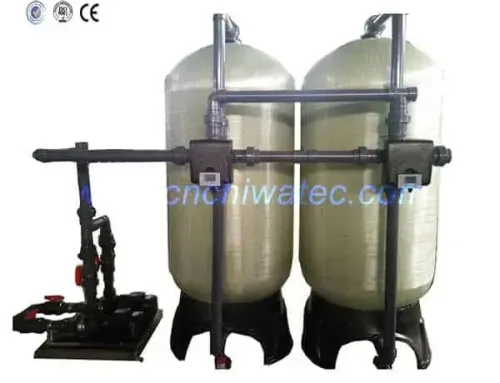
Activated carbon filtration systems can be configured in several arrangements depending on application requirements: single vessel for batch or intermittent operation, dual vessel series (lead-lag configuration) for continuous operation with effluent polishing — the lead vessel operates until exhaustion, then the lag vessel takes over while the lead is replaced, dual vessel parallel for high-flow applications where each vessel operates at half the total flow rate, and multiple vessel manifold for large municipal or industrial installations with automated valving and PLC-based control. Lead-lag configuration is recommended for critical applications where chlorine breakthrough cannot be tolerated.
Media Volume and Bed Depth Design
Standard design parameters for GAC filters include: minimum bed depth of 0.8 meters (2.6 feet) for adequate mass transfer, recommended bed depth of 1.2-2.0 meters (4-6.5 feet) for optimal performance, carbon volume calculated as EBCT multiplied by design flow rate (e.g., 4 minutes EBCT at 100 m3/h requires 6.67 m3 of carbon), vessel diameter selected to maintain linear velocity below 15 m/h at design flow, and freeboard of 50% of bed depth for backwashing expansion. Xi’an CHIWATEC provides custom-designed activated carbon filtration systems with proper media selection, vessel sizing, and control integration for any water treatment application.
Conclusion
The activated carbon filter is a versatile and essential component in virtually every water treatment system, providing reliable chlorine removal, organic contaminant reduction, taste and odor improvement, and critical protection for downstream RO membranes. Understanding the working principles — physical and chemical adsorption — along with proper media selection, design parameters, operation procedures, and maintenance schedules is essential for maximizing filter performance and service life. Whether used in RO pretreatment, municipal drinking water treatment, food and beverage processing, pharmaceutical water systems, or point-of-use drinking water filtration, the properly designed and maintained activated carbon filter delivers consistent, high-quality water. For expert assistance in selecting, sizing, or integrating an activated carbon filter into your water treatment system, contact Xi’an CHIWATEC today at [email protected] or [email protected], or reach us via WhatsApp.
Frequently Asked Questions
Q1: How often should activated carbon filter media be replaced?
For municipal drinking water and RO pretreatment applications with typical chlorine levels of 0.5-2.0 mg/L, activated carbon media should be replaced every 12-24 months, or when effluent chlorine breakthrough exceeds 0.1 mg/L. For applications with high organic loading or aggressive chloramine levels, replacement may be needed every 6-12 months. Testing effluent chlorine concentration monthly is the most reliable way to determine replacement timing. The media can be thermally reactivated (for GAC types) at approximately 30-50% of the cost of virgin carbon replacement.
Q2: Can activated carbon filters remove bacteria and viruses?
Activated carbon filters are not designed for microbiological removal. While they can physically trap some larger microorganisms through sieving in carbon block filters (down to 0.5 microns), they do not reliably remove bacteria or viruses and can actually support bacterial growth on the carbon surface under warm, nutrient-rich conditions. For microbiological control, a separate disinfection stage (UV sterilization, chlorination, or ozonation) should be installed downstream of the activated carbon filter.
Q3: What is the difference between GAC and carbon block filters?
Granular activated carbon (GAC) filters consist of loose carbon particles in a pressure vessel, offering lower pressure drop, longer service life, and thermal reactivation capability — ideal for whole-house and industrial applications. Carbon block filters consist of compressed carbon particles with a polymeric binder, providing combined adsorption and particulate filtration down to 0.5-5 microns — ideal for point-of-use applications where space is limited and consistent effluent quality is required. Carbon blocks have higher pressure drop and shorter service life but may provide better overall contaminant reduction for drinking water.
Q4: What is the ideal flow rate for an activated carbon filter?
The ideal flow rate depends on the vessel diameter and target empty bed contact time. For chlorine removal (2-4 minute EBCT), a standard 10-inch diameter vessel with 0.8 meters of media depth should operate at 4-8 L/min. For larger industrial vessels, the linear velocity should be maintained between 8-15 m/h. Operating above 15 m/h reduces contact time and may cause channeling, while operating below 5 m/h may cause diffusion-limited mass transfer in the boundary layer around carbon particles.
Q5: Can activated carbon remove heavy metals from water?
Standard activated carbon has limited capacity for heavy metal removal (typically below 50% for most metals). However, specially treated or impregnated activated carbons can achieve effective heavy metal removal: acid-washed carbons for mercury removal (up to 90%), sulfur-impregnated carbons for lead and cadmium, and chitosan-impregnated carbons for arsenic. For general heavy metal removal, a combination of activated carbon and ion exchange resin is typically recommended for comprehensive treatment.
Related Resources and Further Reading
Do you have a water treatment project we can help with
* Designing,machining,installing,commissioning, customize and one-stop service
 English
  Spanish
  Portuguese