Reverse Osmosis Membrane Cleaning Machine Technology: A Complete Guide 2026
Reverse osmosis (RO) membrane cleaning machine technology is essential for restoring membrane performance, extending element life, and maintaining consistent water quality in RO systems. Over time, RO membranes accumulate scale, organic foulants, colloidal deposits, and microorganisms that reduce permeate flow, increase salt passage, and raise differential pressure — all indicators that chemical cleaning is required. Understanding the proper membrane cleaning machine technology — including run data normalization, cleaning agent selection (YS-1 for scale, YS-2 for organics), pH and temperature control, and cleaning trigger conditions — enables operators to restore membrane performance to near-original levels while avoiding irreversible damage. CHIWATEC provides advanced RO membrane cleaning systems and technical support for industrial, commercial, and municipal water treatment applications.
Understanding RO Membrane Cleaning Machine Technology
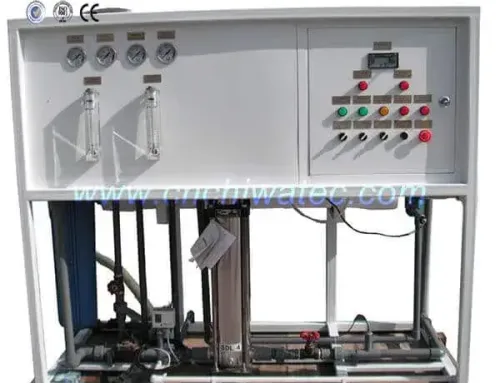
RO membrane cleaning machine technology refers to the systematic process of restoring membrane performance through chemical cleaning. Unlike physical cleaning methods (such as electric pulse cleaning covered in dedicated articles on physical cleaning methods), chemical cleaning uses specially formulated cleaning agents circulated through the membrane elements at controlled pH, temperature, and flow rates to dissolve and remove accumulated foulants. Modern cleaning machines integrate temperature-controlled tanks, multi-stage filtration, chemical dosing pumps, and automated control systems to deliver consistent, repeatable cleaning results across all membrane elements in an array. The effectiveness of any membrane cleaning machine technology depends on three critical factors: proper pre-cleaning data analysis, correct cleaning agent selection matched to the foulant type, and strict adherence to pH and temperature limits during the cleaning cycle.
Run Data Normalization: Establishing a Baseline for Membrane Performance
Before any cleaning procedure, establishing accurate baseline data through run data normalization is essential. When the RO system is first started after commissioning, the permeate flow rate, salt permeability, and pressure drop (inlet water pressure minus concentrate pressure) should be recorded for each membrane element or stage. These records form the baseline for detecting performance decline and determining appropriate cleaning times.
Salt permeability is calculated using total dissolved solids (TDS) or conductivity measurements:
| Parameter | Calculation |
| Average TDS | (TDS influent + TDS concentrate) ÷ 2 |
| Salt permeability (%) | TDS product water x 100 ÷ TDS average |
When comparing current permeate flow with the initial baseline, operating data must be normalized to account for temperature effects — permeate flow changes by 3-5% per 1 degree C. Temperature correction factors (TCF) allow operators to compare performance under different conditions accurately. Industry best practice recommends weekly data normalization for critical RO systems, with automated data logging reducing human error by 40-60% compared to manual recording.
Choosing the Right Cleaning Agent for RO Membrane Contaminants
Selecting the correct cleaning agent is the most important decision in RO membrane cleaning machine technology. Different foulants require different chemical approaches:
| Contaminant Type | Preferred Cleaning Agent | Application |
| Inorganic colloidal contaminants | YS-2 (weak wash), YS-1 (strong wash) | Removes silica, iron, manganese colloids |
| Calcium carbonate, calcium sulfate, barium sulfate, strontium sulfate scale | YS-1 (weak wash), YS-2 (strong wash) | Dissolves hard mineral scale deposits |
| Microorganisms, Natural Organic Matter (NOM) | YS-2 (weak wash), YS-1 (strong wash) | Removes biofilm and organic fouling layers |
YS-1 cleaning agent is primarily formulated for scale removal, effective against carbonate and sulfate scales that form on the membrane surface at the concentrate side. YS-2 cleaning agent targets microorganisms and organic pollutants, breaking down biofilm structures and adsorbed natural organic matter. The standard cleaning sequence begins with YS-1 followed by YS-2. However, when the primary foulant is organic or biological, YS-2 should be applied first, followed by YS-1, with a final YS-2 rinse to ensure complete removal.
YS-1 and YS-2 Cleaning Agents: Application and Preparation
Cleaning solutions are prepared by adding a specific weight or volume of chemical agent to clean water — either RO product water or deionized water free of free chlorine and hardness. The standard preparation uses 25 gallons (100 liters) of clean water as the solvent base. Before the cleaning solution enters the membrane element, it must be thoroughly mixed with pH and temperature adjusted to target values. The conventional cleaning cycle consists of 1 hour of circulation followed by 1 hour of soaking, repeated as needed based on fouling severity.
| Agent | Form | Dosage per 100L | pH Range | Max Temperature |
| YS-1 | Powder (100%) | 100L batch | 2-3 | 40 degrees C |
| YS-2 | Granular (100%) | 100L batch | 9-11 | 40 degrees C |
During the cleaning process, contaminants consume the cleaning chemicals, causing the pH to drift. Operators must monitor pH continuously and adjust when it deviates from the setpoint by more than 0.5. pH drift of more than 0.5 indicates that the cleaning solution has been partially exhausted and additional chemical is needed to maintain effectiveness. Automated pH control systems can maintain optimal conditions throughout the cleaning cycle, reducing chemical consumption by 15-25% compared to manual adjustment.
pH and Temperature Limits for RO Membrane Chemical Cleaning
RO membrane cleaning requires strict adherence to pH and temperature limits to prevent membrane damage. The maximum allowable temperature depends on the cleaning solution pH:
| Membrane Type | Cleaning Solution pH | Max 45 degrees C | Max 35 degrees C (T above 30) | Below 30 degrees C |
| 4040 | 2-10 | 2-11.5 | 2-12.0 | |
| 8040 | 2-10 | 2-11.5 | 2-12.0 |
The minimum cleaning temperature is 21 degrees C. Lower temperatures reduce chemical reaction rates and cleaning effectiveness significantly — at 15 degrees C, cleaning efficiency can drop by 30-50% compared to 25 degrees C. Conversely, exceeding the maximum temperature at a given pH range can permanently damage the membrane polymer structure, voiding the manufacturer’s warranty. Modern cleaning machines incorporate temperature-controlled heating elements and real-time pH monitoring to maintain optimal conditions throughout the cleaning cycle, ensuring consistent results across all membrane elements.
When to Clean: Key Trigger Conditions for RO Membrane Cleaning
Timely cleaning is critical for effective membrane cleaning machine technology. Delaying cleaning allows foulants to compact and harden, making removal increasingly difficult and potentially causing irreversible membrane damage. The membrane element should be cleaned immediately when any of the following conditions are met:
- Permeate flow drop of 5-15% — After the initial flow rate stabilizes, a sustained decrease in permeate production indicates fouling buildup, provided the feed water SDI is below 5.0
- Salt permeability increase of 30-40% — For example, if salt passage rises from 5% initial to 7%, this represents a 40% increase that warrants cleaning. Note: sudden changes may also indicate mechanical issues such as defective O-rings or seal failures causing concentrate bypass
- Standardized differential pressure rise of 25% — Increased pressure drop across the membrane element indicates blocked feed channels from particulate or biological fouling
RO system operators should normalize all performance data to standard conditions (25 degrees C, standard feed pressure) before comparing against trigger thresholds. Recent industry data shows that proactive cleaning at the first trigger (10% flow decline) rather than waiting for the second trigger (30% salt passage increase) reduces total cleaning frequency by 20-30% over the membrane lifetime and extends element life by 12-18 months.
Precautions Before RO Membrane Cleaning
Proper preparation ensures safe and effective RO membrane cleaning. The following precautions must be observed before starting any cleaning procedure:
- Review safety documentation — Obtain and read the chemical safety data sheet (SDS) and product instructions for all cleaning agents before handling
- Personal protective equipment — Wear safety glasses, chemical-resistant gloves, and protective clothing at all times during chemical handling and cleaning operations
- Calibrate the pH meter — Verify pH meter calibration using standard buffer solutions before measuring cleaning solution pH
- Estimate cleaning solution volume — Calculate the total volume required based on the number of membrane elements, vessel dimensions, and piping volume to ensure sufficient prepared solution
- Complete chemical dissolution — Ensure all cleaning chemicals are fully dissolved and mixed before the solution enters the membrane system — undissolved particles can scratch membrane surfaces
- Verify temperature and pH — Confirm that both temperature and pH of the cleaning solution meet the specified ranges for the membrane type being cleaned
Following these safety and preparation steps reduces the risk of chemical injury, membrane damage, and incomplete cleaning — ensuring that the membrane cleaning machine technology delivers the expected performance recovery.
Frequently Asked Questions
What is the difference between YS-1 and YS-2 cleaning agents?
YS-1 is formulated for removing inorganic scale deposits including calcium carbonate, calcium sulfate, barium sulfate, and strontium sulfate. It operates in an acidic pH range of 2-3. YS-2 is designed for organic and biological foulants including microorganisms and natural organic matter (NOM), operating in an alkaline pH range of 9-11. The standard cleaning sequence is YS-1 first followed by YS-2, though this order is reversed when organic fouling predominates.
How often should RO membranes be chemically cleaned?
There is no fixed cleaning schedule — cleaning frequency depends entirely on feed water quality and system operating conditions. Typical industrial RO systems require cleaning every 3-12 months. The correct approach is to clean based on trigger conditions: when permeate flow drops by 5-15%, salt passage increases by 30-40%, or differential pressure rises by 25% compared to baseline normalized data.
Can cleaning damage RO membranes?
Yes, improper cleaning can cause irreversible membrane damage. Common causes include: exceeding maximum temperature limits at a given pH, using incompatible chemicals, exposing membranes to pH extremes outside the allowable range, and mechanical damage from undissolved chemical particles. Always follow the membrane manufacturer’s cleaning guidelines and use properly formulated cleaning agents to avoid damage.
Why is data normalization important before cleaning?
Data normalization adjusts performance measurements to standard conditions (typically 25 degrees C feed temperature and standard pressure), removing the influence of temperature and pressure variations. Without normalization, a 10% flow decline caused by colder feed water could be mistaken for fouling, leading to unnecessary cleaning. Normalized data provides an apples-to-apples comparison that accurately reflects membrane fouling status.
What water quality should be used for cleaning solution preparation?
Cleaning solutions should be prepared using RO product water or deionized water that is free of free chlorine and hardness. Using feed water containing chlorine can oxidize the membrane during cleaning, while hard water can introduce additional scaling ions that interfere with the cleaning chemistry.
Conclusion and Call to Action
Effective membrane cleaning machine technology is a critical capability for any RO system operator. From establishing accurate baseline data through run normalization to selecting the correct cleaning agent (YS-1 for scale, YS-2 for organics), controlling pH and temperature within manufacturer limits, and cleaning promptly when trigger conditions are met — each step in the process contributes to successful membrane restoration. Proper cleaning can restore permeate flow to 95-100% of initial levels and extend membrane life by 2-3 years, delivering significant cost savings over membrane replacement.
Xi’an CHIWATEC Water Treatment Technology is a high-tech enterprise specialized in designing and manufacturing complete water treatment systems, including RO membrane cleaning systems with automated temperature control, chemical dosing, and pH monitoring. Our engineering team provides one-stop service from system design through installation, commissioning, and ongoing technical support. For expert guidance on your RO membrane cleaning requirements, contact us at [email protected] or [email protected].
Do you have a water treatment project we can help with
* Designing,machining,installing,commissioning, customize and one-stop service
 English
  Spanish
  Portuguese