RO Pure Water System Operation Precautions: Essential Safety Tips for Reverse Osmosis Equipment 2026
Following proper reverse osmosis operation precautions is critical for protecting equipment, ensuring operator safety, and maintaining consistent water quality. This guide covers the most important safety measures and operational guidelines for RO pure water systems — from first-time startup procedures and valve adjustment protocols to alarm response and routine monitoring. CHIWATEC provides industrial RO systems with comprehensive safety documentation and technical support.
Reverse Osmosis Operation Precautions Overview
Safe and reliable reverse osmosis operation precautions cover four key areas: first-time system commissioning, regulating valve adjustment, operational monitoring, and alarm response. Each precaution addresses specific risks that can damage membrane elements, reduce water quality, or create safety hazards. The table below summarizes the essential precautions covered in this guide:
| Category | Key Precaution | Risk If Ignored |
|---|---|---|
| First-time use | Discharge product water for 1+ hour before collection | Preservative chemicals and initial rinse water contaminate product |
| Valve adjustment | Coordinate pump outlet valve and concentrate valve | Incorrect pressure or recovery rate damages membranes |
| Monitoring | Check flow and pressure of primary/secondary streams | Undetected fouling or scaling reduces performance |
| Alarm response | Address low/high pressure alarms and overload protection | System damage or unsafe operating conditions |
Understanding these reverse osmosis operation precautions helps operators maintain safe, efficient, and long-lasting RO system performance.
Precaution 1: First-Time Operation — Initial Product Water Discharge
When an RO pure water system is commissioned for the first time, a critical safety step must be followed:
- Discharge period: The pure water produced during the first hour of operation must be sent to drain, NOT collected for use
- Reason: The initial product water contains membrane preservative solutions, residual manufacturing chemicals, and rinse water from the membrane elements and piping
- Verification: After 1 hour of continuous operation, measure the product water conductivity. Once it stabilizes below the design specification (typically <10 uS/cm for single-pass RO), the water can be directed to the storage tank
This first-time discharge precaution is one of the most important reverse osmosis operation precautions — ignoring it can introduce harmful chemicals into downstream processes or storage tanks.
Precaution 2: Regulating Valve Adjustment and Coordination
Proper valve adjustment is essential for safe RO system operation. Two valves require careful coordination:
- High-pressure pump outlet regulating valve: Controls the inlet pressure and flow rate to the RO membrane system. This valve should be opened as much as possible to maximize membrane flow while maintaining the correct operating pressure
- Concentrate regulating valve: Controls the system pressure and adjusts the ratio of pure water to concentrate water. This is the primary valve for setting the recovery rate
Critical reverse osmosis operation precautions for valve adjustment:
- The four valves (pump outlet, concentrate, and their respective bypass/shutoff valves) must be adjusted in coordination, with the concentrate regulating valve as the primary control point
- Operating parameters must conform to the system’s design specifications — random changes can result in serious operational safety issues
- Once the system is debugged and operating normally, the valves should not be adjusted unless performance changes indicate a problem
Precaution 3: Operational Monitoring and Automatic Flushing
Continuous monitoring during operation is a key reverse osmosis operation precaution:
- Observe flow and pressure: Monitor the flow rate and pressure of primary and secondary concentrate drainage and product water continuously
- Normal operation: After system debugging and commissioning, the host typically does not require further adjustment during normal operation
- High water level auto-stop: When the pure water tank reaches high level, the RO system automatically stops, and the flushing pump starts automatically for 2 minutes
- Low-pressure membrane flush: The 2-minute flush cycle replaces concentrated water in the membrane pressure vessels with feed water, preventing crystallization and precipitation of colloids, metal oxides, and sparingly soluble salts on the membrane surface
This automatic flushing sequence at shutdown is a built-in reverse osmosis operation precaution that protects membranes from scaling during idle periods.
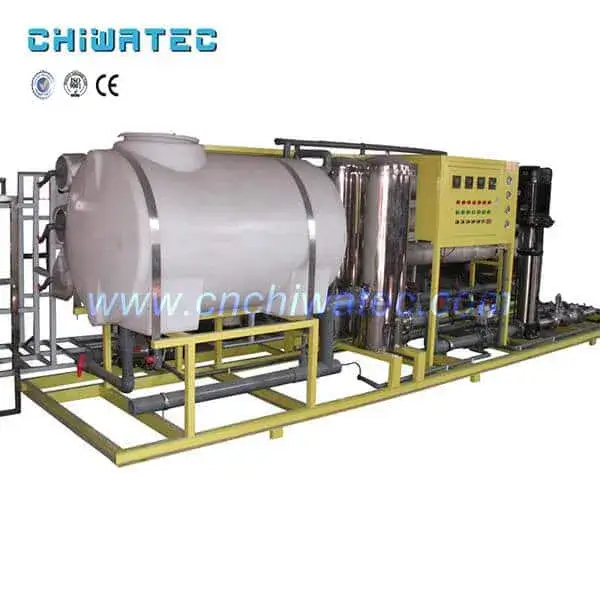
Precaution 4: Alarm Indication and Emergency Response
Modern RO systems include multiple alarm safeguards that protect the equipment and operators:
| Alarm Condition | System Response | Operator Action |
|---|---|---|
| Raw water tank low level | RO host stops, system shuts down | Check feed water supply, restore tank level |
| First-stage RO inlet pressure low | RO host stops, system shuts down | Check pretreatment, pump, and inlet valves |
| First-stage RO inlet pressure high | RO host stops, system shuts down | Check concentrate valve and membrane condition |
| Second-stage RO inlet pressure low/high | RO host stops, system shuts down | Check first-stage operation and interstage pressure |
| Pump overload | No automatic alarm — overload relay trips | Reset overload protection after troubleshooting |
- No alarm for pump overload: Unlike pressure-based alarms, pump overload does not trigger an automatic alarm — the system simply stops. Operators must check the overload relay status when a system stops unexpectedly
- After reset: Investigate and resolve the cause of the overload before restarting. Common causes include closed valves, high feed water viscosity (cold water), or mechanical pump issues
Common Operating Mistakes to Avoid
Based on field experience, these common mistakes violate reverse osmosis operation precautions and lead to system problems:
- Frequent valve adjustment: Changing valve positions during normal operation causes pressure fluctuations that can damage membrane elements. Adjust only when performance parameters drift outside specifications
- Ignoring initial discharge: Collecting first-hour product water without verifying quality introduces preservative chemicals into the storage tank
- Rapid valve opening: Opening valves too quickly causes hydraulic shock to membrane elements — always adjust gradually
- Operating with clogged cartridge filters: High differential pressure across cartridge filters starves the RO pump and can cause cavitation damage
- Skipping daily log sheets: Without recording operating parameters, performance trends cannot be detected early
Avoiding these common errors is a fundamental reverse osmosis operation precaution that extends equipment life and reduces maintenance costs.
Frequently Asked Questions
Q1: What are the most important reverse osmosis operation precautions for new operators?
The most critical reverse osmosis operation precautions are: discharge first-hour product water, coordinate pump outlet and concentrate valves properly, monitor flow and pressure continuously, and respond to alarms promptly by investigating the root cause before restarting.
Q2: Why must product water be discharged for one hour during first-time operation?
New RO membrane elements contain preservative solutions (typically sodium metabisulfite or glycerin) that protect them during storage and shipping. The first hour of operation rinses these preservatives from the system. Collecting this water could introduce chemicals into downstream processes.
Q3: How should the pump outlet and concentrate valves be adjusted together?
The concentrate regulating valve is the primary control point. Open the pump outlet valve as much as possible to maximize membrane flow, then adjust the concentrate valve to achieve the target recovery rate and operating pressure. All four valves must be adjusted in coordination to maintain stable operation.
Q4: What happens during automatic flushing at system shutdown?
When the pure water tank reaches high level, the RO system stops and a flush pump runs for 2 minutes, pushing feed water through the membrane vessels at low pressure. This replaces the highly concentrated water with fresh feed water, preventing salt crystallization and scaling on membrane surfaces during idle time.
Q5: How do I respond to a pump overload trip?
Pump overload does not trigger an automatic alarm — the system simply stops. Check the overload relay in the electrical panel and reset it. Before restarting, investigate the cause: closed valves, high water viscosity (cold weather), or mechanical pump issues. Always follow reverse osmosis operation precautions when investigating alarms.
Conclusion & Call to Action
Following proper reverse osmosis operation precautions protects your equipment investment, ensures operator safety, and maintains consistent water quality. From first-time discharge procedures and valve coordination to monitoring protocols and alarm response, every precaution serves a specific purpose in preventing damage and optimizing performance. For expert support on RO system operation, maintenance, and troubleshooting, contact CHIWATEC today. Email us at [email protected] or [email protected] for technical assistance and equipment services.
Do you have a water treatment project we can help with
* Designing,machining,installing,commissioning, customize and one-stop service

 English
  Spanish
  Portuguese