

Reverse Osmosis Water Treatment Equipment Operation: 2026 Complete Guide to Precautions and Best Practices
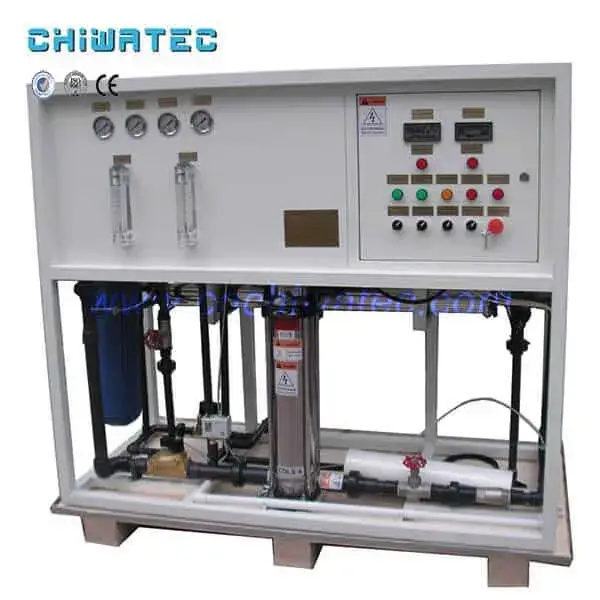
Are you operating reverse osmosis water treatment equipment without knowing the critical precautions that could prevent costly membrane damage? One overlooked parameter — pH, chlorine residual, or feed pressure — can irreversibly destroy RO membranes, leading to thousands of dollars in replacement costs. Here is the direct answer: safe reverse osmosis water treatment equipment operation requires strict control of feed water pH (5-6 for cellulose acetate, 3-11 for composite membranes), continuous monitoring of free chlorine levels, proper flow rates, and immediate low-pressure flushing during shutdowns. CHIWATEC provides engineered RO systems with integrated monitoring and control to simplify operation and maximize membrane lifespan.
Reverse Osmosis Water Treatment Equipment Operation Precautions: 10 Critical Guidelines
The following 10 precautions cover the most common causes of RO system failure and performance degradation. Each guideline addresses a specific operational risk identified through decades of field experience in industrial water treatment applications. For a comprehensive operational framework, see CHIWATEC Provides a Complete Guide to Reverse Osmosis (RO) System Operation and Maintenance.
- Control feed water pH within the membrane-specific range. For cellulose acetate (CA) membranes, the feed water pH must be maintained between 5 and 6 to prevent hydrolysis, which causes irreversible performance deterioration. Composite thin-film (TFC) polyamide membranes tolerate a wider pH range of 3 to 11, but optimal operation is typically maintained between 6 and 8. Continuous pH monitoring with automated dosing is recommended for facilities with variable source water quality.
- Maintain proper chlorine residual for CA membranes while protecting TFC membranes. For CA membranes, insufficient chlorine dosing (below 0.3-0.5 mg/L free chlorine) allows biofilm formation on membrane surfaces, increasing pressure differentials. However, for TFC and polyamide membranes, free chlorine exposure above 0.1 mg/L causes rapid oxidative degradation. If chlorinated feed water is used ahead of TFC membranes, dechlorination via sodium bisulfite (SBS) dosing or activated carbon filtration is mandatory.
- Prevent silt density index (SDI) violations. Feed water with an SDI value exceeding 5.0 will cause colloidal fouling on membrane surfaces. The SDI must be maintained below 4.0 (ideally below 3.0) through proper pretreatment — multimedia filtration, ultrafiltration, or microfiltration depending on feed water quality. Regular SDI testing every 2-4 hours during initial commissioning and daily thereafter is essential for predicting foulant accumulation rates.
- Never exceed the design feed water flow rate. Excessive feed water flow accelerates membrane compaction and causes premature performance deterioration. The feed water flow must not exceed the manufacturer’s design standard, typically specified as a maximum flux rate in GFD (gallons per square foot per day) or LMH (liters per square meter per hour). A flow rate 10-15% above design can reduce membrane lifespan by 30-50%.
- Maintain adequate concentrate (brine) flow. Insufficient concentrate flow — falling below 20% of the feed flow rate — causes uneven flow distribution across pressure vessels and excessive concentration polarization at the membrane surface. This accelerates scale formation and colloidal fouling in the trailing elements. The concentrate flow should be maintained at 20-30% of the feed flow rate for single-stage systems.
- Never interrupt the high-pressure pump even briefly without flushing. Even a short interruption of the high-pressure pump can cause instantaneous pressure surges (water hammer) that damage membrane elements and O-ring seals. Always install slow-closing valves and anti-water-hammer devices on the discharge side. If the pump must be stopped, initiate a low-pressure flush immediately to prevent silica precipitation and biofouling during stagnant conditions.
- Maintain adequate inlet pressure margin. The inlet pressure of the RO system must be maintained with a proper margin above the osmotic pressure. Insufficient applied pressure reduces the net driving pressure, leading to decreased salt rejection and increased permeate conductivity. As a rule of thumb, the applied pressure should be 1.5-2.0 times the osmotic pressure of the feed water. For brackish water RO systems, this typically means 10-15 bar; for seawater RO, 55-70 bar.
- Flush the system with low-pressure feed water during shutdowns. When the RO system is shut down, replace the water inside the membrane elements with low-pressure feed water (< 3 bar) to prevent silica precipitation and biofilm growth during idle periods. For shutdowns exceeding 48 hours, use a preservative solution (1% sodium metabisulfite or 0.5-1.0% formaldehyde) to inhibit biological activity. For extended shutdowns exceeding two weeks, follow the membrane manufacturer’s long-term storage protocol.
- Monitor the pressure differential across the cartridge filter. A sharp rise in the pressure differential across the precision (cartridge) filter indicates turbidity breakthrough from the upstream pretreatment system — the cartridge filter elements are being overloaded. Conversely, a sudden drop in pressure differential suggests the cartridge filter element has ruptured or the tightening screw has loosened. Replace cartridge filters when the differential reaches 1.0-1.5 bar (15-22 psi) or immediately upon detecting a pressure drop.
- Adjust for seasonal temperature variations. In summer, higher feed water temperature increases membrane permeability, producing higher permeate flow at the same operating pressure. To maintain consistent permeate quality, either reduce the operating pressure (which decreases salt rejection) or reduce the number of active membrane modules to maintain pressure while lowering flow. The general rule: for every 1 degree C above 25 degrees C, permeate flow increases by approximately 3% and salt passage increases by approximately 6%. Adjust operating parameters accordingly.
For a dedicated guide on maintaining RO membrane cleanliness, refer to Cleaning method for reverse osmosis equipment maintenance. For preventing membrane fouling at the source, see Pollution Control Methods for Reverse Osmosis (RO) Systems.
Key Parameters to Monitor During RO System Operation
Continuous monitoring of the following parameters is essential for identifying potential issues before they cause damage:
| Parameter | Target Range | Alarm Threshold | Action Required |
|---|---|---|---|
| Feed water pH | 6.0-8.0 (TFC) | Below 5.0 or above 9.0 | Adjust dosing pump or activate alarm |
| Free chlorine | Below 0.1 mg/L (TFC) | Above 0.1 mg/L | Check SBS dosing or carbon filter breakthrough |
| Feed water SDI | Below 3.0 | Above 4.0 | Backwash multimedia filter or clean UF membrane |
| Cartridge filter DP | Below 0.5 bar | Above 1.0 bar | Replace cartridge filter elements |
| Membrane DP (per stage) | Below 1.0 bar | Above 1.5 bar | Initiate chemical cleaning |
| Permeate conductivity | Below 20 µS/cm | Above 50 µS/cm | Check O-rings, probe, and salt rejection |
| Feed water temperature | 15-30 degrees C | Above 35 degrees C | Reduce pressure or adjust flow |
| Concentrate flow | 20-30% of feed | Below 15% of feed | Adjust recovery rate or check concentrate valve |
Preventing Common RO Operation Failures
Beyond the 10 core precautions, the following operational practices significantly reduce failure risk:
- Log all operational data daily: Maintain a written or digital log of feed pressure, permeate flow, concentrate flow, feed water temperature, pH, conductivity, and pressure differentials. Trend analysis over weeks and months identifies developing problems before they cause failures. A 10% increase in normalized pressure differential over 30 days is an early warning sign of membrane fouling that requires investigation.
- Calibrate all online sensors monthly: pH probes, conductivity cells, flow meters, and pressure transmitters drift over time. Monthly calibration against laboratory references ensures monitoring data remains reliable. A single faulty pH probe operating 0.5 units off-target can cause cumulative membrane damage over weeks.
- Perform preventive maintenance on pretreatment systems: The RO system’s health depends entirely on upstream pretreatment. Schedule multimedia filter backwashing, carbon filter replacement, and chemical dosing pump calibration according to the manufacturer’s recommendations, not just when problems appear.
- Maintain a stock of critical spare parts: Keep at least one set of cartridge filter elements, O-rings, O-ring lubricant, and a replacement pH probe on site. For critical installations, also stock a spare high-pressure pump seal kit and a set of pressure vessel end caps.
For installation prerequisites that affect long-term operability, see Essential Conditions and Procedures for Installing Reverse Osmosis Systems.
Frequently Asked Questions
Q1: What is the most critical precaution for RO system operation?
The most critical precaution is maintaining proper feed water quality at the membrane inlet. Specifically: pH must be controlled within the membrane’s specified range (5-6 for CA, 6-8 for TFC), free chlorine must be below 0.1 mg/L for polyamide membranes, and the silt density index must remain below 3.0. Violating any of these three parameters will cause irreversible membrane damage within hours to days, depending on the severity of the deviation.
Q2: How often should RO membranes be chemically cleaned?
RO membranes should be chemically cleaned when the normalized pressure differential increases by 15-20% from baseline, or when normalized permeate flow decreases by 10-15%, or when salt rejection drops by 5-10%. Under normal operating conditions with proper pretreatment, cleaning is typically required every 3-6 months. Frequent cleaning (monthly or more) indicates a pretreatment deficiency that must be addressed rather than treated with more aggressive cleaning.
Q3: Why does the RO system need low-pressure flushing during shutdown?
Low-pressure flushing during shutdown replaces the concentrated feed water inside the membrane elements with fresh, low-salinity water. This prevents silica precipitation (which occurs when silica exceeds its solubility limit of approximately 150 mg/L at neutral pH) and limits biological activity during stagnant periods. Without flushing, the concentrated water left inside the elements can form scales within hours, particularly in high-recovery systems where the brine-side silica concentration approaches saturation limits.
Q4: What causes a sudden increase in permeate conductivity?
A sudden increase in permeate conductivity is most commonly caused by O-ring failure at the interconnector between membrane elements or at the pressure vessel end caps. Other causes include: membrane element seal failure (brine seal bypass), temperature spike reducing salt rejection, or a membrane cleaning procedure that failed to fully restore the membrane surface. A step-by-step diagnostic approach — first checking O-rings, then verifying probe calibration, then evaluating individual element performance via probe ports — isolates the root cause efficiently.
Q5: Can RO equipment operate without antiscalant dosing?
Operating RO equipment without antiscalant dosing is possible only when the feed water has very low scaling potential (LSI below 0, no barium or strontium, and silica below 20 mg/L). For most applications, antiscalant dosing at 2-5 mg/L is essential to prevent calcium carbonate, calcium sulfate, and barium sulfate scale formation at the membrane surface. Operating without antiscalant at recovery rates above 70% will typically cause visible scale formation within 1-2 weeks. For a detailed analysis, refer to Features of reverse osmosis technology and introduction to the composition of reverse osmosis water treatment system.
Conclusion & CTA
Safe and efficient reverse osmosis water treatment equipment operation depends on strict adherence to the 10 critical precautions outlined in this guide — from pH and chlorine control to flow management and shutdown procedures. By implementing continuous monitoring of key parameters, maintaining a daily operational log, and performing regular preventive maintenance, operators can extend RO membrane lifespan from the typical 3-5 years to 7-10 years, reduce unplanned downtime by 60-80%, and consistently achieve design-specified permeate quality and recovery rates.
Contact CHIWATEC today at [email protected] or [email protected] (WhatsApp available) for expert-designed RO systems with integrated monitoring, automated control, and comprehensive operator training programs.
Related Resources and Further Reading
- CHIWATEC Provides a Complete Guide to Reverse Osmosis (RO) System Operation and Maintenance
- Pollution Control Methods for Reverse Osmosis (RO) Systems
- Essential Conditions and Procedures for Installing Reverse Osmosis Systems
- Features of reverse osmosis technology and introduction to the composition of reverse osmosis water treatment system
- RO Water Treatment System — CHIWATEC
Do you have a water treatment project we can help with
* Designing,machining,installing,commissioning, customize and one-stop service






 English
  Spanish
  Portuguese




