Lab Ultrapure Water Treatment Methods: 4 Process Configurations Compared — RO, EDI, and Mixed Bed 2026
Laboratory ultrapure water (UPW) with resistivity exceeding 18.2 MΩ·cm is essential for analytical chemistry, cell culture, pharmaceutical testing, and clinical diagnostics. Selecting the right combination of lab ultrapure water treatment methods — whether reverse osmosis with mixed-bed ion exchange, double-pass RO, RO+EDI, or RO+EDI+polishing — directly determines water quality, operating cost, and system reliability. CHIWATEC designs and manufactures complete laboratory ultrapure water systems meeting ASTM D1193, ISO 3696, and CLSI clinical laboratory standards.
Lab Ultrapure Water Quality Standards and Resistivity Requirements
Laboratory ultrapure water must meet stringent quality specifications defined by international standards. The most critical parameter is resistivity — ultrapure water achieves 18.2 MΩ·cm at 25°C (the theoretical maximum), indicating near-complete removal of ionic contaminants. Additional parameters include total organic carbon (TOC) below 5-10 ppb, dissolved oxygen below 1 ppb, particle counts below 1 particle/mL at 0.2 μm, and bacterial counts below 1 CFU/mL. ASTM D1193 classifies laboratory water into four types:
| Parameter | Type I (Ultrapure) | Type II (Pure) | Type III (RO) |
|---|---|---|---|
| Resistivity (MΩ·cm at 25°C) | > 18.0 | > 1.0 | > 0.05 |
| TOC (ppb) | < 50 | < 200 | < 1,000 |
| Sodium (μg/L) | < 1 | < 5 | < 50 |
| Silica (μg/L) | < 3 | < 10 | < 100 |
| Bacteria (CFU/mL) | < 1 | < 10 | < 100 |
| Typical applications | HPLC, ICP-MS, cell culture | Buffer prep, glassware wash | Feed water for Type I systems |
Understanding these classifications is the first step in selecting the appropriate lab ultrapure water treatment methods for your specific application requirements.
Understanding the Four Lab Ultrapure Water Treatment Methods
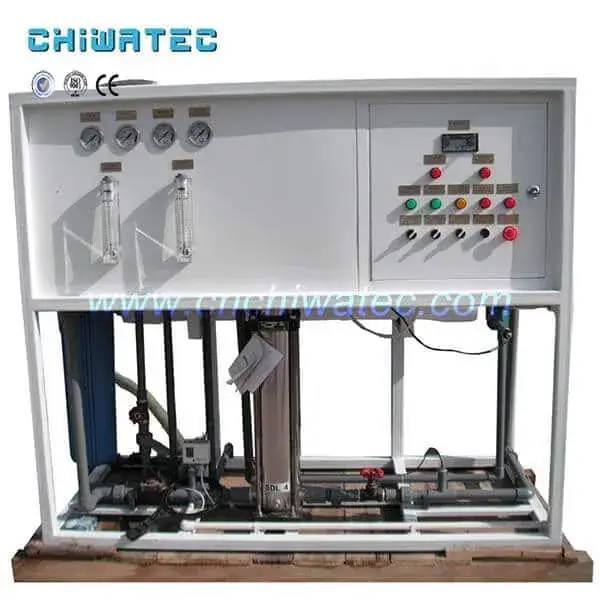
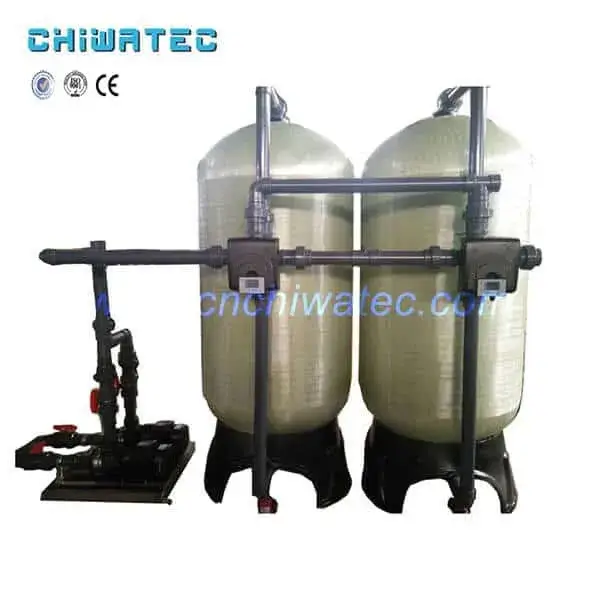
All four common lab ultrapure water treatment methods share a common pretreatment foundation — multimedia filtration for suspended solids removal, activated carbon for chlorine and organic reduction, and antiscalant dosing or softening to prevent membrane scaling. After pretreatment, the process diverges into four distinct configurations, each offering different water quality levels, capital costs, and operating expenses. The choice depends on the required water quality (Type I vs Type II), daily volume (10-2,000 L/day), and available budget for equipment and consumables.
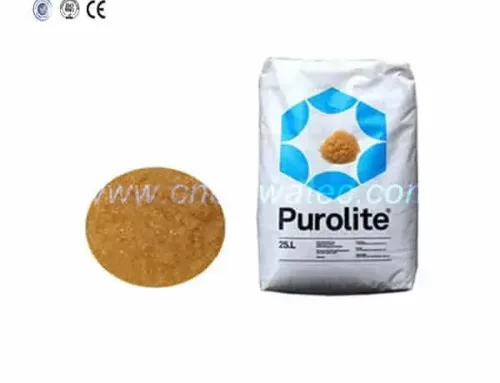
Method 1: RO + Mixed Bed Ion Exchange (DI)
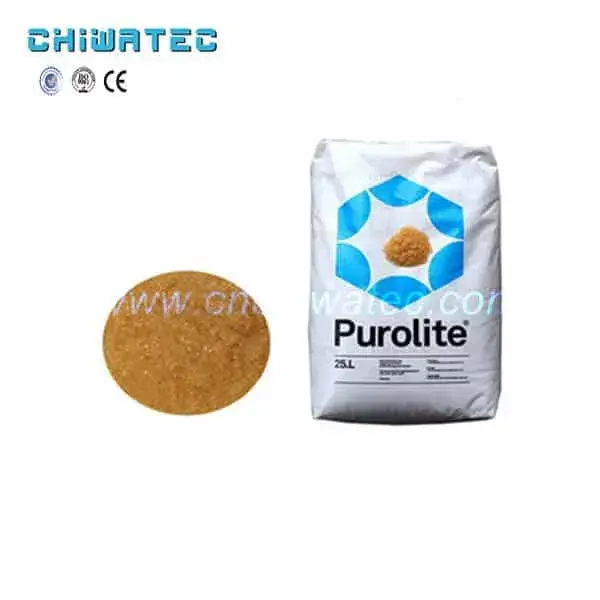
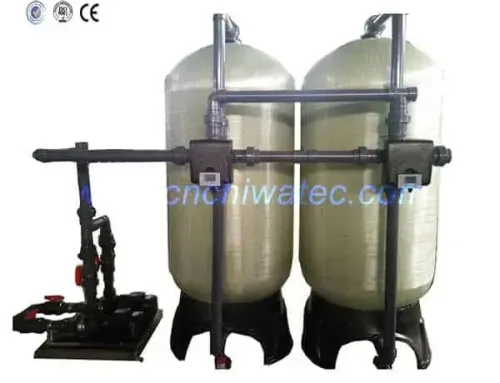
The simplest and most cost-effective lab ultrapure water configuration combines single-pass reverse osmosis with mixed-bed deionization. The process flow: Pretreatment → RO membrane → Water tank → Positive bed (cation) → Negative bed (anion) → Mixed bed → Pure water tank → UV sterilizer → Polishing mixed bed → 0.2 μm final filter → Point of use.
- Water quality output: Resistivity 1-10 MΩ·cm (Type II, approaching Type I after polishing)
- Capital cost: Low to moderate ($2,000-8,000 for benchtop systems)
- Operating cost: Moderate — ion exchange resin requires chemical regeneration every 2-6 months depending on feed water quality and daily usage
- Best for: General chemistry labs, buffer preparation, glassware washing, and feed water for clinical analyzers
- Limitations: Resin regeneration generates chemical waste; TOC removal is limited; regular resin replacement (every 1-3 years) required
This configuration is ideal for labs with moderate water quality requirements and low-to-medium daily consumption (20-200 L/day). The upfront cost is the lowest among the four methods.
Method 2: Double-Pass Reverse Osmosis (RO-RO)
The double-pass RO configuration uses two RO membranes in series, with the permeate from the first stage serving as feed water for the second stage. The process flow: Pretreatment → 1st stage RO → Dosing (pH adjustment by NaOH injection to convert CO₂ to bicarbonate) → Intermediate water tank → 2nd stage RO (positively charged RO membrane for improved ion rejection) → Pure water tank → UV sterilizer → 0.2 μm final filter → Point of use.
- Water quality output: Resistivity 1-5 MΩ·cm (Type II); TDS < 2 mg/L
- Capital cost: Moderate ($4,000-15,000)
- Operating cost: Low — no chemical regeneration required; membrane replacement every 3-5 years
- Best for: Labs requiring consistent Type II water without the chemical handling of DI regeneration; medium consumption (50-500 L/day)
- Limitations: Lower resistivity than EDI or DI polishing; higher energy consumption than single-pass RO due to additional high-pressure pump; higher water rejection ratio (approximately 50% total recovery)
The double-pass RO method is an excellent “chemical-free” solution for labs where consistent Type II water is sufficient and avoiding acid/caustic handling is a priority.
Method 3: Reverse Osmosis + Electrodeionization (RO-EDI)
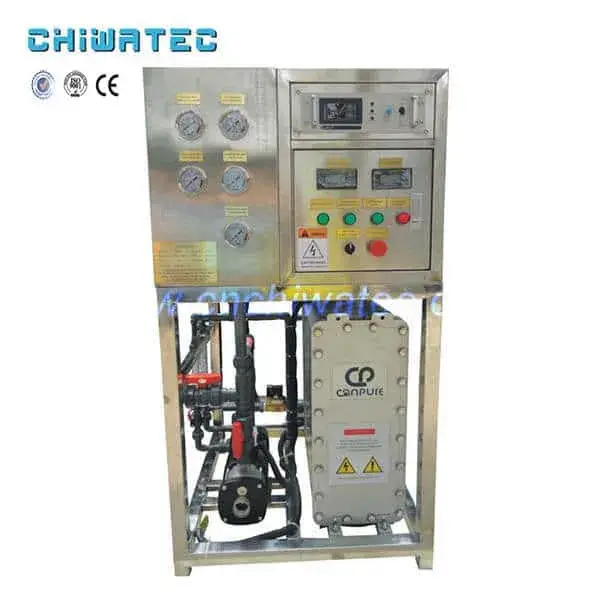
The RO+EDI configuration represents the modern standard for continuous, chemical-free ultrapure water production. EDI uses ion exchange membranes, ion exchange resin, and a DC electrical field to continuously remove ions without chemical regeneration. The process flow: Pretreatment → RO membrane → Intermediate water tank → Water pump → EDI module → Pure water tank → UV sterilizer (185 nm + 254 nm) → 0.2 μm final filter → Point of use.
- Water quality output: Resistivity 5-18 MΩ·cm (approaching Type I); TOC < 10 ppb
- Capital cost: Moderate to high ($8,000-25,000)
- Operating cost: Low — no regeneration chemicals; EDI module lasts 3-5 years; electricity consumption 0.5-1.5 kWh/m³
- Best for: Labs requiring Type I water with minimal operator intervention; medium-to-high consumption (100-1,000 L/day)
- Limitations: Requires RO permeate feed with TDS below 40 mg/L; initial capital investment higher than DI-based systems
The RO-EDI method is the preferred choice for most modern laboratories due to its combination of high water quality, low operating cost, and environmental sustainability.
Method 4: RO + EDI + Polishing Mixed Bed (Highest Purity)
For applications demanding the absolute highest water quality — such as ICP-MS, LC-MS, mammalian cell culture, and molecular biology — a polishing mixed bed is added after the EDI module. The process flow: Pretreatment → RO membrane → Intermediate water tank → Water pump → EDI module → Pure water tank → UV sterilizer (185 + 254 nm) → Polishing mixed-bed ion exchanger → 0.2 μm final filter → Point of use.
- Water quality output: Resistivity 18.2 MΩ·cm (Type I); TOC < 3 ppb; bacteria < 0.1 CFU/mL; particles < 1/mL at 0.2 μm
- Capital cost: High ($12,000-35,000)
- Operating cost: Moderate — EDI requires minimal consumables; polishing resin replacement every 6-18 months ($200-500 per cartridge)
- Best for: Critical analytical applications, pharmaceutical QC labs, clinical reference laboratories, and research institutions
- Limitations: Higher consumable cost for polishing cartridges; requires periodic sanitization (typically quarterly) to maintain bacterial control
This configuration delivers the highest achievable water quality and is the standard for critical laboratory applications worldwide.
Methods Comparison Summary
| Parameter | RO + DI | Double RO | RO + EDI | RO + EDI + Polish |
|---|---|---|---|---|
| Max resistivity (MΩ·cm) | 10 | 5 | 18 | 18.2 |
| Water type (ASTM) | Type II | Type II | Type I | Type I |
| Capital cost | $2-8K | $4-15K | $8-25K | $12-35K |
| Operating cost | Moderate | Low | Low | Moderate |
| Chemicals needed? | Yes (regeneration) | No | No | Minimal |
| Regeneration waste? | Yes | No | No | No |
| Best daily volume | 20-200 L | 50-500 L | 100-1,000 L | 50-500 L |
This comparison table helps laboratory managers and procurement teams quickly evaluate which configuration best matches their water quality requirements, throughput needs, and operating budget.
Key Components in Lab Ultrapure Water Systems
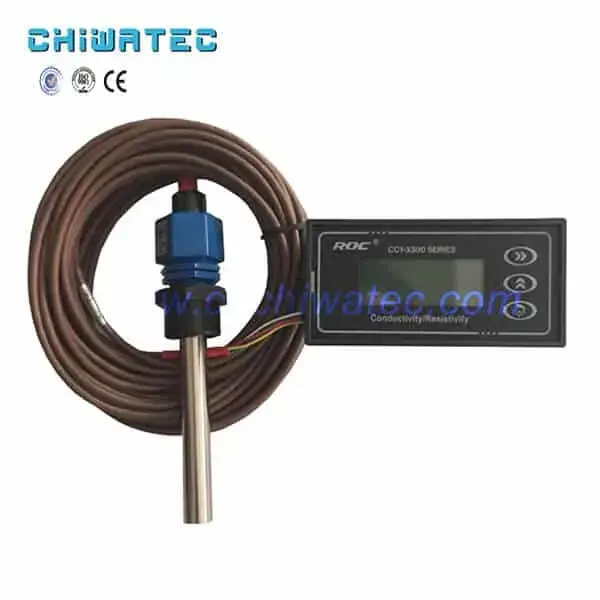
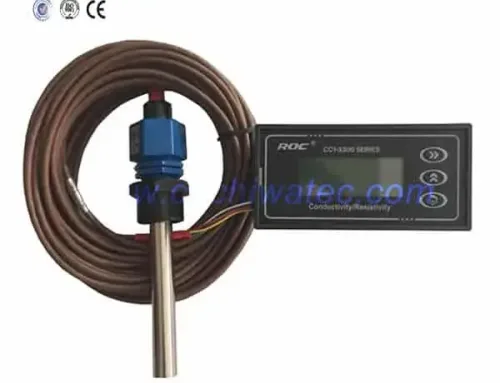
Beyond the primary treatment method, all lab ultrapure water systems share several critical components. The pretreatment stage includes sediment filtration (5-20 μm), activated carbon filtration for chlorine removal (down to < 0.1 mg/L), and water softening or antiscalant dosing. The RO stage uses thin-film composite polyamide membranes operating at 7-15 bar, achieving 95-99% salt rejection. A UV sterilizer with dual wavelengths — 254 nm for bacterial disinfection and 185 nm for TOC reduction by photo-oxidation — is essential for Type I water production. The final 0.2 μm or 0.45 μm membrane filter removes bacteria and particulates at the point of use. Online resistivity and TOC monitoring ensures continuous water quality verification, with alarms and automatic recirculation when setpoints are exceeded.
Frequently Asked Questions (FAQ)
What resistivity does lab ultrapure water need to achieve?
Type I ultrapure water requires resistivity ≥ 18.0 MΩ·cm at 25°C, with the theoretical maximum being 18.2 MΩ·cm. This indicates that ionic contaminants have been reduced to the parts-per-trillion level.
How often should lab UPW system consumables be replaced?
Sediment filters every 3-6 months, activated carbon filters every 6-12 months, RO membranes every 2-5 years, EDI modules every 3-5 years, UV lamps annually, and polishing resin cartridges every 6-18 months depending on usage and feed water quality.
Can tap water be used directly as feed for lab UPW systems?
Yes — all four methods described above are designed to use municipal tap water as feed, provided it meets basic pretreatment requirements (turbidity < 5 NTU, free chlorine < 3 mg/L, TDS < 1,000 mg/L, iron < 0.3 mg/L).
What is the difference between lab pure water and ultrapure water?
Pure water (Type II) has resistivity of 1-10 MΩ·cm and TOC < 200 ppb, suitable for routine lab work. Ultrapure water (Type I) requires resistivity > 18 MΩ·cm and TOC < 50 ppb, with the highest-quality systems achieving TOC < 3 ppb for trace analysis.
Conclusion & Call to Action
Choosing among the four lab ultrapure water treatment methods — RO+DI, double-pass RO, RO+EDI, and RO+EDI+polishing — requires balancing water quality requirements, daily consumption volume, capital investment, and operating costs. CHIWATEC offers complete laboratory ultrapure water systems in all four configurations, from benchtop units to centralized systems producing 2,000 L/day. Contact our applications engineers for a free water quality assessment and system recommendation. Email us at [email protected] or [email protected] for expert assistance with your laboratory water purification needs.
Related Resources and Further Reading
- Laboratory Ultrapure Water Equipment Process: Complete Guide to Lab Water Purification Technologies
- Laboratory Ultrapure Water Systems: Complete Guide to Lab Water Purification Equipment 2026
- Ultrapure Water Treatment Equipment: Working Principles and 2026 Technology Guide
- Pure Water Equipment Working Principle 2026: Complete Guide to Ultrapure Water Systems
- Laboratory and Industrial RO Water Treatment Systems — View Our Product Range
Do you have a water treatment project we can help with
* Designing,machining,installing,commissioning, customize and one-stop service
 English
  Spanish
  Portuguese