

Groundwater and Well Water Treatment Process: Complete Guide to Equipment and Systems 2026
Understanding the groundwater well water treatment process is essential for converting raw groundwater into safe, potable drinking water that meets national quality standards. Xi’an CHIWATEC presents this comprehensive guide to groundwater and well water treatment systems, covering the full process flow from raw water intake to final disinfection and distribution.
Last Updated: May 2026
Why This Guide Matters
Groundwater supplies nearly 50% of the global population’s drinking water and accounts for 43% of all water used for irrigation worldwide. In the United States alone, over 15 million households rely on private well water. However, groundwater contamination from iron, manganese, ammonia nitrogen, arsenic, and industrial pollutants affects millions of people annually. The global groundwater treatment market is projected to reach USD 18.2 billion by 2030, growing at a CAGR of 7.1% from 2024.
Key Industry Trends (2026 Update)
- PFAS Remediation: New US EPA regulations (2024-2026) require groundwater treatment systems to remove PFAS compounds to below 4 parts per trillion, driving adoption of advanced oxidation and granular activated carbon systems.
- Decentralized Treatment: Community-scale groundwater treatment systems are growing at 8.3% CAGR as rural areas seek localized solutions instead of centralized municipal connections.
- Iron and Manganese Removal Innovation: New catalytic media technologies achieve iron removal efficiencies of over 99% at lower capital costs compared to traditional aeration and sand filtration methods.
- Smart Monitoring Integration: IoT sensors enabling real-time groundwater quality monitoring now represent 22% of new well installations, allowing automated process adjustments and remote system management.
1. What Is Groundwater and Why Does It Require Treatment?
Characteristics of Groundwater
Groundwater originates from precipitation that percolates through soil and rock layers to reach underground aquifers. Unlike surface water, groundwater has relatively stable temperature, high mineral content, low turbidity, and consistent chemical composition. However, it typically contains elevated levels of dissolved iron, manganese, calcium, magnesium, and in some regions, arsenic, fluoride, and ammonia nitrogen. The specific contaminants present depend on local geology, land use practices, and aquifer characteristics.
Treatment Objectives
The primary goals of the groundwater well water treatment process include removing iron and manganese (the most common contaminants), reducing hardness, eliminating ammonia nitrogen, controlling bacterial contamination, and ensuring compliance with national drinking water standards such as GB 5749-2022 in China or the US EPA Safe Drinking Water Act. Pollution control methods for RO systems also apply when groundwater feeds into reverse osmosis treatment trains.
2. What Is the Complete Process Flow for Well Water Treatment?
Stage 1: Raw Water Intake and Aeration
The process begins with pumping raw groundwater from the well. Aeration is typically the first treatment step, where water is exposed to air to oxidize dissolved ferrous iron (Fe2+) to ferric iron (Fe3+), which precipitates as solid particles. Aeration also removes dissolved gases such as hydrogen sulfide (H2S), carbon dioxide (CO2), and volatile organic compounds. Common aeration methods include cascade aeration, spray aeration, and diffused aeration, with typical air-to-water ratios of 4:1 to 10:1.
Stage 2: Oxidation and Chemical Dosing
For high iron concentrations (above 5 mg/L), chemical oxidation using chlorine, potassium permanganate, or ozone may supplement aeration. pH adjustment is often necessary, as iron oxidation kinetics are optimal at pH levels above 6.5. When manganese is present, a higher oxidation potential is required, often using potassium permanganate or chlorine dioxide. Analysis of common pretreatment processes shows that proper oxidation is critical for preventing membrane fouling in downstream RO systems.
Stage 3: Filtration (Multi-Media and Manganese Sand)
After oxidation, water passes through multi-media filters containing graded layers of anthracite, silica sand, and garnet to remove precipitated iron and manganese particles. Manganese sand (greensand) filters use a catalytic media that simultaneously filters and continues the oxidation process, achieving iron removal efficiencies of 95-99% and manganese removal of 85-95%. Typical filtration rates range from 5 to 15 gallons per minute per square foot of filter area.
Stage 4: Activated Carbon Filtration
Activated carbon filters remove residual chlorine, organic compounds, taste, odor, and color. They also adsorb any remaining trace contaminants, including pesticides and industrial chemicals that may be present in the source water. Granular activated carbon (GAC) with a bed depth of 30-48 inches and empty bed contact time (EBCT) of 5-15 minutes is standard for groundwater treatment applications.
Stage 5: Precision Filtration and Reverse Osmosis (If Required)
For high-purity applications or when ammonia nitrogen removal is needed, precision filters (5-micron cartridge filters) protect downstream RO membranes from particulate fouling. RO systems remove 95-99% of dissolved solids, including ammonia, nitrates, and residual contaminants. Application cases of pure water equipment demonstrate the effectiveness of RO for groundwater treatment in the food and beverage industry.
Stage 6: Disinfection and pH Adjustment
Final disinfection using UV sterilization or chlorine dosing ensures microbiological safety. pH adjustment may be required if the treatment process has altered the water’s acid-base balance. For corrosive water, pH is typically raised to 7.0-8.5 to prevent pipe corrosion in the distribution system. Proper operation of purified water production equipment is essential for maintaining consistent water quality.
3. How Is Iron and Manganese Removal Achieved?
Oxidation-Filtration Mechanism
Iron and manganese removal relies on the oxidation of soluble forms (Fe2+, Mn2+) to insoluble precipitates (Fe(OH)3, MnO2) that can be physically filtered. The oxidation rate depends on pH, temperature, dissolved oxygen concentration, and the presence of catalytic surfaces. Manganese is significantly harder to oxidize than iron, requiring pH above 8.5 for effective removal through aeration alone, which is why chemical oxidants are often used.
Catalytic Media Technology
Modern groundwater treatment systems increasingly use catalytic media such as Birm, MangOX, and Pyrolox, which catalyze the oxidation reaction without requiring continuous chemical feed. These media have self-regenerating properties and operation costs 30-50% lower than traditional greensand systems. Combined desalination approaches may incorporate iron and manganese removal as pretreatment stages.
4. What Is the Role of Ion Exchange in Groundwater Treatment?
Water Softening Principles
Ion exchange using resin beads replaces calcium and magnesium ions (responsible for water hardness) with sodium or potassium ions. This process is critical for groundwater with hardness exceeding 120 mg/L as CaCO3, as hard water causes scaling in pipes, reduces soap efficiency, and damages water heaters and industrial equipment. Regeneration of the resin bed with brine solution (8-15% NaCl) restores exchange capacity.
Combined Softening and Treatment Systems
In many groundwater treatment plants, ion exchange softeners are placed after iron and manganese removal filters but before precision filters and RO membranes. This sequence prevents resin fouling by iron precipitates while protecting downstream equipment from scaling. For residential well water systems, combination softener-filter units are becoming increasingly popular, serving 65% of new well installations in hard water regions. Operating rules for pure water production equipment provide detailed guidance on system maintenance.
5. How Does Aeration Work for Groundwater Treatment?
Aeration Methods and Efficiency
Aeration is the process of bringing water into intimate contact with air to transfer gases and oxidize dissolved minerals. The four main aeration methods include: (1) cascade aeration where water flows over steps, (2) spray aeration using nozzles, (3) diffused aeration with air bubbles rising through water columns, and (4) packed tower aeration where water trickles over media while air flows counter-currently. Removal efficiencies range from 60-90% for iron at pH above 6.5 and 70-95% for hydrogen sulfide.
System Design Considerations
The choice of aeration method depends on flow rate, contaminant levels, and available space. Packed towers offer the highest mass transfer efficiency (90-99%) but require significant height. Diffused aeration is most common for medium-flow systems (50-500 GPM), while spray aeration is preferred for aesthetic and space-constrained applications. Proper aeration can reduce chemical oxidant demand by 40-60%.
6. What Treatment Is Required for Ammonia Nitrogen in Groundwater?
Ammonia Nitrogen Sources and Standards
Ammonia nitrogen in groundwater originates from agricultural runoff, septic system leakage, and natural organic decomposition. The China GB 5749-2022 standard limits ammonia nitrogen to 0.5 mg/L in drinking water. Levels exceeding this threshold require treatment using biological nitrification, breakpoint chlorination, or membrane filtration.
Treatment Technologies
Reverse osmosis achieves 85-95% ammonia nitrogen removal and is the preferred technology for high concentrations (above 5 mg/L). Biological filtration using nitrifying bacteria converts ammonia to nitrite then nitrate, followed by denitrification or ion exchange. Breakpoint chlorination uses chlorine to oxidize ammonia to nitrogen gas but requires precise dosing control to avoid forming chloramine byproducts. For decentralized systems, RO-based groundwater treatment is the most reliable approach.
7. How Does CHIWATEC Design Groundwater Treatment Systems?
Custom Engineering Approach
CHIWATEC’s engineering team specializes in designing customized groundwater treatment systems based on comprehensive feed water analysis. Our approach begins with raw water testing for 40+ parameters including iron, manganese, hardness, TDS, pH, ammonia nitrogen, silica, and bacterial counts. Based on these results, we design multi-stage treatment trains that optimize capital costs while ensuring consistent compliance with effluent quality standards.
Equipment and Service Capabilities
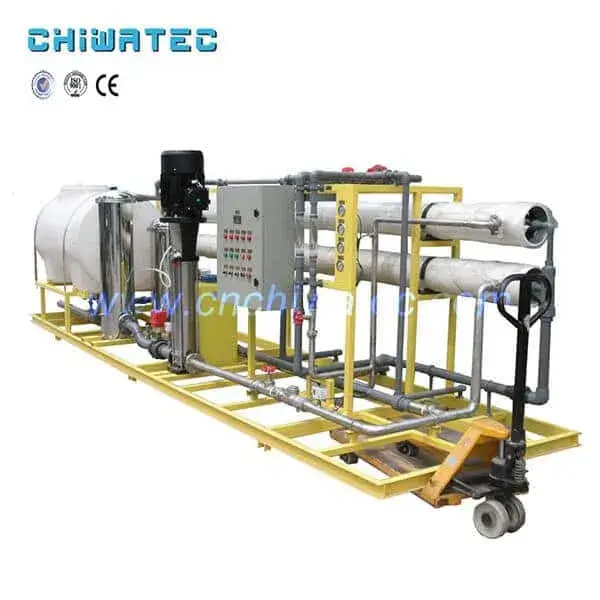
CHIWATEC manufactures a complete range of groundwater treatment equipment including aeration towers, multi-media filters, manganese sand filters, activated carbon systems, precision filters, RO units, and UV sterilizers. We provide full one-stop service from system design and machining through installation, commissioning, and ongoing maintenance support. Our systems serve clients across China, Southeast Asia, the Middle East, and Africa.
8. What Are the Operating and Maintenance Requirements?
Daily and Weekly Procedures
Routine operation of groundwater treatment systems requires daily monitoring of flow rates, pressure differentials across filters, pH, and residual chlorine or ORP levels. Backwashing of multi-media filters is typically performed every 24-48 hours or when pressure drop exceeds 10 psi. Manganese sand filters require periodic regeneration with potassium permanganate, typically every 30-90 days depending on iron loading.
Preventive Maintenance Schedule
Key maintenance tasks include quarterly replacement of cartridge filters, annual replacement of UV lamps, biannual inspection and cleaning of aeration equipment, and annual calibration of monitoring instruments. RO membranes require cleaning every 3-12 months depending on feed water quality, following manufacturer specifications for cleaning solution chemistry and procedures. Proper preventive maintenance can extend equipment life by 40-60% and reduce operating costs by 25-35%.
9. What Is the Difference Between Well Water and Municipal Water Treatment?
Key Distinctions
Well water treatment focuses on iron, manganese, hardness, and ammonia nitrogen removal, while municipal surface water treatment primarily addresses turbidity, pathogens, and organic contaminants. Groundwater typically requires less coagulation and flocculation than surface water due to lower suspended solids but needs more intensive iron and manganese removal. Well water treatment plants are typically smaller, simpler, and operate at lower chemical costs than surface water treatment facilities.
Regulatory Considerations
Private well water in many countries is not regulated by government agencies, placing the burden of water quality testing and treatment entirely on the owner. This has driven demand for simple, reliable, automated well water treatment systems that require minimal operator attention. For community groundwater systems serving 25+ people, compliance with national drinking water standards is mandatory.
10. How to Choose the Right Groundwater Treatment System?
Selection Factors
Choosing the optimal groundwater well water treatment process depends on feed water quality analysis, target water quality standards, required flow rate, site conditions, budget, and operator skill level. A complete water test covering iron, manganese, hardness, TDS, pH, alkalinity, silica, ammonia, arsenic, bacteria, and turbidity is essential before equipment selection. For complex groundwater with multiple contaminants, pilot testing is recommended to validate treatment performance.
Consult with Experts
CHIWATEC provides complimentary feed water analysis and system design consultation to help you select the optimal groundwater treatment configuration. Our experienced engineers design systems that balance performance, cost, and operational simplicity, ensuring you achieve consistent water quality compliance with minimum maintenance burden.
Conclusion
The groundwater well water treatment process involves a carefully sequenced series of physical, chemical, and membrane-based treatment stages designed to transform raw groundwater into safe, high-quality drinking water. From initial aeration and oxidation through multi-media filtration, precision treatment, and final disinfection, each stage serves a specific purpose in removing target contaminants. As water quality regulations tighten and contamination challenges evolve, modern groundwater treatment systems continue to advance with smart monitoring, catalytic media, and energy-efficient designs. Contact CHIWATEC today for expert groundwater treatment solutions. Email us at [email protected] or [email protected]. WhatsApp: +86-18066919523.
Frequently Asked Questions
Q1: How often should well water be tested?
Private well water should be tested at least annually for bacteria, pH, TDS, iron, manganese, and hardness. A comprehensive test covering heavy metals, volatile organic compounds, and pesticides is recommended every 3-5 years. More frequent testing is needed if there are changes in taste, odor, color, or nearby land use activities.
Q2: What is the most common well water problem?
Iron and manganese contamination is the most common well water issue worldwide, affecting an estimated 30-40% of private wells in the United States and similar proportions globally. These metals cause staining of fixtures and laundry, metallic taste, and promote iron bacteria growth in plumbing systems. Proper oxidation-filtration treatment resolves these issues in over 95% of cases.
Q3: Can well water be used without treatment?
While some deep groundwater sources may meet drinking water standards naturally, it is generally recommended to treat all well water before consumption. Even shallow groundwater that appears clean can contain harmful bacteria, nitrates, or heavy metals. The CDC recommends treatment for all private well water, at minimum disinfection and iron/manganese filtration.
Q4: How long does a well water treatment system last?
With proper maintenance, well water treatment equipment can last 10-20 years. Tanks and vessels typically last 15-20 years, control valves 10-15 years, filter media 5-10 years, and RO membranes 2-5 years. Regular maintenance including media replacement, valve servicing, and component inspection significantly extends system lifespan.
Q5: What is the cost of a groundwater treatment system?
Residential well water treatment systems range from USD 1,000-5,000 for basic iron and hardness removal, USD 3,000-10,000 for multi-stage systems with RO, and USD 10,000-50,000+ for complete community-scale treatment plants. Operating costs including chemicals, electricity, media replacement, and maintenance typically add USD 200-1,000 annually for residential systems.
Related Resources and Further Reading
Do you have a water treatment project we can help with
* Designing,machining,installing,commissioning, customize and one-stop service






 English
  Spanish
  Portuguese




