Comparison of Reverse Osmosis and Electrodialysis Technology
Reverse osmosis (RO) and electrodialysis (ED) are two of the most widely applied membrane separation technologies in modern water treatment. Both are used extensively in seawater desalination, brackish water purification, industrial wastewater treatment, and the production of drinking water and high-purity process water.
Although both technologies rely on selective membrane transport, they operate on fundamentally different principles and offer unique advantages depending on water quality, salinity level, and industrial conditions.
This article provides an in-depth technical comparison of reverse osmosis and electrodialysis technology, outlining their working mechanisms, features, applications, and selection criteria for engineers and water treatment professionals.
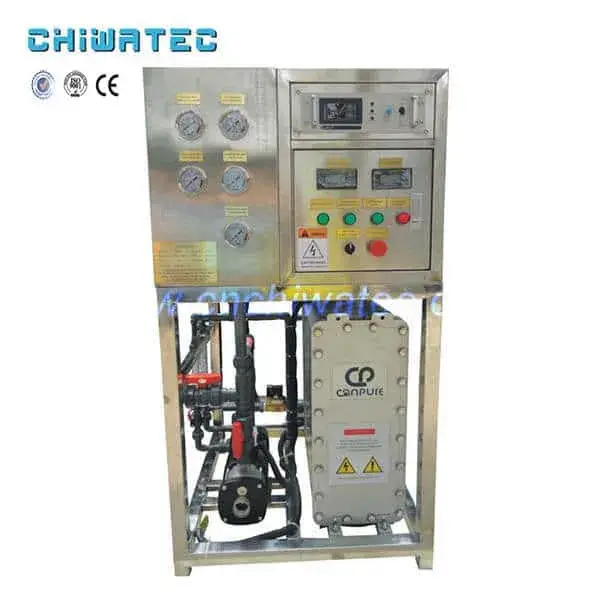
Overview of Electrodialysis Technology
Electrodialysis (ED) is an ion-migration separation process first introduced in the 1950s and widely adopted across seawater desalination, brackish water treatment, food processing, pharmaceuticals, and chemical production. China began ED research as early as 1958, making it one of the earliest countries involved in ED development.
Working Principle
Electrodialysis uses an electric field to drive positive and negative ions through selective ion-exchange membranes. Cation-exchange membranes allow only positive ions to pass, while anion-exchange membranes allow only negative ions to pass. By arranging these membranes alternately between electrodes, salts are removed from the feed water, resulting in desalinated water compartments and concentrated brine compartments.
Key Purposes of Electrodialysis
Electrodialysis technology is applied in four major separation functions:
1. Ion removal to reduce electrolyte concentration
Used in:
- Seawater desalination
- Brackish water desalination
- Production of drinking pure water and industrial pure water
- Treatment of radioactive wastewater
2. Ion concentration to increase electrolyte levels
Applied in:
- Seawater concentration for salt production
- Purification of chemical products
- Recovery of valuable materials from industrial effluents
3. Desalination of organic solutions
Widely used in:
- Food industry
- Pharmaceutical industry
Examples include whey desalination, sugar refining, and amino acid purification.
4. Selective ion separation
Electrodialysis membranes can be designed to allow only monovalent ions to pass, enabling:
- Selective removal of specific ions
- Seawater concentration for salt production
Advantages of Electrodialysis
- Low energy consumption at moderate salinity
Energy use increases only with ion concentration, not total water volume. - Flexible system design
Parallel for higher output, series for higher desalination, and short-flow circulation options. - Environmentally friendly
No chemical regeneration required. - Long equipment lifespan
- Membrane: 3–5 years
- Electrodes: 7–8 years
- Spacers: 10–15 years
- High water recovery rate
- Seawater/high salinity brackish water: >60%
- General brackish water: 65–80%
Overview of Reverse Osmosis Technology
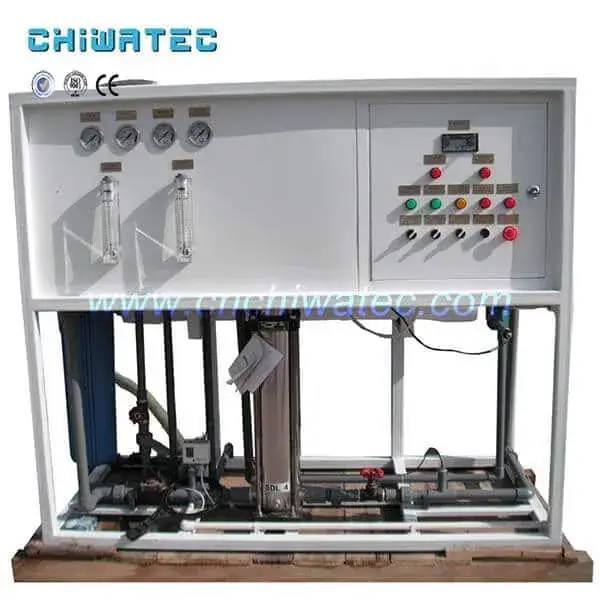
Reverse osmosis (RO) was commercialized in the late 1960s and has become one of the most important technologies for high-purity water preparation. RO relies on pressure to force water molecules through a semi-permeable membrane while rejecting nearly all dissolved salts, organics, and microorganisms.
Working Principle
When high pressure is applied to the feed water, water molecules pass through the RO membrane while dissolved salts and contaminants are retained on the feed side. The permeate water produced is extremely pure and suitable for direct consumption or industrial high-purity applications.
Advantages of Reverse Osmosis
- Low energy consumption compared to thermal desalination
Most economical for converting 2,000–5,000 mg/L brackish water to drinking water standards. - Highly flexible design
RO systems can be arranged in single or multiple stages depending on required salt rejection. - Minimal environmental impact
No chemical regeneration, and brine discharge is the main by-product. - Long membrane lifespan
RO membranes typically last 3–5 years with proper pretreatment. - Consistent high-quality permeate
Produces water suitable for electronics, pharmaceuticals, power plants, and food processing.
Reverse Osmosis vs Electrodialysis: A Technical Comparison
| Parameter | Reverse Osmosis (RO) | Electrodialysis (ED) |
|---|---|---|
| Driving Force | Hydraulic pressure | Electric field |
| Main Function | Removes almost all dissolved substances | Removes ions selectively |
| Ideal Salinity Range | High salinity water, seawater, high TDS | Low–medium salinity brackish water |
| Energy Consumption | Increases with pressure/salinity | Increases with ion concentration |
| Water Recovery | 40–60% (seawater), 65–90% (brackish) | 60–80% |
| Pre-treatment Requirements | High (SDI control, anti-scaling) | Moderate |
| Best Use Cases | Desalination, ultrapure water | Softening, partial desalination, concentration |
How to Choose Between Reverse Osmosis and Electrodialysis
Choose RO When:
- TDS is high (e.g., seawater >30,000 mg/L)
- Ultrapure water is required
- Organic removal, bacteria removal, and TOC reduction are important
- Consistent high-purity permeate is needed
Choose ED When:
- Feed water salinity is moderate
- Selective ion removal is needed
- Concentration of salts for reuse is required
- Operating energy efficiency is a priority in low-salinity applications
- Organic loss must be minimized (food, pharma industries)
Conclusion
Reverse osmosis and electrodialysis are both mature, effective, and widely applied membrane separation technologies. RO excels in high-purity water production and high-salinity desalination, while ED offers high energy efficiency and selective ion removal for medium-salinity applications and specialty industries.
Selecting the correct technology depends on water quality, ion composition, required purity, operational costs, and downstream process needs. A combined RO + ED hybrid system is often used to achieve the best balance of water recovery, energy savings, and cost efficiency.
For advanced RO and pretreatment systems, explore CHIWATEC’s full product range:
👉 CHIWATEC Water Treatment Equipment & Solutions
FAQ (Frequently Asked Questions)
1. Which technology is more suitable for seawater desalination?
Reverse osmosis is generally preferred due to its high salt rejection and lower operating cost at high salinity.
2. Can electrodialysis produce ultrapure water?
Electrodialysis alone cannot reach ultrapure water standards; it is often paired with RO or mixed-bed ion exchange.
3. Is the energy consumption of ED always lower than RO?
Only for low- to medium-salinity water. At high salinity, ED becomes less energy-efficient.
4. Can RO and ED be used together?
Yes. RO + ED hybrid systems are widely used for wastewater reuse, high recovery brackish water desalination, and industrial purification.
5. Which system has a longer lifespan?
Both systems have similar membrane lifespans (3–5 years), but ED spacers can last up to 15 years.
Xi’an CHIWATEC Water Treatment Technology is a high-tech enterprise specialized in various water processing devices. Aside from these individual products, which cover a number of types and series, we can also help with related comprehensive engineering projects. Thanks to our hard work and dedication upon our founding, we are now one of the fastest-developing water treatment equipment manufacturers in Western China.
Further reading:
- Chiwatec RO Reverse Osmosis Equipment: Introduction to Reverse Osmosis Technology
- What are the precautions for the operation of RO reverse osmosis pure water host?
- RO reverse osmosis pure water host operation operation
- RO reverse osmosis water treatment equipment program description(2)
- RO reverse osmosis water treatment equipment program description
FOLLOW US
Do you have a water treatment project we can help with
* Designing,machining,installing,commissioning, customize and one-stop service
 English
  Spanish
  Portuguese