Ultrapure Water Cleaning System: Equipment Characteristics for Touch Screen and Glass Manufacturing 2026
An ultrapure water cleaning system is essential for manufacturing processes where even microscopic contaminants can cause product defects — including touch screen panels, optical lenses, glass components, and precision electronic assemblies. Unlike general industrial pure water, the water used in cleaning applications must achieve resistivity above 18 MΩ·cm with TOC below 10 µg/L to prevent spotting, film residue, or ionic contamination on finished surfaces. This article examines the key characteristics of ultrapure water cleaning systems — from water quality specifications and equipment configuration to installation requirements and operating parameters — providing a practical reference for facilities in the optics, electronics, and precision cleaning industries.
Ultrapure Water Cleaning System — Key Characteristics for Precision Cleaning
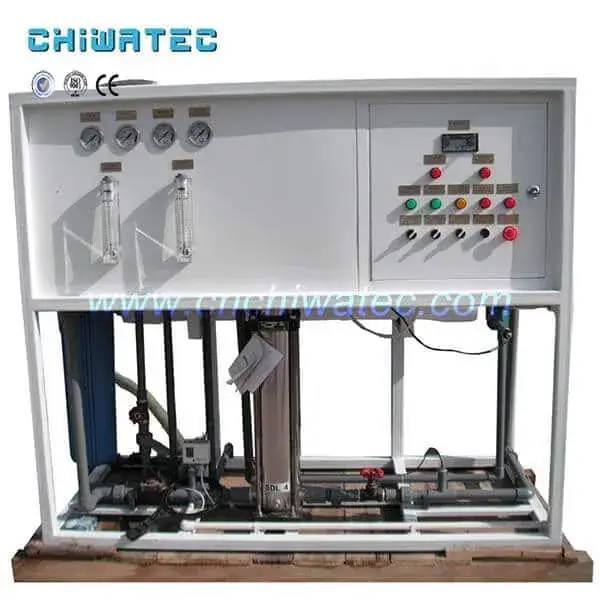
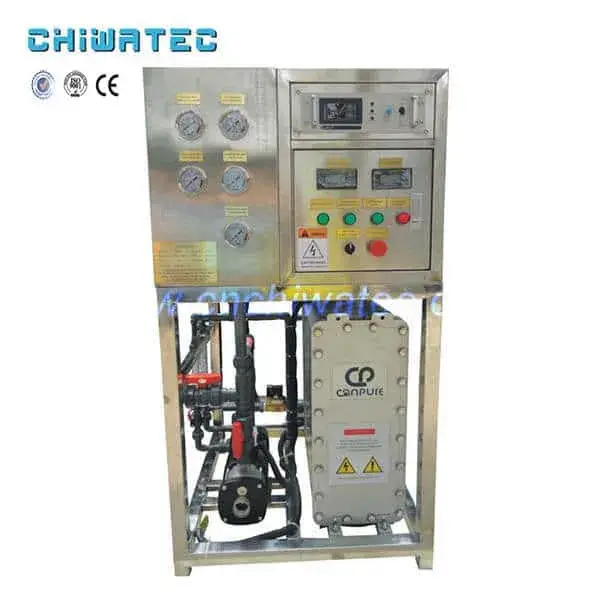
An ultrapure water cleaning system designed for touch screen and glass cleaning applications differs from standard UPW systems in several important ways. The system must deliver water with consistent resistivity of 18.2 MΩ·cm, TOC below 10 µg/L, particle count below 100 particles/mL at 0.2 µm, and bacteria count below 1 CFU/100 mL. These stringent specifications prevent surface defects that can occur during final rinse stages in optical and electronic component manufacturing. The system typically combines RO pretreatment with EDI polishing, followed by UV oxidation (185 nm + 254 nm) for TOC reduction, a membrane degasifier for dissolved oxygen removal, and a final 0.1 µm absolute filter to guarantee particle-free water at the point of use. The entire system is constructed from high-purity PVDF, PTFE, or electrophished 316L stainless steel to prevent leachables from contaminating the ultrapure water stream.
Water Quality Requirements for Touch Screen and Glass Cleaning
The cleaning of touch screen panels, optical glass, and precision components demands water quality that meets or exceeds ASTM Type I (18.2 MΩ·cm) standards. Key quality parameters include:
| Parameter | Required Value | Why It Matters for Cleaning |
| Resistivity | ≥ 18.2 MΩ·cm | Prevents ionic residue and water spots on glass |
| TOC | < 10 µg/L (preferably < 5 µg/L) | Avoids organic film formation on optical surfaces |
| Particles (0.2 µm) | < 100 / mL | Prevents particle adhesion to touch screen panels |
| Bacteria | < 1 CFU / 100 mL | Eliminates biofilm formation in rinse tanks |
| Dissolved oxygen | < 1 mg/L | Reduces oxidation risk for certain substrates |
| Dissolved silica | < 0.5 µg/L | Prevents silicate deposition on glass surfaces |
| Sodium (Na⁺) | < 0.1 µg/L | Avoids ionic contamination on sensitive electronics |
Installation Guidelines for Ultrapure Water Cleaning Equipment
Proper installation of an ultrapure water cleaning system is critical for maintaining water quality and ensuring reliable operation. The following guidelines should be followed:
- Level installation: The equipment must be installed on a level, vibration-free surface. The skid frame should be shimmed to within 2 mm of level across its full length to prevent uneven stress on membrane housings, pump couplings, and pipe connections. An unlevel installation can cause differential pressure imbalances across membrane arrays that reduce performance and shorten membrane life.
- Proximity to power and water supply: The system should be located within 5–10 m of both the feed water connection and the main electrical panel. Long feed water lines increase pressure drop and can introduce contamination through leachable materials. The electrical supply must include a dedicated circuit with proper grounding to protect PLC controllers and sensitive conductivity instrumentation.
- Temperature control: Install the system in a climate-controlled environment (10–35°C) away from direct sunlight, boilers, steam lines, or other heat sources. Freeze protection is essential — if the ambient temperature drops below 4°C, water in membrane housings, piping, and EDI stacks can freeze and cause irreversible damage. For cold climate installations, a heated enclosure or heat-trace wrapping on exposed piping is required.
- Fire safety distance: The equipment must not be installed within 1 meter of any open flame, spark source, or combustible material. The high-pressure pump motor and electrical panel are potential ignition sources in the presence of flammable solvents or cleaning chemicals.
- Access for maintenance: Maintain minimum 1 meter clearance on all sides of the equipment for membrane element replacement, cartridge filter changes, and CIP cleaning connections.
Operating Parameters for Optimal Cleaning Performance
To achieve consistent ultrapure water quality for cleaning applications, the system must operate within these parameters:
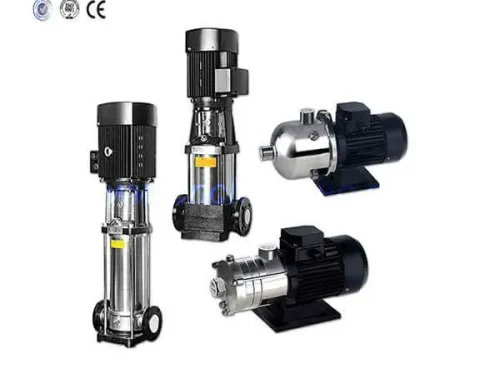
- Feed water pressure: The booster pump discharge pressure should be maintained at 1.0–1.2 MPa (145–175 psi) to ensure adequate feed pressure to the RO membranes. For areas with insufficient incoming water pressure (< 0.3 MPa), a raw water storage tank with a pressurized feed pump is required to maintain stable flow to the RO system.
- RO membrane feed pressure: Operate at 10–15 bar depending on membrane type and feed water TDS. Higher pressures increase permeate flow but also increase fouling rates. Adjust the concentrate control valve to maintain a concentrate:permeate ratio of 1:3–1:4.
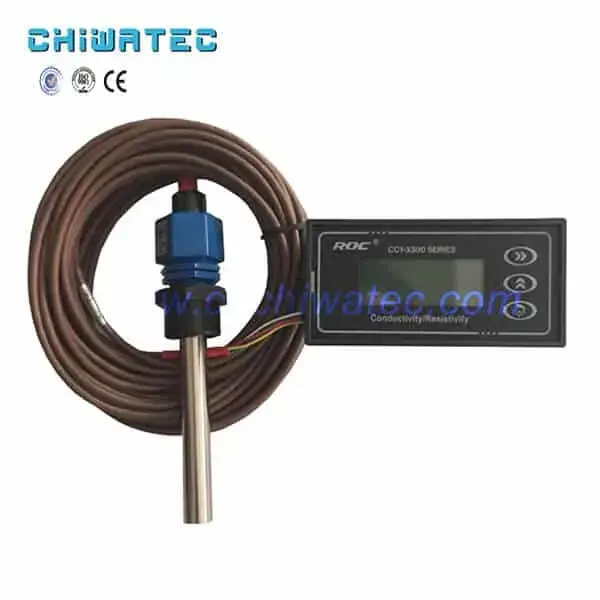
- EDI operating voltage: Maintain 100–400 V DC across the EDI stack depending on the module size and required resistivity. The EDI controller automatically adjusts voltage to maintain setpoint resistivity (typically 18.2 MΩ·cm).
- UV intensity: The 185 nm UV lamp for TOC reduction requires a minimum dose of 30 mJ/cm² to achieve TOC below 5 µg/L. Replace UV lamps annually or after 8,000 operating hours, whichever comes first.
- Final filter replacement: Replace 0.1 µm absolute filters every 3–6 months or when the differential pressure exceeds 0.1 MPa.
Comparison of Ultrapure Water Applications in Cleaning vs. Other Industries
| Industry | Primary Contaminant Concern | Required Resistivity | TOC Limit |
| Touch screen / glass cleaning | Particles, ions, organic film | ≥ 18.2 MΩ·cm | < 5–10 µg/L |
| Semiconductor wafer cleaning | Metal ions, particles, bacteria | ≥ 18.2 MΩ·cm | < 1–5 µg/L |
| Pharmaceutical cleaning (CIP) | Endotoxins, bacteria, pyrogens | ≥ 1 MΩ·cm | < 500 µg/L |
| Laboratory glassware washing | Ionic residues, organic stains | ≥ 10 MΩ·cm | < 50 µg/L |
| LCD panel cleaning | Particles, static charge, ions | ≥ 18.2 MΩ·cm | < 10 µg/L |
Frequently Asked Questions (FAQ)
What is an ultrapure water cleaning system?
An ultrapure water cleaning system is a multistage water purification system — typically combining RO, EDI, UV oxidation, and final filtration — designed to produce water with ≥ 18.2 MΩ·cm resistivity and < 10 µg/L TOC for precision cleaning applications in touch screen, optical glass, and electronics manufacturing.
Why does touch screen cleaning require ultrapure water?
Touch screen panels have transparent conductive coatings (ITO) and anti-reflective layers that are extremely sensitive to ionic contamination, particles, and organic residues. Even sub-microscopic contaminants trapped between the glass and the touch sensor layer can cause dead pixels, reduced transparency, or electrical malfunction. Ultrapure water eliminates these risks by providing chemically pure, particle-free rinsing.
What is the minimum resistivity required for glass cleaning?
The minimum resistivity for precision glass and touch screen cleaning is 18.2 MΩ·cm — the theoretical maximum for pure water. This ensures that no ionic residues remain on the glass surface after the final rinse, preventing water spots, hazing, or film formation that would affect optical clarity or downstream coating adhesion.
Can a standard RO system produce water suitable for precision cleaning?
Standard single-pass RO produces water at 0.1–1.0 MΩ·cm, which is insufficient for precision cleaning applications. An ultrapure water cleaning system requires RO followed by EDI polishing (to reach 15–18 MΩ·cm) and UV oxidation (to reduce TOC below 5–10 µg/L). Without these additional stages, the water will leave unacceptable ionic and organic residues on cleaned surfaces.
How often should an ultrapure water cleaning system be maintained?
Pre-filters should be replaced monthly, RO membranes cleaned every 3–6 months, UV lamps replaced annually, EDI stacks serviced every 2–3 years, and final absolute filters replaced every 3–6 months. Online monitoring of resistivity, TOC, and particle counts provides real-time quality assurance and alerts operators when maintenance is needed.
Conclusion and Call to Action
An ultrapure water cleaning system is a critical investment for facilities manufacturing touch screens, optical glass, and precision electronic components — where water quality directly determines product yield and surface quality. By combining RO pretreatment, EDI polishing, UV oxidation, and absolute final filtration, these systems deliver the 18.2 MΩ·cm resistivity and ultra-low TOC required to prevent particles, ions, and organic residues from compromising cleaned surfaces. At CHIWATEC, we design and manufacture complete ultrapure water systems for cleaning applications, with capacities from 0.5 to 50 m³/h and full validation documentation. For a system tailored to your specific cleaning process and water quality requirements, contact us at [email protected] or [email protected].
Related Resources and Further Reading
- Ultrapure Water Equipment Blockage Causes: Complete Guide to Prevention
- Ultrapure Water System Process Flow: Complete Guide to UPW Production
- Pure Water and Ultrapure Water System: Preparation Process and Applications
- Ultrapure Water Equipment Maintenance: Complete Guide to Care and Service
- UV Sterilization Equipment — Browse CHIWATEC Products
Do you have a water treatment project we can help with
* Designing,machining,installing,commissioning, customize and one-stop service
 English
  Spanish
  Portuguese