Pure Water and Ultrapure Water System: Preparation Process, Applications, and Quality Standards 2026
In modern scientific research and industrial production, a pure water ultrapure water system is essential for applications requiring water purity at the ppb or even ppt level. From life science research sensitive to heavy metals and soluble organics to HPLC analysis demanding ultra-low conductivity water, the pure water ultrapure water system provides the most stable and reliable method for producing high-quality purified water. This guide covers the preparation process, key applications, and important water quality standards for pure water and ultrapure water systems.
How a Pure Water Ultrapure Water System Serves Laboratory and Industrial Applications
A pure water ultrapure water system serves a wide range of applications across scientific, medical, and industrial fields. Understanding these applications helps in selecting the appropriate system configuration and water quality level.
| Water Type | Applications | Typical Resistivity |
| Reverse Osmosis (RO) Pure Water | Laboratory utensil final cleaning, buffer and reagent preparation, microbial culture media, hydrogen generator feed water, autoclave feed water | 0.1-1 MΩ·cm |
| Ultrapure Water (Type 1) | Animal and plant cell culture, medical biochemical analyzers, hemodialysis, HPLC and ion chromatography, atomic absorption spectrometry, IVF, pharmaceutical preparation | 18.2 MΩ·cm |
| Ultrapure Water (Type 2) | General laboratory analysis, reagent dilution, physiology and pathology experiments, clinical trial standards | > 10 MΩ·cm |
Key organizations establishing water quality standards include: National Standard of the People’s Republic of China GB6682-92 (Analytical Laboratory Water Specifications), GB/T11446.1-1997 (Electronic Grade Water), American Chemical Society (ACS), ASTM, NCCLS, and the United States Pharmacopeia (USP).
Common Impurities Removed by a Pure Water Ultrapure Water System
Natural water contains a variety of impurities that must be removed to achieve pure or ultrapure water quality:
| Impurity Type | Examples | Removal Method |
| Soluble inorganic matter | Calcium, magnesium, sodium, chloride, sulfate, silica | Reverse osmosis, ion exchange, EDI |
| Organic matter | Humic acids, tannins, pesticides, pharmaceuticals | Activated carbon, UV oxidation, RO |
| Particulate matter | Silt, sand, rust, colloids | Sedimentation, microfiltration, ultrafiltration |
| Microorganisms | Bacteria, viruses, endotoxins | UV sterilization, ultrafiltration, microfiltration |
| Dissolved gases | CO₂, O₂, Cl₂ | Degassing membrane, vacuum degasification |
A well-designed pure water ultrapure water system integrates multiple treatment stages to address each of these impurity categories, ensuring consistent output quality regardless of feed water variation.
The Three-Stage Preparation Process of Pure Water and Ultrapure Water Systems
The water purification process can be divided into three major steps: pretreatment (producing pure water), ion exchange (producing 18.2 MΩ·cm ultrapure water), and post-treatment (producing ultrapure water meeting special requirements). The specific methods and technologies used in each step depend on the feed water quality and the required effluent specifications.
Stage 1: Pretreatment — Protecting Downstream Membranes and Resins
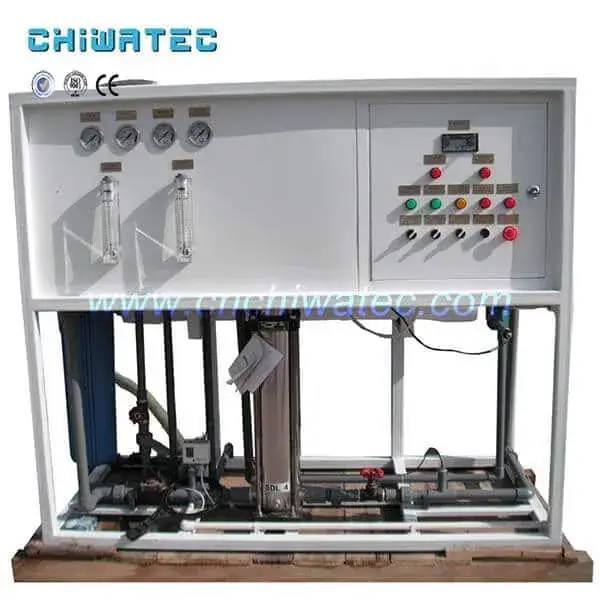
The pretreatment stage removes impurities that could damage or foul the reverse osmosis membranes and ion exchange resins. Key pretreatment components include:
- Sedimentation and multimedia filtration — Removes large particulate matter, suspended solids, and colloidal materials.
- Activated carbon filtration — Adsorbs chlorine, organic compounds, and chloramines that would otherwise degrade RO membranes and ion exchange resins.
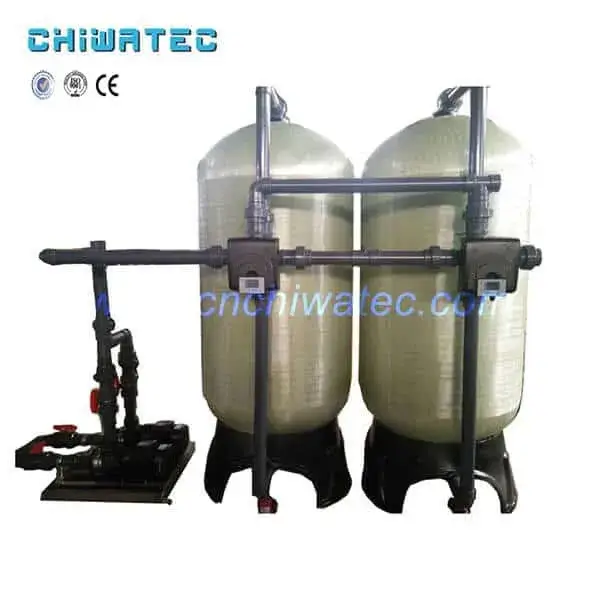
- Water softening — Removes calcium and magnesium ions that cause scaling on RO membranes. Softening extends membrane life and reduces the frequency of chemical cleaning.
- Cartridge filtration (1-5 μm) — Provides final particulate removal before the RO stage to protect the high-pressure pump and membrane elements.
Different feed water sources require different pretreatment configurations. For example, municipal tap water typically needs only multimedia filtration and carbon filtration, while surface water or well water may require additional steps such as iron removal, manganese removal, or antiscalant dosing. Failure to properly configure pretreatment is a common cause of poor ultrapure water system performance and shortened component life.
Reverse Osmosis — The Core of Pure Water Production
Reverse osmosis uses a high-pressure pump to overcome the osmotic pressure of the feed water, forcing water molecules through a semi-permeable membrane while rejecting 90-99% of dissolved inorganic ions, organic compounds, and particulate matter. RO is the most efficient single-stage purification technology and is universally used as the backbone of modern pure water and ultrapure water systems. Typical RO recovery rates range from 50-75% for single-pass systems and up to 90% for double-pass configurations.
Stage 2: Ion Exchange — Achieving 18.2 MΩ·cm Ultrapure Water
Ion exchange is the polishing stage that removes the remaining ionic contaminants after RO pretreatment. Cation exchange resins replace positive ions (Na⁺, Ca²⁺, Mg²⁺, Fe³⁺) with H⁺ ions, while anion exchange resins replace negative ions (Cl⁻, SO₄²⁻, HCO₃⁻, SiO₃²⁻) with OH⁻ ions. The H⁺ and OH⁻ ions combine to form pure H₂O, achieving a theoretical maximum resistivity of 18.2 MΩ·cm at 25°C.
Two common configurations are used:
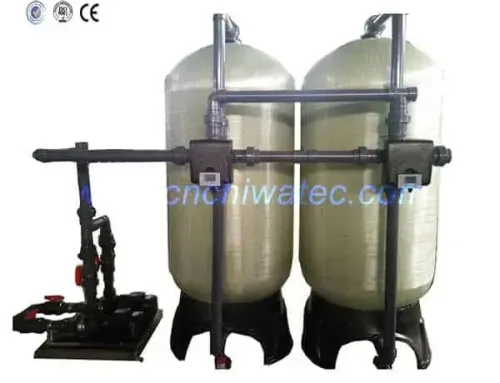
- Mixed bed ion exchange — Cation and anion resins are mixed in a single vessel, providing the highest effluent quality. However, mixed bed resins require chemical regeneration when exhausted.
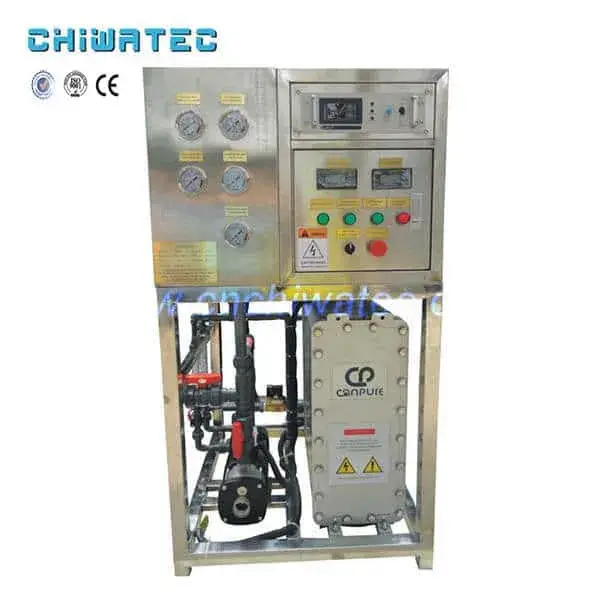
- Electrodeionization (EDI) — Combines ion exchange membranes with an electric field to continuously regenerate the resin, eliminating the need for chemical regeneration. EDI is increasingly preferred in larger systems due to lower operating costs and reduced chemical handling.
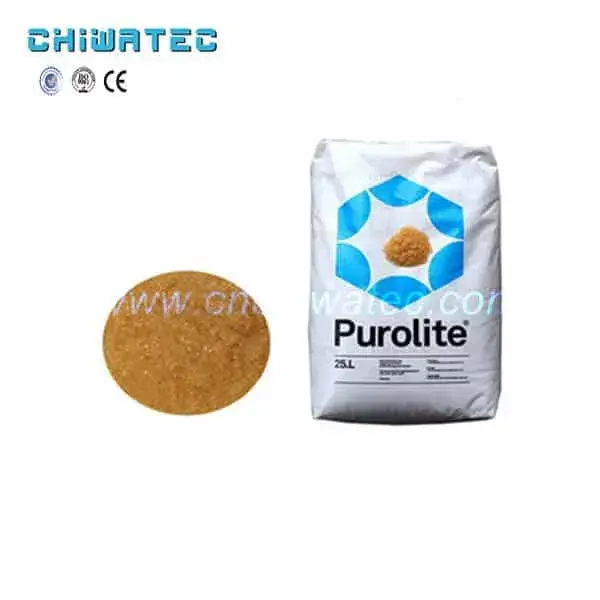
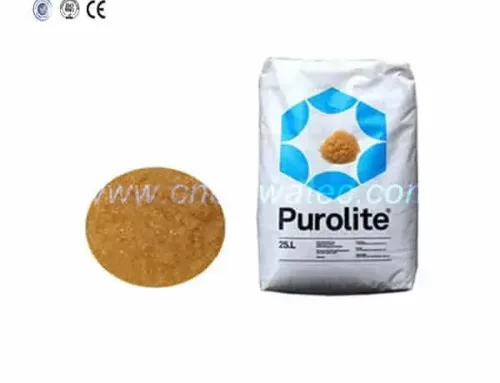
The quality of the ion exchange resin itself is critical to achieving consistent 18.2 MΩ·cm output. Low-quality resins can leach organic compounds or have insufficient exchange capacity, compromising the final water quality.
Stage 3: Post-Treatment — Specialized Polishing for Critical Applications
Post-treatment produces ultrapure water meeting specialized requirements such as low total organic carbon (TOC) or low endotoxin levels. Common post-treatment technologies include:
- Ultraviolet (UV) oxidation — Dual-wavelength UV lamps (185 nm and 254 nm) generate hydroxyl radicals that oxidize organic compounds, reducing TOC to below 5 ppb. The 254 nm wavelength also provides microbial disinfection.
- Ultrafiltration (UF) — UF membranes with molecular weight cutoffs of 5,000-10,000 Da remove endotoxins and pyrogens, reducing endotoxin levels to below 0.001 EU/mL. This is essential for pharmaceutical and life science applications.
- Sub-micron filtration — Final 0.1-0.2 μm membrane filtration removes any remaining bacterial cells and particulate matter before the point of use.
Maintaining Stable Water Quality in Ultrapure Water Systems
Producing 18.2 MΩ·cm ultrapure water is only the first step. Maintaining this quality over time — from the system outlet to the point of use — is equally important. Key factors affecting water quality stability include:
- System recirculation — Continuous circulation of ultrapure water through a closed loop prevents stagnation and biofilm formation. Most high-purity systems use a recirculation loop at 50-100% of the production rate.
- Point-of-use polishing — Final ion exchange and filtration cartridges at each dispensing point ensure that water quality is maintained regardless of variations in the recirculation loop.
- Regular sanitization — Periodic sanitization of the distribution loop with ozone, hot water (80°C), or chemical sanitizers prevents microbial growth that would compromise resistivity and increase TOC.
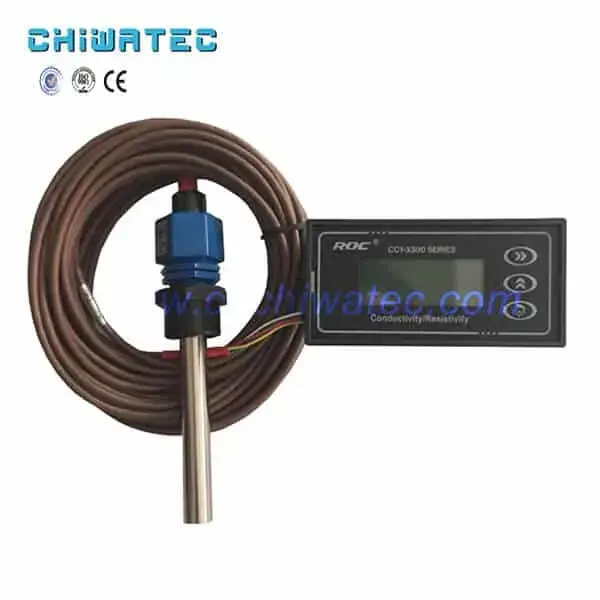
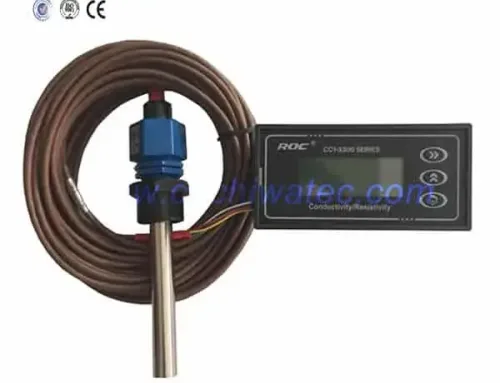
- Online monitoring — Continuous measurement of resistivity, TOC, temperature, and flow rate at critical points provides real-time assurance of water quality and early warning of system degradation.
Frequently Asked Questions About Pure Water and Ultrapure Water Systems
Q1: What is the difference between pure water and ultrapure water?
Pure water typically has a resistivity of 0.1-1 MΩ·cm and is produced by reverse osmosis or distillation. Ultrapure water has a resistivity of 18.2 MΩ·cm (the theoretical maximum) and requires additional polishing through ion exchange, EDI, and post-treatment steps to remove virtually all ionic, organic, and microbial contaminants.
Q2: How often should consumables be replaced in an ultrapure water system?
Replacement frequency depends on feed water quality and system usage. Typical intervals are: pretreatment cartridges every 3-6 months, RO membranes every 2-3 years, ion exchange cartridges when resistivity drops below setpoint (typically every 6-12 months), and UV lamps annually. Systems with online monitoring provide automatic alerts when consumables need replacement.
Q3: Can tap water be used as feed for an ultrapure water system?
Yes, most ultrapure water systems are designed for municipal tap water feed. The pretreatment section (sediment filter, carbon filter, and softener) prepares the tap water for RO treatment. However, if the feed water has unusually high hardness, TDS, or chlorine levels, additional pretreatment may be necessary to protect the system components.
Q4: What water quality standard applies to pharmaceutical ultrapure water?
Pharmaceutical ultrapure water must comply with the United States Pharmacopeia (USP) Purified Water and Water for Injection (WFI) monographs. USP Purified Water requires a resistivity of > 1 MΩ·cm and total organic carbon (TOC) < 500 ppb. USP WFI has stricter microbial limits and requires endotoxin levels below 0.25 EU/mL.
Q5: What is the typical flow rate of a laboratory ultrapure water system?
Laboratory benchtop systems typically produce 10-20 L/hour of ultrapure water. Larger centralized systems serving multiple laboratories can produce 100-1000 L/hour. The dispensing rate at the point of use is typically 1-2 L/min, with storage tanks buffering the difference between production rate and peak demand.
Conclusion and Call to Action
A properly designed pure water ultrapure water system with the right combination of pretreatment, reverse osmosis, ion exchange, and post-treatment stages delivers consistent, high-purity water for the most demanding laboratory and industrial applications. Understanding the preparation process, water quality standards, and maintenance requirements is essential for selecting and operating a system that meets your specific purity needs.
CHIWATEC offers a comprehensive range of pure water and ultrapure water systems, from benchtop laboratory units to large-capacity industrial systems. Contact us at [email protected] or [email protected] to discuss your ultrapure water requirements.
Related Resources and Further Reading
- Electronics Factory Ultrapure Water Process: 5 Production Methods Compared
- Ultrapure Water Equipment Maintenance: Complete Guide to Filter and Resin Care
- EDI Ultrapure Water System 2026: Characteristics, Applications, and Benefits
- Semiconductor Ultrapure Water Process: Complete Guide to UPW for Chip Manufacturing
- Ultrapure Water Purification System Products
Do you have a water treatment project we can help with
* Designing,machining,installing,commissioning, customize and one-stop service
 English
  Spanish
  Portuguese