Ultrapure Water Equipment Maintenance: Complete Guide to Filter and Membrane Care 2026
Ultrapure water (UPW) systems are critical in industries ranging from semiconductor manufacturing and pharmaceutical production to laboratory research and power generation. These systems rely on a sequence of precision components — sediment filters, activated carbon filters, reverse osmosis membranes, and often EDI or mixed-bed polishing — each with a defined service life. Without proper ultrapure water equipment maintenance, component degradation silently reduces water quality, increases operating costs, and risks costly production downtime. This guide covers the essential maintenance tasks for the three most critical consumable components: the precision filter element, activated carbon filter, and reverse osmosis membrane. CHIWATEC supplies complete ultrapure water purification systems with full maintenance support and replacement parts.
Ultrapure Water Equipment Maintenance: Understanding the System Flow
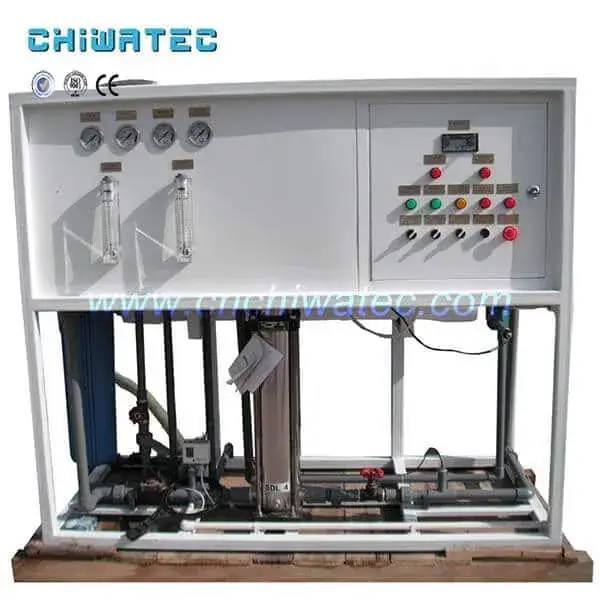
All ultrapure water equipment follows the same basic principle. Raw water (typically tap water) passes through a precision filter element (sediment filter) that removes suspended particles and sediment. It then flows through an activated carbon filter that adsorbs chlorine, organic compounds, and unpleasant tastes and odors. The pre-treated water then enters the reverse osmosis (RO) membrane stage, where dissolved salts, heavy metals, bacteria, and viruses are rejected by the semi-permeable membrane. The purified product water is stored in a tank for use. Ultrapure water equipment maintenance focuses on protecting the RO membrane — the most expensive and critical component — by ensuring the upstream pre-filters are replaced on schedule.
Precision Filter Element: Inspection and Replacement
The precision filter element (also called the sediment filter or PP filter) is the first line of defense in any ultrapure water system. Its job is to remove suspended solids — sand, silt, rust particles, and other debris — from the incoming water supply.
| Parameter | Specification |
| Material | Polypropylene (PP) melt-blown or wound |
| Typical micron rating | 1-5 μm |
| Replacement frequency | Every 3-6 months (depends on feed water turbidity) |
| Visual indicator | New: white. After use: gradually turns brown/yellow |
| Replacement signal | Brown discoloration indicates trapped sediment; replace immediately |
| Cost consequence of neglect | Fouled sediment filter → increased RO membrane load → premature RO failure |
The sediment filter does not remove dissolved contaminants — it protects the downstream activated carbon filter and RO membrane from physical clogging. When the filter element turns brown, it has reached its holding capacity and must be replaced. Continuing to operate with a spent sediment filter forces the entire particulate load onto the RO membrane, accelerating fouling and shortening the membrane’s service life by 50% or more. For systems with high sediment loads, replacing every 3 months is recommended; for clean municipal water, every 6 months is typically sufficient.
Activated Carbon Filter Element: Annual Replacement Schedule
The activated carbon filter element removes chlorine, chloramines, organic compounds, and residual disinfectants from the water. Chlorine is particularly damaging to thin-film composite (TFC) RO membranes — even low concentrations cause irreversible oxidation damage that destroys the membrane’s salt rejection capability. The activated carbon filter therefore serves a critical protective function.
- Replacement frequency: At least once per year. Unlike the sediment filter, the activated carbon filter does not show visible signs of exhaustion. The carbon’s internal surface area becomes saturated with adsorbed contaminants over time, and once saturated, it can no longer remove chlorine or organics.
- Why annual replacement is critical: The total surface area of the activated carbon cannot regenerate itself. After approximately 12 months of continuous use, the adsorption capacity is depleted. Operating beyond this point exposes the RO membrane to chlorine and organic fouling.
- Type of carbon: High-quality coconut shell activated carbon is recommended for UPW pre-treatment due to its superior microporous structure and higher chlorine removal capacity compared to bituminous or wood-based carbons.
- Secondary benefit: Regular carbon replacement also improves taste, odor, and color removal in systems where the ultrapure water is used for drinking or food-grade applications.
Reverse Osmosis Membrane: Protection and Lifespan
The reverse osmosis membrane is the heart of the ultrapure water system. It is responsible for removing 95-99% of dissolved salts, organic compounds, and microorganisms. A new RO membrane typically lasts 2-3 years under normal operating conditions with proper pre-treatment and regular ultrapure water equipment maintenance.
| Factor | Impact on RO Membrane Life | Recommended Action |
| Sediment filter condition | Spent filter allows particles to reach RO → fouling | Replace PP filter every 3-6 months |
| Activated carbon condition | Exhausted carbon allows chlorine to reach RO → oxidation damage | Replace carbon filter annually |
| Feed water TDS | Higher TDS increases osmotic pressure and scaling risk | Consider antiscalant dosing or water softening for TDS >500 ppm |
| Feed water temperature | Colder water increases viscosity, reduces flux, increases pressure | Maintain 20-25°C for optimal performance |
| Operating pressure | Excessive pressure damages membrane structure | Stay within manufacturer’s rated pressure range |
| System idle time | Stagnant water promotes bacterial growth on membrane | Flush membrane weekly if system is not in daily use |
Signs that the RO membrane needs replacement:
- Product water conductivity/TDS rises above acceptable limits
- Recovery rate decreases significantly
- Pressure differential across the membrane increases
- Membrane elements show visible fouling, scaling, or biofouling during inspection
- Sanitization and cleaning no longer restore performance
The single most important rule of ultrapure water equipment maintenance is this: the precision filter element and activated carbon filter exist primarily to protect the reverse osmosis membrane. If they are replaced on schedule, the RO membrane will reliably deliver its full 2-3 year design life. If they are neglected, RO membrane replacement costs will increase dramatically — often 5-10 times the cost of a filter change.
Complete Maintenance Schedule
| Component | Replacement Frequency | Visual Check | Cost of Neglect |
| Precision (PP) filter element | Every 3-6 months | Color change: white → brown | RO membrane fouling, premature failure |
| Activated carbon filter element | Annually | No visible change — must track by date | Chlorine damage to RO membrane, organic fouling |
| Reverse osmosis membrane | Every 2-3 years | Monitor TDS/conductivity of product water | Poor water quality, system downtime, replacement cost |
| Post-carbon / polishing filter | Every 6-12 months | Product water taste/odor | Reduced final water quality |
| UV sterilizer lamp (if equipped) | Annually | UV intensity reading | Bacterial breakthrough in stored water |
| EDI modules (if equipped) | Every 3-5 years | Product water resistivity | Resistivity drop, increased ion leakage |
Frequently Asked Questions
How often should I change the filter elements in my ultrapure water system?
The precision (sediment) filter should be changed every 3-6 months. The activated carbon filter should be changed annually. The RO membrane typically lasts 2-3 years with proper pre-treatment. Always follow your system manufacturer’s recommendations, as actual replacement intervals depend on feed water quality and daily water consumption.
What happens if I don’t replace the sediment filter on time?
The sediment filter gradually clogs with trapped particles, reducing flow rate and increasing pressure drop. More importantly, once the filter is saturated, particulate matter bypasses it and reaches the RO membrane, causing rapid fouling. The RO membrane’s service life can be cut by 50-70% if the sediment filter is not maintained.
Why does the activated carbon filter need annual replacement?
Activated carbon removes chlorine and organic compounds from the feed water by adsorption — contaminants bond to the extensive internal pore surface of the carbon. Over time, these pores become saturated and the carbon loses its adsorption capacity. Unlike the sediment filter, there is no visible indicator of exhaustion. After approximately 12 months, the carbon can no longer protect the RO membrane from chlorine damage.
Can I clean and reuse the sediment filter instead of replacing it?
Some washable sediment filters exist, but for most PP melt-blown or wound filters, replacement is the only option. These filters trap particles within their depth structure — surface cleaning removes only the surface layer while leaving internal contaminants that cause clogging and bacterial growth. Replacement is inexpensive compared to the cost of a damaged RO membrane.
How do I know when my RO membrane needs replacement?
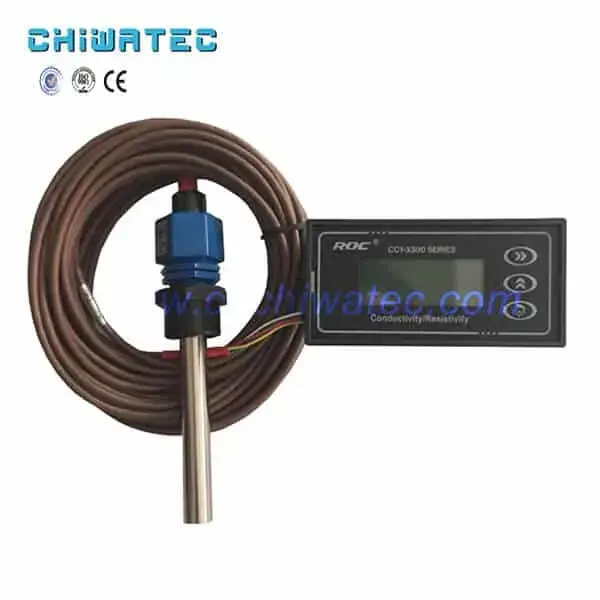
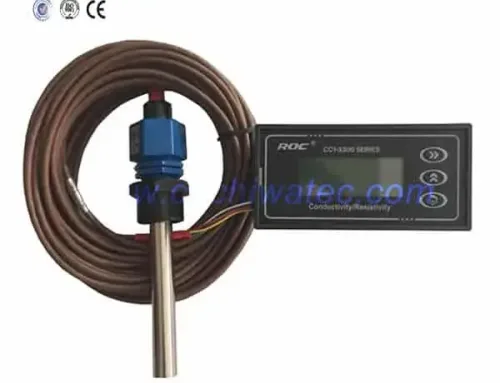
Monitor the product water conductivity or TDS daily. If you see a steady increase above the system’s design specification (typically 95-99% rejection rate), the membrane is degrading. Additional signs: decreased production flow rate at the same operating pressure, increased pressure differential across the membrane housing, and the need for more frequent chemical cleaning. A conductivity meter is the most reliable diagnostic tool for RO membrane health.
Conclusion & Call to Action
Consistent ultrapure water equipment maintenance — particularly timely replacement of the precision filter element and activated carbon filter — is the most cost-effective way to protect your RO membrane investment and ensure reliable, high-quality ultrapure water production. The rules are simple: change the PP filter when it turns brown (every 3-6 months), change the carbon filter annually, and the RO membrane will reward you with 2-3 years of trouble-free service. Neglecting these basic tasks is the most common cause of premature system failure and unnecessarily high operating costs.
Need replacement filters, RO membranes, or a customized ultrapure water equipment maintenance plan? Contact CHIWATEC for professional support. Email us at [email protected] or [email protected] for replacement parts and maintenance recommendations.
Related Resources and Further Reading
- Ultrapure Water Equipment for FPC Circuit Board: Complete Process Guide
- Ultrapure Water Equipment Blockage Causes: Complete Guide
- Ultrapure Water System Process Flow: Complete Guide to UPW Treatment Equipment
- EDI Ultrapure Water System: Characteristics, Applications, and Advantages
- Ultrapure Water and Softening Products
Do you have a water treatment project we can help with
* Designing,machining,installing,commissioning, customize and one-stop service
 English
  Spanish
  Portuguese