What Is Water Pretreatment: Methods and Processes 2026
Water pretreatment is the primary treatment performed in advance before the main purification process, ensuring that downstream RO membranes, ion exchange resins, and other sensitive equipment operate effectively. Understanding water pretreatment methods is essential for designing reliable water treatment systems that achieve consistent effluent quality. Proper pretreatment removes suspended solids, adjusts chemical composition, and protects downstream equipment from fouling, scaling, and damage — directly impacting the operational life and efficiency of the entire treatment train.
What Is Water Pretreatment
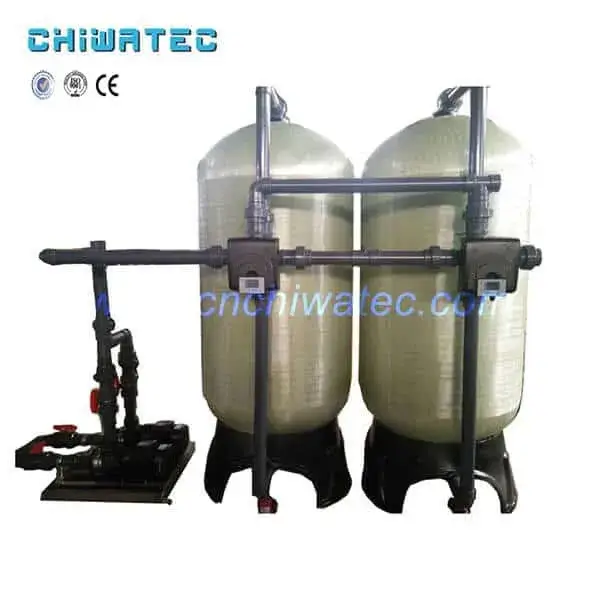
Water pretreatment refers to the initial treatment steps applied to raw water before it enters the main purification system — whether reverse osmosis, ion exchange, or distillation. The primary goal of pretreatment is to condition the feed water to meet the specific requirements of the downstream process. Without adequate pretreatment, even the highest quality RO membranes or ion exchange resins will rapidly foul, scale, or degrade, leading to frequent maintenance, reduced efficiency, and premature replacement. For a detailed overview of how pretreatment integrates with RO systems, see the main process flow of RO pure water equipment.
Water Pretreatment Methods Overview
Water pretreatment methods are generally classified by the type of contaminant they target and the treatment mechanism employed:
| Method | Category | Target Contaminants | Typical Equipment |
| Sedimentation | Physical | Suspended solids, grit, heavy particles | Sedimentation tanks, grit chambers |
| Coagulation / Flocculation | Chemical | Colloidal particles, turbidity, organic matter | Flash mixers, flocculation basins |
| Media Filtration | Physical | Suspended solids, precipitated floc | Sand filters, multimedia filters |
| Chlorination / Disinfection | Chemical | Bacteria, algae, biological growth | Chlorine dosing systems |
| pH Adjustment | Chemical | Acidity, alkalinity, scaling potential | Acid/caustic dosing systems |
| Antiscalant Dosing | Chemical | Scale-forming minerals (Ca, Mg, SiO₂) | Antiscalant injection pumps |
| Cartridge Filtration | Physical | Fine particles (1-5 microns) | Cartridge filter housings |
Most industrial water treatment systems combine multiple pretreatment methods in sequence, with the specific selection determined by raw water quality analysis and the requirements of the downstream purification process.
Physical Pretreatment Methods
Physical pretreatment methods rely on gravity, filtration, or mechanical separation to remove suspended and particulate contaminants from raw water.
Sedimentation (Precipitation): This is the simplest form of pretreatment, where water is held in a large basin or sedimentation tank at very low flow velocity, allowing heavier suspended particles to settle by gravity. The large volume and low flow rate are essential for effective solids separation. Sedimentation is typically used as the first stage when raw water has high turbidity or suspended solids content, such as surface water or river water intake.
Media Filtration: After sedimentation, water passes through layers of granular media — typically sand, anthracite, or garnet — which trap remaining suspended solids. Multimedia filters use layers of different media with decreasing pore sizes, providing depth filtration that captures particles throughout the filter bed rather than just on the surface. This significantly increases the filter’s dirt-holding capacity and extends the time between backwash cycles.
Chemical Pretreatment Methods
Chemical pretreatment uses chemical reagents to transform dissolved contaminants into removable forms or to adjust the water chemistry for downstream processes.
Coagulation and Flocculation: This process uses coagulants such as iron salts (ferric chloride, ferric sulfate), aluminum salts (alum, PAC), or organic polymers to destabilize colloidal particles that would otherwise pass through physical filters. The coagulant neutralizes the electrical charges that keep colloidal particles in suspension, causing them to aggregate into larger floc particles that can settle or be filtered out. The efficiency of coagulation depends on pH, dosage, mixing intensity, and water temperature — with optimal conditions typically at pH 6-8 for most coagulants.
pH Adjustment: Many downstream processes require specific pH ranges for optimal performance. RO membranes, for example, operate best at pH 7-8.5, while ion exchange resins have different pH tolerance windows. Acid (usually H₂SO₄ or HCl) or caustic (NaOH) is dosed to bring the feed water pH into the target range. pH adjustment also controls scaling potential — lowering pH reduces the risk of calcium carbonate scale formation on RO membranes.
For a comprehensive analysis of pretreatment in RO systems, refer to the guide on optimizing RO systems: analysis of five common pretreatment processes.
Why Water Pretreatment Is Essential for RO Systems
Reverse osmosis membranes are particularly sensitive to feed water quality, making pretreatment absolutely critical for reliable RO operation. Key reasons include:
- Preventing membrane fouling: Suspended solids, colloids, and organic matter can deposit on the membrane surface, forming a fouling layer that reduces flux and increases operating pressure.
- Controlling membrane scaling: Dissolved minerals — particularly calcium, magnesium, barium, and silica — can concentrate at the membrane surface and form scale that permanently damages the membrane.
- Protecting against chemical attack: Residual chlorine and other oxidants must be removed before the RO stage, as polyamide RO membranes are highly susceptible to oxidative degradation.
- Reducing operating costs: Effective pretreatment reduces cleaning frequency, extends membrane life, lowers energy consumption, and minimizes downtime.
For operational guidelines on pretreated RO systems, see the operating rules for pure water production equipment.
Frequently Asked Questions
What is the difference between pretreatment and primary treatment?
Pretreatment conditions raw water for the main purification process (RO, ion exchange, etc.), targeting easy-to-remove contaminants like suspended solids, turbidity, and chlorine. Primary treatment refers to the main purification stage — typically membrane separation or ion exchange — that achieves the final water quality target.
Does all water need pretreatment before RO?
Municipal tap water with stable, low turbidity and controlled chlorine levels may need minimal pretreatment (typically a 5-micron cartridge filter and activated carbon). Surface water, well water, or wastewater always requires comprehensive pretreatment including sedimentation, coagulation, and multimedia filtration.
What is the most common pretreatment failure in RO systems?
The most common failure is inadequate chlorine removal by the activated carbon pre-filter. When the carbon bed is exhausted, chlorine passes through to the RO membrane, causing irreversible oxidative damage that reduces salt rejection and shortens membrane life from 3 years to just months.
Can pretreatment be automated?
Yes. Modern water treatment plants use PLC-controlled systems with online sensors for turbidity, pH, chlorine residual, and flow rate to automatically adjust coagulant dosing, backwash frequency, and chemical injection based on real-time feed water quality.
How do I select the right pretreatment method?
The selection depends on raw water analysis (turbidity, TDS, hardness, alkalinity, iron, manganese, silica, bacteria, and organic content) and the specific requirements of the downstream purification process. A comprehensive water analysis report is the essential first step in designing an effective pretreatment system.
Conclusion
Water pretreatment methods — including sedimentation, coagulation, filtration, pH adjustment, and antiscalant dosing — are essential for protecting downstream RO membranes and ensuring reliable water treatment system performance. Proper pretreatment extends equipment life, reduces operating costs, and maintains consistent effluent quality. CHIWATEC Water Treatment Technology designs and supplies complete water pretreatment systems tailored to specific raw water conditions and application requirements. For inquiries, please contact us:
Email: [email protected] / [email protected]
Do you have a water treatment project we can help with
* Designing,machining,installing,commissioning, customize and one-stop service
 English
  Spanish
  Portuguese