

Household Water Purifier Functions: Complete Guide to RO Filtration Stages and Benefits 2026
A household water purifier is essentially a miniaturized water treatment plant designed for home use. The core household water purifier functions center on removing impurities, heavy metals, bacteria, and organic contaminants from tap water through advanced reverse osmosis technology. Understanding these household water purifier functions helps homeowners choose the right system and maintain it properly for consistent, healthy drinking water.
Understanding the Key Household Water Purifier Functions
A standard household reverse osmosis water purifier integrates multiple household water purifier functions across its filtration stages to deliver pure, safe drinking water directly from your tap. Each stage targets specific contaminants that may be present in municipal or well water supplies.
| Filtration Stage | Component | Primary Function | Contaminants Removed |
| Stage 1 | PP Sediment Filter | Remove large particles | Sediment, rust, silt, sand > 5 μm |
| Stage 2 | Granular Activated Carbon (GAC) | Adsorb chlorine and organics | Chlorine, chloramine, pesticides, VOCs, bad taste/odor |
| Stage 3 | Carbon Block Filter (CTO) | Fine adsorption and filtration | Smaller particles, residual chlorine, organic compounds |
| Stage 4 | RO Membrane (0.0001 μm) | Reverse osmosis separation | Heavy metals, nitrates, fluoride, TDS, bacteria, viruses |
| Stage 5 | Post-Activated Carbon (or UF) | Final polishing | Residual taste, odor improvement; optional UF for mineral retention |
The reverse osmosis membrane at Stage 4 is the technological heart of the system. With pore sizes of only 0.0001-0.001 microns — approximately one-millionth the diameter of a human hair — the RO membrane physically blocks bacteria (typically > 0.2 μm) and viruses, ensuring the output water meets purity standards for safe drinking.
The Technical Core of Household Water Purifiers: RO Membrane Function
The reverse osmosis membrane operates on a simple but powerful principle: when pressure is applied to the feed water exceeding the natural osmotic pressure, water molecules are forced through a semi-permeable membrane while dissolved inorganic salts, organic molecules, bacteria, and viruses are rejected. A typical household RO system operates at 40-80 psi (275-550 kPa) and achieves 85-95% rejection of total dissolved solids (TDS).
The purified water (permeate) is collected in a pressurized storage tank for on-demand dispensing, while the concentrated water (reject) containing the removed contaminants is discharged to the drain. Modern systems achieve a permeate-to-reject ratio of approximately 1:1 to 1:3, with higher-end models incorporating permeate pumps to improve efficiency and reduce wastewater.
| Parameter | Typical Value |
| RO membrane pore size | 0.0001 – 0.001 μm |
| Operating pressure | 40-80 psi (275-550 kPa) |
| TDS rejection rate | 85-95% |
| Typical production rate | 50-100 GPD (gallons per day) |
| Recovery ratio | 25-50% |
| Minimum feed water temperature | 5°C (41°F) |
How Household Water Purifier Functions Ensure Water Safety
The combined household water purifier functions provide multi-barrier protection against a wide spectrum of water contaminants:
- Physical removal — Sediment and carbon filters remove suspended particles, rust, and silt that cause turbidity and potentially harbor microorganisms.
- Chemical adsorption — Activated carbon stages adsorb chlorine, chloramine, volatile organic compounds (VOCs), pesticides, and industrial chemicals that affect taste, odor, and long-term health.
- Membrane separation — The RO membrane rejects 85-99% of dissolved inorganic solids including lead, arsenic, chromium, mercury, nitrates, and fluoride. This is the only stage capable of removing dissolved heavy metals.
- Microbiological barrier — The RO membrane’s sub-micron pore size physically blocks bacteria, viruses, and protozoan cysts (Cryptosporidium, Giardia), providing a reliable microbiological barrier without chemical disinfectants.
After the RO membrane, the post-carbon or UF polishing stage enhances taste and optionally restores beneficial minerals through a medical stone (mineralization) filter element, converting purified water into mineral-enriched drinking water.
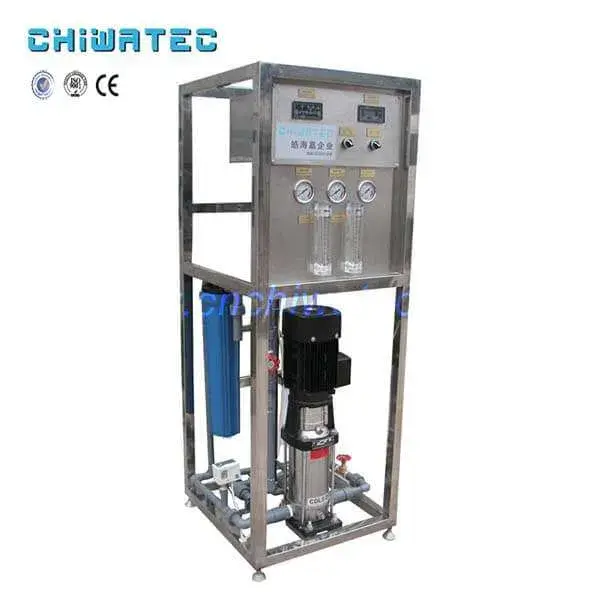
Types of Household Water Purifiers and Their Features
| Type | Filtration Stages | Power Required | Key Feature |
| Standard RO system | 5-stage (sediment + 2 carbon + RO + post-carbon) | Yes (booster pump) | Highest purity, storage tank included |
| Low-pressure RO system | 3-stage (carbon + RO membrane + post-carbon) | No | Lower water pressure, compact design, no electricity needed |
| UF (Ultrafiltration) system | 3-4 stage (sediment + carbon + UF + post-carbon) | No | Retains minerals, no wastewater, no electricity |
| Alkaline / Mineral RO system | 6-stage (5-stage RO + mineral cartridge) | Yes | Adds calcium, magnesium, and trace minerals for taste and health |
| Tankless RO system | 5-stage with high-flow membrane | Yes | Compact, no storage tank, instant filtration |
Installation Requirements for Household Water Purifiers
Most household RO water purifiers are installed under the kitchen sink with a dedicated pure water faucet. Installation requirements include:
- Power supply — A standard electrical outlet under the sink is required for systems with booster pumps. Low-pressure membrane systems (e.g., certain Yike, Morin, or Ke Lukang models) do not require power.
- Feed water connection — A cold water line tap connects to the system’s inlet via a saddle valve or push-fit fitting.
- Drain connection — A drain saddle clamps onto the sink drain pipe to discharge the RO reject water.
- Storage tank placement — For tank-based systems, sufficient under-sink space for the 2-4 gallon pressurized storage tank.
- Pre-installation planning — If you are remodeling your kitchen, plan for an electrical outlet under the sink area even if you do not install the system immediately. This avoids costly retrofitting later.
Benefits of Household Water Purifiers vs. Bottled Water
Installing a household water purifier offers several advantages over traditional bottled water:
- Cost savings — The per-gallon cost of RO-purified water is approximately $0.05-0.15, compared to $0.50-2.00 for bottled water.
- Convenience — Unlimited pure water on demand from your own faucet eliminates the need for carrying heavy water bottles or scheduling deliveries.
- Environmental impact — Reducing plastic bottle consumption decreases plastic waste and the carbon footprint associated with bottled water transportation.
- Water quality control — You control the maintenance schedule, filter replacement, and system condition, ensuring consistent water quality without relying on bottled water suppliers.
Frequently Asked Questions About Home Water Purifiers
Q1: Does a household water purifier remove essential minerals from water?
Yes, RO membranes reject most dissolved minerals including calcium and magnesium. However, these minerals are primarily obtained from food rather than drinking water. For those concerned about mineral intake, mineralizing post-filters (medical stone cartridges) can add back beneficial minerals without compromising the purification capability of the RO membrane.
Q2: How often should I replace the filter cartridges?
Typical replacement schedules are: sediment filter every 6 months, carbon filters every 6-12 months, RO membrane every 2-3 years, and post-carbon filter every 12 months. Replacements depend on feed water quality and system usage — systems treating high-TDS or heavily chlorinated water may require more frequent changes.
Q3: Does a water purifier waste water?
Traditional RO systems produce 2-4 liters of reject water per liter of purified water. However, newer systems with permeate pumps or high-recovery membranes can achieve ratios as low as 1:1. The reject water is safe for non-potable uses such as washing dishes, watering plants, or cleaning.
Q4: Can I install a water purifier myself?
Yes, most under-sink RO systems are designed for DIY installation with push-fit connections and clear instructions. Basic plumbing skills and access to the under-sink area are sufficient. However, if you need to drill a hole for the dedicated faucet on a granite countertop, professional assistance is recommended.
Q5: What maintenance does a household water purifier require?
Regular maintenance includes replacing cartridge filters on schedule, sanitizing the system annually (or when changing the RO membrane), checking for leaks at fittings, and monitoring water production rate. Many modern systems include indicator lights or digital displays that remind you when filter replacement is due.
Conclusion and Call to Action
Understanding the household water purifier functions — from sediment filtration to RO membrane separation and final polishing — empowers you to select, install, and maintain a system that delivers safe, great-tasting drinking water for your family. With a properly maintained RO water purifier, you can eliminate reliance on bottled water, reduce plastic waste, and enjoy unlimited pure water from your kitchen tap.
CHIWATEC offers a complete range of household water purifiers, from standard 5-stage RO systems to low-pressure and mineral-enriched models. Contact us at [email protected] or [email protected] for expert guidance on choosing the right household water purifier for your home.
Related Resources and Further Reading
- Household Water Purifier: Complete Guide to Healthy Drinking Water Treatment
- 2026 Water Purifier Selection Guide: How to Choose the Right System for Your Home
- Introduction of RO Water Purifier: Working Principle and Key Components
- The Function of Each Part of the Pure Water Machine and Common Fault Solutions
- RO Water Treatment System Products
Do you have a water treatment project we can help with
* Designing,machining,installing,commissioning, customize and one-stop service






 English
  Spanish
  Portuguese




