Purified Water Production Equipment: Complete Guide to Main System Components and Configuration
Access to clean, safe drinking water is a growing global priority, and purified water production equipment is at the heart of delivering high-quality water for residential, commercial, and industrial applications. From pretreatment and reverse osmosis to disinfection and final filtration, each subsystem plays a critical role in ensuring consistent water quality. In this guide, CHIWATEC explains the main system composition of purified water production equipment, covering the pretreatment system, the RO host system, and the post-treatment system in detail.
Purified Water Production Equipment: System Overview
A complete purified water production equipment system consists of three main subsystems that work sequentially to convert raw water into high-purity water. Understanding the function of each subsystem helps operators maintain optimal performance and troubleshoot issues effectively.
| Subsystem | Components | Primary Function |
|---|---|---|
| Pretreatment | Raw water tank, pump, multimedia filter, activated carbon filter, softener, cartridge filter | Remove suspended solids, chlorine, hardness, and particles >5 µm |
| RO host | High-pressure pump, RO membrane vessels, membrane elements, flow controls | Remove 95–99% of dissolved salts, bacteria, viruses, and organic compounds |
| Post-treatment | Disinfection device (UV/ozone), microporous filter, storage tank, distribution pump | Sterilize, remove residual particles, and maintain water quality during storage |
Each subsystem must be properly sized and maintained to ensure the overall system delivers water that meets the required quality standards.
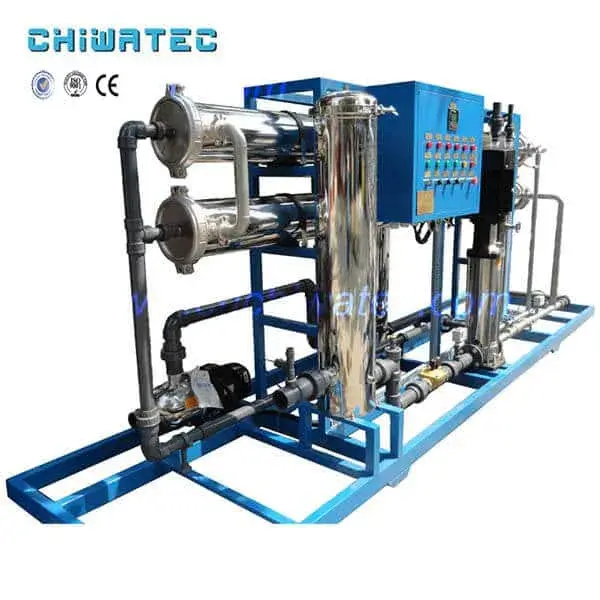
Pretreatment System: Protecting Downstream Equipment
The pretreatment system is the first and arguably most important subsystem of purified water production equipment. Its role is to prepare the raw water for the RO membrane by removing contaminants that could cause fouling, scaling, or chemical damage. A typical four-stage pretreatment train includes:
- Raw water tank and pump — Raw water (municipal tap water, groundwater, or surface water) is stored in a raw water tank to buffer fluctuations in supply pressure and flow. A dedicated raw water pump provides consistent pressure to the pretreatment train, ensuring each downstream filter receives adequate flow regardless of upstream pressure variations.
- Multi-media filter — Contains graded layers of anthracite, silica sand, and garnet to remove suspended solids, sediment, rust particles, and colloidal matter. The multi-layer design allows for depth filtration, capturing particles down to 10–25 microns. The filter is periodically backwashed to remove accumulated debris.
- Activated carbon filter — Filled with granular activated carbon (GAC), this filter adsorbs residual chlorine, organic compounds, volatile organic compounds (VOCs), and substances that cause taste and odor issues. Chlorine removal is critical because chlorine chemically attacks and degrades thin-film composite RO membranes.
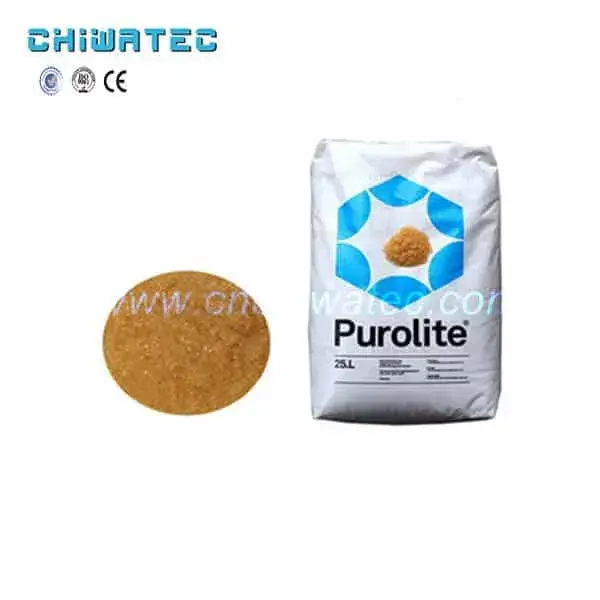
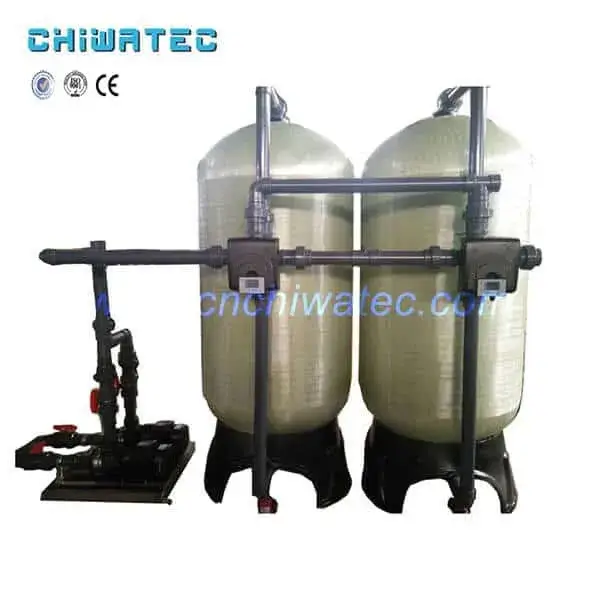
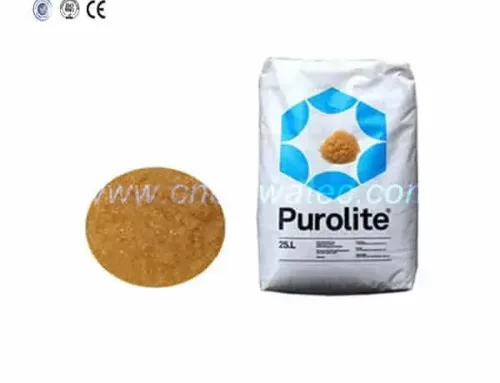
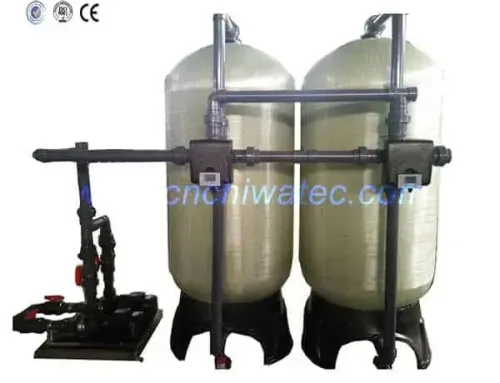
- Water softener (ion exchanger) — Uses cation exchange resin to remove calcium and magnesium ions that cause water hardness. Softening prevents calcium carbonate and calcium sulfate scaling on RO membranes, which would otherwise reduce membrane life and increase operating pressure.
- Cartridge (precision) filter — A 5-micron melt-blown or wound cartridge filter provides final polishing before water enters the RO system. It captures any remaining particles that could bypass or break through the upstream filters, protecting the RO membrane from physical damage and channel blockage.
Reverse Osmosis Host System: The Core Purification Stage
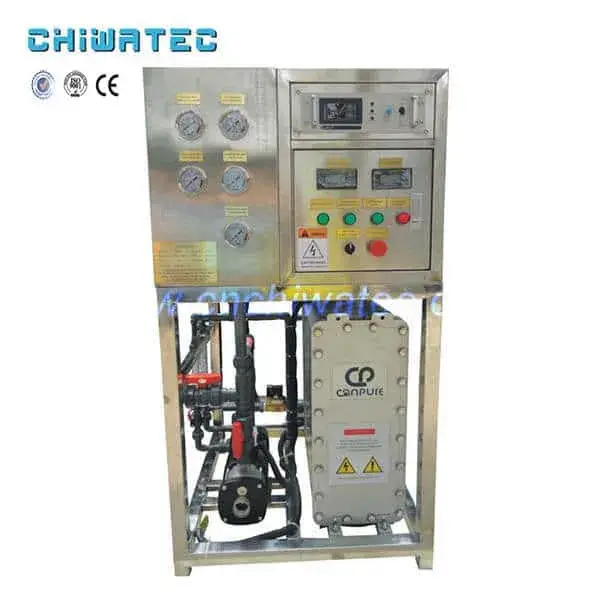
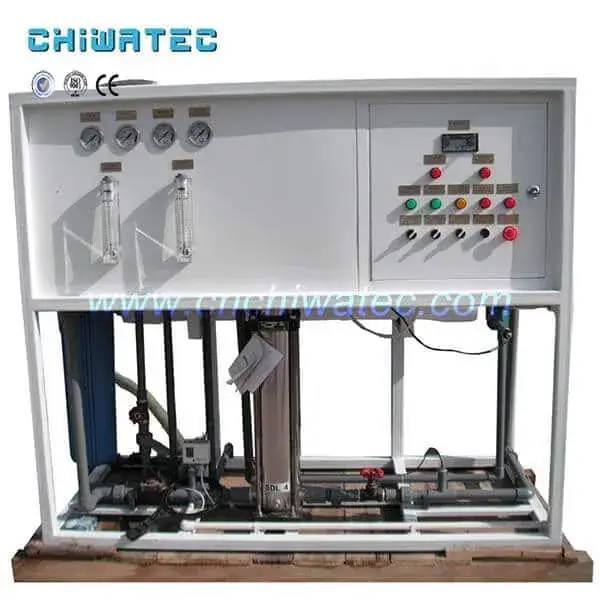
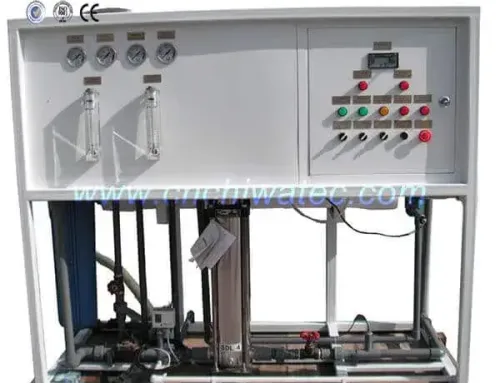
The RO host system is the heart of purified water production equipment. It houses the high-pressure pump and RO membrane elements that perform the primary desalination. Most commercial and industrial purified water systems use a two-stage reverse osmosis configuration:
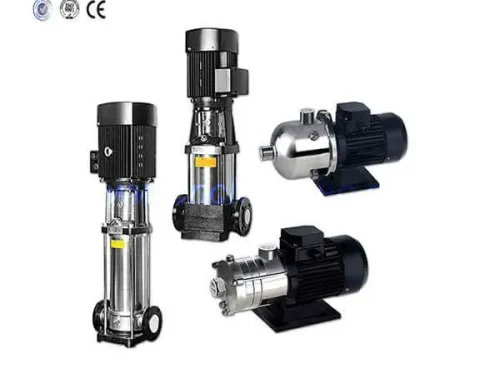
- High-pressure pump — Raises the pretreated water pressure to the level required for reverse osmosis. For brackish water RO systems, operating pressure is typically 8–15 bar (120–220 psi). The pump is the primary energy consumer in the system and should be selected for optimal efficiency at the design flow rate.
- First-stage RO membranes — Pretreated water passes through the first bank of RO membrane elements, where approximately 75–85% of dissolved salts are removed. The permeate from the first stage is collected and fed to the second stage.
- Second-stage RO membranes — The permeate from the first stage undergoes additional polishing in the second stage, achieving a total system desalination rate exceeding 95% (typically 97–99%). The two-stage configuration also improves overall water recovery, with many systems achieving 70–75% recovery.
Key performance parameters at 25°C feed water temperature include: permeate flow rate, salt rejection rate (>95%), recovery rate (70–75%), and pressure drop across the membrane array. As water temperature decreases, the permeate flow rate and recovery rate decrease, requiring pressure adjustment to maintain production.
Post-Treatment System: Final Polishing and Disinfection
After reverse osmosis, the purified water enters the post-treatment system, which ensures microbiological safety and maintains water quality during storage and distribution:
- Disinfection device (ozone generator or UV sterilizer) — Purified water stored in a tank can become contaminated by airborne bacteria entering through tank vents or during tank maintenance. An ozone generator injects ozone (O₃) into the water as a powerful oxidizing disinfectant that kills bacteria and viruses without leaving chemical residues. Alternatively, UV sterilizers provide chemical-free disinfection by exposing flowing water to UV-C light at 254 nm wavelength, which damages microbial DNA and prevents reproduction.
- Microporous (final) filter — A 0.2 µm or 0.45 µm absolute-rated filter removes any residual bacteria, particles, or microbial debris from the disinfection stage. These filters have high filtration accuracy, high flow rates, and are resistant to acid and alkali corrosion. They are typically constructed from polyethersulfone (PES) or polytetrafluoroethylene (PTFE) membrane media.
- Storage and distribution — Purified water is stored in a closed tank with air filtration (to prevent recontamination) and distributed through a recirculation loop to maintain water quality at all points of use.
System Integration and Automatic Control
Modern purified water production equipment integrates the three subsystems through a programmable logic controller (PLC) that manages:
- Automatic start/stop based on storage tank level
- Sequential backwashing of multimedia and carbon filters
- Automatic regeneration of the water softener
- RO membrane flushing at system start-up and shutdown
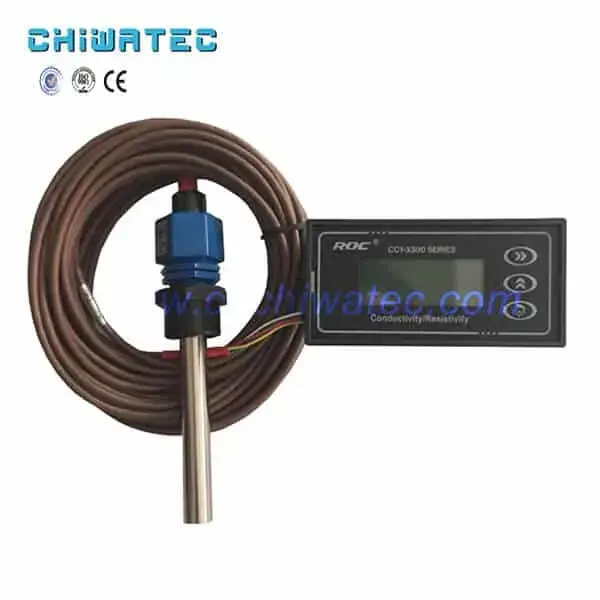
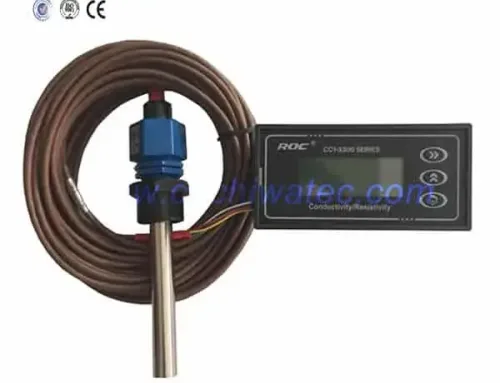
- Real-time monitoring of conductivity, flow rate, pressure, and temperature
- Alarm and shutdown triggers for out-of-spec conditions
This automation enables unattended operation and consistent water quality without the need for dedicated full-time operators, reducing labor costs while improving reliability.
Frequently Asked Questions (FAQ)
What is the difference between purified water and ultrapure water?
Purified water typically has a conductivity of <10 µS/cm and is produced by reverse osmosis. Ultrapure water has resistivity >18 MΩ·cm and requires additional polishing through EDI or mixed-bed ion exchange after RO treatment.
How often should pretreatment filters be replaced?
Multimedia filter media should be replaced every 12–24 months. Activated carbon should be replaced every 6–12 months or when chlorine breakthrough is detected. Cartridge filters should be replaced when the pressure drop exceeds 0.5–1.0 bar above baseline.
What causes low RO membrane desalination rate?
Common causes include membrane age (end of service life), membrane fouling or scaling, O-ring seal leaks on membrane interconnectors, damaged membrane elements due to chlorine exposure, or feed water temperature outside the design range.
Do I need ozone or UV for post-treatment?
Ozone is preferred for storage tank disinfection because it provides residual protection. UV is ideal for point-of-use disinfection at the distribution point. Many systems use both: UV at the RO outlet and ozone injection into the storage tank.
Can purified water production equipment run automatically?
Yes. Most modern systems are fully automated with PLC control, requiring no operator intervention during normal operation. Automatic features include filter backwashing, softener regeneration, membrane flushing, and quality-based start/stop logic.
Conclusion & Call to Action
Understanding the main system composition of purified water production equipment — from pretreatment and reverse osmosis to disinfection and final filtration — is essential for selecting, operating, and maintaining a system that delivers consistent, high-quality water. Each subsystem plays a specific role, and they must work together seamlessly to achieve the desired water quality and production capacity. CHIWATEC designs and manufactures complete purified water production systems for drinking water, industrial process water, and specialized applications. Contact our team for a custom system design: [email protected] or [email protected].
Do you have a water treatment project we can help with
* Designing,machining,installing,commissioning, customize and one-stop service
 English
  Spanish
  Portuguese