2026 Complete Guide to LCD Ultrapure Water Equipment: 8 Key Technical Features for Display Manufacturing
Struggling to maintain the ultra-high water purity required for LCD display manufacturing? The global flat panel display market was valued at approximately USD 142 billion in 2024, and ultrapure water (UPW) quality is the single most critical variable determining LCD production yield. Here is the direct answer: LCD ultrapure water equipment must deliver resistivity of 18.2 MΩ·cm, total organic carbon (TOC) below 5 ppb, and particle counts under 0.1 micron to prevent display defects. CHIWATEC has engineered specialized ultrapure water systems for the electronics display industry, providing turnkey solutions that meet SEMI and ASTM D5127 standards.
Why LCD Manufacturing Requires Ultrapure Water
Liquid crystal display (LCD) panels are manufactured through multiple precision layering, etching, and cleaning processes. Even microscopic contaminants — particles larger than 0.1 micron, dissolved ions, or organic residues — can cause pixel defects, short circuits, or optical irregularities that render entire panels unusable.
The critical relationship between water purity and LCD yield includes:
- Particle contamination: A single 0.2-micron particle can create a visible pixel defect on a 4K display, resulting in panel rejection rates of 3-8% in facilities without adequate UPW systems
- Ionic contamination: Dissolved ions (Na+, Cl–, Ca2+) at levels above 0.1 ppb can cause electrical leakage in thin-film transistor (TFT) arrays
- TOC interference: Organic compounds above 10 ppb can form films on LCD substrates during photoresist stripping and cleaning, reducing light transmission by 5-15%
- Bacterial growth: Biofilms in water distribution systems can shed endotoxins that interfere with liquid crystal alignment layers
For these reasons, LCD fabrication facilities invest heavily in LCD ultrapure water equipment that consistently produces ASTM D5127 Type E-I.2 grade water. The applications of ultra-pure water in the optical industry follow comparable purity benchmarks, though LCD production demands even tighter particle and TOC control.
Core Water Quality Standards for LCD Ultrapure Water Systems
LCD display manufacturing imposes some of the most stringent water quality specifications across all industries. The table below summarizes the required parameters for LCD-grade ultrapure water:
| Parameter | LCD Grade Requirement | Measurement Method |
|---|---|---|
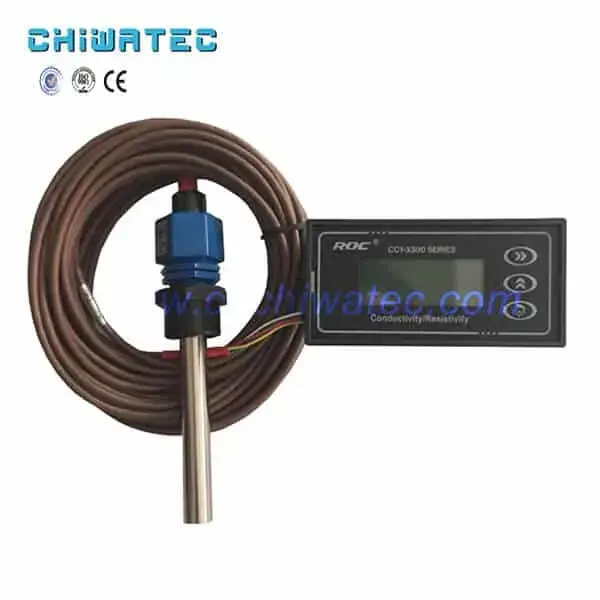
| Resistivity | 18.2 MΩ·cm (at 25°C) | In-line resistivity sensor |
| TOC | ≤ 5 ppb | UV oxidation + NDIR |
| Particles (>0.1 μm) | < 10 particles/mL | Laser particle counter |
| Dissolved Silica | < 1 ppb | ICP-MS or colorimetric |
| Bacteria | < 1 CFU/100 mL | R2A agar culture (7 days) |
| Dissolved Oxygen | < 5 ppb | Membrane-based DO sensor |
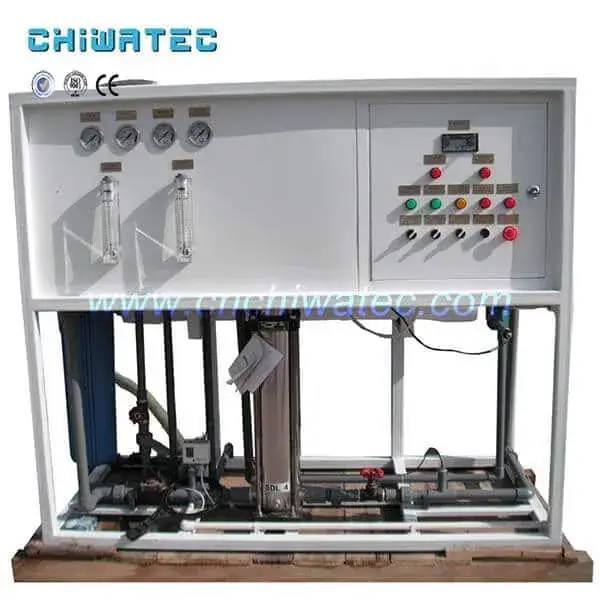
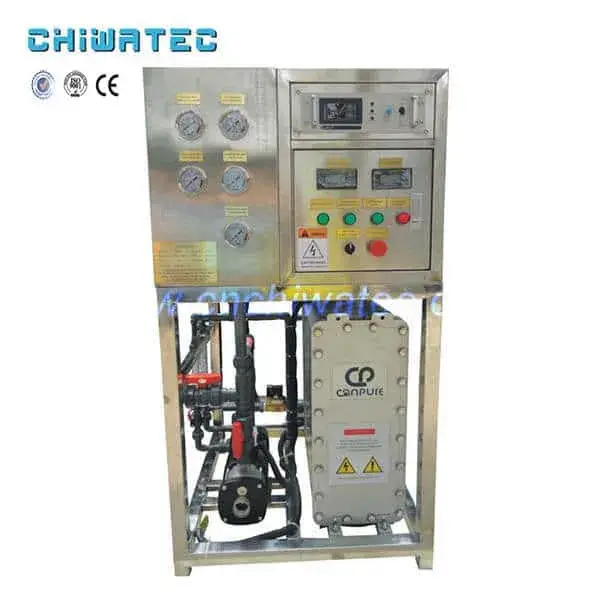
Meeting these specifications consistently requires a multi-stage treatment train combining reverse osmosis, electrodeionization (EDI), UV oxidation, and final polishing. CHIWATEC EDI-based ultrapure water systems are engineered to maintain these thresholds under continuous 24/7 production conditions.
8 Key Technical Features of LCD Ultrapure Water Equipment
High-performance LCD ultrapure water equipment must integrate advanced automation, robust membrane protection, and fail-safe monitoring. Below are the eight defining features that distinguish industrial-grade LCD UPW systems from general-purpose units — features also detailed in the features of liquid crystal display ultrapure water equipment companion guide:
- High degree of automation with fail-safe shutdown: PLC-based control systems monitor resistivity, pressure, and flow rate in real time. When any parameter deviates beyond tolerance, the system automatically halts production and triggers an alarm — preventing off-spec water from reaching the display manufacturing line.
- Modular integration and easy expansion: Skid-mounted RO and EDI modules allow capacity expansion without replacing existing equipment. Adding membrane elements can increase treatment capacity from 10 m³/h to 20 m³/h with minimal structural modification.
- Composite polyamide membrane elements with high rejection: Thin-film composite (TFC) spiral-wound membranes achieve 99.5%+ salt rejection and 99%+ TOC rejection, delivering consistently low conductivity feed to the downstream EDI polishing stage.
- Low energy consumption and high water recovery: Modern LCD UPW systems achieve 75-85% RO recovery with energy recovery devices, reducing specific power consumption to 3.5-5.0 kWh per cubic meter of product water.
- Advanced membrane protection and auto-flush system: During standby or shutdown, the system automatically flushes membrane surfaces with permeate water, removing accumulated foulants and extending membrane service life to 3-5 years.
- Compact footprint design: Vertical membrane housings and optimized pipe routing reduce floor space requirements by up to 40% compared to traditional layout designs — critical for cleanroom environments where space is at a premium.
- Minimal maintenance with no expendable moving parts: The RO-EDI process train contains no regeneration chemicals, no ion exchange resin replacement, and no complex mechanical drives. Annual maintenance is limited to membrane cleaning and sensor calibration.
- Integrated scale inhibition and membrane cleaning system: Built-in antiscalant dosing and CIP (clean-in-place) loops protect membranes from calcium carbonate, silica, and metal oxide scaling — maintaining stable permeate quality even with fluctuating feed water hardness.
Process Flow of LCD Ultrapure Water System
A complete LCD ultrapure water equipment system follows a carefully engineered multi-barrier process train. Understanding this flow is essential for system specification and troubleshooting:
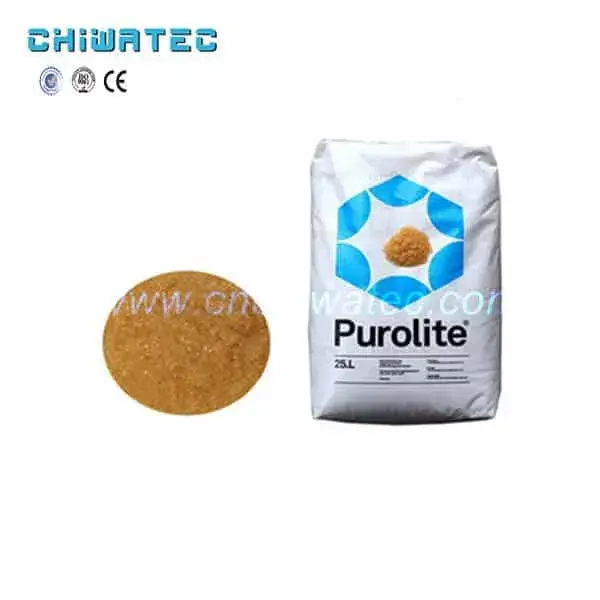
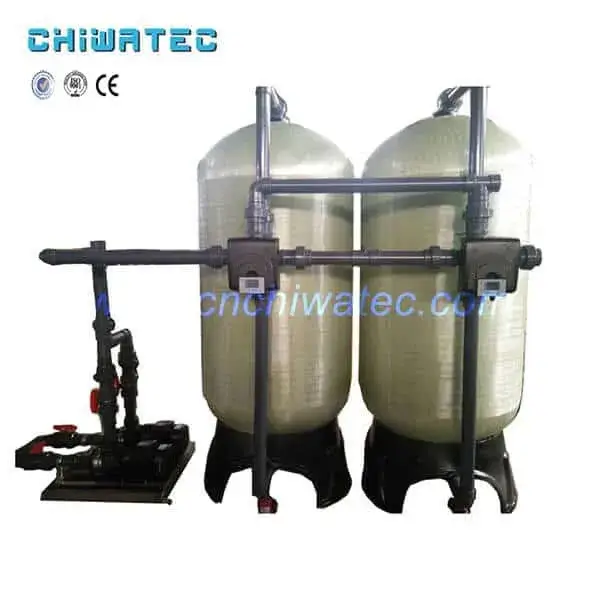
- Pretreatment stage: Multimedia filtration (sand + anthracite) → activated carbon filtration (chlorine removal) → water softening (ion exchange) → cartridge filtration (5 μm). This removes suspended solids, free chlorine, and hardness that would damage downstream RO membranes.
- Primary RO stage: Dual-pass reverse osmosis with 2:1 array configuration. The first pass reduces TDS from feed levels to below 10 ppm; the second pass polishes permeate to below 2 μS/cm conductivity.
- Degasification: A membrane contactor or forced-draft degasifier removes CO₂ to below 5 ppm, preventing carbonic acid formation that would reduce EDI performance.
- EDI polishing: Electrodeionization modules (e.g., E-Cell or Ionpure) continuously deionize the RO permeate to achieve 18.2 MΩ·cm resistivity without chemical regeneration.
- UV oxidation: 185 nm and 254 nm UV units break down organic compounds and kill bacteria, reducing TOC from approximately 20 ppb to below 5 ppb at the point of use.
- Final polishing and distribution: Mixed-bed ion exchange polishers and 0.1 μm absolute membrane filters provide final protection, followed by a recirculating distribution loop maintaining flow velocity above 1.5 m/s to prevent bacterial stagnation.
This process architecture is standard for electronics-grade applications. The process flow of semiconductor ultrapure water equipment follows a similar design, though semiconductor fabs typically require additional dissolved oxygen removal and longer recirculation loops.
LCD Ultrapure Water vs. General Industrial Ultrapure Water
While both LCD and general industrial ultrapure water systems share RO-EDI technology, LCD-grade systems impose stricter specifications in several key areas:
| Parameter | LCD Grade | General Industrial Grade |
|---|---|---|
| Resistivity | 18.2 MΩ·cm | 10-18 MΩ·cm |
| TOC requirement | ≤ 5 ppb | ≤ 50 ppb |
| Particle control | 0.1 μm absolute filtration | 1 μm or less stringent |
| Dissolved oxygen | < 5 ppb | Not typically controlled |
| System material | PVDF or PTFE piping | PVC or UPVC |
| Distribution loop | 316L SS electropolished | SS304 or plastic |
Investing in LCD-grade construction materials — PVDF piping, electropolished stainless steel, and PTFE-wetted components — is essential to prevent leachables and maintain consistent water quality at the point of use.
Maintenance Best Practices for LCD Ultrapure Water Systems
Proper maintenance of LCD ultrapure water equipment directly impacts production uptime and water quality consistency. The industry-average system availability target is 99.5% or higher:
- Daily checks: Monitor resistivity, pressure differentials across RO membranes, and EDI module voltage/current readings. A 15% increase in differential pressure indicates membrane fouling requiring CIP.
- Weekly tasks: Verify UV intensity (minimum 30 mJ/cm² at 254 nm), check antiscalant dosing pump calibration, and collect water samples for in-house conductivity and TOC validation.
- Monthly activities: Replace 5 μm cartridge filters, inspect EDI module polarization, and calibrate in-line resistivity sensors against a calibrated reference meter.
- Quarterly CIP: Clean RO membranes with low-pH (citric acid, pH 2-3) and alkaline (NaOH, pH 10-11) cleaning solutions, alternating between the two. Replace UV lamps annually.
- Annual overhaul: Replace RO membrane elements (typically every 3-5 years), rebuild EDI modules if efficiency drops below 95%, and replace all elastomeric seals and O-rings.
The characteristics of ultrapure water equipment for cleaning provide additional insight into maintenance-specific design features that simplify these routine procedures.
Frequently Asked Questions
Q1: What is the difference between LCD ultrapure water and semiconductor ultrapure water?
While both require 18.2 MΩ·cm resistivity, LCD ultrapure water places greater emphasis on TOC control (≤ 5 ppb vs. ≤ 1 ppb for advanced semiconductor nodes) and particle count. Semiconductor fabs at sub-7 nm nodes demand even tighter TOC (< 0.5 ppb) and dissolved oxygen (< 1 ppb) thresholds. LCD-grade systems are generally simpler and more cost-effective to operate.
Q2: What is the typical cost of an LCD ultrapure water system?
A complete LCD ultrapure water system for a mid-size display manufacturing line (20-50 m³/h capacity) typically costs between USD 500,000 and USD 2,000,000, depending on feed water quality, automation level, and distribution loop complexity. Operating costs average USD 0.50-1.20 per cubic meter, including energy, chemical, and membrane replacement expenses.
Q3: How often should RO membranes be replaced in LCD UPW systems?
With proper pretreatment and regular CIP maintenance, RO membranes in LCD ultrapure water systems typically last 3-5 years. Replacement is indicated when normalized permeate flow drops by 15% or salt rejection falls below 97%. Using advanced antiscalants and maintaining feed water SDI below 3 can extend membrane life by 12-18 months.
Q4: Can EDI modules be repaired or must they be replaced?
EDI modules can be partially rebuilt. Common repairs include replacing ion exchange resin in the dilution/concentrate compartments, restoring electrode coatings, and replacing gaskets. However, if the module electrical efficiency drops below 80% or there are internal short-circuiting issues, full replacement is more cost-effective. EDI module service life is typically 5-10 years with proper operation.
Q5: What causes TOC spikes in LCD ultrapure water systems?
TOC spikes are most commonly caused by: (1) UV lamp degradation or failure (the 185 nm lamp is essential for TOC reduction), (2) bacterial regrowth in distribution loops with stagnant sections, (3) exhausted GAC beds releasing adsorbed organics, and (4) RO membrane fouling allowing TOC passage. The most effective countermeasure is maintaining UV intensity above 30 mJ/cm² and ensuring continuous loop recirculation at minimum 1.5 m/s flow velocity.
Conclusion & CTA
LCD ultrapure water equipment is fundamentally different from general industrial UPW systems — requiring tighter TOC control, particle-free distribution, and 18.2 MΩ·cm resistivity maintained continuously throughout the production process. The eight technical features described above — from automated fail-safe shutdown to integrated CIP systems — define what separates reliable LCD-grade UPW from conventional alternatives.
Selecting the right system requires balancing capacity, water quality targets, and operational cost against your specific feed water conditions and display manufacturing requirements. Contact CHIWATEC today at [email protected] or [email protected] (WhatsApp available) for expert consultation on engineering an LCD ultrapure water system tailored to your facility.
Related Resources and Further Reading
- Features of Liquid Crystal Display Ultrapure Water Equipment — Companion guide covering detailed equipment characteristics
- Applications of Ultra-Pure Water in the Optical Industry — Water purity requirements for optical manufacturing
- Process Flow of Semiconductor Ultrapure Water Equipment — Comparative process architecture for semiconductor UPW systems
- Characteristics of Ultrapure Water Equipment for Cleaning — Design features that simplify maintenance and cleaning procedures
- EDI Ultrapure Water Equipment — CHIWATEC industrial EDI-based UPW systems for electronics manufacturing
Do you have a water treatment project we can help with
* Designing,machining,installing,commissioning, customize and one-stop service
 English
  Spanish
  Portuguese