Mixed Bed vs EDI: Complete Performance Comparison Guide for Ultrapure Water Systems 2026
Choosing between mixed bed ion exchange and EDI (Electrodeionization) for your ultrapure water system? This comprehensive comparison guide covers working principles, operation requirements, costs, water quality, and advantages/disadvantages of both technologies. Featuring detailed performance data, cost analysis, and selection criteria for 2026.
*Last Updated: May 2026 | Industry-Verified Technical Data*
Why This Guide Matters
The global ultrapure water market was valued at approximately USD 9.8 billion in 2024 and is projected to reach USD 19.2 billion by 2033, growing at a CAGR of 7.8%. The semiconductor, pharmaceutical, and power generation industries rely on ultrapure water with resistivity exceeding 18.2 MOhm-cm, and the choice between mixed bed deionization and EDI technology directly impacts water quality consistency, operating costs, and environmental compliance. CHIWATEC designs and manufactures both EDI systems and mixed bed ion exchange systems, offering unbiased expertise in selecting the right technology for specific ultrapure water applications. Understanding the performance differences between these two approaches is essential for making cost-effective, sustainable decisions in water treatment system design.
Key Industry Trends (2026 Update)
- EDI adoption accelerating — EDI technology now accounts for over 60% of new ultrapure water system installations in 2025-2026, up from 35% in 2018, driven by stricter environmental regulations on acid/alkali discharge from mixed bed regeneration.
- Mixed bed life extension — Advanced resin formulations with improved mechanical strength have extended mixed bed operational cycles by 30-40% between regenerations, partially offsetting the operational cost advantage of EDI in retrofit applications.
- RO-EDI integrated systems dominate — Over 80% of new semiconductor ultrapure water plants now specify RO-EDI configurations rather than RO-mixed bed, achieving consistent resistivity above 18 MOhm-cm without chemical regeneration.
- Smart monitoring for predictive maintenance — IoT-enabled EDI module monitoring with real-time resistivity tracking and predictive diagnostics has reduced unplanned downtime by 50% in pharmaceutical ultrapure water installations adopting Industry 4.0 practices.
1. How Do Mixed Bed and EDI Systems Work?
Mixed Bed Ion Exchange Working Principle
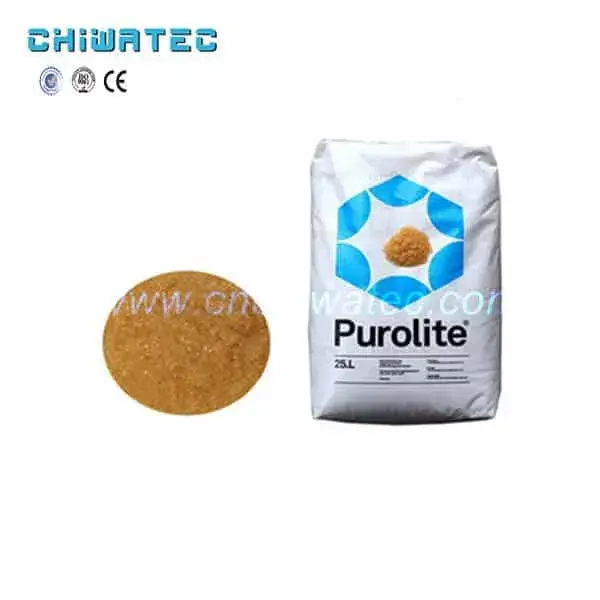
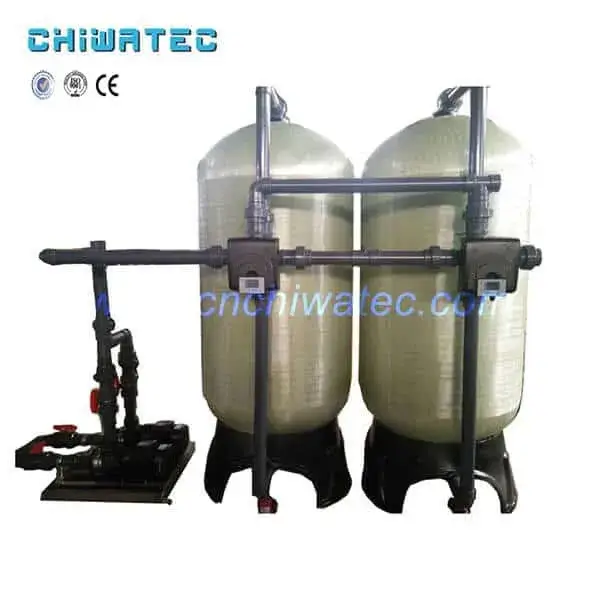
Mixed bed deionizers contain a homogeneous mixture of cation exchange resin (hydrogen form, H+) and anion exchange resin (hydroxide form, OH-) in a single pressure vessel. During the effective exchange period, the mixed bed produces stable effluent water quality with resistivity reaching 14 MOhm-cm. The cation and anion resins work in tandem: cation resin removes positively charged ions (Ca2+, Mg2+, Na+) and exchanges them for H+, while anion resin removes negatively charged ions (Cl-, SO42-, HCO3-) and exchanges them for OH-. The H+ and OH- combine to form pure H2O. However, once the resins reach their exhaustion point, conductivity rises sharply and effluent water quality becomes unstable. Because the exchange cycle is affected by operator skill level, regenerant quality, pretreated water quality, and resin quality itself, the effective cycle time can vary significantly. Therefore, RO + mixed bed systems require at least two mixed bed vessels — one in service and one on standby — to mitigate the risk of sudden failure during regeneration.
EDI Working Principle
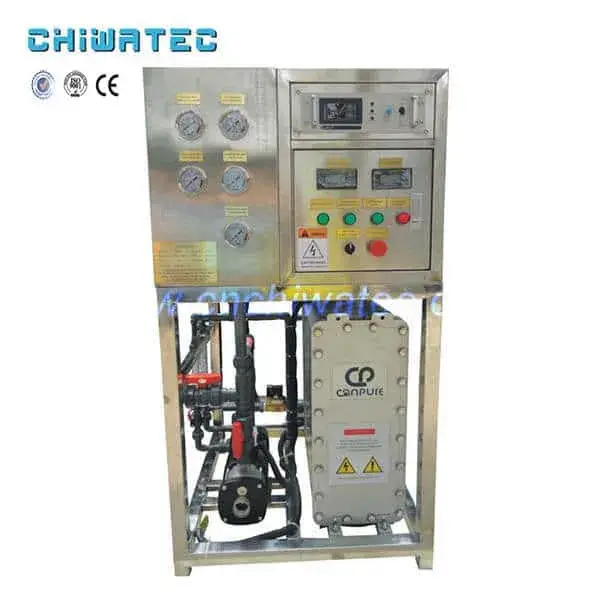
EDI, also known as continuous electrodeionization or CDI (continuous deionization), combines two mature water purification technologies — electrodialysis and ion exchange — into a single integrated process. Dissolved salts are removed under low energy consumption conditions without requiring chemical regeneration during operation. The EDI module contains alternating cation and anion exchange membranes, with mixed bed ion exchange resin filling the dilute compartments. Under the influence of a DC electric field, cations migrate toward the cathode through cation membranes, while anions migrate toward the anode through anion membranes, concentrating ions in separate concentrate streams and producing high-purity water in the dilute stream. The ion exchange resin within the dilute compartments acts as a conductive medium, enhancing ion transport and enabling continuous operation without chemical regeneration. The effluent resistivity typically reaches 10-18 MOhm-cm, meeting national electronic grade water Level I standards. EDI principle and its application in pure water clean production provides a deeper technical explanation of the EDI process.
2. What Are the Key Operational Differences?
Mixed Bed Operation Challenges
Mixed bed regeneration is time-consuming and resource-intensive. The regeneration process requires significant amounts of RO water for flushing, and operation of mixed bed equipment in a purified water system is complex. From acid and alkali preparation to final regeneration completion, the process requires at least two shifts and multiple personnel, with relatively high labor intensity. As the mixed bed’s effective exchange period shortens over time due to resin aging and fouling, regeneration frequency increases, further increasing labor demands. During regeneration, operators must handle concentrated acid and alkali solutions — a hazardous operation despite protective equipment. Furthermore, the effective cycle time after regeneration is highly dependent on operator experience, work responsibility, and the quality of regenerant chemicals. Inevitably, regenerated mixed beds in standby may become invalid and unusable, potentially affecting normal production.
EDI Operation Advantages
EDI systems consist of one or more modules sized for the required hourly water output. EDI modules can be started or stopped according to actual pure water demand. While manual operation is required relatively frequently, the procedures are straightforward: open the EDI inlet valve, electrode water valve, and concentrate water valve, then turn on the power supply and adjust the sodium chloride dosing rate and electrolysis voltage and current based on realtime water quality readings. This simplicity requires operator diligence but significantly less specialized knowledge than mixed bed regeneration procedures. Operating instructions for EDI equipment provides detailed startup, shutdown, and troubleshooting protocols.
3. How Do Capital and Operating Costs Compare?
Initial Investment Analysis
Compared with mixed bed ion exchange facilities, the initial investment for EDI equipment is approximately 20% higher. However, this differential needs to be evaluated in context: mixed bed systems require additional infrastructure for acid and alkali storage, chemical addition systems, wastewater treatment facilities, and ongoing resin replacement. When these factors are included in a total system cost comparison, the actual cost difference narrows to approximately 10%. With ongoing technology improvements and mass production economies of scale, the initial investment required for EDI equipment continues to decrease. Additionally, EDI equipment is compact — the required plant floor space is significantly smaller than mixed bed systems with their associated chemical storage and handling areas.
Operating Cost Comparison
Cost Factor — Mixed Bed — EDI
Energy consumption — 0.35 kWh per ton — 0.50 kWh per ton
Chemical consumption — Acid + alkali for regeneration — NaCl dosing (minimal)
Water utilization — Lower (reclaimed water needed) — Higher (no reclaim required)
Labor intensity — High (2 shifts, multiple personnel) — Low (simple monitoring)
Waste discharge — Acid/alkali wastewater — Concentrate (no hazardous waste)
Resin replacement — Periodic (2-5 year cycle) — Module replacement (3-5 years)
Total operating cost — ~2.7 CNY per ton — ~2.4 CNY per ton
The operating cost per ton of water for EDI equipment is approximately 2.4 CNY, while conventional mixed bed operation costs approximately 2.7 CNY per ton — an 11% operating cost advantage for EDI. The higher initial investment in EDI equipment is typically recovered within 2-4 years through reduced operating costs, making EDI the more economical choice over the system lifecycle.
4. How Does Product Water Quality Compare Between the Two Technologies?
Water Quality Stability
The EDI device operates as a continuous water purification process, producing stable product water quality with resistivity generally maintained at 15 MOhm-cm and reaching up to 18 MOhm-cm — achieving ultrapure water specifications. This stability is inherent to the continuous nature of the EDI process, which constantly regenerates the ion exchange resin electrically rather than relying on batch chemical regeneration cycles.
Mixed Bed Water Quality Profile
Mixed bed ion exchange produces water with quality that varies throughout the exchange cycle. Immediately after regeneration, product water quality is at its highest. As the resins progressively exhaust, product water quality gradually deteriorates over the operating cycle. Mixed bed regeneration is typically required every 20-30 days, and as the resin ages, regeneration cycles become progressively shorter. This intermittent water quality profile contrasts sharply with EDI’s consistent output. For applications requiring consistent ultrapure water quality 24/7 — such as semiconductor wafer rinsing or pharmaceutical formulation — EDI’s quality stability is a significant advantage. Electrodeionization in clean water production discusses water quality consistency data from full-scale EDI installations.
5. What Are the Advantages of Mixed Bed Ion Exchange?
Key Strengths
Mixed bed technology offers several distinct advantages: (1) Lower initial equipment investment — particularly for smaller flow rates under 10 m3/h where EDI module economics are less favorable; (2) Stable proven water quality — achieving 14-18 MOhm-cm when properly operated and regenerated; (3) Simple pretreatment requirements — mixed bed systems can tolerate higher feed water TDS and conductivity than EDI (which requires feed conductivity typically below 40 uS/cm); (4) High water utilization rate — with proper reclaim systems, overall water efficiency can exceed 85%.
When Mixed Bed Remains Competitive
For smaller-scale applications (below 5 m3/h), existing facilities with established acid/alkali handling infrastructure, or locations where EDI module replacement logistics are challenging, mixed bed systems remain a viable and cost-effective choice. The technology has been proven over decades and is well understood by most water treatment operators. EDI replaces mixed bed technology provides a transition roadmap for facilities considering upgrading from mixed bed to EDI systems.
6. What Are the Disadvantages of Mixed Bed Systems?
Operational Limitations
Mixed bed systems face several significant disadvantages: (1) low utilization of resin exchange capacity with high loss rates during regeneration and handling; (2) hazardous waste liquid discharge — acid and alkali regeneration generates wastewater requiring neutralization and treatment before discharge; (3) bacteria proliferation — the resin bed provides an ideal environment for microbial growth, requiring periodic sanitization; (4) complex operation — numerous valves and sequential regeneration steps require experienced operators; (5) large footprint — dual vessels plus chemical storage occupy significantly more space than equivalent EDI systems; (6) water quality fluctuation — as resins exhaust, effluent quality declines progressively until regeneration.
Regulatory Pressure
Increasingly stringent environmental regulations on acid and alkali discharge — particularly in the pharmaceutical and electronics manufacturing sectors — make the chemical regeneration aspect of mixed bed systems a growing compliance burden. Many jurisdictions now require zero liquid discharge (ZLD) for regeneration waste, adding substantial capital and operating costs that can eliminate the initial investment advantage of mixed bed technology. Advantages of EDI technology compared with hybrid ion exchange technology provides detailed comparison data on environmental compliance costs.
7. What Are the Advantages of EDI Systems?
Key Strengths
EDI offers compelling advantages: (1) thoughtful stacked module design — space-efficient and scalable; (2) stable, consistent water quality — resistivity continuously maintained at 15-18 MOhm-cm; (3) no acid-base regeneration — eliminating hazardous waste liquid discharge and chemical handling safety risks; (4) continuous operation — no downtime for regeneration cycles; (5) lower operating costs — approximately 11% lower than mixed bed on a per-ton basis; (6) compact footprint — typically requiring 40-60% less floor space; (7) easy installation and maintenance — modular design simplifies replacement; (8) high water utilization — recovery rates of 90-95% are achievable.
Environmental Benefits
EDI is an environmentally friendly technology. The ion exchange resin within EDI modules does not require acid or alkali chemical regeneration, eliminating the need for acid/alkali storage and treatment facilities. The process produces no waste acid or alkali discharge, making it a non-chemical water treatment system. This environmental advantage is increasingly important for corporate sustainability initiatives and regulatory compliance with wastewater discharge standards. How to maintain EDI ultrapure water equipment provides maintenance protocols that maximize EDI module lifespan and performance.
8. What Are the Limitations of EDI Technology?
Key Disadvantages
EDI technology has two primary limitations: (1) higher initial investment — approximately 20% more than mixed bed at comparable capacities, though the gap is narrowing through mass production and technology maturation; (2) higher pretreatment requirements — EDI feed water must have conductivity below 40 uS/cm (typically requiring RO pretreatment), hardness below 1.0 mg/L as CaCO3 (requiring softening), and TOC below 0.5 ppm. Feed water containing significant hardness, silica, or organic compounds can cause irreversible fouling of EDI modules, necessitating module replacement rather than simple cleaning.
Operating Considerations
EDI does not have excessively high requirements for RO effluent conductivity — feed water with conductivity of 4-12 uS/cm can be processed successfully. However, it may be necessary to add a softening device or increase RO membrane antiscalant dosage to prevent calcium and magnesium scaling in the EDI concentrate compartments. For higher feed conductivity, only the operating current and sodium chloride dosing rate need adjustment. EDI module replacement cost is a significant consideration — modules typically need replacement every 3-5 years depending on feed water quality and operating conditions. EDI ultrapure water equipment problems and solutions diagnoses common EDI operational issues and their remedies.
9. Which Applications Are Best Suited for Each Technology?
Mixed Bed Applications
Mixed bed systems remain the preferred choice for: (1) small-scale ultrapure water production — below 2 m3/h where EDI module minimum flow requirements cannot be met; (2) laboratory and research facilities — where intermittent operation and low total throughput make chemical regeneration economical; (3) retrofit applications — facilities with existing acid/alkali handling infrastructure and trained operators; (4) temporary or mobile water treatment — where transportable mixed bed vessels offer deployment flexibility.
EDI Applications
EDI technology is the preferred solution for: (1) semiconductor manufacturing — requiring consistent 18+ MOhm-cm water 24/7; (2) pharmaceutical and biotechnology — where chemical-free operation supports cGMP compliance and reduces validation burden; (3) power generation — boiler feedwater requiring consistent ultrapure quality for high-pressure steam systems; (4) large-scale ultrapure water plants — above 10 m3/h where EDI’s operating cost advantage becomes significant; (5) facilities with sustainability goals — eliminating hazardous chemical regeneration aligns with environmental management systems.
10. How to Select Between Mixed Bed and EDI for Your System?
Decision Framework
Factor — Choose Mixed Bed — Choose EDI
Flow rate — Below 2 m3/h — Above 5 m3/h
Feed water TDS — Up to 100 uS/cm — Below 40 uS/cm (after RO)
Water quality requirement — 14-17 MOhm-cm — 15-18 MOhm-cm (stable)
Environmental compliance — Minimal restrictions — Strict discharge limits
Operator expertise — Experienced in regeneration — Less specialized
Capital budget — Limited (existing infrastructure) — Willing to invest for long-term savings
Sustainability requirements — Low priority — High priority
Hybrid and Transition Solutions
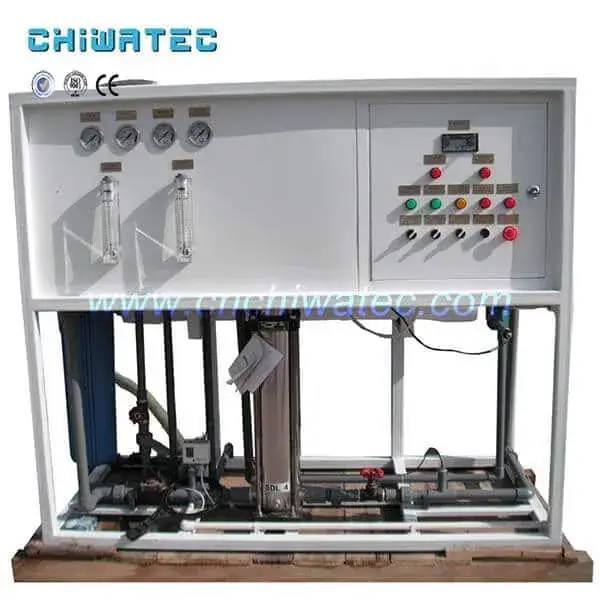
For facilities not ready for a complete EDI conversion, hybrid configurations are available: RO + mixed bed polishing (intermediate cost, good water quality) or RO + EDI + mixed bed polishing (highest water quality, complete redundancy). Many facilities adopt a phased transition — starting with EDI for new capacity while maintaining existing mixed bed systems, then gradually converting as mixed bed vessels reach end of life. CHIWATEC provides engineering support for both technology evaluations and phased transition planning, ensuring optimal ultrapure water system design for specific application requirements.
Conclusion
The choice between mixed bed ion exchange and EDI technology for ultrapure water production depends on multiple factors including scale, water quality requirements, environmental compliance obligations, operator expertise, and long-term economic objectives. Mixed bed systems offer lower initial investment and proven performance for smaller-scale applications, while EDI provides superior water quality consistency, lower operating costs, and environmental benefits at the cost of higher initial investment. With operating costs of approximately 2.4 CNY per ton for EDI versus 2.7 CNY per ton for mixed bed, and regulatory pressure increasingly favoring chemical-free technologies, EDI adoption continues to accelerate — but mixed bed systems remain a viable and cost-effective choice for the right applications. Contact CHIWATEC today to discuss your ultrapure water system requirements. Our engineering team specializes in designing optimized treatment trains incorporating both mixed bed and EDI technologies. Reach us at [email protected] or [email protected], or via WhatsApp at 008618292684865.
Frequently Asked Questions
Q1: Can EDI completely replace mixed bed systems?
EDI can replace mixed bed systems in most large and medium-scale ultrapure water applications, particularly where feed water conductivity below 40 uS/cm is achievable through RO pretreatment. However, for very small flow rates (below 2 m3/h) or applications with intermittent operation, mixed bed systems may remain more economical. The semiconductor and pharmaceutical industries have broadly adopted EDI as the standard for new installations.
Q2: What water quality can EDI achieve compared to mixed bed?
EDI consistently achieves 15-18 MOhm-cm resistivity, while mixed bed achieves 14-17 MOhm-cm. More importantly, EDI water quality remains stable throughout operation, while mixed bed water quality gradually declines between regenerations. For applications requiring consistent 18+ MOhm-cm water, EDI is the preferred choice.
Q3: How long do EDI modules typically last?
EDI modules typically operate for 3-5 years before requiring replacement, depending on feed water quality, operating conditions, and maintenance practices. With proper pretreatment (RO, softening, and carbon filtration) and regular cleaning, some installations achieve module lifespans exceeding 7 years.
Q4: What is the payback period for switching from mixed bed to EDI?
The payback period for converting from mixed bed to EDI typically ranges from 2-4 years, driven by savings in chemical costs (acid and alkali elimination), reduced labor for regeneration, lower wastewater treatment costs, and elimination of resin replacement. Facilities with high water production rates achieve faster payback.
Q5: Is mixed bed regeneration still necessary with EDI systems?
No. EDI systems regenerate the ion exchange resin continuously using electrical current rather than chemicals. This eliminates the need for acid and alkali regeneration, associated chemical storage and handling equipment, and wastewater neutralization systems. This continuous electrical regeneration is the fundamental advantage of EDI over conventional mixed bed technology.
Related Resources and Further Reading
Do you have a water treatment project we can help with
* Designing,machining,installing,commissioning, customize and one-stop service
 English
  Spanish
  Portuguese