Mineral Water Filtration System: Complete Guide to Equipment Performance and UF Technology 2026
Looking for a reliable mineral water filtration system for your production line? The global bottled water market was valued at approximately USD 350 billion in 2024, with mineral water representing a premium segment that demands the highest water quality standards. Understanding the performance indicators and filtration principles of mineral water equipment is essential for producing safe, great-tasting mineral water that meets regulatory requirements. This guide covers everything from ultrafiltration technology to system performance metrics and maintenance best practices.
*Last Updated: May 2026 | Industry-Verified Data*
Why This Guide Matters
The global bottled water market continues to grow at a CAGR of 6.1%, driven by increasing health consciousness and consumer preference for natural mineral water over sugary beverages. Mineral water production requires sophisticated filtration systems that preserve beneficial minerals while removing contaminants, turbidity, and microorganisms. A properly designed mineral water filtration system using advanced ultrafiltration technology can achieve 99.99% pathogen removal while maintaining the natural mineral composition that consumers value. Equipment selection and performance directly impact product quality, production efficiency, and regulatory compliance.
Key Industry Trends (2026 Update)
- UF Dominance in Mineral Water Production: Hollow fiber ultrafiltration has become the preferred technology for mineral water treatment, replacing older sand filtration and microfiltration systems. UF membranes with 0.01-micron pore size achieve superior pathogen removal while operating at lower pressures (1-3 bar) than reverse osmosis.
- Automated CIP and Sanitization: Modern mineral water filtration systems incorporate automated clean-in-place (CIP) systems that reduce downtime and ensure consistent hygienic performance. Automated sanitization cycles using peracetic acid or hot water are becoming standard for preventing biofilm formation.
- Smart Monitoring and IoT Integration: Real-time monitoring of key parameters including transmembrane pressure (TMP), flux rate, turbidity, and microbial counts enables predictive maintenance and early detection of membrane fouling, reducing unplanned downtime by 30-50%.
- Sustainability and Water Recovery: Improved membrane designs and system configurations now achieve water recovery rates of 95-98% for mineral water UF systems, significantly reducing wastewater compared to older technologies. Energy consumption has also decreased by 20-30% through improved pump efficiency and membrane permeability.
1. What Is a Mineral Water Filtration System and How Does It Work?
System Overview
A mineral water filtration system is a specialized water treatment plant designed to process natural spring or groundwater into bottled mineral water that meets safety and quality standards. Unlike reverse osmosis systems that remove virtually all dissolved solids, mineral water filtration systems are designed to preserve beneficial minerals while removing physical contaminants, microorganisms, and organic matter. The key technology employed is hollow fiber ultrafiltration, a membrane separation process with a pore size of approximately 0.01 microns (10 nanometers).
Basic Process Flow
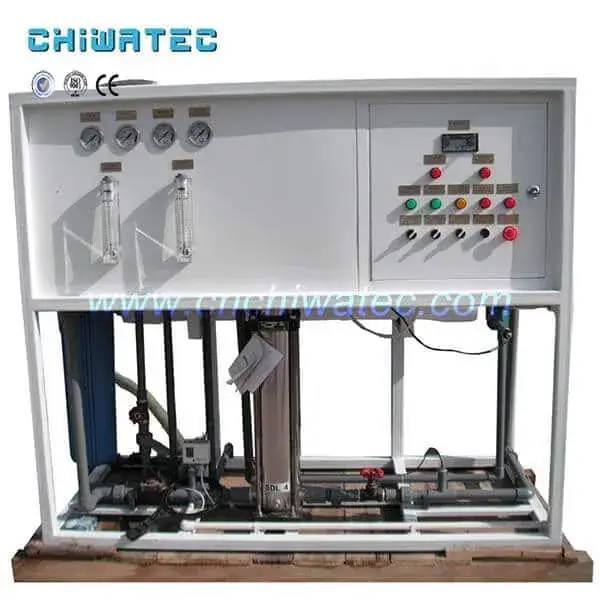
The standard mineral water filtration process follows this sequence: Source water → Source water pump → Mechanical filter (multi-media) → Activated carbon filter → Precision (cartridge) filter → Hollow fiber ultrafiltration main filtration system → Mineral water storage tank. Each stage serves a specific purpose: mechanical filtration removes suspended solids down to 20-25 microns; activated carbon removes chlorine, organic compounds, and improves taste; precision filtration protects the UF membranes from particles above 1-5 microns; and the UF membrane provides the final barrier against pathogens and fine particulates.
2. What Are the Key Performance Indicators of Mineral Water Equipment?
Critical Performance Metrics
- Membrane Flux Rate: Measured in liters per square meter per hour (LMH), typical UF flux rates for mineral water applications range from 50-100 LMH at 25 degrees C. Higher flux rates indicate better membrane performance but must be balanced against fouling rates.
- Transmembrane Pressure (TMP): The pressure differential across the membrane, typically 0.5-2.0 bar for clean membranes. TMP increases as fouling occurs, and a rise of 0.5-1.0 bar above baseline signals the need for cleaning.
- Turbidity Reduction: UF systems should reduce feed water turbidity from 5-50 NTU to below 0.1 NTU in the permeate, achieving 99%+ turbidity removal.
- Microbial Removal Efficiency: Properly operated UF membranes achieve 4-6 log reduction (99.99%-99.9999%) of bacteria, viruses, and protozoa, meeting WHO and EPA microbial standards for drinking water.
- Recovery Rate: The percentage of feed water converted to product water. Modern UF systems achieve 90-98% recovery, with the balance used for membrane flushing and backwashing.
- SDI (Silt Density Index): Feed water SDI should be below 5 for stable UF operation, and permeate SDI should be consistently below 1, indicating excellent particulate removal.
3. What Are the Key Filtration Principles of Hollow Fiber Ultrafiltration?
How Hollow Fiber UF Works
Hollow fiber ultrafiltration membranes consist of thousands of microscopic polymer tubes bundled together, each with an inner diameter of 0.5-1.5 mm and wall thickness of 0.1-0.3 mm. Water flows either from the inside of the fibers outward (inside-out configuration) or from the outside inward (outside-in configuration). The membrane surface contains pores of approximately 0.01 microns that physically exclude particles, colloids, bacteria, and viruses while allowing water and dissolved minerals to pass through.
Two Filtration Modes
- Dead-end Filtration: All feed water passes through the membrane. Suitable for feed water with low suspended solids (<10 NTU). Higher recovery rate (95-98%) but requires more frequent backwashing.
- Cross-flow Filtration: Feed water flows tangentially across the membrane surface, creating shear forces that reduce fouling. Suitable for higher turbidity feed water (10-50 NTU). Lower recovery (90-95%) but longer operating cycles between cleanings.
Molecular Weight Cut-Off (MWCO)
UF membranes are characterized by their molecular weight cut-off, typically 50,000-150,000 Daltons for mineral water applications. This MWCO range effectively removes all suspended solids, colloids, bacteria, and most viruses while allowing dissolved minerals, salts, and low molecular weight organic compounds to pass through — precisely the selectivity required for mineral water production.
4. What Are the Performance Standards for Mineral Water Production?
Regulatory Standards
Mineral water production must comply with national and international standards. In China, GB 8537-2018 establishes requirements for natural mineral water including microbiological limits (no detectable pathogens, fecal coliforms absent), physical-chemical parameters (TDS 1,000-2,000 mg/L depending on source), and radioactivity limits. The EU Mineral Water Directive 2009/54/EC requires official recognition of natural mineral waters and specifies treatment limitations — only filtration with decantation or ozonation is permitted, and disinfection treatments that alter microbial colony counts are restricted.
Equipment Performance Requirements
Mineral water filtration equipment must demonstrate: (1) consistent permeate quality meeting bottled water standards (turbidity <0.1 NTU, no detectable coliforms or E. coli, TOC <2 mg/L); (2) reliable operation with minimal downtime (target availability >95%); (3) material compliance with food-grade requirements (NSF/ANSI 61 or equivalent); and (4) cleanability and sanitization capability according to HACCP principles.
5. How to Select the Right Mineral Water Filtration System?
Capacity and Sizing
System capacity is determined by production volume requirements. A typical mineral water bottling line processing 10,000-20,000 bottles per hour requires a UF system capacity of 20-50 m³/h. System sizing must account for: peak production demand, backwashing and cleaning downtime (typically 2-4 hours per day), and future expansion capacity (recommended 20-30% margin). The UF membrane area is calculated based on desired flux rate and feed water quality.
Feed Water Quality Considerations
- Low turbidity (<5 NTU): Simple pretreatment (mechanical + carbon filtration) followed by dead-end UF is sufficient.
- Medium turbidity (5-20 NTU): Enhanced pretreatment with coagulation or dissolved air flotation (DAF) may be needed before UF.
- High turbidity (>20 NTU): Cross-flow UF configuration is recommended with more frequent backwashing and CIP cycles.
- High iron/manganese: Pre-treatment with aeration and green sand filtration is required before UF to prevent membrane fouling.
6. What Are the Critical Components of Mineral Water Equipment?
Main System Components
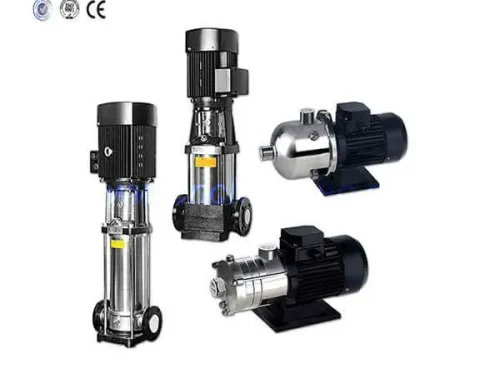
- Feed Pump: Typically a multistage centrifugal pump with VFD (variable frequency drive) for precise flow and pressure control. The pump must provide 2-4 bar feed pressure for UF membranes.
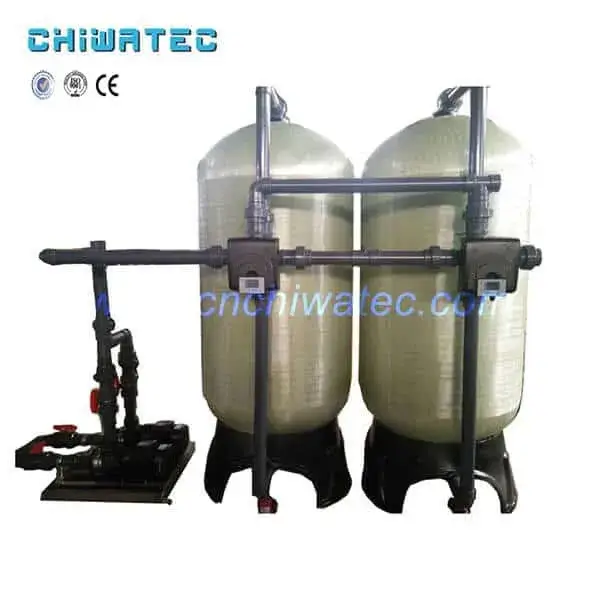
- Multi-Media Filter: Contains graded layers of sand, anthracite, and garnet to remove suspended solids down to 20-25 microns. Automatic backwash control based on pressure differential or timed intervals.
- Activated Carbon Filter: Removes free chlorine, chloramines, organic compounds, and improves taste and odor. Granular activated carbon (GAC) with 8×30 mesh size is standard, replaced every 6-12 months.
- Precision/Cartridge Filter: 5-micron (and sometimes 1-micron) cartridge filters as final protection before UF membranes. Typically replaced when pressure differential reaches 1 bar.
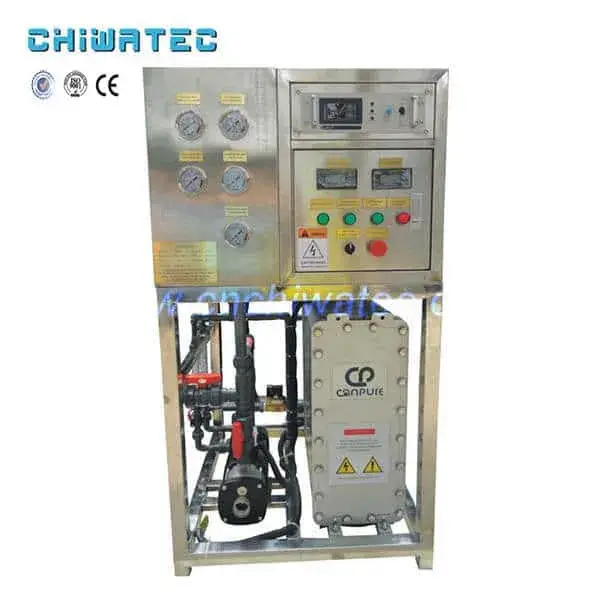
- UF Membrane Module: The core of the mineral water filtration system. Common configurations include pressurized vessels (4-8 inch diameter) for larger systems and submerged modules for smaller applications.
- Backwash System: Automated backwashing using permeate water, typically every 20-60 minutes with a duration of 30-60 seconds. Some systems incorporate air scouring for enhanced cleaning effectiveness.
- CIP System: Clean-in-place system for periodic chemical cleaning (every 1-3 months) using alkaline and acid cleaning solutions, followed by sanitization.
7. How to Maintain a Mineral Water Filtration System?
Daily and Weekly Maintenance
- Daily: Record feed pressure, permeate flow, TMP, and permeate turbidity. Check backwash effectiveness and verify sanitizer residual if used.
- Weekly: Conduct integrity testing (pressure hold test or diffusive air flow test) to verify membrane fiber integrity. Replace any damaged fibers or modules.
- Monthly: Replace cartridge filters. Inspect seals, O-rings, and valves for wear. Calibrate online instruments (flow meters, pressure transmitters, turbidity meters).
Chemical Cleaning (CIP)
When TMP increases by 0.5-1.0 bar above baseline or normalized flux decreases by 15-20%, chemical cleaning is required. The standard CIP protocol includes: (1) alkaline cleaning with NaOH solution at pH 11-12 (2-4 hours recirculation); (2) acid cleaning with citric or phosphoric acid at pH 2-3 (1-2 hours); (3) sanitization with peracetic acid (200-500 ppm) or chlorine (50-100 ppm). Frequency varies from monthly to quarterly depending on feed water quality.
Membrane Replacement
UF membrane lifespan in mineral water applications typically ranges from 3-7 years, depending on feed water quality, pretreatment effectiveness, and maintenance practices. Signs of membrane degradation include: persistent flux decline despite cleaning, salt passage increase (for UF, this appears as increasing permeate turbidity), and integrity test failures indicating broken fibers. CHIWATEC provides replacement UF membrane modules compatible with major brands, ensuring continued performance of your mineral water filtration system.
8. How Does Mineral Water Filtration Differ from Purified Water Treatment?
Key Differences
- Membrane Selection: Mineral water uses UF (0.01 micron pores) to preserve minerals while removing contaminants. Purified water often uses RO (0.0001 micron pores) which removes virtually all dissolved solids including beneficial minerals.
- Target TDS: Mineral water retains natural TDS (typically 100-2,000 mg/L), contributing to taste and health benefits. Purified water targets TDS below 10 mg/L.
- Treatment Philosophy: Mineral water filtration is a selective removal process — remove bad things, keep good things. Purified water treatment is a complete purification process that may require remineralization afterward.
- Regulatory Classification: Natural mineral water is a protected food product with strict geographical origin and treatment limitations. Purified water is a manufactured product with fewer restrictions on treatment processes.
9. What Are the Common Problems in Mineral Water Filtration Systems?
Troubleshooting Guide
- Low permeate flow: Most commonly caused by membrane fouling (check TMP trend), feed pump issues (verify pressure), or blocked pretreatment filters (check pressure differential across cartridge filters).
- High permeate turbidity: Indicates membrane integrity failure — broken hollow fibers or compromised O-ring seals. Conduct pressure hold test to identify damaged modules. Isolate and replace affected modules immediately.
- Rapid TMP increase: Signs of membrane fouling. Common causes include: inadequate pretreatment (high feed turbidity), biofouling (warm feed water with nutrients), scaling (hardness or metal oxide precipitation), or ineffective backwashing (check backwash pressure and duration).
- Off-taste or odor in product water: Usually caused by exhausted activated carbon allowing chlorine/chloramines to reach the product, or biological growth in the storage/distribution system. Replace carbon media and sanitize the entire system.
CHIWATEC engineers provide comprehensive troubleshooting and technical support for mineral water filtration systems, helping operators quickly identify and resolve performance issues to minimize production downtime.
10. What Is the Future of Mineral Water Filtration Technology?
Emerging Technologies
- Ceramic UF Membranes: Ceramic membranes offer superior chemical and thermal resistance compared to polymeric UF, with lifespans of 10-15 years. While capital costs are 2-3x higher, lifetime costs can be lower due to reduced replacement frequency and more aggressive cleaning options.
- AI-Powered Predictive Maintenance: Machine learning algorithms trained on historical TMP, flux, and water quality data can predict fouling events 24-48 hours in advance, allowing proactive cleaning scheduling and reducing unplanned downtime.
- UV Advanced Oxidation: UV-based advanced oxidation processes (UV/H2O2) are being integrated into mineral water systems for enhanced organic contaminant removal without chemical residuals, complementing UF membrane filtration.
- Smart Membrane Modules: Next-generation UF modules with embedded sensors for real-time monitoring of temperature, pressure, and water quality at each module level enable precise performance tracking and early fault detection.
Conclusion
A well-designed mineral water filtration system is the cornerstone of successful bottled water production. From hollow fiber ultrafiltration principles to performance monitoring and maintenance practices, every aspect of the system contributes to product quality, safety, and operational efficiency. As consumer demand for premium mineral water continues to grow and regulatory standards become more stringent, investing in advanced UF technology with proper performance monitoring and preventative maintenance delivers long-term competitive advantage. Contact CHIWATEC today at [email protected] or [email protected] (WhatsApp available) for expert guidance on selecting, installing, and maintaining the ideal mineral water filtration system for your production facility.
Frequently Asked Questions
Q1: What is the difference between ultrafiltration and reverse osmosis for mineral water?
UF removes particles down to 0.01 microns (bacteria, viruses, colloids) while allowing dissolved minerals to pass through. RO removes virtually everything including dissolved salts, producing water with TDS below 10 mg/L. For mineral water that retains natural mineral content, UF is the correct technology; RO would require remineralization afterward.
Q2: How often should UF membranes be replaced in mineral water systems?
UF membrane lifespan typically ranges from 3-7 years in mineral water applications. Key factors affecting lifespan include feed water quality, pretreatment effectiveness, cleaning frequency and protocols, and operating conditions (pressure, temperature, flux rate). Regular integrity testing and performance monitoring help determine optimal replacement timing.
Q3: Can UF membranes remove all bacteria and viruses from mineral water?
Yes. Properly operated UF membranes with 0.01-micron pore size achieve 4-6 log removal of bacteria and 3-4 log removal of viruses. Combined with proper system integrity testing and post-filtration UV disinfection (often used as an additional safety barrier), UF systems reliably produce microbially safe mineral water meeting international standards.
Q4: What pretreatment is needed before UF for mineral water production?
Standard pretreatment includes multi-media mechanical filtration (removes suspended solids >20 microns), activated carbon filtration (removes chlorine, organics, improves taste), and 1-5 micron cartridge filtration (protects UF membranes). For challenging water sources, additional pretreatment may include aeration, iron/manganese removal, or dissolved air flotation.
Q5: How do I know when my UF membranes need chemical cleaning?
Indicators include: transmembrane pressure (TMP) increase of 0.5-1.0 bar above baseline, normalized permeate flux decrease of 15-20%, or increased pressure differential across the membrane module. Most modern systems track these parameters automatically and generate cleaning alerts. Regular preventive CIP cleaning every 1-3 months is recommended regardless of immediate indicators.
Related Resources and Further Reading
- Mineral Water Equipment Process — Detailed process flow and equipment specifications
- Pure Water/Mineral Water Plant Production Process — Comprehensive production line overview
- Key Hygiene Issues in Mineral Water Production — Critical hygiene and safety considerations
- Process Description of RO Pure Water Equipment — RO pure water equipment process reference
- UF Membrane for Water Treatment Systems — Explore CHIWATEC UF membrane solutions for mineral water applications
Do you have a water treatment project we can help with
* Designing,machining,installing,commissioning, customize and one-stop service
 English
  Spanish
  Portuguese