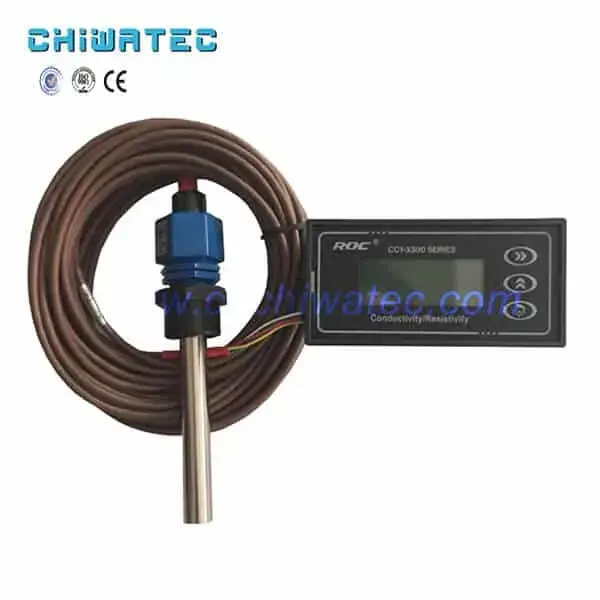
Industrial Reverse Osmosis Pure Water System: Complete Guide to Water Quality Classification and Treatment Process 2026
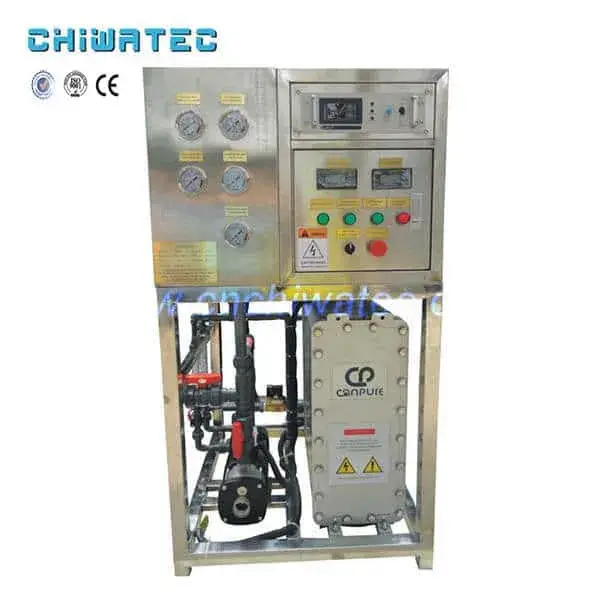
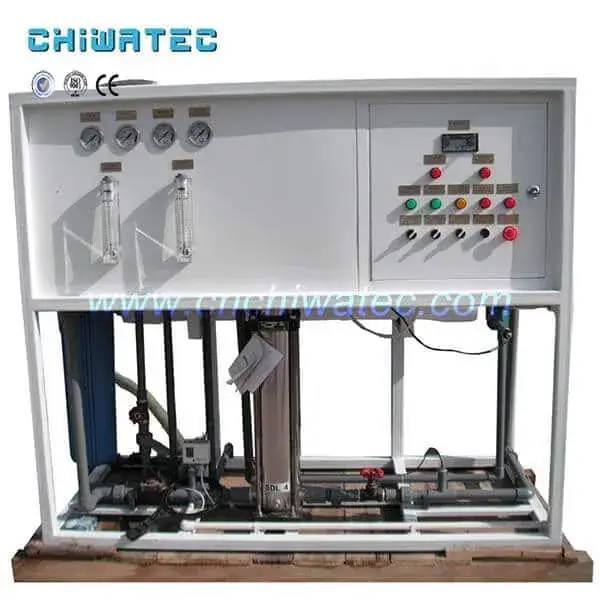
Understanding the industrial reverse osmosis pure water system and its water quality classifications is essential for engineers, plant managers, and procurement professionals who specify high-purity water treatment solutions. From semiconductor fabrication requiring 18.2 megohm-centimeter ultrapure water to pharmaceutical applications demanding USP-grade purified water, the industrial RO system is the backbone of modern water treatment infrastructure. This comprehensive guide by Xi’an CHIWATEC covers water quality standards, treatment process design, equipment classification, and application-specific considerations for industrial RO pure water systems.
* Last Updated: May 2026
Why This Guide Matters
The global industrial water treatment market was valued at approximately USD 36.7 billion in 2024 and is projected to reach USD 55.2 billion by 2032, with reverse osmosis systems representing the largest technology segment at 42% of market share. Industrial RO installations consume over 15 billion gallons of purified water daily across pharmaceutical, electronics, power generation, food and beverage, and chemical processing industries. Proper understanding of industrial reverse osmosis pure water system design, water quality classification, and treatment processes can reduce capital expenditure by 20-30%, lower operating costs by 15-25%, and ensure regulatory compliance with standards including USP, ASTM, and pharmacopoeia requirements.
Key Industry Trends (2026 Update)
- Ultrapure Water Demand Surge: The global ultrapure water market is growing at 8.2% CAGR, driven by semiconductor fabrication expansion — a single advanced 5nm fab requires 20-30 million gallons of ultrapure water monthly at 18.2 megohm-centimeter resistivity, making RO systems the critical first-stage technology in UPW production.
- Two-Pass and Hybrid RO Configurations: Over 60% of new industrial RO installations in 2025-2026 use two-pass RO or RO-EDI hybrid configurations to achieve higher purity levels (conductivity below 1 microsiemen per centimeter) without chemical regeneration, reducing hazardous chemical handling by 90% compared to traditional ion exchange systems.
- Digital Twin and AI Optimization: AI-powered digital twin platforms for industrial RO systems can predict membrane fouling 48-72 hours in advance with 85-90% accuracy, enabling proactive cleaning scheduling that extends membrane life by 30-40% and reduces unplanned downtime by 60%.
- Sustainability and Water Reuse Mandates: Regulatory pressure in the EU, China, and California is driving industrial facilities toward zero liquid discharge (ZLD) configurations, with industrial RO as the core concentration technology, achieving 90-95% water recovery rates when combined with brine concentrators and crystallizers.
1. Understanding Industrial RO Water Quality Classification Standards
Conductivity-Based Classification
Water quality in industrial reverse osmosis pure water system applications is classified primarily by conductivity or resistivity. ASTM D1193-91 defines four types of reagent water: Type I (resistivity above 18 megohm-centimeters, conductivity below 0.056 microsiemens per centimeter), Type II (resistivity above 1 megohm-centimeter, conductivity below 1 microsiemen per centimeter), Type III (resistivity above 0.2 megohm-centimeter, conductivity below 5 microsiemens per centimeter), and Type IV (resistivity above 0.05 megohm-centimeter, conductivity below 20 microsiemens per centimeter). Each classification corresponds to specific industrial applications with different purity requirements.
Regulatory Standards Overview
Multiple regulatory frameworks govern water quality standards across industries. The United States Pharmacopeia (USP <1231>) specifies Purified Water (PW) and Water for Injection (WFI) standards. The European Pharmacopoeia has comparable requirements. For electronics, SEMI standards define ultrapure water quality for semiconductor manufacturing. The Chinese GB/T 6682-2008 standard specifies three grades of analytical laboratory water. Understanding which standard applies to your industry is the first step in specifying an appropriate industrial reverse osmosis pure water system.
2. Conductivity Below 10 Microsiemens Per Centimeter: General Industrial Water
Applications and Suitability
Water with conductivity at or below 10 microsiemens per centimeter represents the baseline level of purified water suitable for a wide range of general industrial applications. This quality level, achievable through a single-pass RO system with basic pre-treatment, meets the requirements for animal drinking water in pharmaceutical research, common chemical raw material ingredient water, food industry ingredient water, general electroplating industry flushing and deionized water, textile printing and dyeing de-hardening and desalting processes, polyester chipping pure water, fine chemical production water, and purified water for civil drinking water systems.
System Configuration
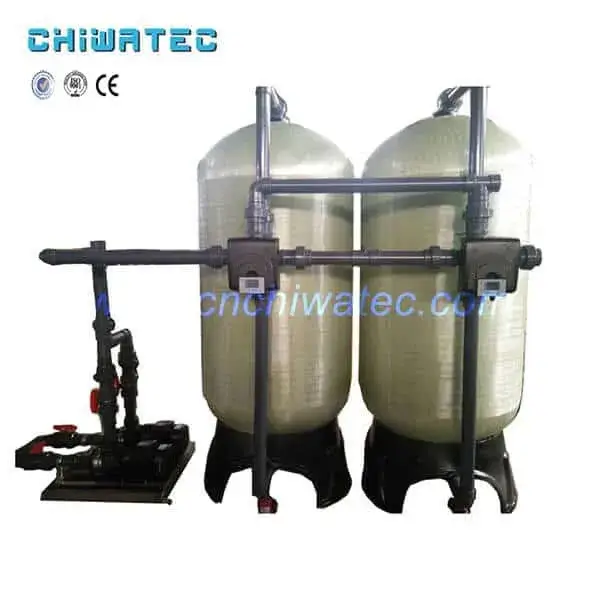
A single-pass RO system with conductivity below 10 microsiemens per centimeter typically includes: multimedia filtration, activated carbon adsorption, antiscalant dosing, a 5-micron cartridge filter, a single-stage RO membrane array, and UV sterilization as an option. Recovery rates for this configuration range from 65-75% depending on feed water quality. Review operating rules for pure water production equipment for detailed protocols.
3. Conductivity Below 5 Microsiemens Per Centimeter: High-Purity Process Water
Critical Applications
Water quality at or below 5 microsiemens per centimeter represents a higher tier of purity required for more demanding industrial processes. This level is typically achieved through two-pass RO or single-pass RO with EDI polishing. Applications include electroplating chemical production water, chemical industry production water, medical purified water meeting USP Purified Water monographs, pure water for liquor and beer production (where trace minerals affect flavor profiles), purified water for civilian use, water for cosmetics production, and water for hemodialysis pure water machines in medical facilities.
Quality Verification
At this purity level, conductivity monitoring alone is insufficient — total organic carbon (TOC) below 500 parts per billion, endotoxin levels below 0.25 endotoxin units per milliliter (for pharmaceutical applications), and microbial counts below 100 CFU per milliliter must also be verified through routine laboratory analysis. Online conductivity meters with temperature compensation and data logging are essential for continuous quality assurance. Learn more about operating and maintaining pure water production equipment.
4. Resistivity 5-10 Megohm-Centimeters: Intermediate Purity Industrial Water
Key Use Cases
Water with resistivity in the 5-10 megohm-centimeter range (conductivity approximately 0.1-0.2 microsiemens per centimeter) serves as intermediate-purity water for applications where moderate deionization is required but ultrapure standards are unnecessary. Primary applications include lithium battery production water (where trace metals affect battery performance and safety), battery production water for traditional lead-acid and nickel-cadmium technologies, cosmetics production water for high-end formulations, pure water for power plant boilers (reducing scaling and corrosion in steam systems), and chemical plant ingredient water for batch chemical synthesis.
System Design Considerations
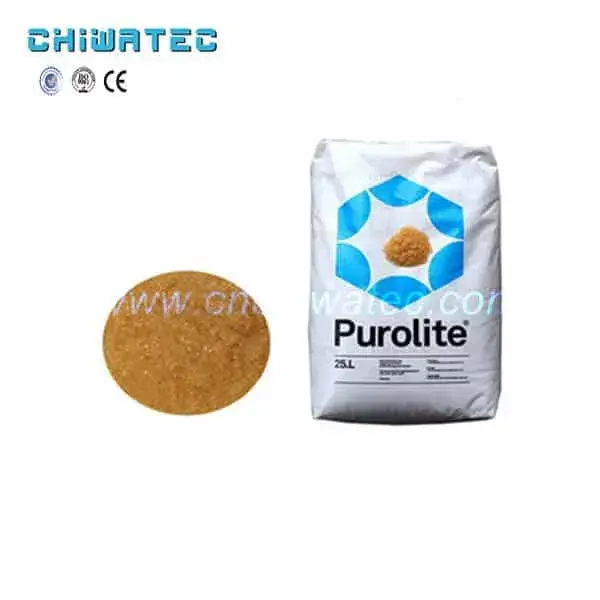
Achieving 5-10 megohm-centimeter resistivity typically requires a two-pass RO system followed by electrodeionization (EDI) or mixed-bed ion exchange polishing. System recovery rates should be carefully managed — higher recovery increases concentrate TDS and scaling potential. Antiscalant selection must be matched to the specific scaling compounds present in the feed water, with particular attention to silica scaling which is difficult to remove once deposited on membrane surfaces.
5. Resistivity 10-15 Megohm-Centimeters: Laboratory and Precision Applications
Application Spectrum
Water at 10-15 megohm-centimeter resistivity serves precision applications including animal laboratory water for research facilities, glass bulb coating washing water (where ionic contamination affects coating adhesion), pure water for electroplating of precision components (eliminating streaking and spotting from ionic residues), coating glass production water, and general laboratory reagent water meeting ASTM Type II standards.
Process Requirements
Systems targeting 10-15 megohm-centimeter output require rigorous pre-treatment including anti-scalant dosing calibrated to feed water chemistry, precise pH adjustment (typically to 6.5-7.0) to optimize silica and boron rejection, and oxidation potential monitoring to protect thin-film composite membranes from chlorine damage. Polishing stages typically include EDI (electrodeionization) modules that achieve continuous deionization without chemical regeneration, reducing operating costs by 40-60% compared to mixed-bed ion exchange. Refer to our cleaning methods for RO equipment maintenance for optimal performance maintenance.
6. Resistivity Above 15 Megohm-Centimeters: High-Purity Water for Critical Industries
Pharmaceutical and Medical Applications
Water with resistivity above 15 megohm-centimeters meets the most stringent requirements for pharmaceutical and medical applications including sterile water for pharmaceutical production conforming to USP Purified Water standards, oral liquid water for pharmaceutical formulations, deionized water for high-end cosmetics production, optical material cleaning water (where ionic contamination would affect optical clarity), and electronic ceramic industry pure water for advanced ceramic component manufacturing.
System Validation Requirements
Pharmaceutical applications require validated systems that demonstrate consistent production of water meeting specified quality parameters. Validation includes installation qualification (IQ), operational qualification (OQ), and performance qualification (PQ) with 3-12 months of continuous monitoring data. Systems must incorporate sanitary design with 3A or FDA-compliant components, heated or chemically sanitized storage and distribution loops maintaining 75-80 degrees C or 20-25 parts per million ozone residual, and continuous TOC monitoring below 500 parts per billion. Our RO system diagnostic guide assists with system validation and troubleshooting.
7. Resistivity Above 17 Megohm-Centimeters: Advanced Technology Applications
Semiconductor and Advanced Materials
Water at 17 megohm-centimeters and above serves demanding applications in cutting-edge technology sectors including demineralized water for magnetic material boiler feed, water for sensitive new material production processes, semiconductor material production water (where the 2024 NIST roadmap requires 18.2 megohm-centimeter water for sub-7nm node manufacturing), advanced metal materials production, anti-aging materials laboratory water, non-ferrous and precious metals smelting water, nano-grade new material production, new aviation material production water, solar cell production water, crystal wafer production water, ultrapure chemical reagent production water, and laboratory high-purity water for research institutions.
Ultrapure Water System Architecture
Achieving 17+ megohm-centimeter resistivity requires a multi-stage treatment train: (1) Pre-treatment with multimedia filtration and activated carbon, (2) Primary RO with antiscalant dosing, (3) Second-pass RO with pH adjustment (typically carbon dioxide injection to 5.8-6.0 pH for optimal rejection), (4) Continuous electrodeionization (CEDI) or mixed-bed polishing, (5) Degasification membrane or vacuum degasser to reduce dissolved oxygen below 10 parts per billion, (6) UV irradiation at 185 nanometers for TOC reduction, and (7) Final 0.05 or 0.1 micron point-of-use filtration.
8. Resistivity Above 18 Megohm-Centimeters: Ultrapure Water Standards
Critical Applications Requiring 18.2 Megohm-Centimeter Water
The highest purity classification, water exceeding 18 megohm-centimeters resistivity (equivalent to 18.2 megohm-centimeters theoretical maximum at 25 degrees C) is essential for ITO conductive glass manufacturing water (where ionic contamination as low as 0.1 parts per billion affects transparent conductive oxide deposition), advanced laboratory water for research-grade analytical chemistry, and electronic grade clean cloth production water for semiconductor cleanroom wipes and garments.
System Specification Considerations
Systems targeting 18.2 megohm-centimeter output must address every potential contamination source: piping materials (PVDF or PP, never PVC or stainless steel below 316L), valve and fitting selection (no dead legs, minimum 1/4-inch diameter sweep tees), storage tank materials (nitrogen-blanketed PVDF or polypropylene with spray ball cleaning), and distribution loop design (minimum 3 feet per second flow velocity to maintain turbulent flow and prevent biofilm formation). Real-time resistivity monitoring at multiple points throughout the system is mandatory, with automatic rejection of water below setpoint via three-way divert valves.
9. Industrial RO Treatment Process: Complete System Design
Pre-Treatment Section
The pre-treatment stage of any industrial reverse osmosis pure water system addresses six critical challenges: preventing membrane surface scaling from iron oxides, calcium carbonate, calcium sulfate, strontium sulfate, calcium fluoride, and silica compounds; preventing colloidal and suspended solid fouling (maintaining SDI below 3 and turbidity below 1 NTU); preventing organic fouling from humic and fulvic acids, oils, and surfactants; preventing microbial fouling through chlorination or chloramination with subsequent dechlorination; preventing oxidative membrane damage (maintaining free chlorine below 0.02 parts per million for thin-film composite membranes); and ensuring stable RO feed water quality regardless of raw water variations.
RO Array Design
The RO membrane array is the heart of the system, and its design directly determines system performance and membrane life. Key design parameters include feed water recovery rate (typically 65-80% for single-pass industrial systems, 85-95% for two-pass systems), membrane flux rate (8-14 gallons per square foot per day for surface water, 10-18 for well water), concentrate staging (typically 2:1 or 3:2 array configurations), and feed water spacer selection (28 or 31 mil spacers for high-fouling feed water, 19-22 mil for clean feed water). Review our application cases for pure water equipment in alcohol and beverage production.
10. Industry-Specific Applications and System Selection
Electronics and Semiconductor Manufacturing
The electronics industry represents the most demanding sector for industrial reverse osmosis pure water system applications. Semiconductor fabs require ultrapure water at 18.2 megohm-centimeters with TOC below 1 part per billion, dissolved oxygen below 5 parts per billion, particle counts below 10 particles per milliliter at 0.05 microns, and bacteria counts below 1 CFU per 100 milliliters. A typical 50-megohm fab water plant produces 2,000-4,000 liters per minute of ultrapure water, with RO as the primary desalination stage removing 95-99% of feed water TDS before final polishing.
Food and Beverage Processing
Food and beverage applications require purified water with conductivity below 5 microsiemens per centimeter and TOC below 500 parts per billion. Specific considerations include compliance with FDA 21 CFR for food contact surfaces, 3-A sanitary standards for dairy applications, and specific mineral content requirements for beverage formulations where RO-polishing is followed by controlled remineralization. Consult our purified water equipment instruction manual for detailed operational guidance. For specialized applications, read about portable and compact water purification solutions.
Conclusion
A properly designed industrial reverse osmosis pure water system is the foundation of high-purity water production across the most demanding industries — from semiconductor fabrication requiring 18.2 megohm-centimeter ultrapure water to pharmaceutical sterilization processes and food and beverage production. Understanding water quality classifications, matching system design to application requirements, and implementing proper operation and maintenance protocols ensures consistent water quality, maximum equipment lifespan, and lowest total cost of ownership. For expert consultation on designing, installing, and commissioning industrial RO systems customized to your specific water quality requirements, production capacity, and industry standards, contact Xi’an CHIWATEC today at [email protected] or [email protected]. WhatsApp: +86 180 6696 6861.
Frequently Asked Questions
Q1: What is the difference between RO water and distilled water for industrial use?
RO water is produced by forcing water through a semi-permeable membrane under pressure, rejecting 95-99% of dissolved solids. Distilled water is produced by boiling water and condensing the steam, achieving similar purity but at 3-5 times higher energy consumption (approximately 1,000 British thermal units per gallon for distillation versus 200-300 for RO). RO is generally preferred for industrial applications due to lower energy costs, continuous operation capability, and smaller physical footprint, while distillation may be specified when removal of volatile organic compounds and certain bacteria is critical.
Q2: How often should industrial RO membranes be replaced?
Industrial RO membrane lifespan typically ranges from 3 to 5 years depending on feed water quality, pre-treatment effectiveness, cleaning frequency, and operating conditions. With optimal pre-treatment (SDI below 3, chlorine below 0.02 ppm) and regular cleaning (every 3-6 months for challenging feed water), membrane life of 5-7 years is achievable. Key indicators for replacement include a 15-20% decline in normalized permeate flow, a 5-10% increase in salt passage, or a 15% increase in normalized differential pressure that cannot be restored through cleaning.
Q3: What pre-treatment is required for an industrial RO system?
Minimum pre-treatment for industrial RO systems includes multimedia filtration (removing particles above 10-20 microns), activated carbon filtration (removing chlorine and organic compounds that would damage the RO membrane), and antiscalant dosing (preventing calcium carbonate, calcium sulfate, and silica scaling). Depending on feed water quality, additional pre-treatment may include greensand filtration or chemical oxidation for iron and manganese removal, water softening for high-hardness feed water (above 20 grains per gallon), ultrafiltration for high-turbidity surface water (above 10 NTU), or sodium bisulfite injection for dechlorination in high-chlorine applications.
Q4: What is the typical recovery rate for an industrial RO system?
Standard single-pass industrial RO systems achieve 65-80% recovery, meaning 65-80% of the feed water is converted to permeate while 20-35% becomes concentrate that must be discharged or further treated. High-recovery systems using two-pass designs with concentrate recycle can achieve 85-92% recovery. Zero liquid discharge (ZLD) configurations with brine concentrators and crystallizers achieve 98-99% recovery but at significantly higher capital and operating costs. Recovery rate is limited by scaling potential of sparingly soluble salts in the concentrate stream and must be calculated based on feed water chemistry analysis.
Q5: How do I select the right industrial RO system for my application?
Selecting the right industrial RO system requires assessing five key factors: required permeate quality (conductivity or resistivity target, TOC limit, bacterial limits), required flow rate (gallons per minute or liters per hour with peak demand factor of 1.2-1.5), feed water quality (comprehensive analysis for TDS, pH, hardness, silica, iron, manganese, chlorine, bacteria, SDI, and temperature range), regulatory requirements (USP, ASTM, SEMI, or local standards), and site constraints (available footprint, power supply, drain capacity, ambient temperature range). Contact the CHIWATEC engineering team for a comprehensive system sizing and specification consultation tailored to your specific requirements.
Related Resources and Further Reading
Do you have a water treatment project we can help with
* Designing,machining,installing,commissioning, customize and one-stop service
 English
  Spanish
  Portuguese