Industrial Pure Water System: Key Features of Reverse Osmosis Pure Water Machines 2026
What makes a modern industrial pure water system truly effective for your manufacturing or processing facility? This comprehensive guide explores the essential features, operational advantages, and technological innovations of reverse osmosis pure water machines in industrial settings. Understanding these features is critical for selecting the right system to meet your production water quality requirements while optimizing energy consumption and operating costs.
*Last Updated: May 2026 | Verified Industry Data
Why This Guide Matters
The global industrial water treatment market was valued at approximately USD 42.3 billion in 2024 and is projected to reach USD 68.7 billion by 2034, growing at a CAGR of 5.0%. Reverse osmosis technology accounts for over 45% of the industrial membrane-based water treatment market, driven by increasing demand for high-purity process water in electronics, pharmaceuticals, power generation, food and beverage, and chemical manufacturing. Selecting an industrial pure water system with the right combination of features directly impacts production efficiency, product quality, and regulatory compliance.
Key Industry Trends (2026 Update)
- Industrial RO market expansion – The industrial reverse osmosis equipment segment grew 8.2% year-over-year in 2025, with Asia-Pacific accounting for 42% of global installations, according to Grand View Research industry estimates.
- Energy recovery integration – Modern industrial pure water systems increasingly incorporate energy recovery devices (ERDs) that reduce specific energy consumption by up to 60%, lowering operating costs from USD 0.80 to USD 0.32 per cubic meter of product water.
- Zero liquid discharge (ZLD) adoption – Stricter environmental regulations are driving adoption of RO-based ZLD systems in chemical, pharmaceutical, and textile industries, with the ZLD market projected to reach USD 10.2 billion by 2030.
- Digital twin and predictive maintenance – AI-powered predictive analytics for RO systems can forecast membrane fouling, component wear, and optimal cleaning schedules, reducing unplanned downtime by 35-45% in industrial installations.
1. What Defines an Industrial Pure Water System?
Core System Architecture
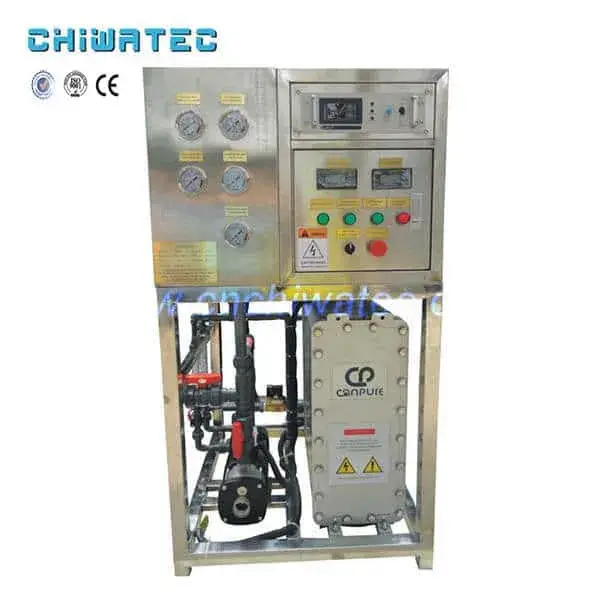
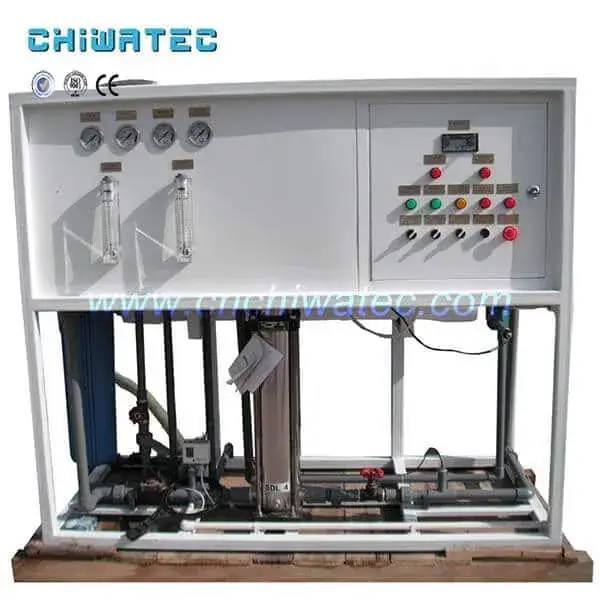
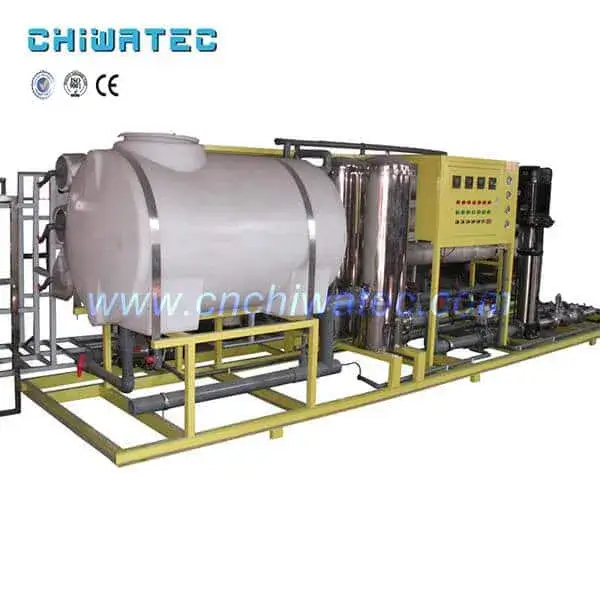
An industrial pure water system based on reverse osmosis technology integrates multiple treatment stages designed to remove dissolved solids, suspended particles, organic compounds, bacteria, and pyrogens from feed water sources. Unlike residential or light commercial units, industrial systems are engineered for continuous 24/7 operation, higher flow rates (typically 1 to 500 m3/h), and automated process control with minimal operator intervention. The core components include a pretreatment skid, high-pressure RO membrane array, post-treatment polishing, and a centralized control system with PLC and HMI interface.
Key Distinguishing Features
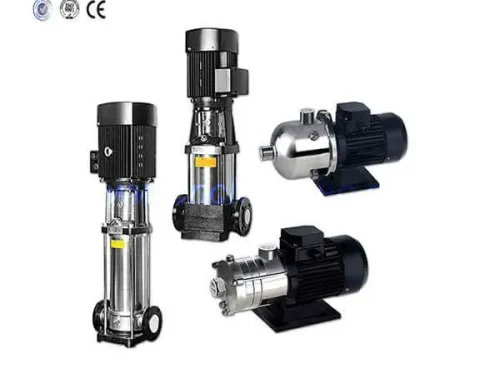
Industrial-grade RO systems differ from smaller units in several critical aspects: heavy-duty stainless steel (304 or 316L) high-pressure piping rated for 300-600 psi, industrial-grade multi-stage centrifugal pumps with mechanical seals, larger format membrane elements (4-inch or 8-inch diameter in 40-inch or 60-inch length housings), automated membrane flush and chemical clean-in-place (CIP) systems, and comprehensive instrumentation including flow meters, conductivity sensors, pH probes, pressure transmitters, and temperature sensors integrated with a distributed control system (DCS) or SCADA platform.
2. What Are the Primary Advantages of RO-Based Industrial Pure Water Systems?
Compact Equipment Footprint and Modular Design
Reverse osmosis systems offer a significantly smaller footprint compared to conventional thermal desalination or ion exchange systems for equivalent production capacity. A 10 m3/h industrial RO system occupies approximately 15-25 square meters, while a comparable evaporation-based system requires 3-5 times more space. Modern industrial pure water systems feature modular membrane arrays that allow capacity expansion by adding additional pressure vessels — a 2:1 array configuration (2 first-stage vessels, 1 second-stage vessel) can be expanded to 4:2 or 8:4 as production demands grow.
Low Energy Consumption Without Phase Change
Unlike thermal processes such as multi-stage flash (MSF) distillation or multi-effect distillation (MED) that require phase change energy (approximately 10-25 kWh/m3), RO operates at a specific energy consumption of 2-5 kWh/m3 for brackish water and 3-7 kWh/m3 for seawater desalination. This energy efficiency is achieved because RO is a pressure-driven membrane process — applied pressure simply overcomes osmotic pressure and membrane resistance without heating, boiling, or condensing the water. For an industrial facility producing 100 m3/day, this translates to annual energy savings of USD 80,000-180,000 compared to thermal alternatives at USD 0.12/kWh.
Superior Contaminant Rejection Without Phase Change
The semi-permeable RO membrane with 0.0001 micron pore size achieves removal rates of 98-99.7% for dissolved inorganic solids, 99.9% plus for bacteria and viruses, and 90-98% for organic compounds with molecular weights above 100 Da. This high rejection is achieved through a combination of size exclusion (sieving), charge repulsion (Donnan exclusion), and solution-diffusion transport mechanisms — all without requiring a phase change, making it fundamentally more energy-efficient than distillation-based approaches. Xi’an CHIWATEC designs industrial RO systems with multi-stage membrane configurations optimized for specific feed water chemistry and product water targets.
3. How Has RO Membrane Technology Evolved for Industrial Applications?
Membrane Material Advancements
Thin-film composite (TFC) polyamide membranes have become the industry standard, offering higher flux rates (25-35 LMH at standard conditions), improved salt rejection (99.5-99.8%), and better chemical stability compared to earlier cellulose acetate (CA) membranes. Recent developments include low-fouling membrane coatings with enhanced hydrophilic properties that reduce organic and biofouling rates by 30-50%, extending cleaning intervals from 3-6 months to 6-12 months in challenging feed water applications. For a deeper look at these advancements in reverse osmosis technology, refer to our dedicated article.
Membrane Element Configuration Options
Industrial RO systems primarily use spiral-wound membrane elements in standard diameters (2.5-inch, 4-inch, and 8-inch) with lengths of 40 inches (standard) or 60 inches (jumbo). The 8-inch by 40-inch element is the workhorse of industrial installations, each producing 6,000-13,000 GPD depending on membrane type (brackish water, seawater, or nanofiltration). Industrial arrays typically contain 6-7 elements per pressure vessel in series, with multiple vessels arranged in parallel to achieve target system capacity. The evolution from 4-inch to 8-inch elements has reduced system footprint by approximately 40% for equivalent capacity.
4. What Are the Key Operational Advantages of RO Over Alternative Technologies?
Continuous Operation and Automation
Industrial pure water systems based on RO technology support fully automated continuous operation with minimal operator supervision. Modern PLC-based control systems manage start-up and shut-down sequences, automatic permeate flush at shutdown, membrane protection interlocks (low-pressure and high-pressure cutoffs), conductivity-based product diversion, and CIP initiation based on normalized performance trends. This compares favorably to ion exchange systems that require periodic regeneration with chemicals (acid and caustic) every 12-48 hours, generating significant chemical waste streams.
No Regeneration Chemicals Required
A significant operational advantage of RO over conventional ion exchange demineralization is the elimination of regeneration chemicals. A typical mixed-bed ion exchange system producing 100 m3/day consumes approximately 2-4 tons of 30% hydrochloric acid and 3-5 tons of 50% sodium hydroxide per month for regeneration. An RO system eliminates this chemical consumption, reducing both operating costs and hazardous waste disposal requirements. When combined with electrodeionization (EDI) for final polishing, the hybrid RO-EDI configuration provides continuous high-purity water (18.2 Mohm-cm resistivity) without any chemical regeneration. For an in-depth comparison of pure water and mineral water plant production processes, see our comprehensive process guide.
No Phase Change Operation
Unlike evaporation and distillation technologies that require energy-intensive phase change (latent heat of vaporization at 2,260 kJ/kg), RO separation occurs at ambient temperature with no vaporization or condensation. This not only reduces energy consumption by 60-90% compared to thermal processes but also preserves the physical and chemical properties of the product water, making it ideal for food, beverage, and pharmaceutical applications where water quality consistency is paramount. For industries requiring ultrapure water, the RO system serves as an ideal pretreatment stage before final polishing by EDI or ion exchange mixed beds, as detailed in our introduction to reverse osmosis core technology applications.
5. How Does RO Integrate with Other Industrial Water Treatment Technologies?
RO-EDI Hybrid Systems for Ultrapure Water
The combination of RO and electrodeionization (EDI) has become the gold standard for industrial ultrapure water production in electronics, pharmaceutical, and power generation applications. In this configuration, the RO system removes 95-99% of feed water contaminants, and the EDI unit polishes the RO permeate to achieve 18.2 Mohm-cm resistivity with continuous operation and zero regeneration chemicals. This RO-EDI hybrid consumes 80% less energy than traditional RO-ion exchange configurations and eliminates acid and caustic storage and handling hazards.
RO as Pretreatment for Thermal and Membrane Processes
In industrial pure water systems, RO frequently serves as pretreatment for downstream processes. Examples include RO before EDI for semiconductor ultrapure water production, RO before ion exchange mixed beds for pharmaceutical USP Purified Water and WFI (Water for Injection) preparation, and RO before thermal distillation for zero liquid discharge (ZLD) applications where RO concentrates brine to 60,000-80,000 mg/L TDS for efficient thermal evaporation.
Multi-Stage RO Configurations
Industrial applications requiring very high purity water or high water recovery frequently employ multi-stage RO configurations. A two-pass RO system routes permeate from the first-pass membrane array through a second-pass RO array, achieving 99.8-99.9% total salt rejection and producing water with conductivity below 2 microsiemens/cm. For high-recovery applications (90-95% recovery), concentrate staging or brine recirculation configurations maximize water utilization while minimizing reject water volume. CHIWATEC engineering team custom-designs these multi-stage configurations based on site-specific feed water analysis and product water specifications.
6. What Pretreatment Features Are Essential for Industrial RO Systems?
Comprehensive Pretreatment Requirements
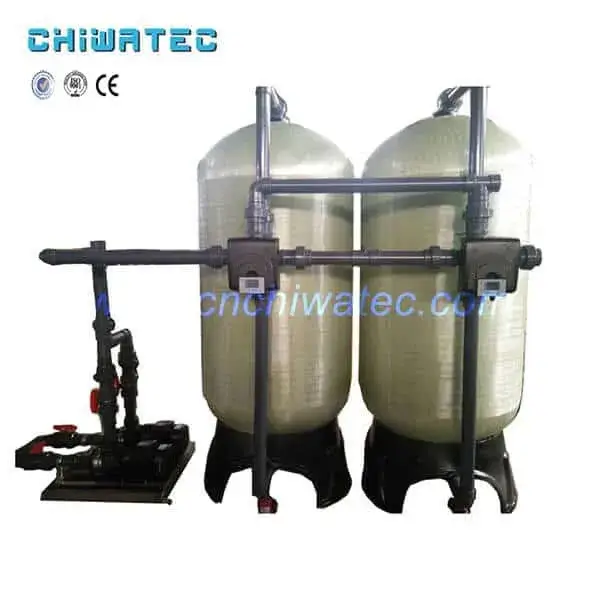
Protecting RO membranes from fouling, scaling, and chemical attack requires a well-designed pretreatment system. Essential pretreatment components for an industrial pure water system include: multi-media filtration (sand and anthracite) for suspended solids removal, activated carbon filtration for chlorine and organic compound adsorption, antiscalant dosing to prevent calcium carbonate, calcium sulfate, and silica scaling, cartridge filtration (5-micron) for final particulate protection, and optional sodium bisulfite dosing for residual chlorine reduction. For a detailed analysis, see our guide on five common RO pretreatment processes.
Advanced Pretreatment Technologies
For challenging feed water sources, advanced pretreatment technologies may include ultrafiltration (UF) membranes as a replacement for conventional media filtration, achieving SDI below 2 versus the 3-5 achievable with media filtration, or nanofiltration (NF) membranes for selective hardness and color removal. These membrane-based pretreatment systems provide more consistent feed water quality to the RO membranes, extending element life by 1-3 years in surface water and wastewater reuse applications.
7. What Monitoring and Control Features Do Industrial RO Systems Include?
Instrumentation and Sensors
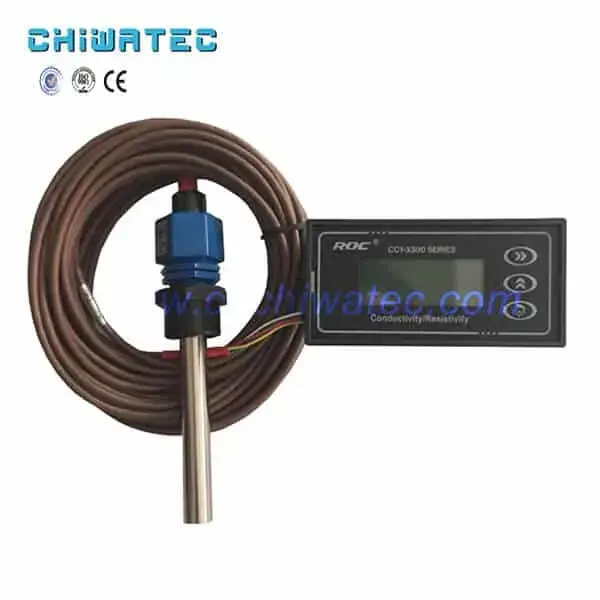
Modern industrial pure water systems incorporate comprehensive instrumentation for real-time performance monitoring: feed, interstage, and concentrate pressure transmitters (0-600 psi range), feed and permeate conductivity sensors (0-2000 microsiemens/cm and 0-100 microsiemens/cm ranges respectively), permeate and concentrate flow meters (magnetic or turbine type), pH and ORP sensors for feed water quality trending, and temperature sensors for normalized performance calculation. This instrument suite enables operators to track the key performance indicators that determine system health: specific flux (LMH/bar), salt rejection (%), and differential pressure across membrane stages.
PLC and SCADA Integration
Industrial RO systems are controlled by programmable logic controllers (PLCs) that manage all automated functions: start-up sequence (feed valve open, low-pressure flush, high-pressure pump ramp-up), shut-down sequence (high-pressure pump stop, permeate flush, feed valve close), automatic membrane flush at programmable intervals, CIP initiation based on performance triggers, and alarm management for out-of-spec conditions. SCADA integration enables remote monitoring, historical data trending, and predictive maintenance algorithms. For guidance on installing reverse osmosis systems with proper control integration, refer to our installation guide.
8. What Are the Maintenance Requirements for Industrial RO Systems?
Routine Maintenance Schedule
Daily tasks include recording operating parameters (pressures, flows, conductivity, temperature), inspecting for leaks, and checking chemical feed pump operation. Weekly tasks include verifying instrument calibration, inspecting pretreatment media condition, and checking brine seal integrity. Monthly maintenance includes replacing cartridge filters and checking softener brine tank salt level. Quarterly activities include instrument recalibration, safety device testing, and full system performance normalization analysis.
Chemical Clean-In-Place (CIP) Procedures
Industrial RO systems require periodic CIP when normalized performance declines by 15% in permeate flow or 20% in differential pressure. The standard CIP protocol uses sequential low-pH acidic cleaning (citric or hydrochloric acid at pH 2-3) and high-pH alkaline cleaning (sodium hydroxide at pH 11-12 with detergents and EDTA). CIP frequency depends on feed water quality — surface water-fed systems may require quarterly cleaning, while well water-fed systems may operate 6-12 months between cleanings. For systematic troubleshooting guidance, consult our diagnosis guide for reverse osmosis water treatment systems.
Membrane Element Replacement
Industrial RO membrane elements typically require replacement every 3-7 years, depending on feed water quality, pretreatment effectiveness, and maintenance diligence. Replacement indicators include: normalized permeate flow below 70% of rated capacity after CIP, salt rejection below 95%, or differential pressure above 50 psi at standard operating conditions. Membrane autopsies are recommended before wholesale replacement to identify the root cause of performance degradation — biofouling, scaling, organic fouling, colloidal fouling, or chemical oxidation — and implement corrective measures before installing new elements.
9. What Are the Key Considerations for Selecting an Industrial Pure Water System?
Feed Water Quality Assessment
A comprehensive feed water analysis is the foundation of proper system design. Critical parameters include: TDS (typically 100-2,000 mg/L for brackish water), hardness (as CaCO3), alkalinity, silica concentration (critical — can form irreversible scaling above 150 mg/L at 75% recovery), iron and manganese levels (must be below 0.1 and 0.05 mg/L respectively), free chlorine and chloramines, bacteria and biofilm-forming potential (measured as ATP), and seasonal variability — surface water sources may show 3-5 times higher TSS and organic loading during rainy seasons.
Capacity, Recovery, and Quality Specifications
Key design parameters include: target permeate flow rate (m3/h or GPD), required water recovery (typically 75-85% for brackish water RO in industrial applications), product water quality specification (conductivity, resistivity, silica, TOC, bacteria), operating hours per day (8, 16, or 24-hour continuous), and redundancy requirements (N+1 pump or membrane array configuration for critical processes). Xi’an CHIWATEC engineers use industry-standard design software including ROSA, IMSDesign, and Wave to model membrane array configurations and predict performance under site-specific conditions.
Regulatory Compliance and Documentation
Industrial pure water systems must comply with applicable standards depending on the end-use application: USP <1231> for pharmaceutical Purified Water and WFI, ASTM D1193-91 for laboratory reagent water (Type I, II, III), FDA 21 CFR Part 11 for electronic records in regulated industries, GB/T 6682-2008 for Chinese laboratory water specifications, and local environmental discharge regulations for RO concentrate disposal.
10. What Does the Future Hold for Industrial Pure Water System Technology?
Emerging Membrane Technologies
Several promising membrane technologies are progressing toward commercial industrial deployment. Forward osmosis (FO) uses osmotic pressure differential rather than hydraulic pressure, enabling lower fouling propensity and higher recovery for challenging feed waters. Membrane distillation (MD) combines membrane separation with thermal driving force, enabling salt rejection above 99.99% and the ability to treat RO brine to near-saturation concentrations for ZLD applications. Graphene oxide and carbon nanotube-enhanced membranes promise 2-5 times higher permeability than current TFC membranes while maintaining or improving salt rejection, though these remain at laboratory and pilot scale as of 2026.
AI and Machine Learning Integration
Artificial intelligence is transforming industrial RO system operation. Machine learning algorithms trained on historical operating data can predict membrane fouling events 2-4 weeks in advance, optimize antiscalant dosing rates in real time based on feed water chemistry, recommend optimal CIP timing and chemical concentration, and automatically adjust operating pressure and recovery to maintain target production while minimizing energy consumption. Early adopters report 15-25% reduction in total operating costs and 20-30% extension in membrane service life through AI-optimized operation.
Sustainability and Circular Economy
The industrial pure water system of the future increasingly embraces circular economy principles: RO brine minimization through high-recovery membrane configurations and brine concentrators, resource recovery from concentrate streams (lithium, magnesium, potassium extraction), renewable energy integration (solar or wind-powered RO for off-grid applications), and carbon footprint reduction through energy-efficient membrane and pump technologies. These sustainability features align with the United Nations Sustainable Development Goal 6 (clean water and sanitation) and Goal 12 (responsible consumption and production).
Conclusion
The industrial pure water system based on reverse osmosis technology offers a compelling combination of compact footprint, energy-efficient operation, excellent contaminant rejection, and flexible integration with complementary treatment technologies. Modern RO systems incorporate advanced membrane materials, comprehensive instrumentation and automation, and robust pretreatment design to deliver reliable, high-purity water for the most demanding industrial applications. As membrane technology, AI-driven optimization, and sustainability features continue to advance, RO-based industrial pure water systems will remain the cornerstone of industrial water treatment infrastructure. For expert assistance in designing, selecting, or optimizing an industrial pure water system for your specific application, contact Xi’an CHIWATEC today at [email protected] or [email protected], or reach us via WhatsApp.
Frequently Asked Questions
Q1: What is the typical lifespan of an industrial RO system?
A well-designed and properly maintained industrial pure water system has a service life of 15-20 years for the mechanical and structural components (pressure vessels, piping, pumps, frame). Membrane elements require replacement every 3-7 years, and instrument sensors (conductivity, pH, flow meters) typically need recalibration annually and replacement every 3-5 years. The high-pressure pump is the primary wear component, with mechanical seal replacement recommended every 3-5 years and complete pump overhaul every 8-10 years.
Q2: How much water does an industrial RO system waste?
Industrial brackish water RO systems typically operate at 75-85% recovery, meaning 75-85% of the feed water is converted to permeate and 15-25% is discharged as concentrate. For a 100 m3/h system at 80% recovery, only 20 m3/h of concentrate is produced. Proper concentrate management through recovery optimization, brine concentration, or beneficial reuse (cooling tower makeup, irrigation, or industrial cleaning) can reduce net water loss to near zero.
Q3: Can industrial RO systems handle hot feed water?
Standard TFC polyamide RO membranes have a maximum continuous operating temperature of 45 degrees C (113 degrees F), with optimal performance at 25 degrees C. For industrial processes with elevated feed water temperatures, heat exchangers or cooling towers are required upstream of the RO system to reduce feed temperature to the acceptable range. Alternatively, specialized high-temperature RO membranes are available for operation up to 70 degrees C but offer lower salt rejection and shorter service life.
Q4: What is the payback period for an industrial RO system?
The payback period for an industrial pure water system depends on the current water supply cost, production volume, and local utility rates. For facilities currently purchasing purified water at USD 0.50-1.00 per liter, on-site RO systems typically achieve payback within 12-24 months. For facilities switching from ion exchange demineralization, the elimination of chemical regeneration costs typically yields a 2-3 year payback. Annual operating costs for an industrial RO system typically represent 10-20% of the equivalent purchased purified water cost.
Q5: Do industrial RO systems require a full-time operator?
Modern industrial RO systems with PLC-based automation and remote monitoring typically require only 1-2 hours per day of operator attention for routine checks, data recording, and consumables management, plus 4-8 hours per month for scheduled maintenance activities. Fully automated systems with SCADA integration and predictive maintenance capabilities can operate with minimal on-site operator presence, with alerts sent to mobile devices for out-of-spec conditions or alarm events.
Related Resources and Further Reading
Do you have a water treatment project we can help with
* Designing,machining,installing,commissioning, customize and one-stop service
 English
  Spanish
  Portuguese