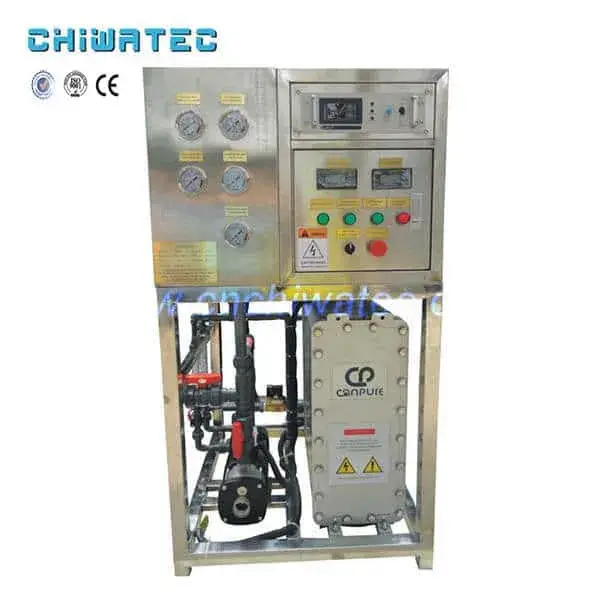
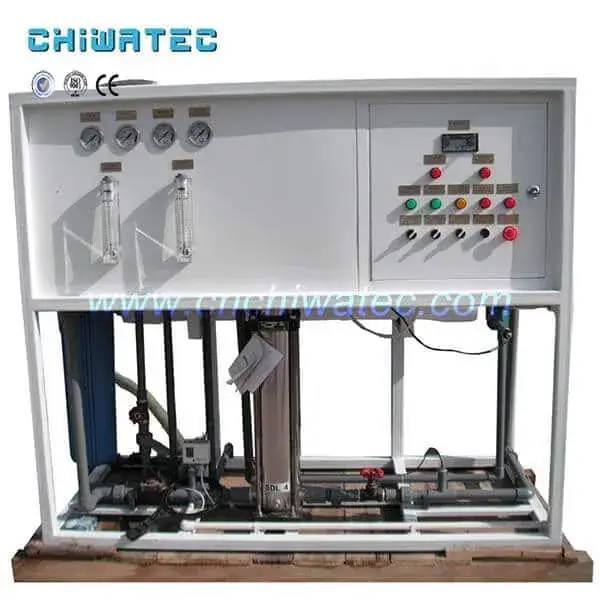
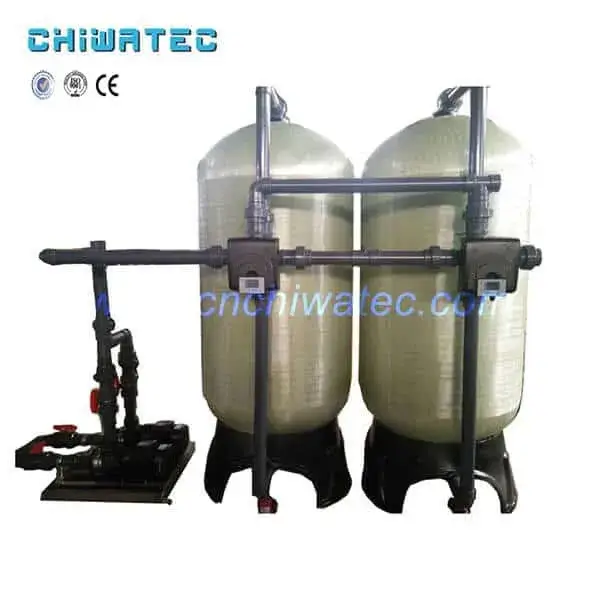
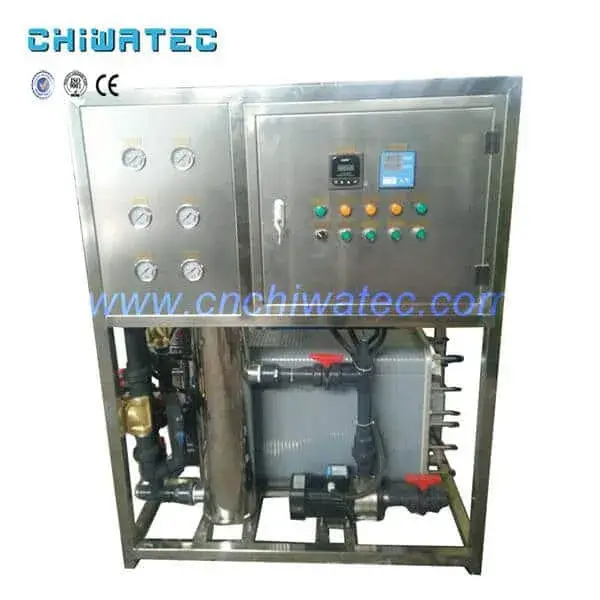
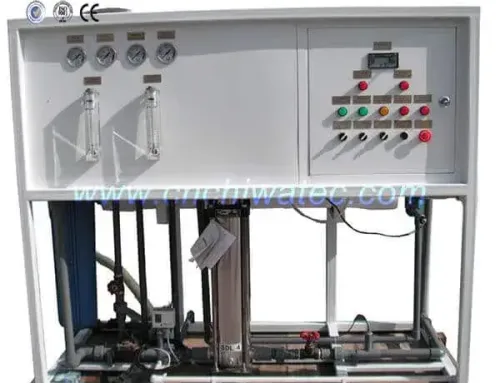
EDI System Water Treatment Equipment
Electrodeionization (EDI) is one of the most advanced and reliable technologies for producing high-purity and ultrapure water. By combining ion exchange resins, selective ion exchange membranes, and a direct-current electric field, an EDI system removes ions continuously without chemical regeneration, making it an environmentally friendly and low-maintenance water treatment solution.
For industries such as biopharmaceuticals, electronics, laboratories, and precision manufacturing, EDI system water treatment equipment provides stable, efficient, and high-quality water production that surpasses traditional mixed-bed ion exchange systems.
1. Manufacturing Standards of EDI Water Treatment Systems
High-quality EDI equipment must comply with international or national industry standards to ensure structural integrity, corrosion resistance, and long-term reliability.
Imported Equipment Standards
Imported EDI units generally meet:
- ASME (American Society of Mechanical Engineers) standards
- ASTM (American Society for Testing and Materials) specifications
These standards ensure consistent quality in materials, welding, pressure testing, and mechanical stability.
Domestic Equipment Standards
Domestic EDI systems should comply with:
- JB2932-99 “Technical Conditions for Manufacturing Water Treatment Equipment”
In cases where special materials are used, the manufacturer’s technical specifications may apply.
2. Working Principle of EDI Technology
The EDI system—also known as an electrically regenerated mixed bed—uses a direct electric field to continuously remove ions from water.
How EDI Works
- Ion Removal Through Electric Field
A DC voltage is applied across the EDI module. Charged ions in the water migrate toward electrodes through ion-selective membranes. - Ion Exchange Resin Enhancement
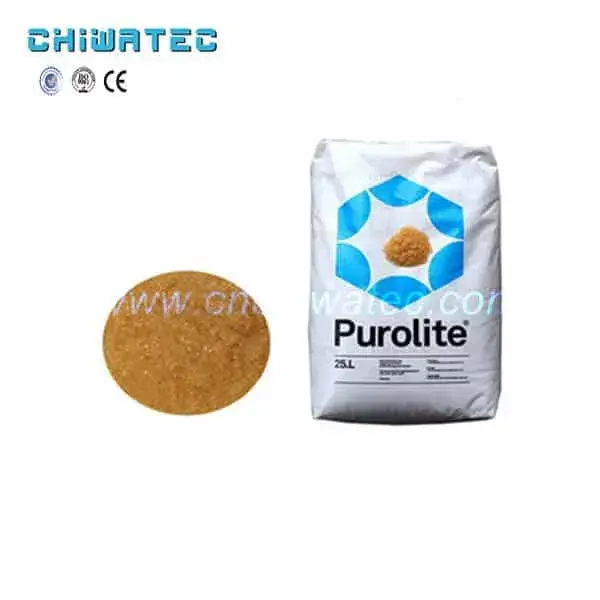
The resin inside the EDI module improves conductivity and enhances ion transport efficiency. - Continuous Resin Regeneration
Under electrical potential, water molecules dissociate into:- H⁺ (hydrogen ions)
- OH⁻ (hydroxide ions)
These ions regenerate the ion exchange resin in real time, eliminating the need for chemical regenerants like acid or caustic soda.
- Non-stop Water Production
Unlike traditional mixed-bed resins, EDI does not require shutdown for regeneration.
3. System Features of EDI Equipment
Modern EDI systems offer several advantages that make them ideal for ultrapure water production:
High Water Purity
- Product water quality >16 MΩ·cm
- Suitable for semiconductor and pharmaceutical-grade water
Stable and Continuous Operation
- 24/7 operation
- No chemical regeneration downtime
Environmentally Friendly
- No acid/alkali storage
- No chemical regeneration waste
- Minimal wastewater discharge
Small Footprint and Low Operating Costs
- Simplified system layout
- Minimal labor and maintenance
- Lower consumable cost vs. ion exchange
4. Water Production Performance
- Product water resistivity: >16 MΩ·cm
- Water recovery rate: 90%–95%
This ensures efficient use of feedwater while maintaining consistent purity.
5. Inlet Water Quality Requirements
To ensure proper EDI operation and prevent membrane fouling, the inlet water must meet the following standards:
| Indicator | Requirement |
|---|---|
| Total Exchangeable Anions (TEA, as CaCO₃) | <25 mg/L |
| pH | 5–9 |
| Hardness | <1 mg/L (as CaCO₃) |
| Silica | <1 mg/L |
| TOC | <0.5 mg/L |
| Residual chlorine | <0.05 mg/L |
Typically, EDI is installed after RO (Reverse Osmosis) to meet these requirements.
6. Application Areas of EDI Systems
EDI technology is widely used across industries requiring high-purity or ultrapure water:
Pharmaceutical & Biotechnology
- Injection water
- Dialysis water
- Laboratory-grade water
Electronics & Semiconductor Manufacturing
- Chip production
- LCD/LED panels
- Optical components
Power & Chemical Industries
- Boiler feedwater
- Ultra-clean process water
Precision Manufacturing
- High-purity rinse water
- Surface treatment
Large enterprises such as CHIWATEC have mastered mature EDI system integration, offering solutions from 0.5 t/h to 200 t/h to match customer requirements.
Conclusion
EDI system water treatment equipment has become the preferred solution for industries requiring stable, continuous, and ultra-high-purity water. Its environmentally friendly design, elimination of chemical regeneration, low operating cost, and excellent water quality make it a superior alternative to traditional mixed-bed ion exchange systems.
As EDI technology continues to advance, it is increasingly recognized as the future of industrial-scale ultrapure water production.
FAQ (Frequently Asked Questions)
1. What is an EDI system used for?
EDI is used to produce high-purity or ultrapure water, especially in industries like electronics, pharmaceuticals, and power generation.
2. Does EDI require chemical regeneration?
No. EDI regenerates the resin internally using electricity, eliminating the need for acid or alkali regenerants.
3. What is the difference between RO and EDI?
- RO removes 95–99% of dissolved salts through membrane filtration.
- EDI polishes RO permeate to produce ultrapure water >16 MΩ·cm.
They are often used together: RO → EDI.
4. What water quality does EDI require at the inlet?
- Hardness <1 mg/L
- Silica <1 mg/L
- TOC <0.5 mg/L
- Residual chlorine <0.05 mg/L
RO is typically required before EDI.
5. Is EDI suitable for large-scale water production?
Yes. Modern EDI systems can exceed 200 t/h, making them suitable for industrial continuous operation.
Xi’an CHIWATEC Water Treatment Technology is a high-tech enterprise specialized in various water processing devices. Aside from these individual products, which cover a number of types and series, we can also help with related comprehensive engineering projects. Thanks to our hard work and dedication upon our founding, we are now one of the fastest-developing water treatment equipment manufacturers in Western China.
Further reading:
FOLLOW US
Do you have a water treatment project we can help with
* Designing,machining,installing,commissioning, customize and one-stop service
 English
  Spanish
  Portuguese