

RO concentrated water disposal is a critical environmental challenge for reverse osmosis systems worldwide. This 2026 comprehensive guide covers concentrate characteristics (TDS 3,000-30,000+ mg/L depending on recovery rate), treatment technologies, regulatory compliance, and proven disposal strategies including deep well injection, evaporation ponds, ZLD systems, and innovative resource recovery approaches for industrial and municipal RO installations.
The RO Concentrate Problem: Scale and Environmental Impact in 2026
Reverse osmosis concentrate (also called brine, reject water, or RO concentrate) is the waste stream from reverse osmosis systems containing concentrated impurities from the feed water. As RO adoption accelerates globally, concentrate management has become increasingly critical.
The global RO concentrate treatment market reached $2.1 billion in 2025 and is projected to grow at 7.3% CAGR through 2030, driven by stricter environmental regulations, water scarcity driving higher recovery rates, and zero liquid discharge (ZLD) mandates in water-stressed regions.
Concentrate Quality: How Recovery Rate Affects TDS
| Feed Water TDS | Recovery Rate | Concentrate TDS | Concentration Factor |
|---|---|---|---|
| 3,000 mg/L (brackish) | 75% | 12,000 mg/L | 4x |
| 3,000 mg/L (brackish) | 85% | 20,000 mg/L | 6.7x |
| 3,000 mg/L (brackish) | 90% | 30,000 mg/L | 10x |
| 35,000 mg/L (seawater) | 50% | 70,000 mg/L | 2x |
| 35,000 mg/L (seawater) | 60% | 87,500 mg/L | 2.5x |
Key insight: Higher recovery rates reduce concentrate volume but increase TDS exponentially, creating a trade-off between disposal cost and treatment complexity.
Environmental Risks of Untreated Discharge
- Surface water impact: Elevated salinity harms aquatic ecosystems, reduces biodiversity, and disrupts food chains
- Groundwater contamination: Improper disposal can infiltrate aquifers, affecting drinking water sources
- Soil degradation: High sodium adsorption ratio (SAR) damages soil structure and reduces agricultural productivity
- Scaling and corrosion: Concentrate can damage sewer infrastructure and interfere with wastewater treatment processes
- Regulatory violations: Most jurisdictions now prohibit direct untreated discharge to surface waters
RO System Waste Streams: Beyond Concentrate
RO and nanofiltration systems generate multiple waste streams requiring management:
| Waste Stream | Source | Characteristics | Disposal Method |
|---|---|---|---|
| Concentrate (brine) | Continuous RO operation | High TDS, scaled contaminants | Specialized treatment required |
| Pretreatment sludge | Media filtration backwash | Suspended solids, coagulant residues | Conventional wastewater treatment |
| Cleaning solutions | CIP (clean-in-place), 2-4x/year | Acids, bases, surfactants, chelants | Neutralization + wastewater treatment |
| Preservation fluid | Long-term shutdown | Sodium bisulfite (1% solution) | Dechlorination + discharge |
| Spent membranes | Replacement, 3-7 year life | Polyamide, polysulfone, fiberglass | Landfill or emerging recycling |
Except for concentrate, other waste streams have established disposal methods. Concentrate's high salinity makes it uniquely challenging.
Disposal Option 1: Deep Well Injection
How It Works
Deep well injection pumps concentrate into underground geological formations (typically 1,000-3,000 meters deep) isolated from freshwater aquifers by impermeable rock layers.
Advantages
- Proven technology: Widely used for oilfield brine and hazardous waste disposal
- Low operating cost: $0.50-2.00 per cubic meter after capital investment
- Minimal surface footprint: Only wellhead and injection pumps visible
- Weather-independent: Operates continuously regardless of climate
Limitations and Requirements
| Requirement | Specification | Rationale |
|---|---|---|
| Geological suitability | Permeable injection zone, impermeable confining layer | Prevent upward migration to aquifers |
| Well depth | >1,000 meters below freshwater | Regulatory minimum for isolation |
| Seismic risk | Low seismicity area | Prevent induced earthquakes |
| Permitting | UIC (Underground Injection Control) permit | EPA or equivalent authority approval |
| Monitoring | Continuous pressure, annual water quality testing | Detect leaks or formation issues |
When Deep Well Injection Makes Sense
- ✓ Large RO plants (>10,000 m³/day concentrate volume)
- ✓ Suitable geology (sedimentary basins, depleted oil/gas fields)
- ✓ Long-term project life (>10 years to justify well drilling cost)
- ✓ No surface water discharge options available
Disposal Option 2: Evaporation Ponds
How It Works
Concentrate is pumped into shallow lined ponds where solar energy evaporates water, leaving crystallized salts for periodic removal and disposal.
Advantages
- Simple technology: Minimal mechanical equipment, low energy consumption
- Low operating cost: $0.20-1.00 per cubic meter (mainly land and maintenance)
- Scalable: Pond area can be expanded as needed
- Salt recovery potential: Crystallized salts may be commercially viable
Limitations
- Land intensive: Requires 1-5 hectares per 1,000 m³/day concentrate (arid climates)
- Climate dependent: Evaporation rates vary seasonally; ineffective in humid regions
- Liner requirements: HDPE or clay liners needed to prevent groundwater contamination ($50,000-200,000 per hectare)
- Wildlife hazards: Birds and animals may be attracted to ponds, requiring deterrent systems
- Salt disposal: Accumulated salts require periodic removal and landfill disposal
Disposal Option 3: Zero Liquid Discharge (ZLD) Systems
ZLD Process Flow
- Pretreatment: Remove suspended solids, organics, and scaling precursors
- Brine concentrator: Mechanical vapor recompression (MVR) evaporator increases TDS to 200,000-300,000 mg/L
- Crystallizer: Further evaporation produces dry solids and distilled water for reuse
- Solids dewatering: Centrifuge or filter press produces cake for landfill or beneficial use
Advantages
- 100% water recovery: Eliminates discharge entirely, maximizes water reuse
- Regulatory compliance: Meets strictest environmental standards
- Resource recovery: Recovered salts may have commercial value (NaCl, Na₂SO₄, Li⁺)
- Future-proof: Anticipates increasingly stringent regulations
Challenges
| Challenge | Impact | Mitigation |
|---|---|---|
| High capital cost | $5-20M for 1,000 m³/day ZLD | Phased implementation, government subsidies |
| High energy consumption | 15-30 kWh per m³ of concentrate | Waste heat integration, renewable energy |
| Complex operations | Requires skilled operators | Automation, remote monitoring, training |
| Solids disposal | Crystallized salts need landfill | Beneficial use programs (de-icing, construction) |
Disposal Option 4: Combined Discharge with Other Wastewater
Dilution Strategy
Mixing RO concentrate with treated municipal wastewater, industrial cooling water, or power plant effluent reduces salinity to acceptable discharge levels.
Feasibility Criteria
| Parameter | Requirement | Rationale |
|---|---|---|
| Dilution ratio | 1:5 to 1:20 (concentrate:other water) | Achieve discharge TDS <1,000-2,000 mg/L |
| Receiving water capacity | Sufficient flow year-round | Maintain dilution during dry seasons |
| Compatibility | No adverse chemical reactions | Prevent scaling, precipitation, toxicity |
| Regulatory approval | Permit allows mixed discharge | Compliance with water quality standards |
Best Applications
- RO plants adjacent to wastewater treatment facilities
- Industrial parks with multiple wastewater streams
- Power plants using RO for boiler makeup (concentrate to cooling tower blowdown)
- Coastal desalination plants (concentrate to ocean outfall with proper diffuser design)
Disposal Option 5: Land Application
How It Works
Controlled application of concentrate to land (forests, grasslands, salt-tolerant crops) where evapotranspiration removes water and soil filters contaminants.
Requirements and Limitations
- Soil permeability: Moderate permeability required (not too fast to contaminate groundwater, not too slow to cause pooling)
- Climate: Arid to semi-arid regions with evapotranspiration > precipitation
- Vegetation: Salt-tolerant species (halophytes) or no vegetation (dedicated disposal area)
- Groundwater depth: >3 meters to prevent contamination
- Application rate: Typically 10-50 mm/day depending on soil and climate
2026 Technology Trends in RO Concentrate Management
Latest innovations transforming concentrate disposal:
- High-recovery RO membranes: 95-98% recovery rates reduce concentrate volume by 50-75% vs. traditional 75% recovery
- Forward osmosis (FO): Uses draw solution to extract water from concentrate, reducing volume before final disposal
- Membrane distillation (MD): Low-temperature thermal process using waste heat for concentrate volume reduction
- Electrochemical concentration: Electrodialysis and capacitive deionization for selective ion removal and resource recovery
- Lithium extraction: Recovering Li⁺ from brackish water concentrate for battery manufacturing (emerging market)
- AI-optimized ZLD: Machine learning algorithms minimize energy consumption and predict scaling events
Frequently Asked Questions (FAQ)
How much concentrate does a typical RO plant produce?
Concentrate volume depends on recovery rate: 75% recovery = 25% of feed becomes concentrate (1 m³ concentrate per 3 m³ product water). A 10,000 m³/day RO plant at 75% recovery produces ~3,300 m³/day concentrate. Higher recovery (90%) reduces concentrate to ~1,100 m³/day but increases TDS.
What is the cheapest concentrate disposal method?
For coastal plants: ocean discharge with proper diffuser ($0.10-0.50/m³). For inland plants: sewer discharge to wastewater treatment ($0.50-2.00/m³) or evaporation ponds in arid climates ($0.20-1.00/m³). ZLD is most expensive ($5-15/m³) but may be mandated in water-scarce regions.
Can RO concentrate be discharged to the sewer?
Often yes, with limitations. Many wastewater treatment plants accept RO concentrate up to 2,000-5,000 mg/L TDS if it represents <5-10% of total inflow. Higher salinity can inhibit biological treatment. Always obtain permission and verify local regulations.
Is zero liquid discharge (ZLD) economically viable?
ZLD costs $5-15 per m³ of concentrate treated, 5-10x higher than conventional disposal. However, it becomes viable when: (1) discharge permits are unavailable or extremely expensive, (2) water reuse value is high (> $2/m³), (3) regulations mandate ZLD, or (4) recovered salts have commercial value.
What regulations apply to RO concentrate discharge?
Regulations vary by jurisdiction. In the US, NPDES permits regulate surface water discharge; underground injection requires UIC permits. In China, GB 8978-1996 (Integrated Wastewater Discharge Standard) and local standards apply. EU Water Framework Directive sets ecological quality standards. Always verify local requirements.
Can concentrate be used for aquaculture or agriculture?
Generally no for agriculture (salinity damages crops). Limited aquaculture applications exist for halophyte species (brine shrimp, certain fish) in controlled ponds, but this requires careful salinity management and market development. Not a mainstream disposal option.
How do I select the best disposal option for my RO plant?
Decision framework: (1) Check regulatory requirements first (may eliminate options). (2) Evaluate site-specific factors (coastal vs. inland, geology, climate, land availability). (3) Compare lifecycle costs (capital + operating) for feasible options. (4) Consider future expansion and regulatory trends. (5) Engage stakeholders early (regulators, community, environmental groups).
Conclusion: Choosing the Right RO Concentrate Disposal Strategy
RO concentrated water disposal requires balancing environmental compliance, technical feasibility, and economic viability. Key selection criteria include:
- ✓ Regulatory requirements: Verify discharge limits, permitting timelines, and future regulatory trends
- ✓ Concentrate characteristics: TDS, flow rate, contaminants of concern drive technology selection
- ✓ Site conditions: Coastal vs. inland, geology, climate, land availability, proximity to infrastructure
- ✓ Cost analysis: Evaluate 20-year lifecycle costs including capital, operating, permitting, and closure
- ✓ Stakeholder acceptance: Engage regulators, community, and environmental groups early in planning
- ✓ Flexibility: Design for future expansion and evolving regulatory requirements
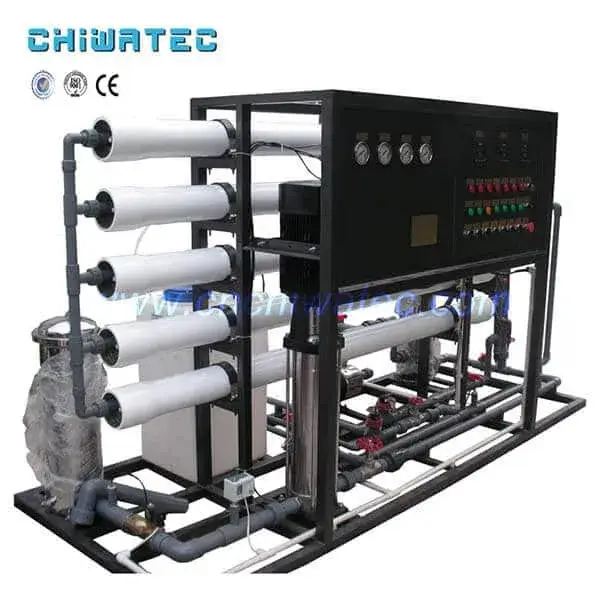
Need expert guidance? CHIWATEC provides customized RO water treatment and concentrate management solutions for industrial and municipal applications. Our engineers can assess your concentrate characteristics, evaluate disposal options, and design cost-effective systems tailored to your specific requirements. Contact us for a free consultation and feasibility study.
Related Resources
Do you have a water treatment project we can help with
* Designing,machining,installing,commissioning, customize and one-stop service






 English
  Spanish
  Portuguese




