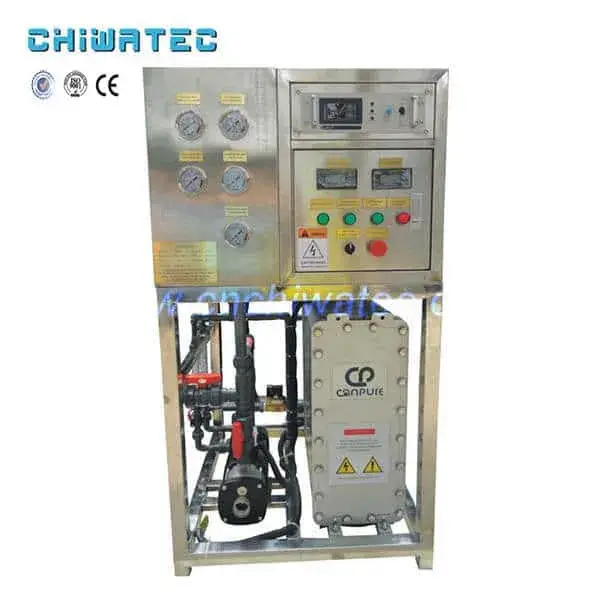
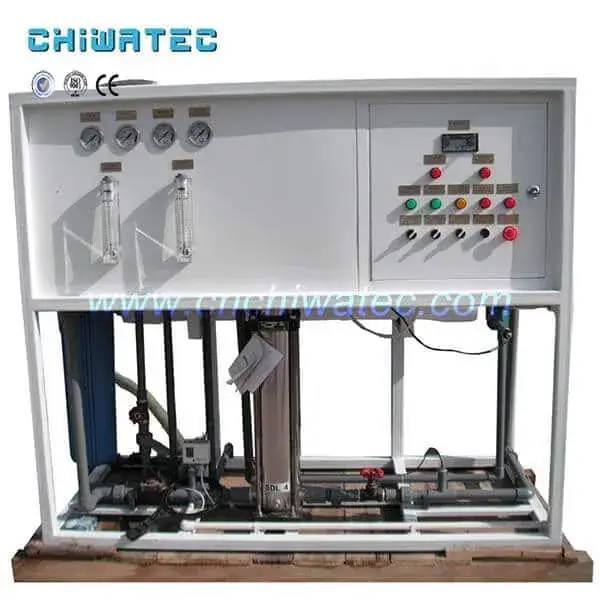
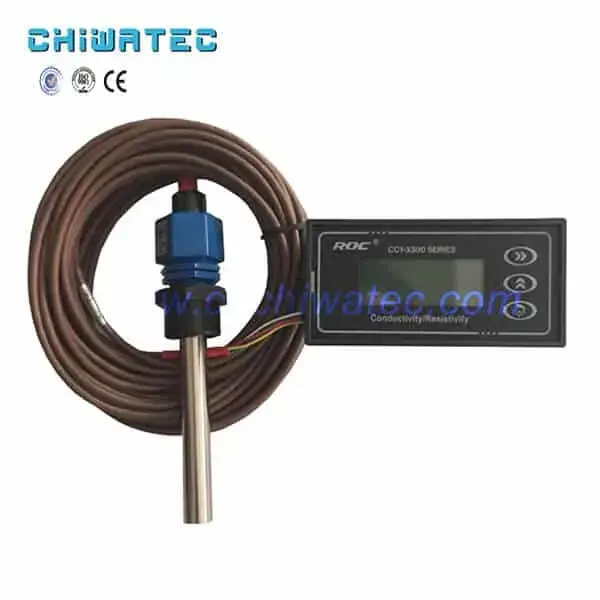
Bottled Water RO Treatment Systems: Advanced Reverse Osmosis Technology for Premium Bottled Water Production
Discover how RO reverse osmosis technology powers the global bottled water industry — delivering pure, safe, and great-tasting water at scale.
Explanation of reverse osmosis principle
The global bottled water market was valued at approximately USD 283 billion in 2023 and is projected to exceed USD 510 billion by 2032, growing at a CAGR of 6.7% (Grand View Research, 2024). At the heart of this industry lies reverse osmosis (RO) technology — the most advanced, energy-efficient, and widely adopted separation technology for bottled water purification.
The principle of RO is elegantly simple yet scientifically sophisticated: under pressure exceeding the natural osmotic pressure of a solution, a specialized semi-permeable membrane selectively allows only water molecules to pass through while rejecting dissolved solids, contaminants, and microorganisms. This membrane, composed of polymeric cellulose with a highly ordered matrix structure, features pores ranging from 0.1 to 1 nanometer — approximately one thousandth the size of E. coli bacteria and one hundredth of a virus particle.
Working principle of reverse osmosis
1. Penetration and osmotic pressure
Osmosis is a fundamental natural phenomenon readily observed in everyday life. For instance, when a cucumber is placed in salt water, it shrinks as water molecules migrate from the cucumber into the brine — this is osmosis in action. In a controlled system, if a container is divided by a semi-permeable membrane that only allows water molecules to pass, with pure water on one side and brine on the other at equal heights, water molecules will naturally migrate into the salt solution. The brine level rises until it reaches an equilibrium point. The pressure differential at this equilibrium is defined as osmotic pressure, which is directly proportional to the solute concentration of the solution. In the context of bottled water treatment, understanding osmotic pressure is critical for designing efficient RO systems that minimize energy consumption while maximizing water recovery rates.
2. Reverse osmosis phenomenon and reverse osmosis water purification technology
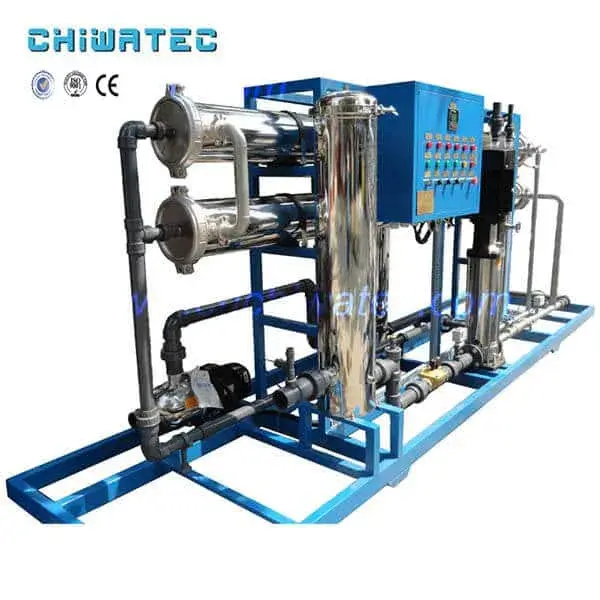
When an external pressure exceeding the natural osmotic pressure is applied to the concentrated solution side of the equilibrium system, the direction of water molecule migration reverses — water molecules now move from the concentrated solution to the pure water side. This phenomenon is called reverse osmosis. In practical bottled water equipment, feed water is pressurized by high-pressure pumps (typically operating at 8–15 bar for brackish water or 55–70 bar for seawater desalination) and forced through RO membrane elements. The result: purified permeate water on one side and concentrated reject brine on the other. Modern RO systems achieve water recovery rates of 65–85% for bottled water applications, significantly reducing wastewater compared to conventional treatment methods.
There are two keys to the production of pure water in reverse osmosis facilities. One is a selective membrane, which we call a semi-permeable membrane, and the other is a certain pressure. Simply put, the reverse osmosis semi-permeable membrane has many pores, the size of these pores is equivalent to the size of water molecules. Because bacteria, viruses, most organic pollutants and hydrated ions are much larger than water molecules, they cannot be penetrated. The reverse osmosis semi-permeable membrane is separated from the water that passes through the reverse osmosis membrane. Among the many impurities in water, soluble salts are the most difficult to remove. Therefore, the water purification effect of reverse osmosis is often determined according to the level of salt removal. The level of reverse osmosis salt removal is mainly determined by the reverse osmosis semipermeable membrane The selectivity. At present, the salt removal rate of highly selective reverse osmosis membrane elements can be as high as 99.7%.
Bottled Water Market Growth and Industry Outlook
The bottled water industry has experienced remarkable growth over the past decade, driven by increasing health consciousness, rising concerns over tap water quality, and growing demand for convenient hydration solutions. According to industry data:
- Global market size: USD 283 billion (2023), projected to reach USD 510 billion by 2032 (CAGR 6.7%)
- Asia-Pacific dominance: The region accounts for approximately 35% of global bottled water consumption, with China and India leading demand growth
- RO segment share: Reverse osmosis technology represents over 55% of the water treatment equipment market for bottled water production (Fortune Business Insights, 2024)
- Packaged water consumption: Global per capita consumption exceeded 120 liters/year in 2023, with the US averaging 167 liters and Mexico reaching 297 liters
These statistics underscore the critical role of reliable, high-performance RO systems in meeting the quality and volume demands of modern bottled water production facilities.
Key Advantages of RO Technology for Bottled Water Production
RO technology offers uniquely compelling advantages for bottled water manufacturers compared to alternative purification methods:
Superior Contaminant Removal
RO membranes can remove up to 99.7% of dissolved salts, along with bacteria, viruses, heavy metals (lead, arsenic, cadmium), pesticides, and pharmaceutical residues — meeting the stringent requirements of NSF/ANSI 58 and FDA bottled water regulations (21 CFR 165.110).
Consistent Product Quality
Unlike distillation or ion exchange, RO provides consistent output quality regardless of feed water variability, making it ideal for large-scale bottled water operations that must maintain brand consistency across multiple production sites.
Energy Efficiency
Modern RO systems equipped with energy recovery devices (ERDs) consume only 3–6 kWh per 1,000 gallons of purified water produced — significantly less than distillation (15–25 kWh) or electrodialysis (8–12 kWh).
Scalability and Modular Design
RO systems can be designed for capacities ranging from 500 GPD (small bottling plants) to 2+ MGD (large-scale facilities), with modular membrane arrays that allow easy capacity expansion as production needs grow.
Latest Trends in Bottled Water RO Systems (2024–2025)
Smart Monitoring and IoT Integration
Modern bottled water plants increasingly deploy IoT-enabled RO systems with real-time sensors monitoring membrane pressure, flow rates, conductivity, and temperature. AI-driven predictive analytics can alert operators to potential membrane fouling up to 48 hours in advance, reducing unplanned downtime by up to 30%.
Low-Energy Membrane Technology
The latest generation of thin-film composite (TFC) membranes operates at pressures 15–20% lower than conventional membranes while maintaining >99% salt rejection, directly reducing energy costs for bottled water producers.
Zero Liquid Discharge (ZLD) Systems
Environmental regulations and sustainability goals are driving adoption of ZLD configurations that recover up to 98% of feed water — compared to the 65–75% recovery of conventional single-pass RO — minimizing brine discharge in bottled water operations.
PFAS Removal Standards
With the EPA’s new PFAS regulations (April 2024) setting maximum contaminant levels at 4 ppt for PFOA and PFOS, bottled water producers are upgrading to high-rejection RO membranes rated for PFAS removal to maintain FDA and EPA compliance.
Frequently Asked Questions About Bottled Water RO Systems
What is the difference between RO and distilled water for bottling?
RO removes up to 99.7% of dissolved solids while retaining beneficial minerals like calcium and magnesium in controlled amounts. Distillation removes essentially all minerals, resulting in flat-tasting water that requires re-mineralization. For most bottled water applications, RO is preferred for its better taste profile and lower energy consumption.
How often do RO membranes need replacement in bottled water plants?
With proper pretreatment (sediment filtration, carbon filtration, and antiscalant dosing), RO membranes typically last 2–5 years in bottled water applications. Factors affecting membrane life include feed water quality, operating pressure, and cleaning frequency.
Can RO systems handle fluctuating water demand in bottling plants?
Yes. Modern RO systems feature variable frequency drive (VFD) pumps and multi-train configurations that automatically adjust production capacity from 30% to 100% of rated output, making them ideal for bottling lines with variable production schedules.
What pretreatment is needed before RO in bottled water production?
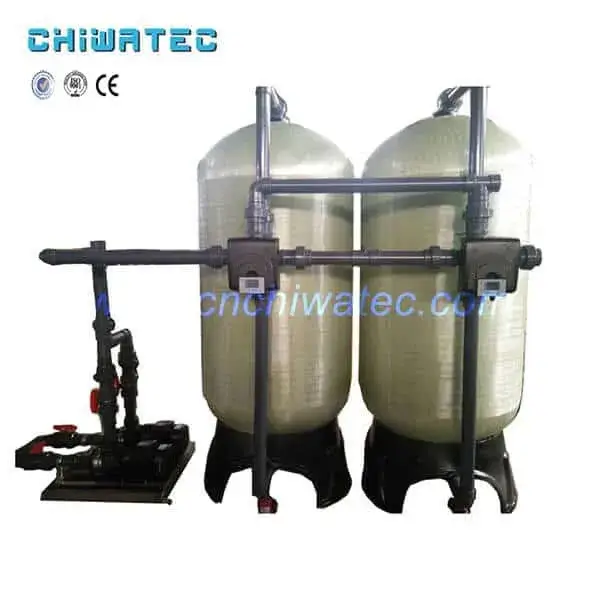
Standard pretreatment includes: multimedia filtration (removing suspended solids >20 microns), activated carbon filtration (removing chlorine and organic compounds), water softening or antiscalant dosing (preventing membrane scaling), and cartridge filtration (5-micron polishing).
How does RO compare to UV and ozone for bottled water disinfection?
RO physically removes pathogens through membrane filtration, while UV and ozone provide secondary disinfection. The industry best practice is a multi-barrier approach: RO for primary purification + UV sterilization + ozone injection for residual protection during storage and bottling.
Further Reading
Explore these related articles for more in-depth information on water treatment systems for bottled water production:
- Mineral Water Equipment Process — Complete overview of mineral water production line equipment and processing stages
- Pure Water/Mineral Water Plant Production Process — Detailed production workflow from raw water intake to final bottling
- Main Process Flow of Reverse Osmosis Pure Water Equipment — Technical breakdown of RO system components and process flow
- Key Hygiene Issues in Mineral Water Production — Critical hygiene standards and HACCP implementation for bottled water facilities
- Complete Guide to RO System Operation and Maintenance — Best practices for RO system operation, troubleshooting, and preventive maintenance
Do you have a water treatment project we can help with
* Designing,machining,installing,commissioning, customize and one-stop service
 English
  Spanish
  Portuguese