Boiler Water Softener Function: Preventing Scale for Safe Boiler Operation 2026
The primary boiler water softener function is to remove calcium (Ca²⁺) and magnesium (Mg²⁺) hardness ions from feed water before they enter the boiler system. Without effective softening, these ions precipitate as calcium carbonate and magnesium silicate scale on heat transfer surfaces, creating an insulating barrier that forces tube wall temperatures to rise from the normal 280°C to dangerous levels exceeding 680°C. According to industry data, every 1 mm of boiler scale increases fuel consumption by 5–10%, and 1 cm of accumulated scale wastes up to 10% of fuel. A properly designed boiler water softener function also reduces the risk of tube bulging, cracking, and catastrophic boiler failure while minimizing the need for chemical cleaning that shortens equipment lifespan.
Boiler Water Softener Function — Why Hardness Removal Is Critical for Boiler Safety
The boiler water softener function directly addresses the most common cause of boiler efficiency loss and equipment damage: scale formation. Raw feed water contains dissolved calcium bicarbonate [Ca(HCO₃)₂] and magnesium bicarbonate [Mg(HCO₃)₂]. As water temperature rises above 80°C in the boiler, these bicarbonates decompose: Ca(HCO₃)₂ → CaCO₃↓ + CO₂↑ + H₂O. The resulting calcium carbonate scale adheres firmly to tube walls, creating a thermal barrier with thermal conductivity of only 0.5–2.0 W/(m·K) compared to 45–50 W/(m·K) for carbon steel boiler tubes. This 20–90× reduction in heat transfer efficiency means the tube metal overheats, loses mechanical strength, and may bulge, crack, or rupture under pressure. Case studies show that a 10 kg/cm² boiler operating without scale maintains a tube wall temperature of 280°C, while the same boiler with only 1 mm of scale reaches 680°C — approaching the material’s yield point and risking imminent failure.
Consequences of Untreated Hard Water in Boiler Systems
When a boiler operates without adequate water softening, several progressive failures occur:
- Fuel waste: 1 cm of boiler scale increases fuel consumption by 10%. For a 10-ton/hour steam boiler operating 8,000 hours annually at 80% efficiency, this translates to approximately 80–120 tons of additional coal or equivalent fuel per year.
- Tube wall overheating: Scale-free tube wall operates at 280°C under 10 kg/cm² pressure. With scale, the temperature rises to 680°C, reducing steel tensile strength from approximately 400 MPa to below 200 MPa — a 50% reduction that dramatically increases rupture risk.
- Mechanical damage: Uneven scale deposits cause localized hot spots, leading to tube bulging, cracking, and in severe cases, furnace wall rupture or boiler explosion.
- Increased cleaning costs: Chemical descaling with inhibited hydrochloric acid or EDTA solutions is required every 3–6 months for heavily scaled systems. Frequent acid cleaning thins tube walls, accelerates corrosion, shortens boiler life by 30–50%, and generates hazardous chemical waste that must be neutralized before disposal.
- Cold weather freeze risk: Emergency boiler shutdown for cleaning during winter leaves heating equipment vulnerable to freezing and cracking of pipes and heat exchangers.
How a Boiler Water Softener Works: Ion Exchange Principle
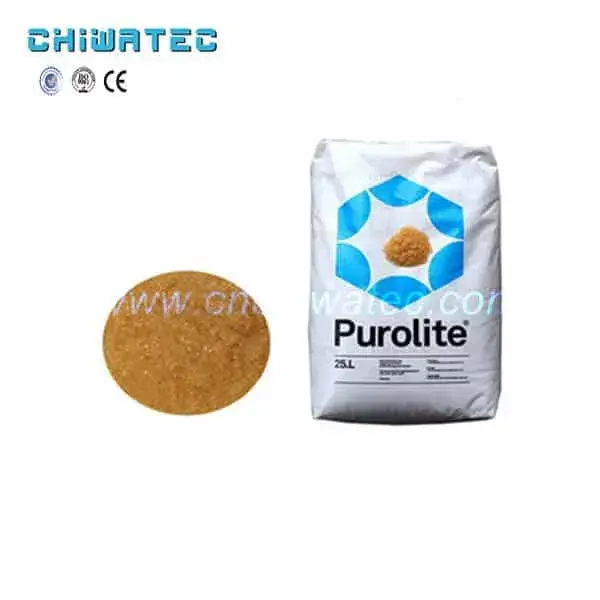
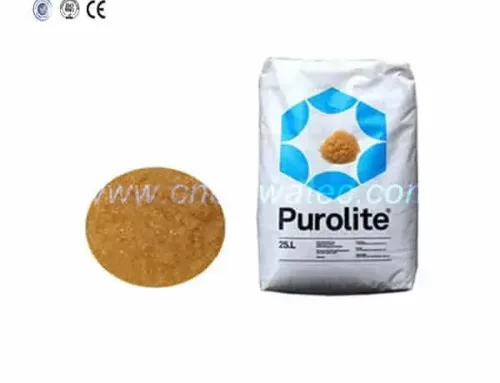
A boiler water softener achieves its function through ion exchange using strong acid cation (SAC) resin in the sodium form. The resin beads contain sulfonic acid functional groups (R–SO₃⁻) that are initially charged with sodium ions (Na⁺). As hard water passes through the resin bed, Ca²⁺ and Mg²⁺ ions displace Na⁺ ions according to the reaction:
2R–SO₃Na + Ca²⁺ → (R–SO₃)₂Ca + 2Na⁺
2R–SO₃Na + Mg²⁺ → (R–SO₃)₂Mg + 2Na⁺
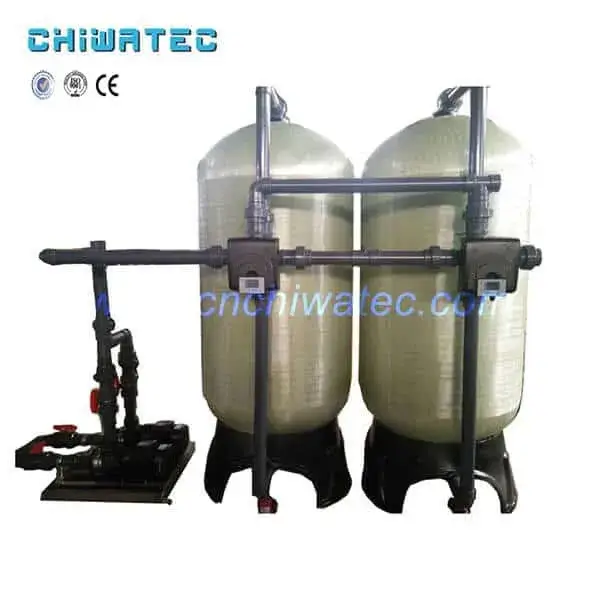
This exchange continues until the resin’s sodium ions are depleted, at which point the system initiates an automatic regeneration cycle. The controller triggers a backwash (to loosen and lift the resin bed and flush trapped particulates), followed by brine injection (8–12% NaCl solution at 2–4 bed volumes) that reverses the ion exchange reaction, flushing the accumulated Ca²⁺ and Mg²⁺ to drain. A slow rinse then a fast rinse complete the regeneration, typically in 60–90 minutes. Modern microprocessor-based control valves can initiate regeneration based on calculated throughput (liters × feed hardness), time-clock schedule, or immediate demand, ensuring the boiler always receives water with hardness below 1 ppm as CaCO₃.
Key Performance Parameters for Boiler Water Softening Equipment
| Parameter | Recommended Value | Impact on Boiler |
| Feed water hardness | < 1 ppm as CaCO₃ | Zero scale formation on tubes |
| Resin bed depth | 0.8–1.5 m | Adequate contact time for complete exchange |
| Service flow rate | 10–30 BV/h (bed volumes per hour) | Optimal ion exchange kinetics |
| Regenerant level | 120–240 g NaCl/L resin | Restores resin capacity to 95%+ |
| Effluent pH | 7.0–8.5 | Prevents acidic corrosion in boiler |
| Differential pressure | < 0.1 MPa at design flow | Indicates clean, unclogged resin bed |
Boilers operating within these parameters typically achieve 5–10 years of tube life before maintenance, compared to 2–3 years for boilers with inadequate or no softening. Regular monitoring of effluent hardness (at least once per shift using EDTA titration or conductivity measurement) ensures the boiler water softener function remains effective.
Comparison Table: Soft Water vs. Hard Water in Boiler Operation
| Operating Condition | Soft Water (Treated) | Hard Water (Untreated) |
| Tube wall temperature | 280°C (design spec) | 680°C+ (overheating) |
| Fuel consumption | Baseline (rated efficiency) | +10–30% due to scale insulation |
| Scale accumulation rate | None or negligible | 0.5–3 mm per month |
| Chemical cleaning frequency | Not required (or annual inspection only) | Every 3–6 months |
| Tube replacement interval | 5–10 years | 2–3 years |
| Risk of tube rupture | Very low | High — especially above 600°C tube wall |
| Boiler lifespan | 15–20 years (with proper maintenance) | 8–12 years (premature failure) |
Frequently Asked Questions (FAQ)
What is the main boiler water softener function?
The main boiler water softener function is to remove calcium and magnesium hardness ions from feed water through ion exchange, preventing scale formation on boiler tube walls. This maintains heat transfer efficiency, prevents tube overheating and rupture, reduces fuel consumption, and extends boiler lifespan.
Can a boiler operate without a water softener?
A boiler can physically operate without a water softener, but the consequences are severe. Scale accumulates rapidly (0.5–3 mm per month), fuel costs increase by 10–30%, tube wall temperatures rise to dangerous levels (680°C+), and the risk of tube bulging, cracking, or catastrophic explosion increases dramatically. Most boiler warranties require feed water hardness below 1–2 ppm as CaCO₃, making a softener mandatory for insured operation.
How often does a boiler water softener need regeneration?
Regeneration frequency depends on feed water hardness and water consumption. A typical boiler softener with standard resin capacity (1.2–2.0 eq/L) regenerates every 1–3 days for moderate hardness (200–400 ppm) or every 4–7 days for lower hardness (50–150 ppm). The control valve tracks cumulative throughput and initiates regeneration automatically when the calculated capacity is consumed.
What happens if the water softener regenerates during boiler operation?
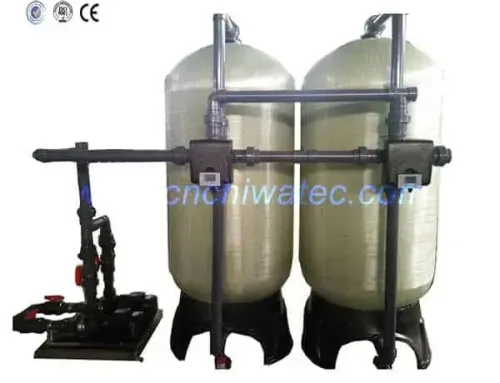
During regeneration (60–90 minutes), the softener bypasses or goes offline — softened water is drawn from a storage tank or an automatic bypass valve feeds hard water to the boiler. Brief exposure to hard water during regeneration (< 2 hours) is generally acceptable for most boilers, but a duplex softener system (dual alternating vessels) ensures continuous soft water supply without interruption.
Does a boiler water softener remove dissolved gases like oxygen?
No. The boiler water softener function specifically targets hardness ions (Ca²⁺, Mg²⁺). Dissolved gases such as oxygen (O₂) and carbon dioxide (CO₂) require separate treatment — typically through thermal deaeration (reduces O₂ to < 0.005 mg/L) or chemical oxygen scavenging with sodium sulfite or hydrazine. Oxygen corrosion is a separate concern from scale and must be addressed independently.
Conclusion and Call to Action
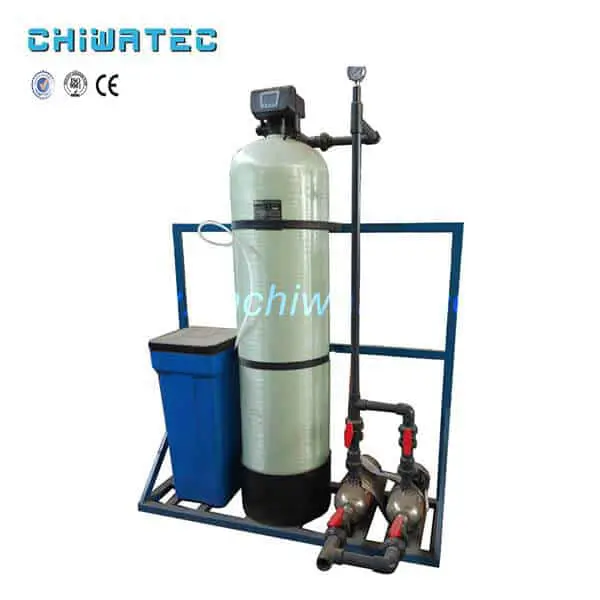
The boiler water softener function — removing hardness ions through ion exchange — is the most critical protection measure for safe, efficient boiler operation. Without it, scale buildup leads to fuel waste (10%+ per cm of scale), dangerous tube wall overheating (280°C → 680°C+), increased chemical cleaning costs, and significantly reduced boiler lifespan. At CHIWATEC, we manufacture automatic water softening systems designed specifically for boiler feed water applications, with capacities from 1 to 200 m³/h and microprocessor-controlled regeneration for unattended operation. For a customized boiler softener solution based on your feed water analysis and steam demand, contact us at [email protected] or [email protected].
Related Resources and Further Reading
- Water Softener Selection Parameters: Complete Guide to Choosing Boiler Softening Equipment
- Boiler Water Softener Maintenance 2026: Why Routine Care Matters
- Boiler Water Softening Equipment: Configuration, Control Technology, and Selection
- Water Softening Equipment Working Process: Step-by-Step Ion Exchange and Regeneration
- Water Softening Systems — Browse CHIWATEC Products
Do you have a water treatment project we can help with
* Designing,machining,installing,commissioning, customize and one-stop service
 English
  Spanish
  Portuguese