Total Solids, Dissolved Solids and Suspended Solids in Water: Complete Guide 2026
Water quality assessment relies heavily on understanding the types and concentrations of solids present. The terms dissolved solids and suspended solids describe two distinct categories of impurities that determine water’s suitability for drinking, industrial processes, and reverse osmosis (RO) system operation. Total solids (TS) is the combined measure of both, directly impacting treatment design and equipment longevity.
What Are Dissolved Solids and Suspended Solids in Water: Definitions and Key Differences
Dissolved solids and suspended solids represent the two primary categories of solid impurities in water, excluding dissolved gases. Understanding their differences is essential for selecting appropriate water treatment methods. Dissolved solids (DS) are substances that pass through a 2-micrometer filter and remain in solution — primarily inorganic salts (calcium, magnesium, sodium, bicarbonates, chlorides, sulfates), dissolved organic matter, and certain silica compounds. Suspended solids (SS), by contrast, are particles larger than 2 micrometers that remain physically dispersed and do not dissolve, including silt, clay, plankton, algae, microbial cells, and fine organic debris. Together, these constitute total solids (TS), a fundamental parameter in water quality analysis.
How Total Solids Are Measured: Gravimetric Analysis Methods
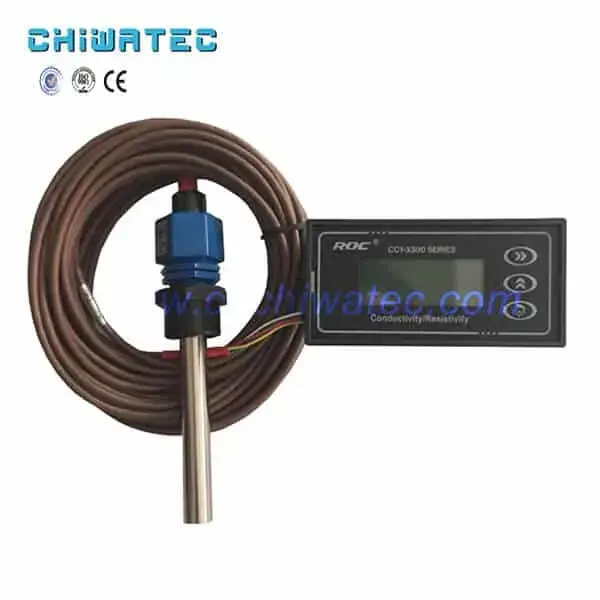
Total solids determination follows standard gravimetric methods, where a measured water sample is evaporated at 105–110°C and the dry residue is weighed. The precision of this measurement depends heavily on temperature control — deviations as small as ±2°C can alter results by 3–5%. For TDS (total dissolved solids) measurement, the filtered portion of the sample is evaporated separately, while TSS (total suspended solids) is determined by weighing the filter residue after drying at 103–105°C. Modern water treatment facilities also use real-time TDS meters based on electrical conductivity, with a conversion factor typically ranging from 0.55 to 0.70 depending on the ionic composition of the water.
| Parameter | Measurement Method | Filtration | Drying Temp | Unit |
| Total Solids (TS) | Evaporation + weighing | No filtration | 105–110°C | mg/L |
| Total Dissolved Solids (TDS) | Filtered evaporation + weighing | 2 μm filter | 180°C | mg/L |
| Total Suspended Solids (TSS) | Filter residue + weighing | 2 μm filter | 103–105°C | mg/L |
| Conductivity (TDS proxy) | Electrical conductivity meter | None | 25°C | μS/cm |
Impact of Dissolved Solids and Suspended Solids on RO System Performance
The presence of high levels of dissolved solids and suspended solids significantly affects reverse osmosis membrane performance and system economics. For RO feed water, TDS above 2000 mg/L increases osmotic pressure, requiring higher operating pressure (up to 15–25 bar for brackish water, 55–70 bar for seawater), which raises energy consumption by 30–50% compared to low-TDS sources. Suspended solids contribute to membrane fouling — silt density index (SDI) must be below 5 for stable RO operation, with ideal SDI below 3. Each 1 NTU of turbidity above recommended levels can reduce membrane lifespan by 15–20%. Proper pretreatment targeting both DS and SS is therefore not optional but mandatory for RO system longevity.
Pretreatment Methods for Suspended Solids Removal
Effective removal of suspended solids requires a multi-stage approach. Common pretreatment technologies include:
- Coagulation and flocculation: Alum or ferric chloride dosing at 10–50 mg/L neutralizes particle charges and forms flocs, achieving 90–95% turbidity removal
- Sedimentation: Gravity settlers with 2–4 hour retention time remove particles above 50 μm, reducing TSS by 60–80%
- Media filtration: Multi-media filters (anthracite/sand/garnet) at 8–15 m/h filtration velocity remove particles down to 10–25 μm
- Ultrafiltration (UF): Membrane filtration with 0.01–0.05 μm pores achieves near-complete SS removal (SDI below 1) and is increasingly adopted for challenging feed waters
Dissolved Solids Removal Technologies in Water Treatment
Unlike suspended solids, dissolved solids require advanced separation processes for removal. Reverse osmosis is the most widely used technology, achieving 95–99% TDS rejection depending on membrane type and operating conditions. Alternative methods include:
- Ion exchange: Removes specific dissolved ions (hardness, nitrates, arsenic) with 90–99% efficiency, regeneration cycles every 2–7 days depending on feed water quality
- Electrodialysis (ED/EDR): Effective for brackish water (1000–10000 mg/L TDS) at 40–85% recovery
- Distillation: Multi-effect distillation (MED) and multi-stage flash (MSF) achieve above 99% TDS removal for seawater desalination
- Nanofiltration (NF): Selective for divalent ions (80–95% rejection) with lower operating pressure than RO
Water Quality Standards for Solids in Different Applications
Regulatory bodies worldwide have established guidelines for acceptable levels of solids in different water applications. The WHO recommends drinking water TDS below 600 mg/L (ideally below 300 mg/L), while the US EPA sets a secondary maximum contaminant level of 500 mg/L. For industrial applications, standards are considerably stricter: RO feed water should have SDI below 5, TSS below 1 mg/L, and turbidity below 0.2 NTU for optimal performance. Boiler feed water specifications can require TDS as low as 0.1 mg/L for high-pressure systems operating above 60 bar. These varying requirements underscore the importance of accurate measurement and targeted treatment for both dissolved and suspended solids.
Relationship Between Conductivity, TDS, and Water Quality
Electrical conductivity provides a rapid, cost-effective estimation of TDS in water. The relationship follows the formula: TDS (mg/L) = k × EC (μS/cm), where k ranges from 0.55 to 0.70. For natural waters with mixed ionic composition, k = 0.64 is commonly used, yielding approximately 640 mg/L TDS per 1000 μS/cm. However, this relationship varies with water chemistry — sodium chloride-dominated waters have k approximately 0.5, while calcium bicarbonate waters may reach k = 0.7. Accurate TDS determination still requires gravimetric analysis for critical applications like RO system design and performance validation.
Frequently Asked Questions
What is the difference between total solids and dissolved solids?
Total solids (TS) is the sum of all solid materials in water, measured by evaporating a sample at 105–110°C. Dissolved solids are the portion of total solids that pass through a 2 μm filter, primarily consisting of dissolved salts and organic compounds. Suspended solids are the fraction retained by the filter — particles and insoluble matter. In typical surface water, dissolved solids account for 60–90% of total solids, while groundwater can have DS exceeding 95% of TS.
What is the normal TDS level for drinking water?
The WHO recommends drinking water TDS below 600 mg/L, with ideal levels under 300 mg/L for optimal taste. The US EPA secondary standard is 500 mg/L. Water with TDS above 1000 mg/L may have noticeable taste, scaling, or laxative effects. RO-treated water typically achieves TDS below 50 mg/L, while natural spring water ranges from 50–500 mg/L depending on mineral content.
How do you remove suspended solids from water?
Suspended solids removal typically follows a multi-step process: coarse screening removes large debris (above 1 mm), coagulation/flocculation aggregates fine particles (5–50 μm) into settleable flocs, sedimentation removes 60–80% of TSS, and granular media filtration achieves 90–99% TSS removal. For high-purity applications, ultrafiltration (0.01 μm) provides near-complete SS removal with SDI consistently below 1.
What is the acceptable TSS level for RO feed water?
RO feed water should have TSS below 1 mg/L and turbidity below 0.2 NTU to prevent membrane fouling. The silt density index (SDI), a more comprehensive fouling indicator, should be below 5 (preferably below 3) for stable RO operation. Exceeding these limits accelerates membrane fouling, increases cleaning frequency, and reduces membrane lifespan by 30–50%.
How does TDS affect reverse osmosis operation?
Higher feed water TDS requires higher operating pressure to overcome osmotic pressure — approximately 0.7–1.0 bar per 1000 mg/L TDS. Energy consumption increases proportionally, with seawater RO (35,000 mg/L TDS) consuming 3–6 kWh/m³ compared to 0.5–1.5 kWh/m³ for brackish water RO (2000–5000 mg/L TDS). High TDS also reduces membrane recovery rates, with typical brackish water RO recovering 75–85% while seawater RO achieves only 35–50% recovery.
Conclusion and Call to Action
Understanding the distinction between dissolved solids and suspended solids is fundamental to effective water treatment system design and operation. Accurate measurement, appropriate pretreatment selection, and compliance with water quality standards ensure optimal performance of downstream processes like reverse osmosis and ion exchange. Xi’an CHIWATEC Water Treatment Technology is a high-tech enterprise specialized in various water processing devices, covering a wide range of types and series for comprehensive water treatment projects. For expert guidance on analyzing your feed water characteristics and selecting the right treatment approach, contact us today.
Related Resources
Do you have a water treatment project we can help with
* Designing,machining,installing,commissioning, customize and one-stop service
 English
  Spanish
  Portuguese