Nutshell Activated Carbon Adsorption Factors: Filtration Rate and Performance Guide 2026
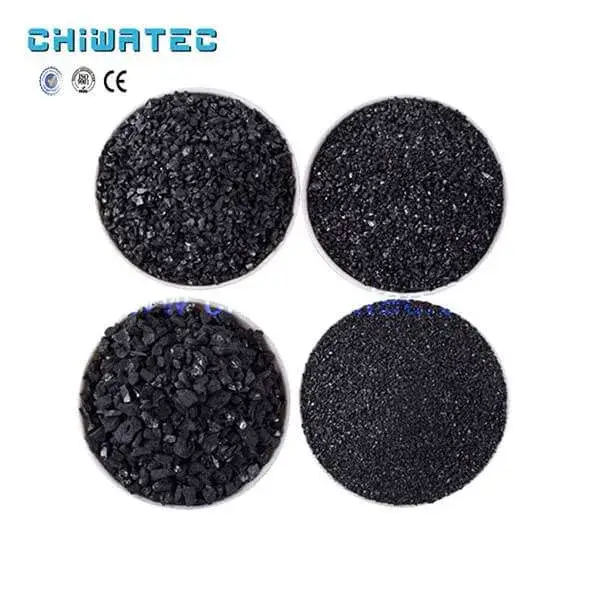
Nutshell activated carbon (coconut shell and apricot shell) behaves differently from coal-based or wood-based activated carbon in filtration rate and adsorption capacity. Understanding the nutshell activated carbon adsorption factors — including filtration velocity, surface area, pH, temperature, contact time, and coexisting substances — is essential for designing effective water and air treatment systems. CHIWATEC supplies high-grade nutshell activated carbon products with certified iodine values and mechanical strength for municipal and industrial applications.
Nutshell Activated Carbon Adsorption Factors: Filtration Rate Fundamentals
The filtration rate of nutshell activated carbon is a primary nutshell activated carbon adsorption factors that directly influences effluent quality and system operating cost. Filtration rates vary by activated carbon type and mechanical strength — nutshell activated carbon with high mechanical strength generally supports faster filtration than lower-strength grades. In European and American water treatment plants, activated carbon filter design rates range from 7.5 to 15 m/h. For nutshell activated carbon specifically, the minimum flow rate recommendation is 9–12.5 m/sec through the carbon bed. The filtration rate is determined during the design phase and cannot be adjusted during normal operation without affecting treatment performance. Under a fixed carbon layer thickness, slower filtration increases contact time, which improves adsorption efficiency and effluent quality.
Surface Area and Pore Structure of Nutshell Activated Carbon
The specific surface area of nutshell activated carbon typically ranges from 800 to 1,200 m²/g, measured by the BET method. A larger surface area provides more active sites for adsorption and directly correlates with higher iodine values (800–1,100 mg/g for commercial grades). The pore structure of nutshell activated carbon is predominantly microporous (pore diameter <2 nm), making it particularly effective for adsorbing small organic molecules, volatile organic compounds (VOCs), and dissolved gases. The pore size distribution and surface chemistry (oxygen-containing functional groups) also significantly influence adsorption selectivity. Nutshell activated carbon with well-developed micropores achieves faster adsorption kinetics for low-molecular-weight contaminants compared to mesoporous alternatives.
Effect of pH and Temperature on Nutshell Activated Carbon Adsorption
| Parameter | Impact on Adsorption | Practical Recommendation |
|---|---|---|
| pH (acidic <7) | Higher adsorption of organic compounds; reduced ionization of adsorbates | Operate at pH 5–7 for maximum organic removal |
| pH (alkaline >7) | Reduced adsorption; increased desorption of weakly bound species | Avoid alkaline conditions when targeting dissolved organics |
| Temperature (low, 5–15 °C) | Slightly higher equilibrium adsorption capacity (exothermic process) | Suitable for cold-region water treatment |
| Temperature (high, 30–50 °C) | Faster adsorption kinetics but reduced equilibrium capacity | Use with caution; may require deeper carbon bed |
The pH of the feed water affects both the surface charge of the nutshell activated carbon and the ionization state of the adsorbate molecules. In acidic solutions (pH 4–6), the carbon surface carries a positive charge that attracts negatively charged organic species. Temperature has a relatively minor effect on nutshell activated carbon adsorption compared to pH and contact time, but higher temperatures accelerate desorption of volatile compounds.
Adsorbate Properties and Coexisting Substances
The adsorption performance of nutshell activated carbon depends on the physical and chemical properties of the target contaminant. Key adsorbate characteristics include:
- Solubility: Less soluble compounds adsorb more readily because hydrophobic interactions drive partitioning to the carbon surface
- Molecular size and polarity: Nutshell activated carbon preferentially removes non-polar or low-polarity molecules that fit within its micropores
- Surface free energy: Higher surface energy compounds exhibit stronger binding affinity to the carbon surface
When multiple adsorbates coexist in the feed stream, competitive adsorption occurs. The adsorption capacity of nutshell activated carbon for any single compound decreases in the presence of competing species. In wastewater applications with complex contaminant mixtures, the total organic load may require 20–50% more activated carbon than predicted from single-solute isotherm tests. Pre-treatment to remove competing organics (e.g., coagulation or biological treatment) can significantly improve nutshell activated carbon efficiency.
Contact Time and Adsorption Equilibrium
Sufficient contact time between the nutshell activated carbon bed and the feed water is essential to approach adsorption equilibrium and fully utilize the carbon’s adsorption capacity. The empty bed contact time (EBCT) is the standard design parameter, calculated as the volume of the carbon bed divided by the flow rate. For nutshell activated carbon in water treatment applications, typical EBCT values range from 10 to 30 minutes. Longer EBCT improves removal efficiency but requires larger carbon beds and higher capital investment. A practical trade-off is to design for 15–20 minutes EBCT and monitor effluent concentration breakthrough to schedule carbon replacement or regeneration.
Coconut Shell vs. Apricot Shell Activated Carbon: Comparison
| Property | Coconut Shell Activated Carbon | Apricot Shell Activated Carbon |
|---|---|---|
| Iodine value | 900–1,100 mg/g | 800–1,000 mg/g |
| Hardness | 95–99% (very high) | 90–95% (high) |
| Micropore volume | 0.40–0.55 cm³/g | 0.30–0.45 cm³/g |
| Ash content | <3% | <5% |
| Best for | Water purification, gold recovery, gas phase adsorption | Water decolorization, food processing, general deodorization |
Coconut shell activated carbon is the preferred choice for high-purity water applications due to its higher hardness, lower ash content, and greater micropore volume. Apricot shell activated carbon offers a more economical alternative for applications where absolute purity is less critical, such as industrial decolorization and odor control.
Frequently Asked Questions (FAQ)
What is the ideal filtration rate for nutshell activated carbon in water treatment?
The recommended filtration rate for nutshell activated carbon beds is 9–12.5 m/h for water treatment applications. European and American water plants typically operate within 7.5–15 m/h, with the lower end preferred when higher organic removal efficiency is required.
Does nutshell activated carbon have a higher adsorption capacity than coal-based carbon?
Nutshell activated carbon generally has a higher micropore volume (0.40–0.55 cm³/g) than coal-based carbon (0.25–0.40 cm³/g), making it more effective for adsorbing small organic molecules. However, coal-based carbon has better mesopore development, which is advantageous for removing larger molecules and color bodies.
How does pH affect nutshell activated carbon performance in wastewater?
Nutshell activated carbon achieves maximum organic removal at pH 5–7. In alkaline wastewater (pH >8), adsorption efficiency drops by 20–40% because the carbon surface becomes negatively charged, repelling anionic organic species.
What EBCT should I use for nutshell activated carbon in a drinking water system?
A minimum EBCT of 10 minutes is required for drinking water treatment. For systems targeting trace organic removal (pesticides, pharmaceuticals), 20–30 minutes EBCT is recommended. Longer EBCT provides a safety margin against premature breakthrough.
How often should nutshell activated carbon be replaced?
Replacement frequency depends on feed water quality and treatment targets. Typical service life ranges from 6 months to 2 years for water treatment applications. Monitor effluent concentration of target contaminants and replace the carbon when breakthrough reaches the treatment limit.
Conclusion & Call to Action
The adsorption performance of nutshell activated carbon is governed by six key factors: filtration rate, surface area and pore structure, pH, temperature, adsorbate properties and coexisting substances, and contact time. Coconut shell activated carbon offers superior hardness and micropore volume for high-purity applications, while apricot shell carbon provides a cost-effective alternative for industrial treatment. For certified nutshell activated carbon adsorption factors analysis and product recommendations, contact the CHIWATEC team at [email protected] or [email protected].
Related Resources and Further Reading
Do you have a water treatment project we can help with
* Designing,machining,installing,commissioning, customize and one-stop service
 English
  Spanish
  Portuguese