

Benefits of Reverse Osmosis Technology 2026: Why RO Water Treatment Matters
Reverse osmosis (RO) technology has transformed the water treatment industry by providing an efficient, reliable, and cost-effective method for removing contaminants from water. From residential drinking water systems to large-scale industrial desalination plants, the benefits of reverse osmosis technology extend across virtually every sector that requires high-purity water. This guide explores the critical advantages of RO technology and explains why it has become the gold standard in modern water purification.
1. The Critical Importance of Reverse Osmosis Technology in Water Purification
Reverse osmosis technology uses a semi-permeable membrane to remove up to 99% of dissolved salts, organic compounds, bacteria, and other contaminants from water. By applying pressure greater than the osmotic pressure, water molecules are forced through the membrane while impurities are rejected and flushed away. This fundamental benefits of reverse osmosis technology — its ability to produce consistently high-purity water — makes it indispensable for applications ranging from pharmaceutical manufacturing to drinking water production. RO systems can reduce total dissolved solids (TDS) from 1,000 ppm to under 10 ppm in a single pass, a level of purification unmatched by conventional filtration methods.
2. Key Benefits of Reverse Osmosis Technology for Drinking Water
For residential and commercial drinking water applications, the benefits of reverse osmosis technology include the removal of lead, arsenic, fluoride, chlorine, nitrates, and hundreds of other contaminants. RO systems improve taste, odor, and clarity while providing a safer alternative to bottled water. Unlike carbon filters that only trap larger particles, RO membranes remove dissolved solids at the molecular level. The development and technical description of RO reverse osmosis highlights how membrane advancements have improved contaminant rejection rates to over 99.5% for most dissolved solids, making RO systems the most effective point-of-use water treatment technology available.
3. How Reverse Osmosis Technology Protects Industrial Equipment
In industrial settings, the benefits of reverse osmosis technology extend beyond water quality to equipment protection. Untreated feedwater containing hardness ions, silica, and dissolved solids causes scaling and fouling in boilers, cooling towers, and heat exchangers. RO pretreatment removes these harmful contaminants, extending equipment lifespan by 30-50% and reducing maintenance costs. For boiler feed water applications, RO permeate with conductivity below 20 μS/cm dramatically reduces chemical treatment requirements and blowdown frequency. This translates to significant operational savings — typically 15-25% reduction in energy costs and 30-40% reduction in chemical consumption. Learn more about reverse osmosis equipment pretreatments to optimize system performance.
4. Environmental Benefits of RO Water Treatment
The environmental benefits of reverse osmosis technology are increasingly important in an era of water scarcity and stricter discharge regulations. RO systems enable the treatment and reuse of industrial wastewater, reducing fresh water consumption by up to 80% in some applications. For seawater desalination, RO has replaced thermal distillation as the preferred technology, consuming 60-75% less energy and producing brine with lower environmental impact. Modern RO plants achieve specific energy consumption as low as 2.5-3.5 kWh per cubic meter of permeate, a 5× improvement over plants built two decades ago. The role of antiscalants in RO systems is critical for maintaining efficiency while minimizing environmental impact.
5. Applications of Reverse Osmosis Technology Across Industries
The versatility of RO technology is reflected in its wide range of applications:
| Industry | Application | Water Quality Requirement |
|---|---|---|
| Pharmaceutical | USP purified water, WFI pretreatment | Conductivity < 1.3 μS/cm |
| Food & Beverage | Bottled water, beverage production, brewing | TDS < 10 ppm, bacteria-free |
| Power Generation | Boiler feedwater, cooling tower makeup | Conductivity < 0.1 μS/cm |
| Electronics | Ultrapure water for semiconductor washing | Resistivity > 18 MΩ·cm |
| Desalination | Seawater and brackish water conversion | TDS < 500 ppm |
The advantages of RO reverse osmosis systems make them the preferred choice across these diverse industries.
6. Cost-Effectiveness and ROI of Reverse Osmosis Technology
When evaluating the benefits of reverse osmosis technology, the financial returns are compelling. A typical industrial RO system has a payback period of 12-24 months through reduced chemical costs, lower energy consumption, and decreased maintenance. Key cost advantages include:
- Reduced chemical consumption: RO pretreatment reduces boiler treatment chemicals by 30-50%
- Lower energy costs: Clean heat-transfer surfaces from RO-treated water save 10-20% in fuel costs
- Minimized downtime: Fewer equipment failures from scaling and fouling
- Water conservation: RO permeate recovery rates of 65-85% minimize wastewater
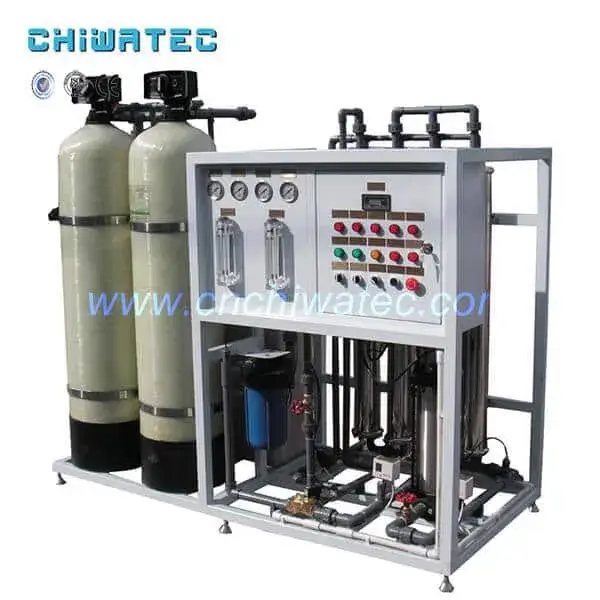
For more detailed information on RO system composition and pricing, see our guide on RO water treatment system components.
7. Frequently Asked Questions
Q1: What is the most important benefit of reverse osmosis technology?
The most important benefit of reverse osmosis technology is its ability to remove up to 99% of total dissolved solids (TDS), including heavy metals, salts, bacteria, and viruses. This level of contaminant removal is unmatched by other filtration methods and produces water pure enough for pharmaceutical, medical, and semiconductor applications.
Q2: Is reverse osmosis technology cost-effective for home use?
Yes. Under-sink RO systems cost $150-$600 for the unit and $30-$100 annually for filter replacements. Compared to bottled water, RO systems save $300-$800 per year for an average family while providing on-demand purified water without plastic waste. The long-term benefits of reverse osmosis technology for home use include better-tasting water, reduced plastic consumption, and peace of mind about water quality.
Q3: How does reverse osmosis technology compare to distillation?
RO technology uses 80-90% less energy than distillation while producing comparable water quality for most applications. RO systems also operate continuously without the need for heat, have a smaller footprint, and require less maintenance. However, for applications requiring water purity below 1 μS/cm conductivity, a combination of RO followed by electrodeionization (EDI) or mixed-bed polishing is typically used.
Q4: What are the environmental benefits of using RO technology?
RO technology reduces the need for bottled water (cutting plastic waste), enables wastewater reuse and recycling, and produces less brine waste than thermal desalination methods. Modern high-efficiency RO membranes also consume significantly less energy, with energy recovery devices reducing power consumption in large desalination plants by up to 60%.
Q5: How long do RO membranes last with proper maintenance?
With proper pretreatment and regular cleaning, reverse osmosis membranes typically last 2-5 years. Key factors affecting membrane lifespan include feedwater quality, antiscalant dosing, operating pressure, and cleaning frequency. Following recommended antiscalant treatment best practices significantly extends membrane life and maintains performance.
8. Conclusion: Why Reverse Osmosis Technology Is the Gold Standard for Water Purification
The benefits of reverse osmosis technology make it the most widely adopted advanced water purification method across residential, commercial, and industrial sectors. From providing safe drinking water to enabling high-purity industrial processes, RO technology delivers unmatched contaminant removal, operational efficiency, and environmental sustainability. As membrane technology continues to advance, the benefits — including lower energy consumption, higher recovery rates, and improved contaminant rejection — will only increase.
Ready to implement RO technology for your water treatment needs? Contact CHIWATEC today for expert consultation and custom system design:
📧 [email protected] or [email protected]
Our engineering team designs and manufactures complete RO water treatment systems from 125 L/H to 50,000 L/H for applications worldwide.
9. Related Resources and Further Reading
- Advantages of Reverse Osmosis Systems — Detailed analysis of RO system benefits for pure water production
- Application of Reverse Osmosis Pure Water in Winemaking — Specialized use of RO technology in the beverage industry
- Reverse Osmosis Technology 2026: Complete Guide to RO Membrane Purification — Comprehensive overview of RO technology principles and applications
- RO Membrane Technology Explained — How RO membranes work and why they are effective
🔧 View Our RO Water Treatment Systems — Complete range of RO equipment from 125 L/H to 50,000 L/H
Do you have a water treatment project we can help with
* Designing,machining,installing,commissioning, customize and one-stop service






 English
  Spanish
  Portuguese




