

Reverse Osmosis Technology 2026: Complete Guide to RO Membrane Systems & Applications
Meta Description: Comprehensive guide to reverse osmosis technology in 2026. Learn RO membrane principles, 97-98% contaminant removal, energy-efficient desalination, and industrial applications for water purification systems.
Introduction to Reverse Osmosis Technology
Reverse osmosis technology stands as the most advanced, energy-efficient, and effective membrane separation technology available in 2026. With global RO system installations surpassing 30,000 new plants annually and water scarcity affecting over 2 billion people worldwide, reverse osmosis membrane systems have become the gold standard for water purification across industries.
The fundamental RO technology principle operates by applying pressure exceeding the natural osmotic pressure, forcing water molecules through a semi-permeable membrane while blocking dissolved salts, colloids, microorganisms, and organic compounds. With membrane pore sizes measuring only about 10 Angstroms (0.001 microns), reverse osmosis systems achieve contaminant removal rates as high as 97-98%, delivering exceptional water quality with minimal energy consumption and environmental impact.
How Reverse Osmosis Technology Works: Core Principles
The Semi-Permeable Membrane Mechanism
Reverse osmosis membrane technology relies on a sophisticated semi-permeable barrier that selectively allows water molecules to pass while rejecting contaminants. The RO membrane pore size of approximately 10A (1 nanometer) enables removal of:
- Dissolved salts: TDS reduction up to 97-98%
- Colloids and particles: Down to 0.001 microns
- Microorganisms: Bacteria, viruses, and protozoa (99.9% removal)
- Organic matter: Molecular weight >100 Daltons
- Heavy metals: Lead, mercury, arsenic, chromium
Osmotic Pressure and Applied Pressure
In natural osmosis, water flows from low-concentration to high-concentration solutions. Reverse osmosis technology reverses this process by applying external pressure (150-1,200 PSI depending on feed water TDS), overcoming the natural osmotic pressure and forcing purified water (permeate) through the membrane while concentrating contaminants in the reject stream.
System Components and Process Flow
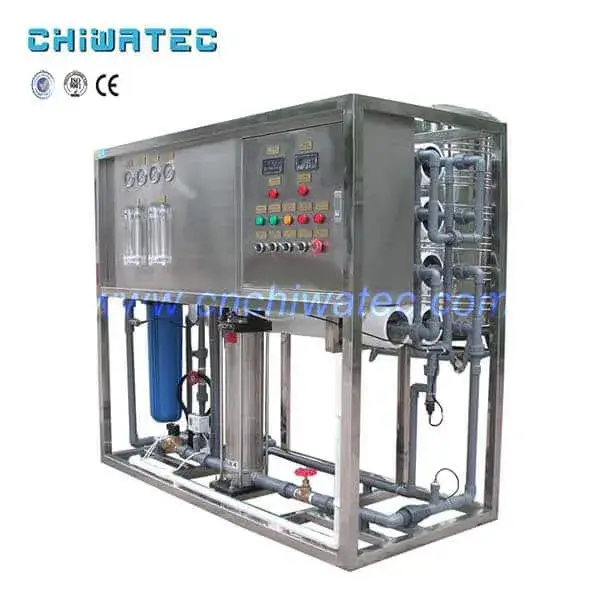
A complete reverse osmosis water treatment system includes:
- Pre-treatment stage: Multi-media filtration, activated carbon, water softening
- High-pressure pump: Generates required operating pressure
- RO membrane modules: Spiral-wound or hollow fiber configuration
- Energy recovery devices: Capture pressure from concentrate stream (96-98% efficiency)
- Post-treatment: UV sterilization, remineralization, pH adjustment
- Control systems: PLC automation with real-time monitoring
Key Advantages of Reverse Osmosis Technology
Superior Water Quality
RO membrane systems consistently produce water meeting WHO, EPA, and EU drinking water standards. The exceptional contaminant removal rate of 97-98% ensures reliable water quality for critical applications ranging from pharmaceutical manufacturing to municipal water treatment.
Energy Efficiency and Cost Savings
Modern reverse osmosis technology offers significant advantages over traditional separation methods:
- Low energy consumption: 3-10 kWh/m³ for brackish water, 2.5-4 kWh/m³ for seawater (with ERD)
- Reduced chemical usage: Minimal antiscalant dosing compared to thermal desalination
- Lower operating costs: 40-60% savings versus ion exchange systems
- Extended membrane life: 5-10 years with proper maintenance
Environmental Benefits
RO water purification contributes to sustainability goals:
- No pollution: Chemical-free separation process
- Reduced resin regeneration: When used as pre-demineralization, decreases ion exchange resin load by 90%+
- Lower regenerant discharge: Reduces acid/caustic consumption by 90%
- Water reuse enablement: Supports circular economy through wastewater recycling
Simple Process and Easy Operation
Reverse osmosis systems feature straightforward operation with automated controls, requiring minimal operator intervention. Modular design enables easy expansion and maintenance.
Applications of Reverse Osmosis Technology in 2026
1. Seawater and Brackish Water Desalination
RO desalination technology serves over 300 million people globally with continued expansion:
- Brackish water RO (BWRO): TDS 1,000-15,000 ppm, 150-400 PSI operating pressure
- Seawater RO (SWRO): TDS 35,000-45,000 ppm, 800-1,200 PSI with specialized membranes
- Energy recovery: Isobaric ERDs achieving 96-98% efficiency
- Hybrid systems: RO combined with thermal processes for optimal performance
2. Water Softening Treatment
Reverse osmosis water softening provides comprehensive hardness removal:
- Calcium and magnesium reduction >98%
- Prevents scale formation in boilers and heat exchangers
- Eliminates need for salt-based water softeners in many applications
- Reduces maintenance costs and extends equipment life
3. Pharmaceutical and Food Industry Purification
RO technology in pharmaceutical applications ensures compliance with stringent standards:
- USP Purified Water and Water for Injection (WFI) pretreatment
- Food and beverage concentration and separation
- Dairy processing and ingredient standardization
- Brewing water adjustment for consistent product quality
4. Chemical Industry Concentration and Separation
Industrial reverse osmosis systems enable efficient process operations:
- Chemical concentration without thermal degradation
- Product recovery from wastewater streams
- Catalyst separation and recycling
- Zero liquid discharge (ZLD) configurations
5. Power Generation and Boiler Feed Water
RO for power plants delivers ultra-pure boiler feedwater:
- TDS <1 ppm for high-pressure boilers (>100 bar)
- Prevents scaling and corrosion in steam generation systems
- Reduces blowdown rates, improving energy efficiency by 15-25%
- Integration with condensate polishing systems
6. Semiconductor and Electronics Manufacturing
Ultrapure water (UPW) production relies on RO as critical pretreatment:
- Resistivity of 18.2 MΩ·cm for chip manufacturing
- TOC levels <5 ppb
- Particle counts <1 particle/mL (>0.05 micron)
- Integration with EDI and degasification
7. Wastewater Treatment and Water Reuse
RO wastewater recycling supports sustainability initiatives:
- Municipal wastewater reuse for indirect potable applications
- Industrial wastewater treatment and resource recovery
- Textile dyeing water reuse (60-80% freshwater reduction)
- Electroplating rinse water recycling with metal recovery
Reverse Osmosis vs. Other Membrane Separation Technologies
Comparison of Membrane Technologies
Reverse osmosis (RO), ultrafiltration (UF), microfiltration (MF), and electrodialysis (ED) all serve distinct water treatment roles:
| Technology | Pore Size | Removal Range | Primary Application |
|---|---|---|---|
| Reverse Osmosis (RO) | 0.0001 micron (10A) | Ions, salts, organics >100 Da | Desalination, high-purity water |
| Nanofiltration (NF) | 0.001 micron | Divalent ions, organics >200 Da | Water softening, color removal |
| Ultrafiltration (UF) | 0.01-0.1 micron | Proteins, bacteria, viruses | Post-treatment, clarification |
| Microfiltration (MF) | 0.1-10 microns | Suspended solids, bacteria | Pre-treatment, particle removal |
| Electrodialysis (ED) | Ion-selective membranes | Charged ions | Brackish water desalination |
Integration in High-Purity Water Systems
In semiconductor and pharmaceutical applications, reverse osmosis technology typically serves as the primary desalination step, with ultrafiltration as post-treatment for particle and bacteria removal, and microfiltration for final polishing. This multi-barrier approach ensures consistent ultrapure water quality.
2026 Technology Trends in Reverse Osmosis
Advanced Membrane Materials
Next-generation RO membranes enhance performance:
- Thin-film nanocomposite (TFN): 50% higher flux with improved fouling resistance
- Graphene oxide membranes: Selective ion removal with enhanced permeability
- Aquaporin biomimetic membranes: Near-perfect water/salt separation efficiency
- Extended service life: 7-10 years versus traditional 3-5 years
Smart Monitoring and AI Optimization
RO system digitalization enables predictive operations:
- Real-time monitoring of pressure, flow, conductivity, and temperature
- AI-driven predictive maintenance reducing downtime by 35%
- Digital twin simulations for performance optimization
- Cloud-based data logging and remote diagnostics
Energy Efficiency Innovations
2026 reverse osmosis systems prioritize energy optimization:
- High-efficiency pumps with variable frequency drives (VFD)
- Isobaric energy recovery devices at 96-98% efficiency
- Low-fouling membranes reducing cleaning frequency and pressure requirements
- Solar-powered RO systems for off-grid and remote applications
Conclusion: The Future of Reverse Osmosis Technology
Reverse osmosis technology has evolved into the most widely used and effective membrane separation technology for water purification in 2026. With its proven ability to remove 97-98% of dissolved salts, colloids, microorganisms, and organic matter, RO systems deliver exceptional water quality while maintaining low energy consumption, minimal environmental impact, and straightforward operation.
From seawater desalination serving coastal communities to ultrapure water production for semiconductor manufacturing, reverse osmosis applications continue expanding across industries. As water scarcity intensifies and sustainability requirements tighten, investing in advanced RO membrane technology positions organizations for long-term operational success and regulatory compliance.
For comprehensive system guidance, explore our RO System Operation and Maintenance Guide. Learn about water purification system principles and discover effective pollution control methods for RO systems.
Frequently Asked Questions (FAQ) About Reverse Osmosis Technology
What is the removal rate of reverse osmosis technology?
RO membrane systems achieve 97-98% removal of dissolved salts, colloids, microorganisms, and organic matter. High-rejection membranes can reach 99.7% salt rejection for specialized applications requiring ultrapure water.
How does reverse osmosis compare to ultrafiltration?
Reverse osmosis removes ions and dissolved salts (0.0001 micron pore size), while ultrafiltration targets larger particles, bacteria, and proteins (0.01-0.1 micron). RO is used for desalination; UF serves as post-treatment for particle removal.
What are the energy requirements for RO systems?
RO energy consumption ranges from 3-10 kWh/m³ for brackish water to 2.5-4 kWh/m³ for seawater (with energy recovery devices). This is 75% lower than thermal desalination methods.
Can reverse osmosis remove bacteria and viruses?
Yes, RO membranes effectively remove 99.9% of bacteria, viruses, and protozoa due to their 0.0001 micron pore size. Post-treatment UV sterilization provides additional disinfection for critical drinking water applications.
What industries benefit most from reverse osmosis technology?
Key industries include pharmaceuticals (USP water), food and beverage (consistent quality), power generation (boiler feed), semiconductors (ultrapure water), textiles (water reuse), and municipal desalination. RO technology serves diverse applications from high-purity water to wastewater recycling.
FOLLOW US
Do you have a water treatment project we can help with?
Designing, machining, installing, commissioning, customize and one-stop service






 English
  Spanish
  Portuguese




