

Aquaculture Pure Water Equipment: Key Characteristics and Benefits for the Aquatic Industry 2026
Aquaculture pure water equipment plays a vital role in maintaining water quality for fish farming, hatcheries, and aquatic product processing operations. Unlike conventional water treatment systems, aquaculture pure water equipment must meet specific demands: compact footprint for space-constrained facilities, energy-efficient operation to keep production costs low, fully automatic controls for unattended operation, and environmentally friendly processes that eliminate acid-base chemical regeneration. This article examines the key characteristics of pure water equipment designed for the aquatic industry — from RO membrane desalination performance to remote monitoring capabilities — and how these features contribute to healthier aquatic environments and more profitable farming operations.
Compact Design and Space Efficiency of Aquaculture Pure Water Equipment
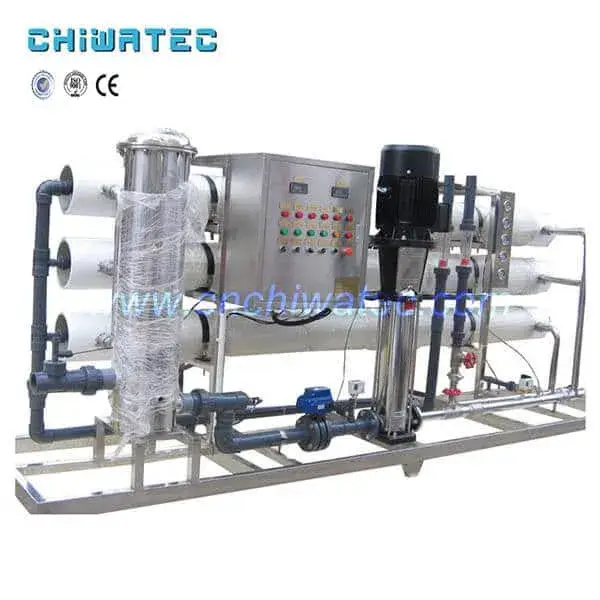
One of the defining characteristics of aquaculture pure water equipment is its compact, integrated design. Aquatic facilities — whether land-based fish farms, hatcheries, or processing plants — often have limited floor space that must accommodate raceways, tanks, aeration systems, and feeding equipment simultaneously. Modern RO-based pure water systems are designed with skid-mounted configurations that consolidate the multimedia prefilter, activated carbon vessel, water softener, high-pressure pump, RO membrane housing, and control panel into a single, small-footprint unit. Typical systems occupy only 2–6 m² of floor space depending on capacity, with heights under 2 meters to fit standard facility layouts. The modular design allows for easy transport through standard doorways and rapid installation without concrete foundations or structural modifications, making them adaptable to both new construction and retrofits in existing aquaculture facilities.
Energy-Saving and Economical Operation for the Aquatic Industry
Energy consumption is a critical cost factor in aquaculture operations, where pumps, aerators, and water treatment equipment run 24/7. Pure water equipment for the aquatic industry addresses this with multiple energy-saving features. Low-energy thin-film composite (TFC) RO membranes operate at 8–15 bar (120–220 psi) instead of the 15–25 bar required by conventional cellulose acetate membranes, reducing pump energy demand by 30–40%. High-efficiency multistage centrifugal pumps with IE3/IE4 premium-efficiency motors maintain 75–85% hydraulic efficiency across the operating range. Frequency drive (VFD) control matches pump output to actual demand, eliminating energy waste during low-flow periods. Additionally, automatic flush and standby modes reduce power consumption to less than 50 W during idle periods. These features combined result in energy costs of just $0.15–$0.40 per m³ of produced pure water — significantly lower than traditional distillation or ion exchange systems.
Fully Automatic Control and Remote Monitoring Capabilities
Aquaculture operations frequently run with minimal on-site personnel, especially during overnight and weekend hours. Pure water equipment designed for this industry addresses this through fully automatic PLC-based control systems. The controller manages all operational parameters: feed water valve sequencing, high-pressure pump start/stop, membrane feed pressure adjustment, permeate and concentrate flow balancing, and automatic membrane flushing. Touchscreen HMI interfaces display real-time data including feed water conductivity, permeate flow rate, system pressure, and membrane differential pressure. More advanced systems include remote monitoring via Ethernet or cellular modem, transmitting alarms (high conductivity, low flow, high pressure) directly to operators’ smartphones or facility SCADA systems. This enables unattended 24/7 operation with intervention only required for scheduled maintenance — typically 30 minutes per week for prefilter changes and system inspection.
Environmentally Friendly Operation — No Acid-Base Regeneration
Traditional ion exchange water softeners require periodic regeneration with hydrochloric acid and sodium hydroxide, producing chemical waste that is difficult to handle in aquaculture settings where environmental discharge regulations are strict. RO-based aquaculture pure water equipment eliminates this entirely. Reverse osmosis is a physical separation process — feed water is pressurized against a semipermeable membrane that rejects 95–99% of dissolved salts, bacteria, and organic compounds. There is no chemical regeneration step, no acid or caustic storage, and no neutralization system required. The only waste stream is the concentrate (reject) water, which typically contains 4–8× the salt concentration of feed water and can be discharged to drain or, in some configurations, blended back for lower-grade uses. This chemical-free operation simplifies permitting, reduces environmental compliance costs, and aligns with sustainable aquaculture practices.
| Parameter | RO-Based Pure Water System | Traditional Ion Exchange |
| Chemical regeneration | None required | Acid + caustic (HCl, NaOH) |
| Chemical waste discharge | None (only brine concentrate) | Acid/alkali wastewater |
| Operator chemical handling | Not required | PPE + training required |
| Environmental compliance | Simplified | More complex, higher cost |
High-Quality Effluent with Advanced RO Membrane Technology
The core of any pure water system for aquaculture is the reverse osmosis membrane array. Modern spiral-wound TFC polyamide membranes achieve 99.0–99.7% salt rejection, producing permeate with conductivity below 10–20 µS/cm from typical freshwater feed (300–800 µS/cm). This level of purity removes ammonia precursors, heavy metals, pesticides, and bacterial contaminants that can stress or kill aquatic species. The membranes operate at feed pressures of 8–15 bar with flux rates of 15–25 L/m²/h, balancing productivity against fouling resistance. Key operational advantages include low noise from vibration-dampened high-pressure pump mounts (typically < 65 dB(A) at 1 m), durable membrane elements with 3–5 year service life under proper pretreatment, and tool-free replacement cartridge designs that allow membrane changes in under 30 minutes. The system delivers continuous, uninterrupted water supply — critical for aquaculture operations where even a few hours of downtime can stress fish populations.
Comparison Table: Key Features of Pure Water Equipment for the Aquatic Industry
| Feature | Benefit for Aquaculture | Specification |
| Compact skid design | Fits limited floor space in hatcheries and farms | 2–6 m² footprint |
| Energy-efficient operation | Reduces operating costs for 24/7 facilities | $0.15–$0.40/m³ operating cost |
| Fully automatic PLC control | Unattended operation, reduced labor costs | Remote monitoring via Ethernet/cellular |
| No chemical regeneration | Simplified compliance, no chemical handling | Physical RO separation only |
| High salt rejection | Removes contaminants harmful to aquatic species | 99.0–99.7% rejection |
| Low noise operation | Suitable for indoor hatchery environments | < 65 dB(A) at 1 m |
| Continuous water supply | No downtime risk for fish populations | 24/7 uninterrupted operation |
Frequently Asked Questions (FAQ)
What makes aquaculture pure water equipment different from standard RO systems?
While the core RO technology is similar, aquaculture pure water equipment is specifically designed with compact footprints for space-constrained fish farm environments, lower energy consumption for 24/7 operation, robust PLC automation for unattended runs, and chemical-free operation to avoid discharge compliance issues. Standard industrial RO systems may be oversized, less energy-efficient, and lack the remote monitoring features critical for aquaculture.
What water quality does aquaculture pure water equipment produce?
A well-designed system produces permeate with conductivity below 10–20 µS/cm from typical freshwater sources (300–800 µS/cm feed), salt rejection of 99.0–99.7%, and undetectable levels of suspended solids, bacteria, and organic contaminants. This water is suitable for sensitive hatchery operations, fish larval rearing, and aquatic product processing.
How much energy does aquaculture pure water equipment consume?
Energy consumption depends on feed water salinity and system size, but typical values range from 2.5–5.0 kWh per m³ of produced pure water for brackish feed water (1,000–5,000 ppm TDS). For freshwater feed (< 500 ppm TDS) using low-energy membranes, consumption drops to 1.0–2.5 kWh/m³. This translates to an operating cost of $0.15–$0.40/m³ at typical industrial electricity rates.
Does the system require chemicals for cleaning or regeneration?
No. RO-based aquaculture pure water equipment operates without acid or caustic regeneration chemicals. Periodic membrane cleaning (every 3–12 months depending on feed water quality) may use mild cleaning solutions, but these are low-volume, biodegradable, and can be neutralized on-site. No continuous chemical feed or storage is required.
Can the system run unattended overnight?
Yes. Fully automatic PLC control with remote monitoring is a standard feature. The system starts, stops, flushes, and adjusts operation based on demand without operator intervention. Alarms for abnormal conditions (high conductivity, low pressure, membrane differential pressure) are transmitted to operators via smartphone notification, email, or SCADA integration.
Conclusion and Call to Action
Choosing the right aquaculture pure water equipment is essential for maintaining optimal water quality in fish farming, hatchery, and aquatic product processing operations. The key characteristics — compact skid design, energy-efficient RO membranes, fully automatic PLC controls with remote monitoring, chemical-free operation, and high-purity effluent — directly address the unique challenges of the aquatic industry: limited space, 24/7 operating schedules, stringent environmental regulations, and the need for consistently high water quality to support healthy aquatic species. At CHIWATEC, we design and manufacture custom RO pure water systems for aquaculture applications, with capacities from 0.5 to 100 m³/h and full automation packages. For a system tailored to your specific aquatic species and facility layout, contact us at [email protected] or [email protected].
Related Resources and Further Reading
- Recirculating Aquaculture Water Treatment Technology: Enhancing Sustainability in Fish Farming
- Water Treatment Technology Guide: RO, Membrane, and Carbon Filtration Methods
- Pure Water and Mineral Water Production Solutions: Complete System Overview
- Pure Water/Mineral Water Plant Production Process: Complete Guide
- RO Water Treatment Systems — Browse CHIWATEC Products
Do you have a water treatment project we can help with
* Designing,machining,installing,commissioning, customize and one-stop service






 English
  Spanish
  Portuguese




