

Pure Water and Mineral Water Production Solutions: Complete Guide to Bottled Water Equipment 2026
Bottled water production encompasses multiple product categories — pure water, mineral water, spring water, mineralized water, and distilled water — each with distinct water quality standards and process requirements. Understanding pure water and mineral water production solutions is essential for investors, plant engineers, and quality managers entering the bottled water industry. This guide explains the equipment, filtration technologies, sterilization methods, and bottling lines needed for each water type, from RO-based pure water systems to UF-based mineral water plants.
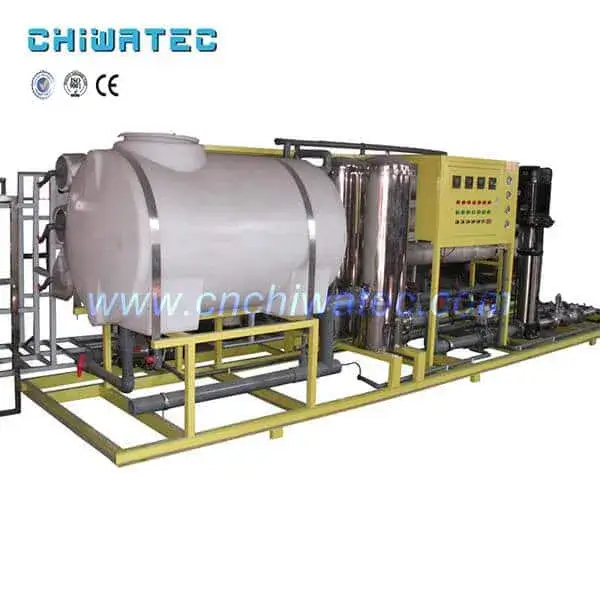
Overview of Pure Water and Mineral Water Production
Different water types have different production requirements. Pure water demands maximum contaminant removal, while mineral water preserves beneficial minerals from the source. The table below summarizes the five main bottled water types and their production approaches:
| Water Type | Definition | Core Technology | Key Standard |
| Pure water (Purified water) | Water containing only H₂O molecules, all impurities removed | RO membrane + sterilization | Conductivity ≤10 µS/cm |
| Mineral water | Groundwater with naturally occurring minerals above defined thresholds | UF hollow fiber membrane + disinfection | Certified by geological authority |
| Mountain spring water | Spring water with natural mineral content from its source | Mechanical filtration + disinfection | Source-point bottling required |
| Mineralized water | RO-purified water with precisely added trace elements | RO + mineral dosing system | Element concentrations per standards |
| Distilled water | Water purified by evaporation and condensation | Multi-effect distillation | Bacteria-free, low conductivity |
Pure Water Production Equipment and Process
Pure water (purified water) is defined as water that ideally contains no substances other than H₂O molecules. The production process uses reverse osmosis membrane technology combined with sterilization to remove contaminants while minimizing energy consumption. China’s national standard requires purified water conductivity to be ≤10 µS/cm.
Pure Water Process Flow
Raw water → Raw water pump → Multi-media filter → Activated carbon filter → Water softener → Precision filter (5 µm) → RO membrane system → Sterilization (UV/ozone) → Pure water storage tank → Filling machine
Key Equipment Specifications
- RO membrane — TFC polyamide, spiral-wound, operating at 150–200 psi. Single-stage RO achieves 95–99% salt rejection. For conductivity ≤10 µS/cm, a second RO pass or mixed-bed polishing may be required depending on feed water TDS
- Sterilization — Ozone (0.3–0.5 mg/L dissolved ozone) or UV (254 nm, 30–40 mJ/cm² dosage) ensures microbial safety during storage and bottling
- Conductivity monitoring — Online conductivity meters continuously verify product water quality with alarms for out-of-spec conditions
Mineral Water Equipment and Ultrafiltration Technology
Mineral water is sourced from protected groundwater containing naturally occurring minerals (calcium, magnesium, potassium, sodium, bicarbonate, sulfate) above defined thresholds. Unlike pure water, mineral water should retain these beneficial minerals while removing only physical contaminants, bacteria, and viruses.
Hollow Fiber Ultrafiltration Technology
Hollow fiber ultrafiltration (UF) membranes are the core technology for mineral water production. UF operates at room temperature and low pressure (15–50 psi), without phase change, providing gentle separation that preserves the mineral profile. Key characteristics include:
- Pore size — 0.01–0.05 µm, effectively removing colloidal particles, bacteria, viruses, heat sources, proteins, and high-molecular-weight organic substances
- Membrane material — PVDF (polyvinylidene fluoride) or PES (polyethersulfone), with hydrophilic surface modification to reduce fouling
- Filtration mode — Dead-end or cross-flow, with automatic backwash every 30–60 minutes at 1.5–2× forward pressure
Mineral Water Process Flow
Source water → Raw water pump → Multi-media filter → Activated carbon filter → Precision filter (5 µm) → Hollow fiber UF system → UV sterilization → Ozone injection → Storage tank → Filling
UF systems are also widely used in food, fermentation, pharmaceutical, environmental, and chemical industries for separation, concentration, and purification of macromolecular substances.
Mountain Spring, Mineralized, and Distilled Water Equipment
Mountain Spring Water
Mountain spring water contains a natural proportion of mineral elements from its source and requires only basic filtration and disinfection to ensure safety while maintaining the natural composition. The typical process is: source water → mechanical filtration → fine filtration → UV sterilization → storage → filling. Spring water must be bottled at source to preserve its natural characteristics.
Mineralized Water (Reconstituted Mineral Water)
Mineralized water (also called reconstituted mineral water) is produced by first purifying water through reverse osmosis, then precisely adding a defined blend of trace elements (calcium chloride, magnesium sulfate, potassium bicarbonate) back into the purified water. The advantage of this approach is that the mineral content can be formulated to precise specifications, ensuring consistent taste and health benefits batch after batch.
Distilled Water
Distillation heats raw water to boiling and re-condenses the steam, leaving all non-volatile contaminants behind. High-temperature vaporization achieves the most thorough microbial kill — exceeding 6-log reduction of all pathogens. Distilled water is used in laboratories, battery top-up, medical sterilization, and other applications requiring water with extremely low bacterial counts and no residual chemicals.
Bottling Line and Water Treatment Machinery
A complete bottled water production plant integrates three major systems:
Water Treatment System
The process train depends on the source water quality and product water target. Typical components include:
- Pretreatment — Multi-media filter (quartz sand + anthracite, 6–12 m/h), activated carbon filter (10–20 min EBCT), water softener (if hardness >100 mg/L), iron/manganese removal filter, and microfiltration
- Advanced treatment — RO membrane (for pure water), UF membrane (for mineral water), or ion exchange polishing (for high-purity applications)
- Post-treatment — UV sterilizer (254 nm, 30 mJ/cm²), ozone generator (0.3–0.5 mg/L), and final 0.2 µm absolute filter
Bottle Blowing Machine
For PET bottle production, the RJM14 bottle blowing machine (Tech-Long technology) is a mature solution offering high stability and excellent bottle forming rates. The two-stage process: preform heating (110–130°C) → stretch-blow molding (25–35 bar) produces consistent, lightweight bottles at rates of 2,000–8,000 bottles per hour.
Bottled Water Filling Machine
Modern filling machines integrate three processes — bottle washing, filling, and capping — in a single rotary or linear platform. Key features include: neck-holding bottle transfer (star-wheel design), automatic bottle washing (hot water + disinfectant rinse), volumetric or level-controlled filling, and servo-driven capping. Advantages include minimal bottle wear, simple bottle type changeover, precise transmission, and hygienic operation.
Frequently Asked Questions
What is the difference between pure water and mineral water?
Pure water is produced by removing all dissolved solids and contaminants, typically through reverse osmosis, achieving conductivity ≤10 µS/cm. Mineral water comes from protected groundwater containing naturally occurring minerals above defined thresholds and is processed through ultrafiltration to remove bacteria while preserving the mineral profile.
What equipment is needed for a bottled water plant?
A complete bottled water plant requires: water treatment system (filters, RO/UF, sterilizer), bottle blowing machine (PET preform to bottle), filling machine (wash-fill-cap), labeling machine, packaging machine, and auxiliary systems (compressed air, CIP cleaning, water storage tanks). Total investment ranges from ¥500,000 (small plant, 2,000 BPH) to ¥10 million+ (large plant, 12,000 BPH).
Can the same production line make both pure water and mineral water?
Yes, with a modular design. A common approach is to install a UF system for mineral water and an RO system as a parallel or downstream option. When producing pure water, RO is active; when producing mineral water, UF is active and RO is bypassed. The bottling line, sterilization, and packaging equipment are shared.
What is the difference between ultrafiltration and reverse osmosis for water production?
UF removes particles, bacteria, and viruses (0.01–0.05 µm pores) but allows dissolved minerals and salts to pass through. RO removes >99% of all dissolved salts (0.5–10 nm pores) along with all particles and microorganisms. UF is used for mineral water (preserves minerals), RO for pure water (removes everything).
What sterilization methods are used in bottled water production?
Three main methods: UV sterilization (254 nm, 30–40 mJ/cm²) for inline disinfection without chemical residuals; ozone injection (0.3–0.5 mg/L dissolved ozone) for storage tank and bottle disinfection with residual protection; and chlorine dioxide (0.5–2.0 mg/L) for raw water pretreatment. Most plants use UV + ozone in combination.
Conclusion and Call to Action
Successful pure water and mineral water production requires matching the right technology — RO for pure water, UF for mineral water — with the right bottling and sterilization equipment. From source water pretreatment through membrane filtration, disinfection, and automated bottling, each stage must be designed for consistent quality, regulatory compliance, and operational efficiency. CHIWATEC provides complete engineering solutions for bottled water plants: water treatment system design, equipment manufacturing, installation, commissioning, and after-sales support. Contact our team: [email protected] or [email protected].
Do you have a water treatment project we can help with
* Designing,machining,installing,commissioning, customize and one-stop service






 English
  Spanish
  Portuguese




