Landfill Leachate Treatment Equipment Advantages: Urban Leachate Management with RO Technology 2026
Urban landfill leachate — the high-concentration wastewater generated when moisture percolates through municipal solid waste — requires specialized treatment to meet environmental discharge standards. Modern landfill leachate treatment equipment advantages include mechanized, intelligent system operation that replaces manual labor, reduces human error, and achieves consistent compliance with national emission standards. This guide explores the key landfill leachate treatment equipment advantages and how RO-based systems deliver reliable, cost-effective leachate management.
Key Landfill Leachate Treatment Equipment Advantages for Urban Applications
Landfill leachate is a complex wastewater characterized by high concentrations of organic matter (COD up to 50,000 mg/L), ammonia nitrogen, heavy metals, and recalcitrant compounds. A well-designed treatment system must handle this challenging feed water while meeting strict discharge or reuse standards. The main landfill leachate treatment equipment advantages include:
| Advantage | Description | Impact on Operation |
| Continuous 24/7 operation | Fully automated systems with PLC control enable round-the-clock treatment without manual intervention | Stable effluent quality, reduced operator labor costs |
| High pollutant removal efficiency | Multi-stage treatment including biological treatment + UF + RO achieves > 99% removal of COD, NH₃-N, and heavy metals | Effluent meets Class 1A discharge standards or can be reused as industrial process water |
| Resource recovery capability | RO concentrate can be further treated for salt recovery or volume reduction | Reduces waste disposal volume by 75-90% |
| Harmless treatment | Complete destruction of pathogens and organic pollutants through combined biological and membrane processes | No secondary pollution; treated water safe for discharge or reuse |
| Low operating cost | Energy-efficient membrane systems with automated cleaning cycles minimize chemical and energy consumption | Operating cost of $1.5-3.0 per m³ of leachate treated |
Understanding Urban Landfill Leachate and Treatment Challenges
Landfill leachate is formed when moisture — from the waste’s inherent water content, rainwater infiltration, and groundwater intrusion — percolates through the waste layers in a municipal landfill. The resulting liquid accumulates contaminants from the decomposing waste, creating a high-strength wastewater that requires sophisticated treatment.
| Parameter | Typical Range for Young Landfill (< 5 years) | Typical Range for Mature Landfill (> 10 years) |
| COD (mg/L) | 10,000 – 50,000 | 1,000 – 5,000 |
| BOD₅ (mg/L) | 5,000 – 30,000 | 100 – 1,000 |
| Ammonia nitrogen (mg/L) | 500 – 2,000 | 1,000 – 3,000 |
| pH | 5.5 – 7.0 | 7.0 – 8.5 |
| Heavy metals (mg/L) | Variable, depending on waste composition | Lower, due to washout |
The challenge of leachate treatment lies in the extreme variability of both flow and composition. Seasonal rainfall can cause flow rates to fluctuate by 3-5x, while the aging of the landfill shifts the waste from acidic, high-BOD young leachate to alkaline, high-ammonia mature leachate over a 10-20 year period.
Complete Leachate Treatment Process with RO Membrane Technology
Modern landfill leachate treatment equipment integrates multiple treatment stages, with reverse osmosis (RO) membrane technology serving as the core polishing step. A typical treatment train includes:
- Equalization and pH adjustment — Balancing flow and composition variations while adjusting pH to optimal ranges for biological treatment.
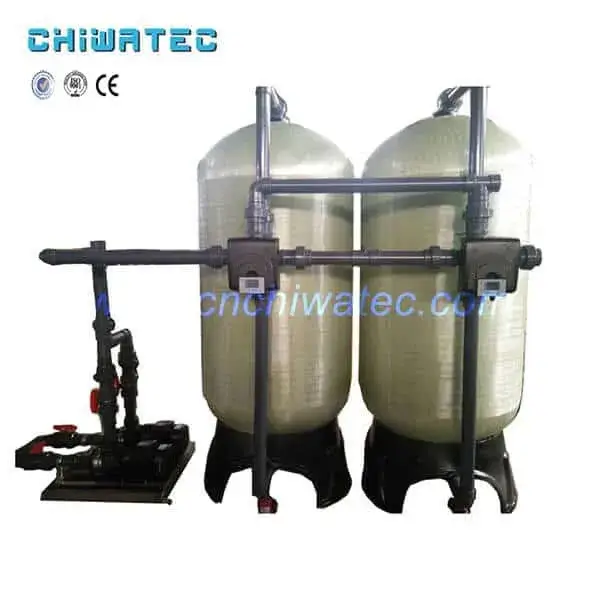
- Biochemical treatment — Anoxic/oxic (A/O) or membrane bioreactor (MBR) systems remove the majority of organic matter and achieve nitrification/denitrification for ammonia removal. MBR systems combine biological treatment with UF membrane separation for superior solids retention.
- Advanced oxidation (if required) — Ozonation or Fenton processes break down recalcitrant organic compounds that resist biological degradation, improving downstream RO performance.
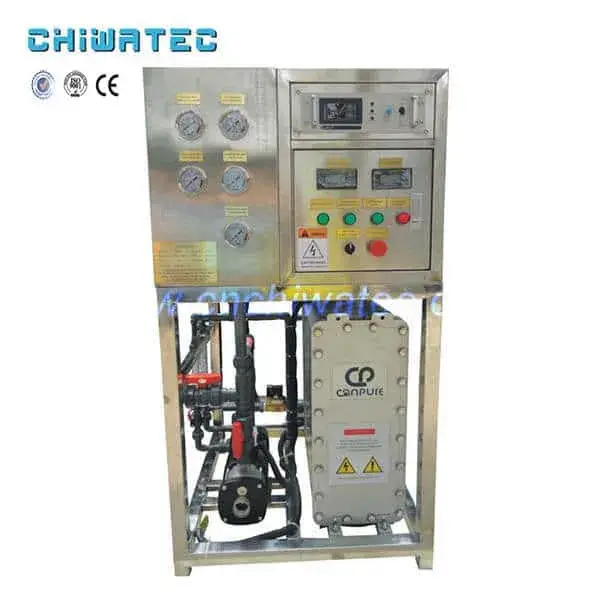
- Reverse osmosis (RO) membrane system — The final polishing stage that removes residual COD, color, heavy metals, and dissolved salts. RO achieves 95-98% salt rejection and produces permeate that meets strict discharge standards or can be reused as industrial water.
- Concentrate management — The RO concentrate (typically 15-25% of feed volume) is treated through evaporative concentration, deep well injection, or solidification before disposal.
Continuous Operation and Intelligent Control
One of the most significant landfill leachate treatment equipment advantages is the ability to operate continuously with minimal manual oversight. Modern systems feature:
- PLC-based automation — The entire treatment process is controlled by a programmable logic controller that adjusts flow rates, chemical dosing, and membrane operating parameters in real-time based on feed water quality sensors.
- Remote monitoring capability — SCADA (Supervisory Control and Data Acquisition) systems allow operators to monitor system performance, receive alarms, and adjust settings from a central control room or even via mobile devices.
- Automated cleaning cycles — RO membranes automatically initiate clean-in-place (CIP) cycles when transmembrane pressure or permeability reaches pre-set thresholds, maintaining optimal performance without operator intervention.
- 24-hour operation — Unlike batch treatment systems, continuous-flow leachate treatment equipment processes incoming leachate as it is generated, eliminating the need for large storage tanks and preventing odor problems from stored leachate.
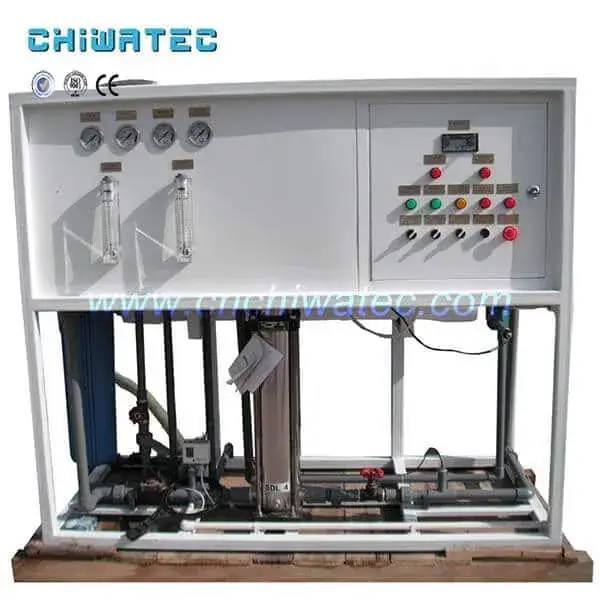
Resource Utilization and Environmentally Harmless Treatment
Modern landfill leachate treatment equipment advantages extend beyond compliance to include resource recovery and environmental sustainability:
Water Reuse
RO-treated leachate permeate can meet quality standards for industrial reuse applications, including landfill vehicle washing, dust suppression, green space irrigation, and even boiler feed water in some cases. This reduces the demand for fresh water sources and transforms a waste stream into a valuable water resource.
Concentrate Volume Reduction
Advanced RO systems with high recovery rates (70-85%) minimize the volume of concentrated reject water that requires disposal. For landfills with limited disposal options, additional technologies such as disk-tube RO (DTRO) or mechanical vapor recompression (MVR) can achieve 90-95% overall water recovery.
Environmental Compliance
Well-designed leachate treatment systems ensure that all discharge parameters — including COD, BOD, ammonia nitrogen, total phosphorus, heavy metals, and color — meet the applicable environmental standards. This protects local water bodies from contamination and helps landfill operators maintain their environmental permits.
Frequently Asked Questions About Landfill Leachate Treatment Equipment
Q1: What is the most effective technology for landfill leachate treatment?
The most effective approach combines biological treatment (MBR or A/O process) with reverse osmosis membrane polishing. This combination achieves > 99% removal of organic matter, ammonia, and heavy metals, producing effluent that meets the most stringent discharge standards.
Q2: How much does landfill leachate treatment cost?
Treatment costs vary based on leachate composition, flow rate, and discharge standards. For a typical 200-500 m³/day system, total operating costs range from $1.50-3.00 per m³, including energy (30-40%), chemicals (20-30%), membrane replacement (15-20%), and labor (10-15%).
Q3: Can RO membranes handle the high fouling potential of leachate?
RO membranes require effective pretreatment — typically MBR or ultrafiltration — to reduce suspended solids and organic fouling potential before the RO stage. With proper pretreatment and automated CIP cleaning, RO membranes in leachate service typically achieve 2-4 years of useful life.
Q4: What happens to the RO concentrate from leachate treatment?
RO concentrate is typically 15-25% of the feed volume and contains high levels of salts and refractory organics. Common disposal methods include recirculation back to the landfill, evaporation in lined ponds, deep well injection (where permitted), or solidification for landfill disposal.
Q5: Is landfill leachate treatment equipment suitable for small landfills?
Yes. Modular, containerized leachate treatment systems are available for small to medium landfills (50-200 m³/day). These pre-assembled units incorporate all treatment stages in a standard shipping container, minimizing site construction and enabling rapid deployment.
Conclusion and Call to Action
The landfill leachate treatment equipment advantages — including continuous automated operation, high pollutant removal efficiency, resource recovery, harmless treatment, and low operating costs — make modern RO-based systems the preferred solution for urban landfill leachate management. By integrating biological treatment with membrane technology, landfill operators can achieve reliable compliance while minimizing environmental impact.
CHIWATEC provides complete landfill leachate treatment solutions incorporating MBR, RO, and advanced oxidation technologies. Contact us at [email protected] or [email protected] for expert guidance on leachate treatment system design and equipment selection.
Related Resources and Further Reading
- RO System Technical Specifications: Reverse Osmosis Water Treatment System Guide
- Reverse Osmosis Water Treatment Equipment Operation: 2026 Safety and Efficiency Guide
- Reverse Osmosis Water Treatment Equipment: Improvement of Reverse Osmosis Desalination System
- Why Does Reverse Osmosis Water Treatment Technology Need Pretreatment? Common Processes Explained
- RO Water Treatment System Products
Do you have a water treatment project we can help with
* Designing,machining,installing,commissioning, customize and one-stop service
 English
  Spanish
  Portuguese