

Understanding the Filtration Mechanism and Operational Process of Reverse Osmosis (RO) Membranes
Understanding the Filtration Mechanism and Operational Process of Reverse Osmosis (RO) Membranes
1. Filtration Mechanism of Reverse Osmosis (RO) Membranes
Reverse osmosis (RO) technology is highly effective in removing contaminants, including viruses, bacteria, and organic impurities, with a removal rate exceeding 99.9% (at least 3-log removal). However, microbial regrowth can occur on the permeate side if proper system design, monitoring, and maintenance are not in place. Therefore, the effectiveness of an RO system in removing microorganisms is determined more by system management rather than just the membrane properties alone.
2. Basic Principles of Reverse Osmosis
When pure water and saline water are separated by an ideal semi-permeable membrane, the membrane allows only water molecules to pass through while blocking salts. In natural osmosis, water flows spontaneously from the pure water side to the saline water side. However, applying external pressure on the saline water side can reverse this process. When the applied pressure exceeds the osmotic pressure, water molecules move from the saline water side to the pure water side, effectively filtering out contaminants. This is the fundamental principle of reverse osmosis (RO) filtration.
3. Overview of Reverse Osmosis Technology
Reverse osmosis (RO) is a membrane separation technology that utilizes pressure differences to drive water purification. Originating from aerospace research in the 1960s, RO technology has since been widely adopted in scientific research, medical fields, food and beverage industries, and seawater desalination.
RO membranes have a nanometer-scale pore size (1 nm = 10⁻⁹ meters), allowing only H₂O molecules to pass through while blocking dissolved salts, heavy metal ions, organic compounds, colloids, bacteria, and viruses. As a result, RO filtration effectively separates purified water from concentrated waste water.
Water purified through RO membranes typically has a conductivity of 5 µS/cm, meeting national laboratory-grade water standards. When further refined using atomic-level ion exchange, the resistivity of the purified water can reach 18.2 MΩ·cm, exceeding Grade 1 laboratory water standards (GB682-92).
4. Pre-Treatment Considerations for Reverse Osmosis Systems
Pre-treatment is crucial to maintaining RO system efficiency and preventing membrane fouling. Key considerations include:
- Suspended Solids Removal: To prevent clogging, feedwater must undergo filtration to remove suspended particles, reducing turbidity.
- Microbial Control: Pre-treatment should include disinfection to prevent biofilm formation.
- Silt Density Index (SDI) Monitoring: RO systems require a feedwater SDI below 5, with an optimal value under 3 to minimize membrane fouling.
- pH Adjustment: Each RO membrane type operates best within a specific pH range, necessitating feedwater pH adjustments.
- Temperature Control: Water permeability increases with temperature; however, excessive heat accelerates the hydrolysis of cellulose acetate membranes and softens organic membranes. Typical operating temperatures range between 20-40°C for organic membranes and 5-45°C for composite membranes.
5. RO System Startup and Operational Adjustments
Before operation, ensure all pre-treatment conditions are met. The RO system is powered by a high-pressure pump, and effective desalination occurs only when feedwater pressure exceeds the osmotic pressure.
Key operational adjustments include:
- Inlet Flow Adjustment: Use the RO inlet control valve to regulate feedwater flow to match design specifications.
- Permeate and Concentrate Flow Control: Adjust the pressure control valve on the concentrate line to fine-tune product water flow and system pressure.
- Pressure Management: If permeate flow is lower than expected, increase feedwater pressure by slightly closing the concentrate valve to maintain the designed operational parameters.
6. Optimal Operating Conditions for RO Systems
RO membrane technology relies on pressure-driven separation and offers several advantages:
- Non-Thermal Separation: RO operates at ambient temperature without phase changes, making it suitable for processing heat-sensitive substances with lower energy consumption than thermal separation methods.
- Broad Contaminant Removal Spectrum: RO effectively removes dissolved salts, organic matter, and microorganisms.
- High Desalination and Water Recovery Rates: RO membranes can retain solutes with diameters larger than a few nanometers, ensuring high purification efficiency.
- Low-Pressure Operation: The system operates under relatively low pressure, making the equipment simple, easy to maintain, and highly automated for improved operational safety and hygiene.
7. RO System Components and Maintenance
A standard RO system consists of:
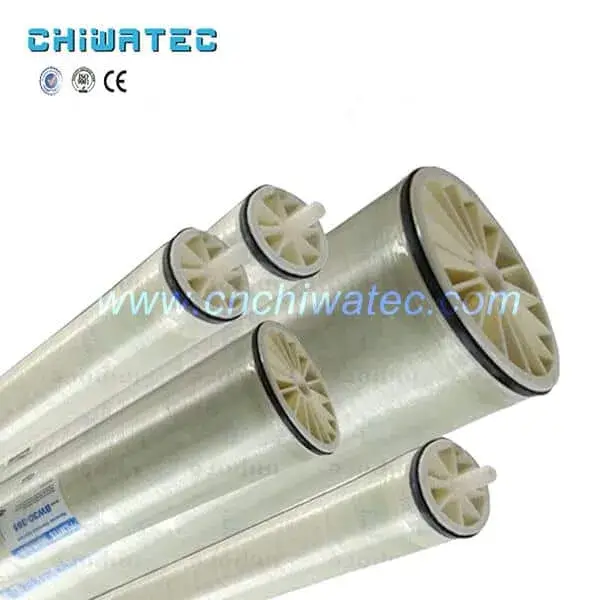
- RO Membrane Modules: The core filtration component, typically using polyamide composite membranes with a salt rejection rate of up to 99.5%.
- High-Pressure Pump: Provides the necessary pressure for water permeation through the membrane.
- Pre-Filtration Units: Security filters with 5-micron cartridges to prevent large particulates from damaging the RO membranes.
To maintain optimal performance, RO membranes require specific feedwater quality:
- pH Range: 3-10
- Residual Chlorine: <0.1 mg/L
- Silt Density Index (SDI15): <5.0
Proper system monitoring and maintenance, including periodic cleaning and replacement of filter elements, are essential to extending membrane life and ensuring consistent water quality.
Xi’an CHIWATEC Water Treatment Technology is a high-tech enterprise specialized in various water processing devices. Aside from these individual products, which cover a number of types and series, we can also help with related comprehensive engineering projects. Thanks to our hard work and dedication upon our founding, we are now one of the fastest-developing water treatment equipment manufacturers in Western China.
Further reading
FOLLOW US
Do you have a water treatment project we can help with
* Designing,machining,installing,commissioning, customize and one-stop service






 English
  Spanish
  Portuguese




