Reverse Osmosis Membrane Advantages: Complete Guide to RO Membrane Benefits, Performance, and Applications 2026
Why are reverse osmosis membranes the most widely used water purification technology in the world? With over 70% of global desalination capacity relying on RO membrane technology, understanding reverse osmosis membrane advantages is essential for anyone selecting water treatment equipment. The global RO membrane market was valued at USD 6.8 billion in 2024 and is projected to reach USD 12.4 billion by 2034 (CAGR 6.2%), driven by increasing demand for high-purity water across industrial, municipal, and residential sectors. The direct answer: reverse osmosis membrane advantages include 95-99% salt rejection, operation at ambient temperature without phase change, compact system footprint, low energy consumption (2.5-4.0 kWh/m3 for seawater), and the ability to remove not only dissolved salts but also bacteria, viruses, and organic compounds in a single pass. CHIWATEC supplies high-performance RO membrane elements and complete reverse osmosis systems engineered for reliable operation across diverse water treatment applications.
Reverse Osmosis Membrane Advantages: Exceptional Salt Rejection and Water Quality
The primary reverse osmosis membrane advantage is its exceptional ability to reject dissolved salts. Modern thin-film composite (TFC) polyamide RO membranes achieve 99.0-99.8% salt rejection under standard operating conditions, reducing feed water TDS from thousands of ppm to just a few ppm in a single pass. This performance is unmatched by any other single-stage water treatment technology.
| Parameter | RO Membrane | Conventional Filtration | Ion Exchange |
|---|---|---|---|
| Salt rejection | 95-99.8% | 0% (mechanical only) | 99-99.9% |
| Bacteria removal | > 99.99% | > 99% (with proper media) | Partial (resin can host bacteria) |
| Virus removal | > 99.99% | 0% (unless UF membrane) | 0% |
| Organic compound removal | 90-99% (MW > 150) | Partial (GAC only) | 0% |
| Continuous operation | Yes | Yes | Requires duplex for continuous |
| Chemical regeneration | None | None (backwash only) | Required |
This combination of high salt rejection, microbial removal, and continuous operation without chemical regeneration is the defining reverse osmosis membrane advantage over competing technologies.
Energy Efficiency: Key Reverse Osmosis Membrane Advantages in Reducing Operating Costs
RO membrane technology operates at ambient temperature without phase change, making it significantly more energy-efficient than thermal desalination processes. This is a critical reverse osmosis membrane advantage in large-scale applications where energy costs represent 30-50% of total operating expenses. The specific energy consumption of RO systems has decreased dramatically over the past three decades due to advances in membrane permeability, pump efficiency, and energy recovery technology.
- Brackish water RO: 1.5-3.0 kWh/m3 — suitable for most industrial and municipal applications
- Seawater RO: 2.5-4.0 kWh/m3 with energy recovery devices — down from 8+ kWh/m3 in 1990s-era systems
- Comparison with thermal distillation: RO uses 80-90% less energy than multi-stage flash distillation (10-15 kWh/m3)
- Energy recovery: Modern ERDs recover 40-60% of the energy from the high-pressure concentrate stream
The absence of chemical regeneration also eliminates the recurring cost of acid and caustic soda required by ion exchange systems, further reducing long-term operating expenses.
Compact Footprint and Modular Design
RO membrane systems occupy significantly less floor space than equivalent-capacity conventional treatment systems. A 1,000 m3/day brackish water RO system requires approximately 50-80 m2, compared to 200-400 m2 for an equivalent ion exchange system and 500-1,000 m2 for a thermal desalination plant. The modular design of RO membrane elements — standard 4-inch and 8-inch diameter spiral-wound elements — allows systems to be easily scaled from 1 m3/day to over 500,000 m3/day by adding additional pressure vessels and membrane elements. For more details on RO system design, refer to the RO membrane separation technology guide.
Ambient Temperature Operation
RO membranes operate at ambient feed water temperatures (typically 10-35 degrees C), avoiding the energy penalty of heating or cooling required by distillation or evaporation processes. This reverse osmosis membrane advantage is particularly valuable in applications where heat-sensitive solutions must be processed, such as:
- Food and beverage processing: Concentrating fruit juices, dairy products, and protein solutions without thermal degradation
- Pharmaceutical manufacturing: Producing water-for-injection without the energy cost of distillation
- Wastewater reuse: Treating municipal and industrial effluent for reuse without heating
- Seawater desalination: Producing drinking water from seawater using ambient-temperature ocean water
Ambient temperature operation also minimizes scaling risks compared to thermal processes, as the solubility of scale-forming compounds generally decreases with increasing temperature.
Automation and Ease of Operation
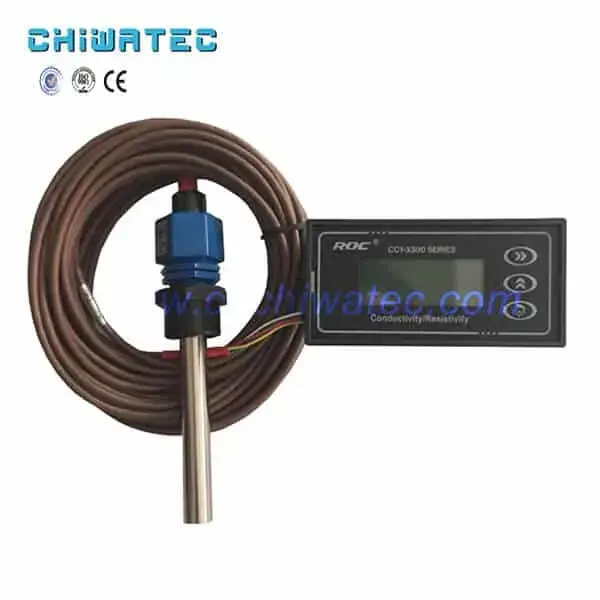
Modern RO membrane systems feature fully automated operation with PLC-based controls, remote monitoring, and automatic cleaning cycles. Operators require minimal specialized training — most systems require only periodic monitoring of key parameters: feed pressure, permeate flow, differential pressure, and permeate conductivity. RO membrane materials technology has advanced to the point where membrane elements routinely last 3-7 years with proper pre-treatment and maintenance, reducing the frequency of membrane replacement.
- Startup and shutdown: Fully automated with programmable sequences
- Monitoring: Online conductivity, flow, pressure, and temperature sensors with data logging
- Cleaning: Automated clean-in-place (CIP) systems for periodic membrane maintenance
- Alarm systems: Automatic shutdown on high pressure, low flow, or conductivity excursions
Broad Removal Spectrum
Unlike technologies that target specific contaminants, RO membranes remove a wide spectrum of impurities in a single process. This comprehensive removal capability is a key reverse osmosis membrane advantage over specialized treatment methods:
- Dissolved inorganics: 95-99.8% removal of all monovalent and multivalent ions (Na+, Ca2+, Mg2+, Cl-, SO42-, HCO3-)
- Dissolved organics: 90-99% removal of organic compounds with molecular weight above 150 Da
- Microorganisms: 99.99%+ removal of bacteria, viruses, and protozoan cysts
- Colloidal particles: 99%+ removal of colloidal silica, clay, and other submicron particles
- Endotoxins/pyrogens: 99.9%+ removal in pharmaceutical-grade RO systems
This single-technology solution eliminates the need for multiple treatment stages, simplifying system design and reducing capital costs.
Membrane Types and Configuration Flexibility
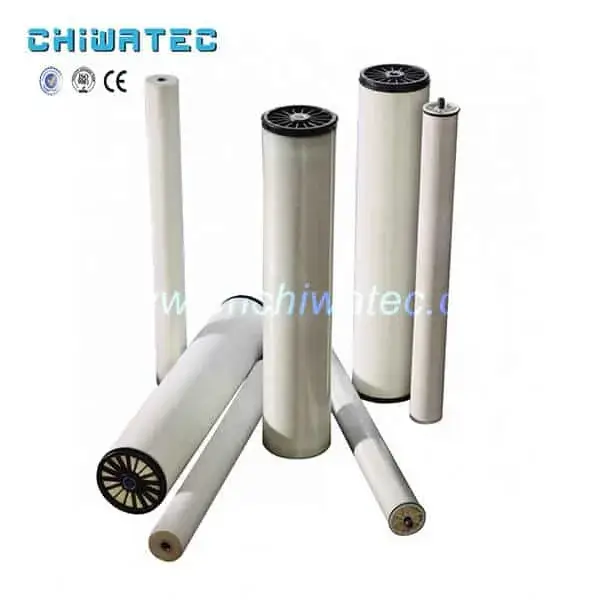
RO membranes are manufactured in various configurations to suit different applications. The types of reverse osmosis membranes include spiral-wound (most common for water treatment), hollow fiber (for high-fouling applications), and tubular (for high-solids streams). The principle, structure, and effect of RO membranes have been refined over decades of development, resulting in today’s high-performance thin-film composite membranes.
Frequently Asked Questions
Q1: What is the main advantage of reverse osmosis membranes over ultrafiltration?
The primary advantage is salt removal — RO membranes reject 95-99.8% of dissolved salts, while ultrafiltration membranes reject only suspended solids and macromolecules but allow salts to pass through freely. RO membranes have pores approximately 0.0001 um (0.1 nm), compared to 0.01-0.1 um for UF membranes. This makes RO suitable for desalination and ultrapure water production, while UF is limited to particulate and microbial removal.
Q2: How long do reverse osmosis membranes typically last?
With proper pre-treatment and regular cleaning, RO membranes last 3-7 years in brackish water applications and 3-5 years in seawater applications. Factors that reduce membrane life include: inadequate pre-treatment (high SDI > 3), chlorine exposure (damages polyamide membranes), infrequent cleaning (allowing fouling to become irreversible), and operation outside design parameters (excessive pressure or temperature). Key RO membrane characteristics directly affect long-term performance and lifespan.
Q3: Are reverse osmosis membranes energy-efficient?
Yes. RO membrane technology is the most energy-efficient desalination method available. Modern seawater RO systems with energy recovery devices consume 2.5-4.0 kWh/m3, while thermal distillation requires 10-15 kWh/m3 — RO uses 70-80% less energy. For brackish water applications, energy consumption is even lower at 1.5-3.0 kWh/m3. The energy efficiency of RO continues to improve with advances in membrane permeability and energy recovery technology.
Q4: Can RO membranes remove bacteria and viruses?
Yes, RO membranes provide excellent microbial removal. The pore size of RO membranes (approximately 0.0001 um) is 1,000-10,000 times smaller than bacteria (0.5-5 um) and 10-100 times smaller than viruses (0.02-0.4 um). RO membranes achieve > 99.99% removal of bacteria and viruses, which is why RO systems are widely used to produce microbiologically safe drinking water from contaminated sources and for pharmaceutical water systems requiring sterile product water.
Q5: Do reverse osmosis membranes remove beneficial minerals from water?
Yes, RO membranes remove essentially all dissolved minerals, including beneficial minerals such as calcium, magnesium, and potassium. The permeate water from an RO system typically has very low TDS (10-50 mg/L for brackish water RO). For drinking water applications, post-treatment remineralization — adding a calcite or corosex filter — is often recommended to restore mineral content and improve taste. For industrial applications, the complete demineralization is typically desired.
Conclusion & CTA
Reverse osmosis membrane advantages — exceptional salt rejection, energy efficiency, compact design, ambient temperature operation, comprehensive contaminant removal, and automation — make RO the dominant water purification technology worldwide, accounting for over 70% of global desalination capacity. From small-scale residential systems producing 100 L/day to large municipal seawater RO plants producing 500,000 m3/day, RO membrane technology delivers reliable, cost-effective water purification across every scale and application. CHIWATEC supplies high-quality RO membrane elements and complete reverse osmosis systems engineered for industrial, commercial, and municipal applications. Contact our team at [email protected] or [email protected] (WhatsApp available) for expert guidance on selecting the right RO membrane solution for your application.
Related Resources and Further Reading
- Introduction of Reverse Osmosis Membrane Materials
- Types of Reverse Osmosis Membranes: Structural and Morphological Classification
- The Principle, Structure, and Effect of Reverse Osmosis Membrane
- RO Membrane Separation Technology: Complete Guide to Characteristics and Principles
- RO Membrane Products – Browse Our Range
Do you have a water treatment project we can help with
* Designing,machining,installing,commissioning, customize and one-stop service
 English
  Spanish
  Portuguese