Reverse Osmosis Equipment Applications: Complete Guide to RO System Uses in Industry 2026
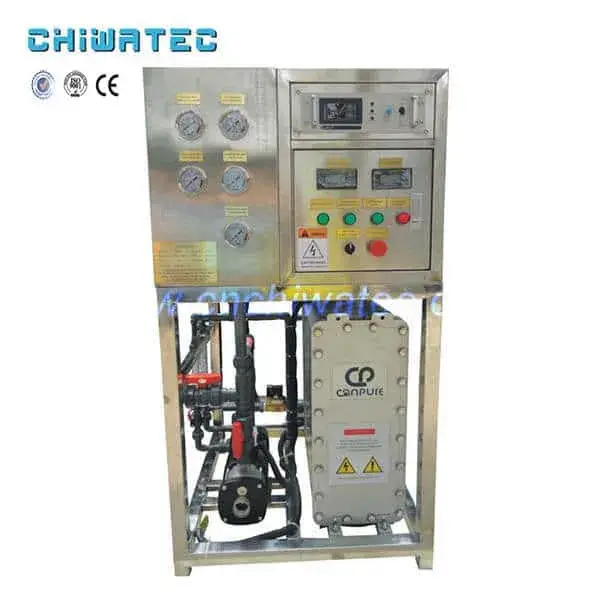
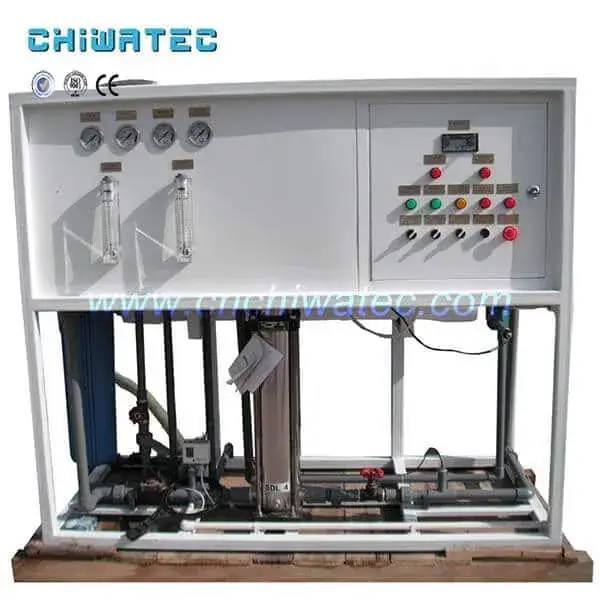
Reverse osmosis (RO) equipment is the most widely used membrane separation technology in industrial water treatment, serving applications from electronics manufacturing to pharmaceutical production. Understanding the full range of reverse osmosis equipment applications enables facility managers and engineers to select the right RO system configuration for their specific needs. This guide covers RO applications across electronics, pharmaceutical, chemical, food and beverage, and power generation industries, with equipment selection guidance for each sector. CHIWATEC provides custom-engineered RO systems designed for diverse industrial applications.
Why Reverse Osmosis Equipment Is Essential Across Industries
Reverse osmosis has become the dominant water purification technology because it offers:
- 95-99% salt rejection — Removes dissolved solids, bacteria, viruses, and organic compounds in a single pass
- Lower operating cost — Compared to distillation and ion exchange, RO typically consumes 30-60% less energy per cubic meter of treated water
- Scalable design — RO systems range from 100 L/h benchtop units to 500,000 m³/day municipal desalination plants
- Automated operation — Modern RO systems feature PLC control, automated flushing, and remote monitoring
- Minimal chemical usage — Unlike ion exchange, RO requires no acid/caustic regeneration, reducing chemical handling and waste disposal costs
Electronics Industry Reverse Osmosis Equipment Applications
The electronics industry is one of the largest consumers of high-purity water produced by RO equipment. Key applications include:
- Wafer and semiconductor fabrication — RO systems provide primary desalination for ultrapure water (UPW) production, achieving 18.2 MΩ·cm water for wafer cleaning and etching processes. Semiconductor fabs require RO feed water with TDS < 2 ppm before final polishing
- LCD and display panel manufacturing — RO equipment removes particles >0.1 μm and dissolved ions that cause pixel defects in LCD panels. A typical 8th-generation LCD fab consumes 20,000-30,000 m³/day of RO-treated water
- Printed circuit board (PCB) production — RO water is used for board rinsing between etching and plating steps, preventing ionic contamination that causes electrical failures
- Kinescope and CRT manufacturing — Although declining, CRT glass bulb cleaning still requires RO water with resistivity ≥1 MΩ·cm to prevent streaking and adhesion problems
Pharmaceutical and Medical RO System Applications
Pharmaceutical water systems rely on RO as the primary purification step for USP Purified Water (PW) and Water for Injection (WFI):
- USP Purified Water production — RO followed by electrodeionization (EDI) produces PW meeting USP conductivity ≤1.3 μS/cm and TOC ≤500 ppb. Single-pass RO removes 95-99% of feed water contaminants before EDI polishing
- Water for Injection pretreatment — For WFI produced by distillation or RO + EDI + UF, RO provides the critical first-stage desalination, protecting downstream distillation units from scaling
- Hemodialysis water treatment — RO systems with endotoxin-rejecting membranes produce AAMI-compliant water (bacteria <100 CFU/mL, endotoxin <0.25 EU/mL) for dialysis clinics
- Laboratory water systems — Clinical and research laboratories use RO as pretreatment for Type I water systems (≥10 MΩ·cm), extending the life of final polishing cartridges
Chemical and Industrial Process RO Equipment Applications
Chemical and process industries use RO equipment for multiple purposes:
- Boiler feed water treatment — RO reduces boiler blowdown frequency by removing hardness, silica, and TDS from make-up water. Typical boiler feed RO systems achieve conductivity <10 μS/cm, reducing chemical treatment costs by 40-60%
- Cooling tower make-up — RO-treated water in cooling towers reduces scale formation, allows higher concentration cycles, and decreases water consumption by 30-50%
- Process water for chemical manufacturing — Many chemical reactions require consistent water quality that RO systems provide regardless of raw water fluctuations
- Wastewater recovery and reuse — Industrial RO systems recover 70-85% of process wastewater for reuse in cleaning, cooling, or as feed to demineralizers, reducing fresh water intake and discharge volumes
Food and Beverage RO System Applications
The food and beverage industry uses RO for concentration, purification, and product quality improvement:
- Fruit juice concentration — RO concentrates fruit juices at lower temperatures than thermal evaporation, preserving flavor, color, and nutritional value. Typical RO concentration reaches 25-35° Brix from 10-12° Brix feed
- Dairy processing — RO concentrates whey and milk proteins before spray drying, recovering 95% of water as high-quality permeate for plant cleaning and boiler feed
- Bottled water and beverage production — RO is the standard technology for producing purified bottled water and beverage make-up water, ensuring consistent taste and microbiological safety
- Wine and beer production — Breweries use RO to adjust water mineral content for consistent beer profiles. Wineries use RO for grape must concentration and alcohol reduction
Key RO Equipment Configurations by Application
| Application | Typical RO Configuration | Operating Pressure | Recovery Rate |
|---|---|---|---|
| Electronics UPW | Two-pass RO + EDI | 150-200 psi | 70-85% |
| Pharmaceutical PW | Single-pass RO + EDI | 100-150 psi | 75-85% |
| Boiler feed | Single-pass RO | 100-150 psi | 75-85% |
| Seawater desalination | Single-pass SWRO + ERD | 800-1,200 psi | 40-50% |
| Food concentration | Tubular or spiral-wound RO | 400-800 psi | 60-80% (water recovery) |
| Wastewater reuse | UF + RO + advanced oxidation | 100-200 psi | 65-80% |
How to Select RO Equipment for Your Application
Selecting the right reverse osmosis equipment applications configuration requires evaluating several factors:
- Feed water source and quality — Municipal water (200-500 ppm TDS) requires different RO design than brackish water (1,000-10,000 ppm) or seawater (35,000 ppm). Higher TDS feed needs higher-pressure membranes and energy recovery
- Target product water quality — Electronics manufacturing (18.2 MΩ·cm) needs two-pass RO + EDI, while boiler feed (10-50 μS/cm) can use single-pass RO. Define your target before selecting the system
- Required flow rate — RO systems are modular. For flows under 5 m³/h, standard skid-mounted units are cost-effective. Above 50 m³/h, custom-engineered multi-train systems offer better redundancy
- Space and installation constraints — Standard RO skids require 2-4 m² per 1 m³/h capacity. Containerized RO systems are available for outdoor or remote installations
- Operating cost priorities — High-recovery RO systems (85%+) reduce feed water and brine disposal costs but require more extensive pretreatment. Standard 75% recovery systems have lower capital cost and simpler operation
CHIWATEC engineers custom RO systems matched to each application’s specific requirements, from initial water analysis through commissioning.
Frequently Asked Questions
What industries use reverse osmosis equipment?
Reverse osmosis equipment is used across electronics (wafer fabrication, PCB, LCD), pharmaceutical (purified water, WFI), chemical processing (boiler feed, process water), food and beverage (juice concentration, bottled water), power generation (make-up water, cooling towers), and municipal water supply (desalination, water reuse). Each application requires specific RO system design parameters.
Can RO equipment remove all contaminants from water?
RO removes 95-99% of dissolved salts, 99%+ of bacteria and viruses, and 90-95% of organic compounds. However, RO does not remove dissolved gases (CO₂, H₂S) and certain small organic molecules. For applications requiring complete contaminant removal, RO is typically combined with EDI, UV oxidation, activated carbon, or degasification as complementary treatment steps.
What is the difference between single-pass and two-pass RO?
Single-pass RO sends feed water through one set of membranes, achieving 95-99% rejection. Two-pass RO sends first-pass permeate through a second membrane array, achieving 99.8-99.9% rejection with product water conductivity below 2 μS/cm. Two-pass is used for electronics UPW pretreatment and pharmaceutical PW production where higher purity is required.
How long do RO membranes last in industrial service?
RO membranes typically last 3-5 years in well-maintained industrial systems with proper pretreatment. Membranes treating municipal water with SDI <3 and chlorine-free feed can last 5+ years. Factors reducing membrane life include inadequate pretreatment, scaling, biofouling, chlorine exposure, and operational upsets like high pressure or temperature excursions.
What is the typical operating cost of an industrial RO system?
Industrial RO system operating costs range from $0.15-0.65 per m³ of product water, depending on feed TDS, system size, and energy costs. Major cost components: energy (30-50%), membrane replacement (15-25%), chemicals (10-15%), maintenance labor (10-15%), and pretreatment consumables (10-15%). Energy recovery devices can reduce operating costs by 25-40% for high-pressure systems.
Conclusion & Call to Action
Reverse osmosis equipment serves critical roles across multiple industries, from producing ultrapure water for semiconductor fabrication to concentrating fruit juices and treating industrial wastewater. Selecting the right RO configuration — single-pass, two-pass, with or without energy recovery — depends on feed water quality, target purity, and flow requirements. CHIWATEC provides custom-engineered RO systems designed for specific industrial applications, with complete support from water analysis through commissioning.
Email: [email protected] or [email protected]
Related Resources and Further Reading
- Introduction of Reverse Osmosis Pure Water Equipment
- Main Process Flow Description of Reverse Osmosis Pure Water Equipment
- Process Flow and Equipment Characteristics of Reverse Osmosis Pure Water Production
- Reverse Osmosis Pure Water System Applications: Industrial and Commercial
- RO Water Treatment System for Industrial Applications
Do you have a water treatment project we can help with
* Designing,machining,installing,commissioning, customize and one-stop service
 English
  Spanish
  Portuguese