Reverse Osmosis Water Purification Process: Complete Guide to RO Equipment and System Components 2026
The reverse osmosis water purification process is a multi-stage treatment train that progressively removes contaminants to produce high-purity water for industrial, commercial, and municipal applications. Each component in the reverse osmosis water purification process plays a specific role — from raw water storage and pretreatment through membrane separation to final polishing. This guide explains every stage and component in detail. CHIWATEC provides complete RO water purification system design and manufacturing services worldwide.
Reverse Osmosis Water Purification Process Overview
A typical reverse osmosis water purification process follows this sequence: Raw water storage → Pump pressurization → Multi-media filtration → Activated carbon filtration → Ion softening/antiscalant dosing → Precision filtration → RO membrane system → Product water. Each stage removes specific contaminants:
| Stage | Component | Contaminants Removed |
|---|---|---|
| 1 | Raw water tank | Large sediment, flow/pressure buffering |
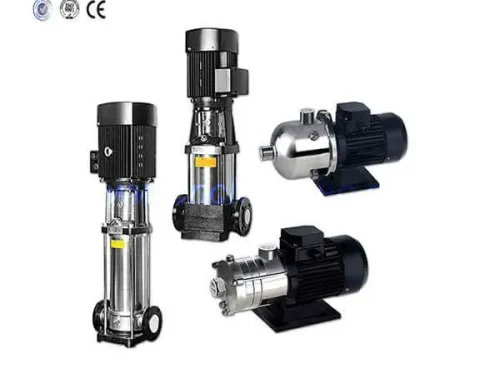
| 2 | Raw water pump | Provides stable pressure to pretreatment |
| 3 | Multi-media filter | Particles >20 um (silt, rust, colloids) |
| 4 | Activated carbon filter | Chlorine, organics, COD, color, odor, THM |
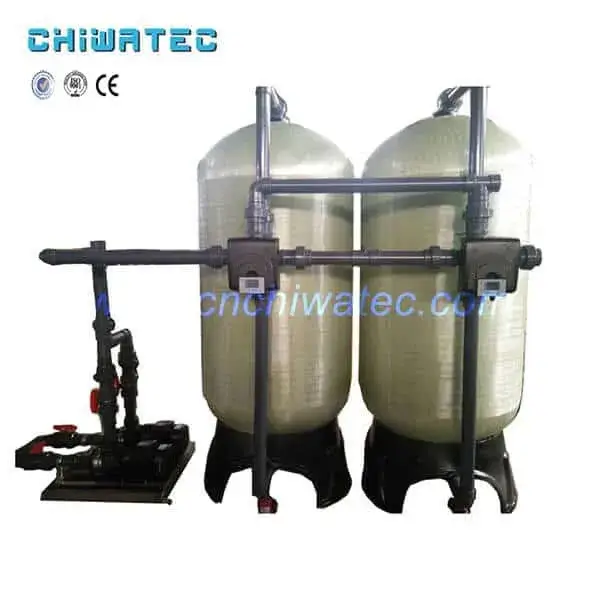
| 5 | Ion softening / antiscalant | Hardness ions (Ca2+, Mg2+), scale prevention |
| 6 | Precision filter (5 um) | Residual suspended solids, fine particles |
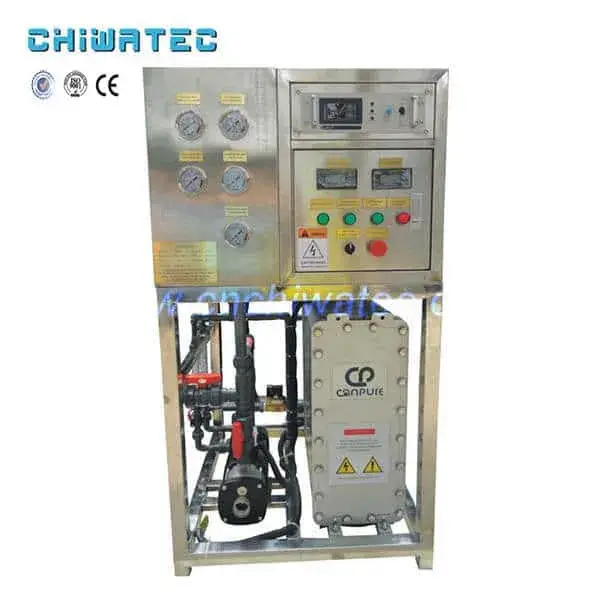
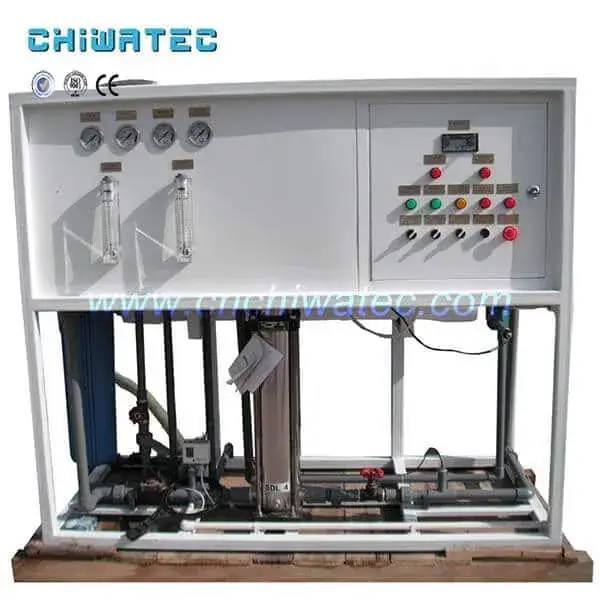
| 7 | RO membrane system | Dissolved salts (95-99%), bacteria, viruses, TOC |
Understanding the complete reverse osmosis water purification process is essential for proper system design, operation, and troubleshooting.
Raw Water Storage and Pump Pressurization
The raw water tank is the first component in the RO purification system. It serves two critical functions:
- Sedimentation: Allows large sediment particles and precipitable substances to settle by gravity, reducing the load on downstream filters
- Flow/pressure buffering: Absorbs pressure fluctuations from the incoming water supply, preventing pressure surges that could damage sensitive equipment or trigger false alarms on pressure sensors
The raw water pump then boosts the water to a stable operating pressure for the pretreatment system. A constant pressure supply is essential for consistent filter performance and RO membrane operation.
Multi-Media Filtration: Removing Suspended Solids
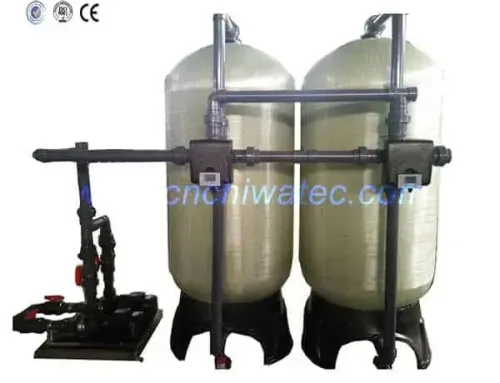
The multi-media filter is a depth filtration system using multiple layers of filter media with different particle sizes. Typically, it contains anthracite, sand, and garnet layered from coarse to fine:
- Filtration capability: Removes particles larger than 20 um, including silt, rust, colloidal matter, and suspended solids
- Media layers: Coarse anthracite (top) → fine sand (middle) → garnet support (bottom) for progressive filtration
- Operation modes: Service (downflow) and backwash (upflow) — manual valve control or fully automatic controller
- Backwash frequency: Typically every 24–48 hours or when differential pressure exceeds 0.5–1.0 bar
Proper multi-media filtration extends the life of downstream activated carbon and RO membrane elements by preventing particle fouling.
Activated Carbon Filtration for Chlorine and Organics Removal
Activated carbon filtration is a critical step in the RO purification process. This system uses nutshell-based activated carbon (typically coconut shell):
- Chlorine removal: Protects thin-film composite (TFC) RO membranes from oxidation damage. Free chlorine must be reduced to <0.1 ppm before the RO membrane
- Organics adsorption: Reduces potassium permanganate oxygen consumption (COD) from 15 mg/L to 2–7 mg/L (O2)
- Additional benefits: Removes color, odor, taste, biochemical organic matter, trihalomethanes (THM), and pesticide residues
- Ion exchange adsorption: The activated carbon surface can also adsorb electrolyte ions through physical and chemical adsorption mechanisms
The activated carbon filter can be backwashed and rinsed using manual or automatic controls, ensuring consistent performance with very low operating costs.
Ion Softening and Scale Inhibitor Dosing
Scaling prevention is essential in the RO water purification process. Without proper treatment, sparingly soluble salts can crystallize on membrane surfaces, causing irreversible damage:
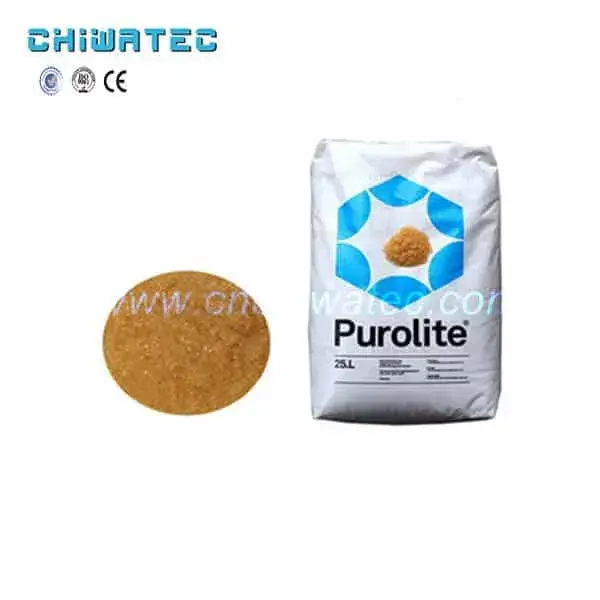
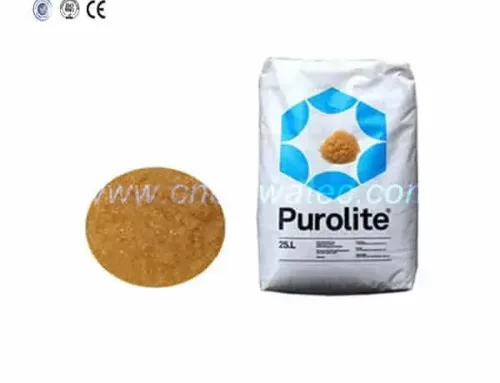
- Ion exchange softening: Removes Ca2+ and Mg2+ ions using sodium-form cation resin, preventing carbonate and sulfate scale formation
- Antiscalant dosing: High-efficiency scale inhibitors (e.g., PTP-0100) prevent precipitation of CaCO3, MgCO3, MgSO4, CaSO4, BaSO4, SrSO4, and SiO2 crystals
- Critical zone: The last membrane element in each RO vessel is most vulnerable to scaling because the concentrate stream has the highest salt concentration
- Method selection: Softening is preferred for low-to-medium hardness; antiscalant dosing is more economical for high-hardness water where the softener would be prohibitively large
Proper scale control is vital for maintaining RO membrane performance over the system’s operating life.
Precision Filtration: Final Protection Before RO Membranes
The precision filter (also called cartridge filter or microfilter) is the last line of defense before water enters the RO membrane modules:
- Filter rating: Typically 5 um melt-blown polypropylene cartridges
- Function: Removes any residual suspended solids, non-curved particles, colloids, or media fines that may have passed through the upstream filters
- Housing: Stainless steel or polypropylene housing, typically 20- or 40-inch cartridge length, arranged in 3–50+ cartridge bundles depending on flow rate
- Replacement frequency: When differential pressure exceeds 1.0–1.5 bar, or on a scheduled 3–6 month basis
The precision filter ensures that the SDI (Silt Density Index) of feed water entering the RO membrane is below 5, a critical requirement for long membrane life.
Reverse Osmosis Membrane System: Core Purification Stage
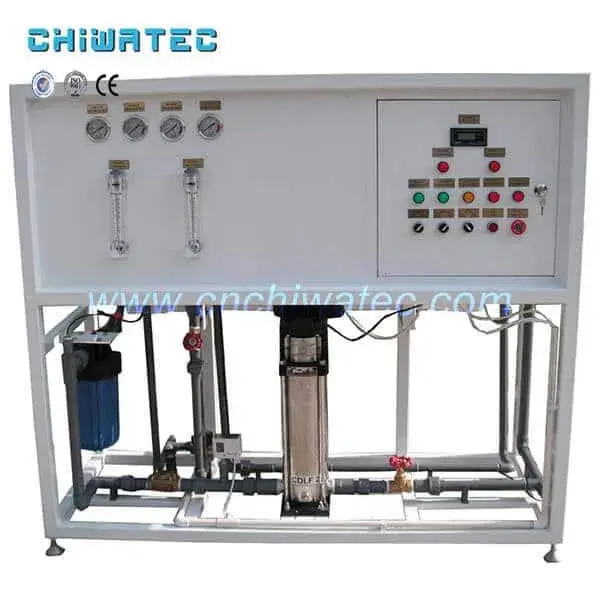
The RO membrane system is the heart of the water purification process. Key aspects of this stage include:
| Parameter | Typical Value / Description |
|---|---|
| Membrane Type | Thin-film composite (TFC) polyamide spiral wound |
| Salt Rejection | 95–99% for single pass; up to 99.5% for double pass |
| Operating Pressure | 10–15 bar (brackish water); 55–70 bar (seawater) |
| Recovery Rate | 50–85% depending on feed water quality |
| pH Range | 2–11 (continuous); optimal at 7–8 |
| Max Feed Temperature | 45°C (113°F) |
| Max Feed Turbidity | <1 NTU (SDI <5) |
RO membranes remove not only dissolved salts but also bacteria, viruses, and organic compounds through a combination of size exclusion and diffusion-based separation mechanisms.
Component Integration in the RO Water Purification System
A well-designed reverse osmosis water purification process integrates all components into a reliable, automated system. Key integration considerations include:
- Piping and valving: Properly sized interconnecting pipes with isolation valves for each vessel allow maintenance without system shutdown
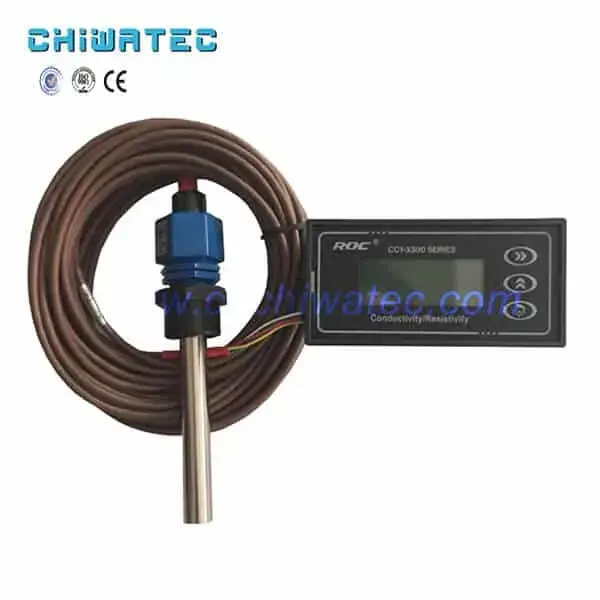
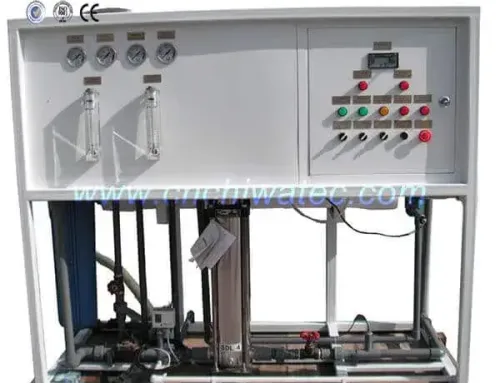
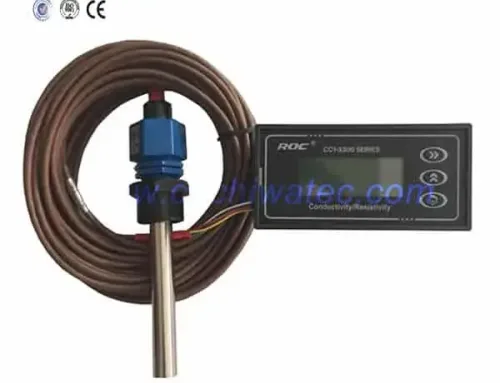
- Instrumentation: Pressure gauges before and after each filter, flow meters on feed-permeate-concentrate streams, and conductivity meters for real-time water quality monitoring
- Controls: PLC-based automatic control for start-up, operation, shutdown, and flushing sequences
- Skid mounting: Factory pre-assembled on a single frame for quick on-site installation and commissioning
Proper integration ensures that each component in the reverse osmosis water purification process operates within its design parameters for maximum efficiency and reliability.
Frequently Asked Questions
Q1: What is the reverse osmosis water purification process?
The reverse osmosis water purification process is a multi-stage treatment sequence: raw water storage → pump pressurization → multi-media filtration → activated carbon filtration → softening/antiscalant → precision filtration → RO membrane separation → product water. Each stage removes specific contaminants to produce high-purity water.
Q2: Why is activated carbon filtration needed before RO membranes?
Activated carbon removes free chlorine and chloramines that would damage thin-film composite RO membranes. It also reduces organic compounds (COD, THM) and improves taste, odor, and color. Without it, RO membrane life would be significantly shortened.
Q3: What happens if antiscalant is not added before RO membranes?
Without antiscalant or softening, sparingly soluble salts (CaCO3, CaSO4, BaSO4, SiO2) can precipitate on membrane surfaces, causing scaling. This reduces permeate flow, increases pressure drop, and can permanently damage membrane elements. The last membrane element in each vessel is most vulnerable.
Q4: What is the purpose of the precision filter before RO membranes?
The 5 um precision filter (cartridge filter) captures any residual particles, media fines, or colloids that may have passed through the multi-media and carbon filters. It protects the RO membranes from particulate fouling and ensures feed water SDI is below 5.
Q5: How often should RO system components be maintained?
Multi-media filters: backwash every 24–48 hours. Activated carbon: backwash every 48–72 hours; replace carbon every 1–3 years. Cartridge filters: replace every 3–6 months. RO membranes: clean every 3–6 months; replace every 3–5 years. Regular maintenance ensures optimal reverse osmosis water purification process performance.
Conclusion & Call to Action
The reverse osmosis water purification process involves a carefully designed sequence of treatment stages, each protecting and enhancing the performance of the next. From raw water intake through pretreatment to the RO membrane system, every component must be properly selected, integrated, and maintained to achieve reliable, high-purity water production. For customized reverse osmosis water purification process design and equipment supply, contact CHIWATEC today. Email us at [email protected] or [email protected] for a free consultation and project quotation.
Do you have a water treatment project we can help with
* Designing,machining,installing,commissioning, customize and one-stop service
 English
  Spanish
  Portuguese