Pure Water vs Ultrapure Water: Key Differences and Applications 2026
Understanding the distinction between pure water vs ultrapure water is essential for selecting the correct water quality for laboratory research, pharmaceutical production, electronics manufacturing, and industrial processes. While both terms refer to highly treated water, they differ significantly in purity levels, conductivity, resistivity, production complexity, and application suitability. This comprehensive guide explains the definitions, quality parameters, production methods, and practical differences to help you make an informed decision for your specific water quality requirements.
What Is Pure Water vs Ultrapure Water: Definition and Quality Standards
Pure water, also referred to as purified water, is water that has been mechanically filtered or processed to remove impurities, making it suitable for general laboratory and industrial use. According to global pharmacopoeia standards (USP, EP, JP), purified water has a conductivity of ≤ 5.1 µS/cm at 25 °C and total organic carbon (TOC) below 500 ppb. Common production methods include reverse osmosis (RO), distillation, and deionization.
Ultrapure water (UPW) represents the highest achievable water purity grade, starting from pure water and undergoing additional polishing steps. UPW has a resistivity of ≥ 18.2 MΩ·cm (close to the theoretical maximum of 18.25 MΩ·cm at 25 °C), conductivity below 0.056 µS/cm, TOC below 10 ppb (often below 3 ppb for critical applications), and bacterial counts below 1 CFU/mL. These stringent specifications make ultrapure water essential for semiconductor manufacturing, advanced pharmaceutical research, and analytical chemistry.
The fundamental difference lies in the impurity levels: pure water contains impurities at parts-per-million (ppm) levels, while ultrapure water maintains them at parts-per-billion (ppb) or even parts-per-trillion (ppt) levels.
How Pure Water Is Produced: Reverse Osmosis, Distillation, and Deionization
Pure water production typically employs one or more of the following methods:
| Method | Process | Typical Conductivity | Primary Application |
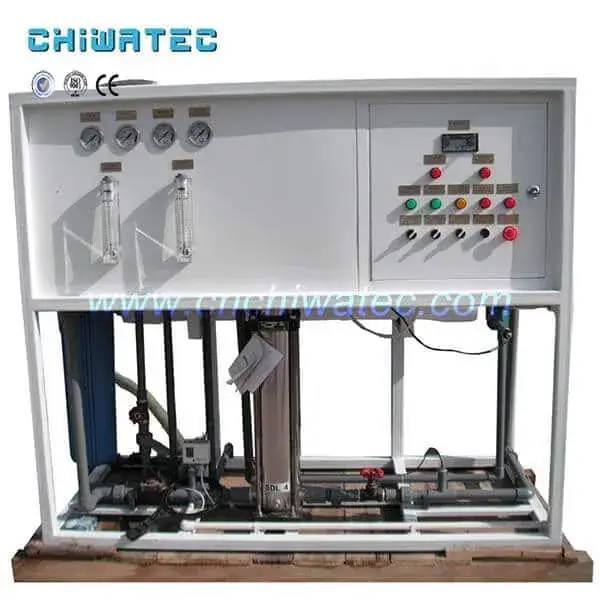
| Reverse Osmosis (RO) | Pressurized water passes through semipermeable membrane, removing 95-99% of dissolved salts | 2-20 µS/cm | General laboratory, industrial feed water |
| Distillation | Water is boiled; steam is condensed, leaving non-volatile impurities behind | 1-10 µS/cm | Pharmaceutical, laboratory |
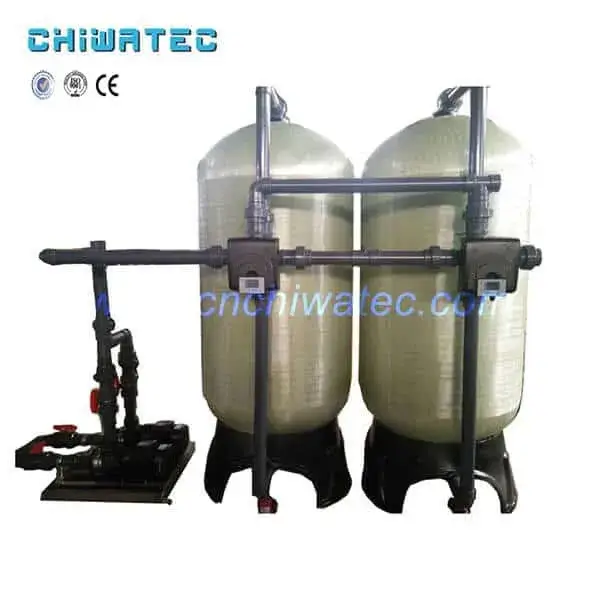
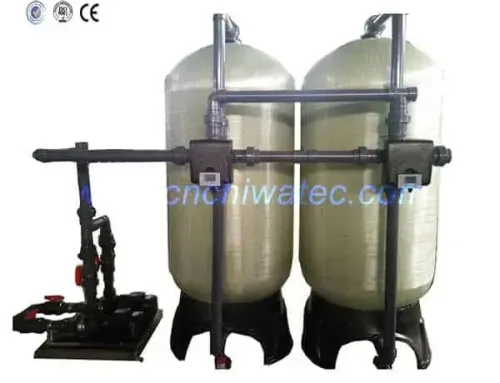
| Deionization (DI) | Ion exchange resins remove charged impurities (cations and anions) | 0.1-1 µS/cm | Electronics rinsing, battery production |
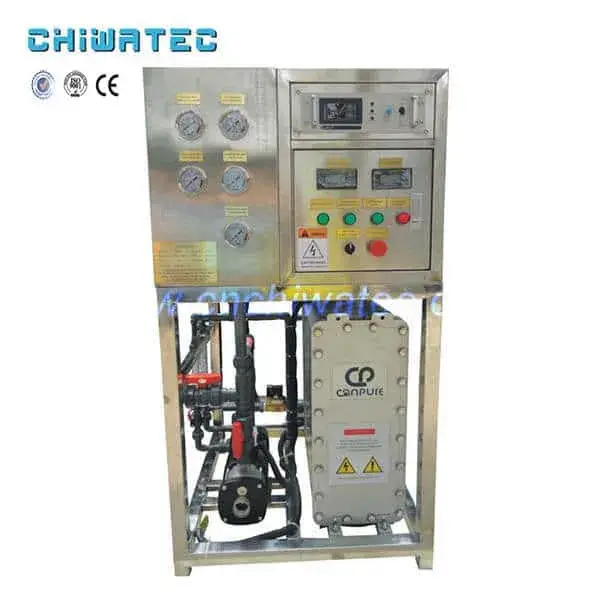
| Electrodeionization (EDI) | Continuous ion removal using ion exchange membranes and electric current | 0.1-0.5 µS/cm | High-purity industrial processes |
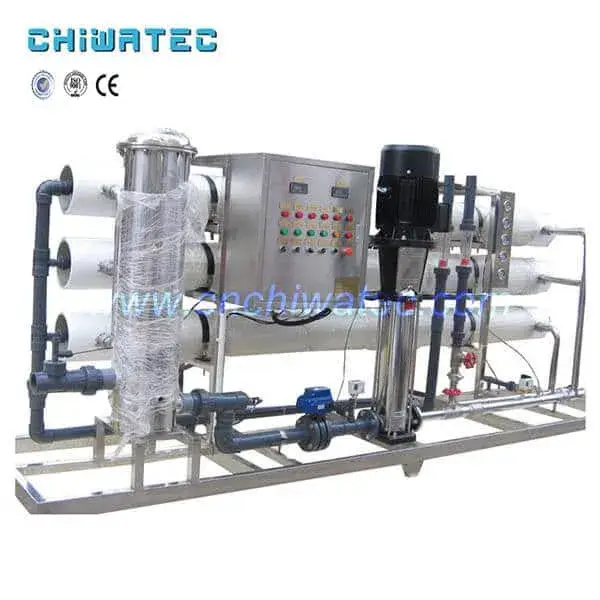
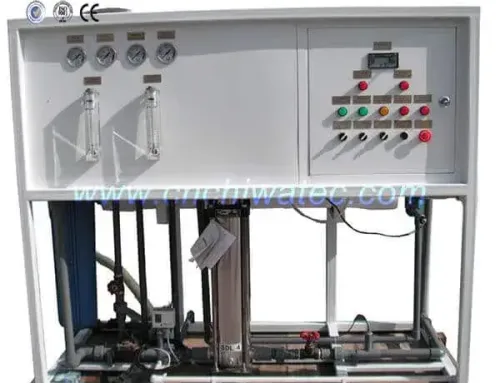
Many pure water systems combine RO with EDI or mixed-bed DI to achieve consistent purified water quality for ongoing operations.
How Ultrapure Water Is Produced: Advanced Polishing Technologies
Ultrapure water production builds upon pure water as feed, adding advanced polishing steps to remove trace contaminants to the lowest possible levels:
- UV Photo-Oxidation — 185 nm and 254 nm UV lamps break down organic compounds and reduce TOC to below 3 ppb while also disinfecting bacterial contaminants.
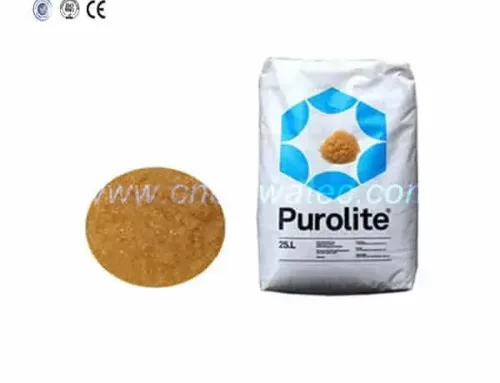
- Polishing Mixed-Bed Ion Exchange — High-purity mixed-bed resins remove residual ionic contaminants to achieve resistivity above 18.2 MΩ·cm.
- Submicron Filtration — 0.2 μm or 0.1 μm membrane filters remove particulate matter, bacteria, and endotoxins.
- Ultrafiltration (UF) — Hollow-fiber UF membranes remove pyrogens, colloids, and high-molecular-weight organics for critical pharmaceutical and clinical applications.
- Degassing — Membrane contactors remove dissolved gases (CO₂, O₂, N₂) that can affect sensitive analytical measurements.
These technologies are typically combined in a multi-stage process train tailored to the specific water quality requirements of the end application.
Pure Water vs Ultrapure Water: 5 Critical Differences Explained
The following comparison table summarizes the key differences between these two water quality grades:
| Parameter | Pure Water (Purified) | Ultrapure Water (UPW) |
| Conductivity | 2-10 µS/cm | ≤ 0.056 µS/cm |
| Resistivity | 0.1-0.5 MΩ·cm | ≥ 18.2 MΩ·cm |
| TOC (Total Organic Carbon) | < 500 ppb | < 10 ppb (often < 3 ppb) |
| Bacterial Count | < 100 CFU/mL | < 1 CFU/mL |
| Particle Count (0.2 μm) | Not specified or > 100 particles/mL | < 1 particle/mL |
| Impurity Level | Parts per million (ppm) | Parts per billion (ppb) to parts per trillion (ppt) |
| Production Complexity | Single-stage (RO, distillation, or DI) | Multi-stage (RO + polishing + UV + UF) |
| Piping Material Requirement | Standard PVC or stainless steel | PVDF, Teflon, or electrophished stainless steel |
| Cost per Liter | Low to moderate | High (10-50x pure water cost) |
These differences arise from the increasingly stringent quality standards required by different downstream applications.
Common Applications for Each Water Grade
Each water grade serves distinct application domains based on the required purity level:
| Industry | Pure Water Applications | Ultrapure Water Applications |
| Pharmaceutical | Cleaning, buffer preparation, water for injection feed | HPLC mobile phase, critical analytical testing |
| Semiconductor | General cleaning, cooling | Wafer rinsing, chemical dilution, photolithography |
| Laboratory | Glassware rinsing, media preparation | ICP-MS, LC-MS, DNA sequencing, cell culture |
| Power Generation | Cooling tower makeup, boiler feed | High-pressure boiler feed, nuclear reactor coolant |
| Electronics | PCB cleaning, plating solutions | LCD manufacturing, disk drive production |
The semiconductor industry is the largest consumer of ultrapure water, with a typical 300 mm wafer fabrication facility consuming 4,000-6,000 m³ of UPW per day, requiring rigorous quality monitoring and continuous system optimization.
Key Water Quality Parameters: Conductivity, Resistivity, and TOC
Understanding these three core parameters is essential for evaluating and maintaining water quality:
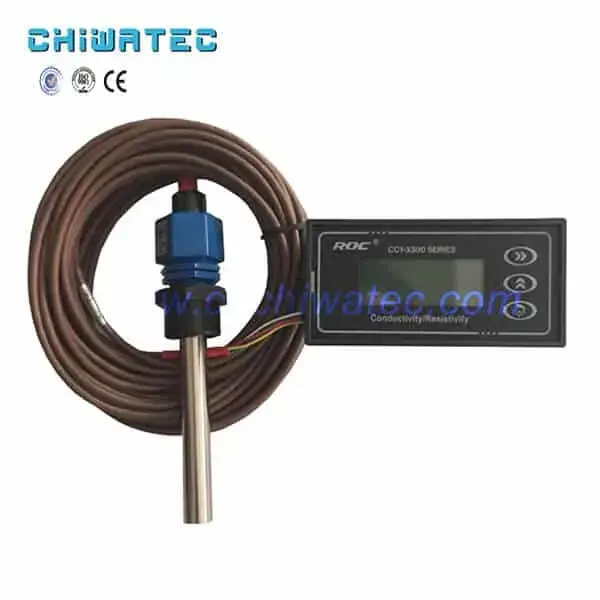
- Conductivity — Measures the ability of water to conduct electrical current, directly proportional to the concentration of dissolved ionic impurities. Pure water has conductivity of 2-10 µS/cm, while ultrapure water approaches the theoretical minimum of 0.055 µS/cm.
- Resistivity — The reciprocal of conductivity, expressed in MΩ·cm. Resistivity is the most commonly monitored parameter for ultrapure water quality, with ASTM D1193 requiring ≥ 18.0 MΩ·cm for Type I water.
- TOC (Total Organic Carbon) — Measures organic contaminants that can interfere with sensitive analytical techniques and biological applications. Ultrapure water systems use continuous TOC monitoring to ensure levels remain below the specified threshold.
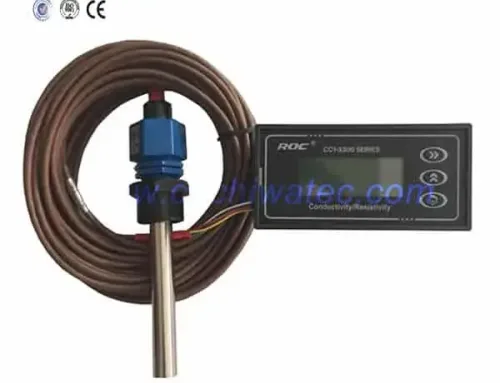
Many facilities now use online monitoring systems that track these parameters in real time, with automatic alarms and divert-to-drain mechanisms when quality falls below specification.
Frequently Asked Questions
Can ultrapure water be used instead of pure water?
While ultrapure water can substitute for pure water in most applications, it is often unnecessarily expensive. Using UPW for general cleaning or cooling can increase operating costs by 10-50 times without any measurable benefit. It is best practice to match water quality to the specific requirements of each application.
How long does ultrapure water remain ultrapure after production?
Ultrapure water degrades rapidly when exposed to the atmosphere. CO₂ absorption alone can drop resistivity from 18.2 MΩ·cm to below 1 MΩ·cm within minutes. Storage in plastic containers can introduce leachates that increase TOC. For critical applications, UPW should be used immediately or distributed through a recirculating loop with continuous polishing.
What is the difference between DI water and ultrapure water?
Deionized (DI) water has had ionic impurities removed through ion exchange, typically achieving resistivity of 1-10 MΩ·cm. Ultrapure water goes beyond deionization by also removing organic compounds, dissolved gases, particles, and microorganisms through UV oxidation, degassing, and ultrafiltration. All ultrapure water is deionized, but not all deionized water meets ultrapure standards.
Is distilled water the same as pure water?
Distilled water is a type of pure water produced through boiling and condensation. While distillation effectively removes non-volatile impurities, it may not remove volatile organics and gases as effectively as RO or EDI. Distilled water typically has conductivity of 1-10 µS/cm, placing it within the pure water category.
What water quality does the semiconductor industry require?
The semiconductor industry requires ultrapure water meeting SEMI F63 standards, with resistivity ≥ 18.2 MΩ·cm, TOC below 1 ppb, dissolved oxygen below 1 ppb, particles (≥ 0.05 μm) below 1,000 particles/L, and bacteria below 1 CFU/100 L. These stringent requirements demand multi-stage treatment systems with continuous online monitoring.
Conclusion and Call to Action
Choosing between pure water and ultrapure water depends on your specific application requirements, quality standards, and budget. CHIWATEC is a high-tech enterprise specialized in various water processing devices, covering a number of types and series, and also providing related comprehensive engineering projects. Our team can help you design, install, and maintain water purification systems matched to your exact specifications — from cost-effective pure water systems to full ultrapure water production trains with continuous quality monitoring.
Contact us today to discuss your water quality requirements:
Email: [email protected]
Email: [email protected]
Related Resources and Further Reading
- RO Pure Water Equipment System: Complete Guide to Reverse Osmosis Water Purification 2026
- Fundamentals of Reverse Osmosis Technology
- Process Flow and Equipment Characteristics of Reverse Osmosis Pure Water Equipment
- Purified Water, Pure Water, Soft Water: Key Differences
- RO Water Treatment Systems — Browse Products
Do you have a water treatment project we can help with
* Designing,machining,installing,commissioning, customize and one-stop service
 English
  Spanish
  Portuguese