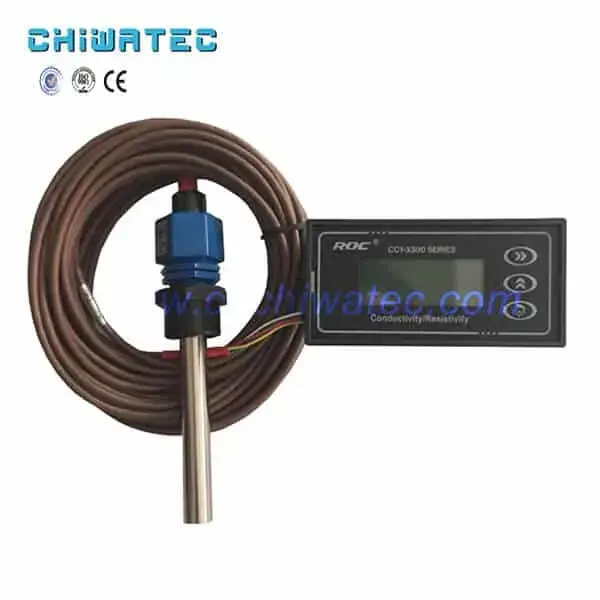
RO Pure Water Equipment System: Complete Guide to Reverse Osmosis Water Purification 2026
How does a reverse osmosis pure water equipment system work, and what applications does it serve across different industries? RO pure water equipment is the backbone of modern water purification, producing high-quality water for electronics manufacturing, pharmaceutical production, food and beverage processing, and countless other industrial applications. This comprehensive guide covers RO system principles, application scope across industries, key components, and selection criteria. Updated with 2026 industry data and standards.
* Last Updated: May 2026 | Industry-Verified Data
Why This Guide Matters
Reverse osmosis pure water equipment has become the standard technology for producing purified water across virtually every manufacturing industry. The global reverse osmosis membrane market was valued at approximately USD 3.5 billion in 2025 and is projected to reach USD 7.2 billion by 2034, growing at a CAGR of 8.3% (Grand View Research). RO technology accounts for over 60% of the world’s installed desalination capacity and is the primary pre-treatment technology for EDI and mixed bed polishing systems in ultrapure water production. Understanding RO pure water equipment systems — from basic principles to application-specific configurations — is essential for engineers, facility managers, and procurement professionals selecting water treatment solutions for their facilities.
Key Industry Trends (2026 Update)
- High-efficiency RO membranes: New thin-film composite membranes achieve 99.5% salt rejection at 30-40% lower pressure than traditional membranes, reducing energy consumption and enabling smaller pump and piping systems.
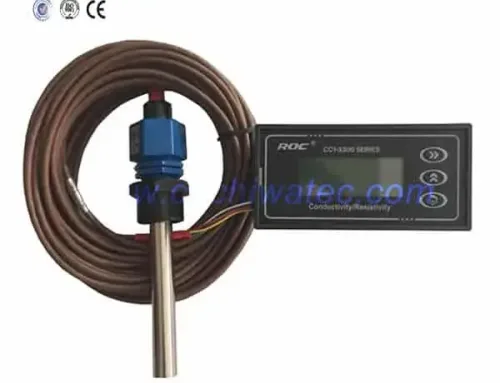
- Smart RO systems with IoT monitoring: Modern RO equipment integrates real-time conductivity monitoring, automated membrane flush cycles, predictive maintenance alerts, and remote control capabilities, reducing operator intervention by 40-60%.
- RO-EDI integration dominance: Over 80% of new ultrapure water systems for pharmaceutical and semiconductor applications now specify integrated RO + EDI configurations, replacing traditional RO + mixed bed designs.
- Water-efficient RO designs: Advanced RO system configurations with multiple-stage arrays and energy recovery devices achieve recovery rates of 85-92% for brackish water applications, reducing brine discharge volume by 30-50% compared to conventional single-stage designs.
1. What Is a Reverse Osmosis Pure Water Equipment System?
System Overview
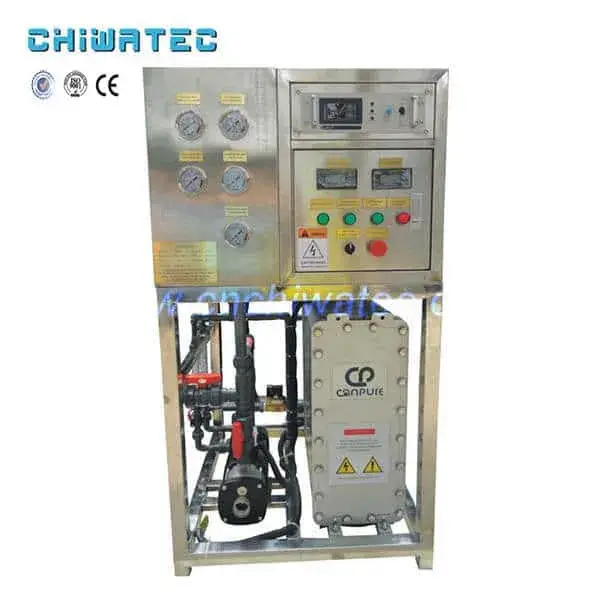
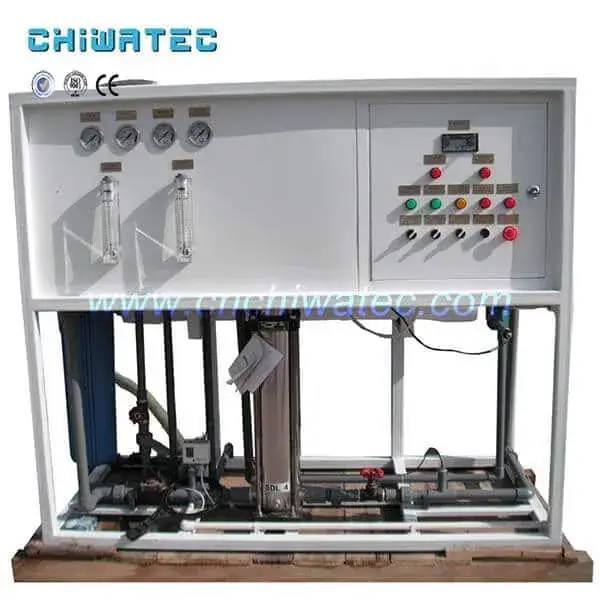
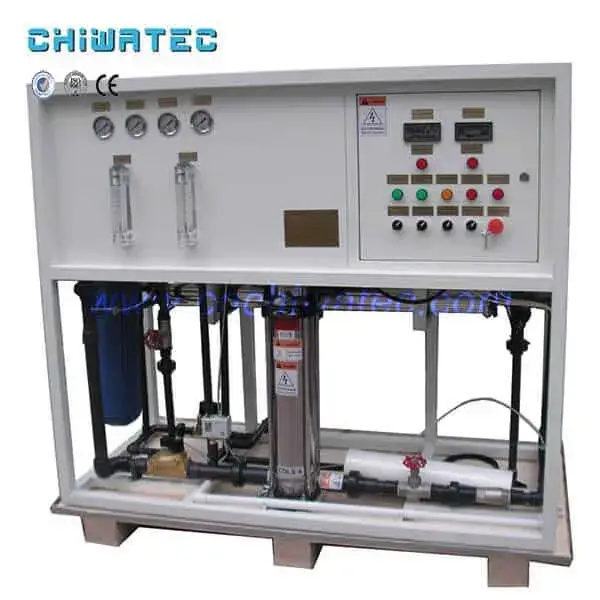
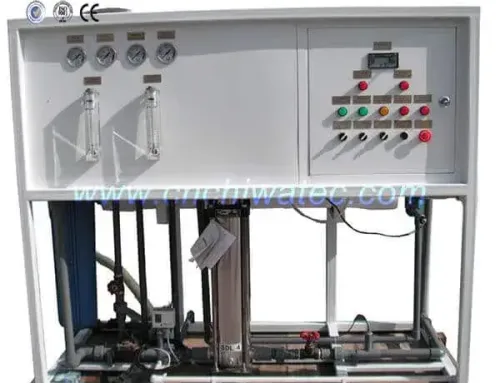
A reverse osmosis pure water equipment system is a complete water treatment system designed to produce high-purity water by forcing feed water through semi-permeable membranes under pressure. The system removes dissolved salts, organic compounds, bacteria, viruses, particles, and other contaminants, producing water with conductivity typically below 10-20 microsiemens per centimeter from tap water or brackish feed sources. A standard RO pure water system includes pre-treatment (multimedia filtration, carbon filtration, water softening, and cartridge filtration), high-pressure pumping, RO membrane array, post-treatment (pH adjustment, remineralization, UV sterilization), and a control system for automated operation.
The RO Separation Principle
The principle behind RO technology is straightforward: when pressure exceeding the feed water’s osmotic pressure is applied to the concentrated side of a semi-permeable membrane, water molecules pass through while dissolved contaminants are retained. For brackish water with TDS of 1,000-5,000 mg/L, operating pressures of 8-15 bar are required. For seawater with TDS of 35,000 mg/L, pressures of 50-80 bar are needed. The membrane itself is a thin-film composite (TFC) polymer, typically consisting of a polyamide active layer on a polysulfone support layer, with salt rejection rates exceeding 99% for modern commercial membranes.
2. What Are the Application Scopes of RO Pure Water Equipment?
Electronics and Semiconductor Industry
The electronics industry requires the highest purity water for manufacturing processes. RO pure water equipment serves as the primary purification step in ultrapure water systems for semiconductor wafer rinsing, printed circuit board (PCB) manufacturing, LCD panel production, and electronic component cleaning. RO removes 95-99% of dissolved solids from feed water, reducing the load on downstream EDI or mixed bed polishing systems. For 3nm and 2nm semiconductor fabrication, RO permeate conductivity must be maintained below 5 microsiemens per centimeter before final polishing to 18.2 MOhm-cm.
Pharmaceutical and Medical Applications
Pharmaceutical manufacturers use RO pure water systems to produce USP Purified Water and as pre-treatment for Water for Injection (WFI) systems. RO technology effectively removes endotoxins (bacterial pyrogens), microorganisms, and dissolved solids that could compromise drug quality. The pharmaceutical industry values RO for its reliable, consistent performance and compliance with cGMP (current Good Manufacturing Practice) requirements. For a comprehensive overview of drinking and process water treatment, see the drinking water treatment process flow and purification guide.
Food, Beverage, and Brewing
The food and beverage industry uses RO pure water equipment for various applications: producing consistent-quality water for soft drinks, juices, and bottled water; preparing process water for food canning and processing; and concentrating fruit juices, whey protein, and other liquid food products through RO membrane concentration. In the brewing industry, RO water allows precise control of mineral content in brewing water, enabling consistent beer flavor profiles across different batches. The reverse osmosis pure water in the brewing process provides detailed information on this specialized application.
Textile and Chemical Industry
Textile manufacturing uses large quantities of purified water for dyeing, finishing, and washing processes. RO-treated water improves dye uptake consistency, reduces defects in finished fabrics, and extends the life of dye baths. The chemical industry uses RO pure water for product formulation, catalyst preparation, and as process water for chemical reactions where water quality directly affects product yield and purity.
3. What Are the Key Components of an RO Pure Water Equipment System?
Pre-Treatment Section
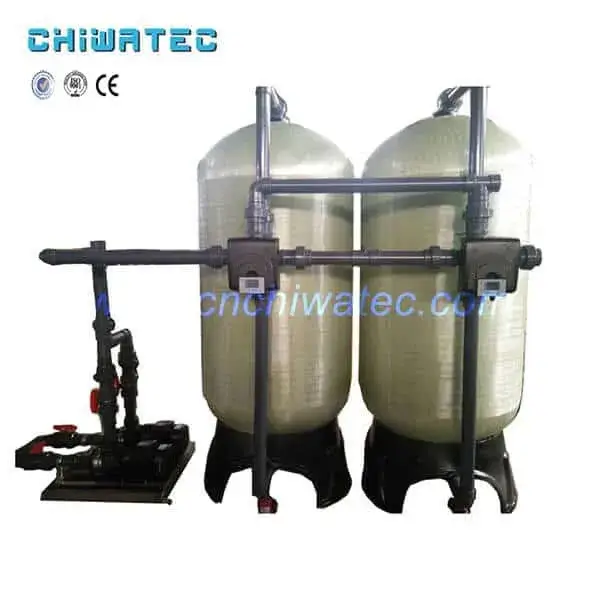
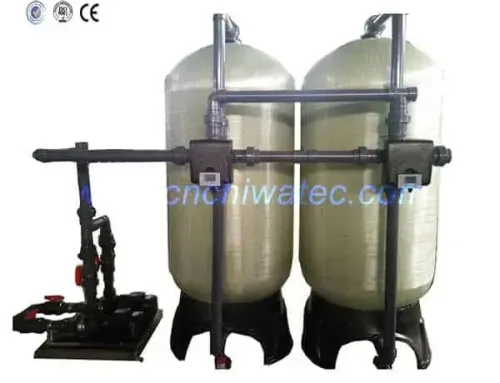
Proper pre-treatment is essential for reliable RO system operation. The standard pre-treatment train includes: PP cotton (polypropylene sediment filter) — removes suspended particles down to 5-10 microns; activated carbon filter — removes free chlorine, chloramines, organic compounds, and improves taste and odor; water softener — removes calcium and magnesium to prevent membrane scaling; antiscalant dosing — chemical injection that inhibits scale formation on membrane surfaces; and 5-micron cartridge filter — final safety barrier before the high-pressure pump. The specific pre-treatment configuration depends on feed water quality and should be designed based on a complete water analysis.
RO Membrane Array
The RO membrane array is the heart of the system. Standard configurations include: single-stage — feed water passes through one set of membrane elements, achieving 75-85% recovery for brackish water; two-stage — concentrate from the first stage becomes feed for the second stage, increasing overall recovery to 85-92%; multi-stage — used for high-recovery systems or when feed water TDS is very high. Membrane elements are typically 4-inch (2.5 m3/h capacity) or 8-inch (10-15 m3/h) diameter, arranged in series and parallel configurations in fiberglass-reinforced plastic pressure vessels. For proper installation procedures, refer to the essential conditions and procedures for installing reverse osmosis systems.
4. What Industries Benefit Most from RO Pure Water Technology?
Major Industry Segments
Beyond the primary applications mentioned above, RO pure water equipment serves many additional industries. Power generation — RO systems produce boiler feed water with conductivity below 0.1 microsiemens per centimeter for high-pressure steam cycles. Marine and offshore — compact RO systems provide fresh water from seawater for ships, oil platforms, and coastal facilities. Mining and metals — RO treats process water and enables water recycling in mineral processing operations. Municipal water supply — large-scale RO plants supplement freshwater supplies in water-stressed regions, treating brackish groundwater or surface water to drinking water standards.
Emerging Application Areas
New applications for RO pure water technology continue to emerge. The aquaculture industry uses RO to control water quality in recirculating aquaculture systems (RAS), where water reuse rates above 95% are achievable. Hydroponic farming relies on RO water to precisely control nutrient solution composition for optimized crop yields. The cosmetics industry uses RO purified water as the base for skincare and personal care products. For insights into water treatment advances in China, see the advancements of reverse osmosis technology in China.
5. How Does RO Compare to Other Water Purification Technologies?
RO vs. Ion Exchange
RO removes 95-99% of dissolved solids and also removes particles, bacteria, viruses, and organic compounds — capabilities that ion exchange alone cannot provide. However, RO requires higher capital investment, generates a continuous brine waste stream (15-25% of feed flow), and is less effective than mixed bed ion exchange at achieving the very lowest conductivity levels (below 0.1 microsiemens per centimeter). In practice, RO and ion exchange are complementary — RO is used for bulk contaminant removal, followed by ion exchange for final polishing.
RO vs. Distillation
RO consumes 80-90% less energy than distillation for equivalent water quality, making it the clear economic choice for most applications. Distillation achieves slightly higher purity (conductivity below 1 microsiemens per centimeter) but at 5-10 times the energy cost. RO also operates continuously, while distillation requires periodic maintenance for scale removal. For pharmaceutical WFI production, multiple-effect distillation or vapor compression distillation remain the regulatory gold standard in many markets, though RO-based WFI systems are gaining regulatory acceptance.
RO vs. Ultrafiltration/Microfiltration
UF and MF remove suspended solids, bacteria, and particles but do not remove dissolved salts. RO removes both particulate and dissolved contaminants. In many systems, UF serves as pre-treatment for RO, providing high-quality feed water that extends RO membrane life and reduces cleaning frequency.
6. How to Select the Right RO Pure Water Equipment System?
Capacity and Sizing
System capacity is determined by peak water demand, with the system typically sized at 1.2-1.5 times the expected average daily flow to allow for maintenance downtime. Small commercial systems range from 0.5-10 m3/day, industrial systems from 10-500 m3/day, and municipal systems can exceed 10,000 m3/day. The system should be designed with modular expandability where future capacity increases are anticipated.
Feed Water Quality and System Design
Feed water analysis is the foundation of proper system design. Key parameters that affect system configuration include: TDS level — determines number of stages and required operating pressure; hardness — above 100 mg/L as CaCO3 requires water softening or antiscalant; silica — above 20 mg/L limits system recovery to prevent scaling; iron/manganese — above 0.3 mg/L requires pre-treatment; TOC — high organic content requires enhanced pre-treatment; SDI (silt density index) — must be below 5 for reliable RO operation. For advanced arsenic and contaminant removal applications, see the advanced technologies for safe drinking water.
7. What Are the Key Performance Parameters for RO Systems?
Critical Operating Metrics
RO system performance is monitored through four key parameters: salt rejection — typically 97-99.5% for modern TFC membranes, calculated as (1 – permeate TDS/feed TDS) x 100%; recovery rate — percentage of feed water converted to product water, typically 70-85% for brackish water single-stage, 85-92% for two-stage; permeate flow rate — measures membrane productivity, typically 15-30 L/m2/h for brackish water membranes; differential pressure — the pressure drop across the membrane array, typically 1-3 bar for clean membranes. Normalized data trending over time reveals performance degradation that may require membrane cleaning.
Performance Monitoring and Normalization
Raw operating data must be normalized to standard conditions (25 degrees C, specified pressure) for meaningful trend analysis. Temperature normalization accounts for the 3% per degree C change in membrane water permeability. Pressure normalization accounts for variations in feed pressure. Most modern RO systems include control software that calculates normalized performance parameters automatically. A 10-15% decline in normalized permeate flow or a 10-15% increase in normalized salt passage indicates that membrane cleaning is required.
8. How to Operate and Maintain an RO Pure Water System?
Daily and Periodic Maintenance
Daily tasks: verify operating pressures, feed/permeate/concentrate flow rates, permeate conductivity, and temperature; record readings in an operating log. Weekly tasks: check chemical dosing levels (antiscalant, if used); inspect pre-filter pressure gauges; verify instrument calibration. Monthly tasks: replace cartridge pre-filters; check and clean conductivity sensors; test safety interlocks. Quarterly tasks: review normalized performance data and schedule membrane cleaning if indicated; sample and test feed water quality. Annual tasks: inspect high-pressure pump seals and bearings; calibrate all instruments; replace UV lamps (if installed); conduct comprehensive system audit. The reverse osmosis system operation and maintenance provides a complete operation and maintenance reference.
Membrane Cleaning Protocols
RO membranes require chemical cleaning when normalized permeate flow declines by 10-15%, normalized salt passage increases by 10-15%, or differential pressure increases by 15% from baseline. The cleaning protocol depends on foulant type: acid cleaning (citric acid at pH 2-3) removes inorganic scales (calcium carbonate, calcium sulfate, iron hydroxide); alkaline cleaning (sodium hydroxide at pH 11-12) removes organic fouling, biofilms, and silica. Cleaning is performed at low pressure (below 4 bar) and high crossflow (1.5 times normal concentrate flow) for 30-60 minutes per cleaning cycle, followed by freshwater rinsing until neutral pH.
9. What Are Common RO System Problems and Troubleshooting Tips?
High Differential Pressure
Increasing pressure drop across the membrane indicates fouling. Particulate fouling from inadequate pre-treatment typically affects the first-stage membrane elements. Biological fouling (biofilm growth) occurs most frequently in warm feed water conditions above 25 degrees C. Scale formation affects the last-stage elements where salt concentrations are highest. The specific fouling pattern helps identify the root cause — front-end fouling suggests particulate issues, while back-end fouling suggests scaling. Understanding the risks of concentration polarization is critical — see the dangers of reverse osmosis concentration polarization for detailed analysis.
High Permeate Conductivity
Elevated salt passage can result from: membrane damage from chlorine exposure (most common cause of premature membrane failure), O-ring seal leaks at membrane interconnections, glue line failures in membrane elements, or operation at too low pressure. A step-by-step diagnostic approach: check O-rings first (replacing them resolves 30-50% of high-conductivity issues), verify feed water chlorine levels, check operating pressure against design specifications, and perform a probe test to identify the affected membrane element.
10. What Is the Future of RO Pure Water Equipment Technology?
Membrane Technology Advances
Next-generation RO membranes under development include: graphene oxide membranes — offering 3-5 times higher water permeability than current TFC membranes with equivalent salt rejection; biomimetic aquaporin membranes — incorporating water channel proteins for highly selective water transport; low-fouling surface modification — hydrophilic and anti-microbial membrane coatings that reduce cleaning frequency by 50-75%; and chlorine-resistant membranes — enabling direct chlorinated feed water operation without dechlorination pre-treatment.
System Integration and Decentralization
The trend in RO pure water equipment is toward fully integrated, containerized systems that include all pre-treatment, RO, post-treatment, and control components in a single skid or shipping container footprint. These systems feature plug-and-play installation, factory-tested performance, and remote monitoring capabilities. Small-scale decentralized RO systems powered by renewable energy are making purified water accessible in remote and developing regions, with levelized water costs declining by over 50% in the past decade. The mineral water equipment process provides additional information on specialized water equipment configurations.
Conclusion
Reverse osmosis pure water equipment systems are essential technology across electronics, pharmaceutical, food and beverage, textile, chemical, and countless other industries. Understanding the system components, application scope, selection criteria, and maintenance requirements enables engineers and facility managers to choose, operate, and maintain the optimal RO system for their specific needs. With continuing advances in membrane technology, smart monitoring, system integration, and energy efficiency, RO pure water equipment will remain the cornerstone of industrial water purification for decades to come.
For expert assistance in designing, installing, or maintaining an RO pure water equipment system for your specific application, contact CHIWATEC today at [email protected] or [email protected] or via WhatsApp at 008618292684865. CHIWATEC provides comprehensive water treatment solutions including design, machining, installation, commissioning, and customized one-stop service for RO and water purification systems worldwide.
Frequently Asked Questions
Q1: What is the difference between RO pure water and distilled water?
RO pure water is produced by membrane filtration, removing 95-99% of dissolved solids through a semi-permeable membrane under pressure. Distilled water is produced by boiling and condensing water vapor, achieving slightly higher purity (conductivity below 1 microsiemens per centimeter) but consuming 5-10 times more energy. RO is more economical for most applications, while distillation is preferred for pharmaceutical WFI production in some regulatory frameworks.
Q2: How often should RO membranes be replaced?
With proper pre-treatment and maintenance, RO membranes typically last 3-5 years. Factors that extend membrane life include: effective pre-treatment, operation within design parameters, regular cleaning when indicated by performance data, and protection from chlorine. Signs that replacement is needed include: inability to achieve target permeate flow at design pressure, salt rejection below 95%, or high pressure differential that cannot be restored by cleaning.
Q3: What industries use RO pure water equipment?
Major industries include electronics and semiconductor (wafer rinsing, PCB manufacturing), pharmaceutical (USP Purified Water, WFI pre-treatment), food and beverage (bottled water, brewing, process water), textile (dyeing, finishing), chemical (product formulation), power generation (boiler feed water), mining and metals, marine, aquaculture, and cosmetics. RO is also increasingly used for municipal water supply in water-stressed regions.
Q4: How much maintenance does an RO system require?
RO systems require relatively moderate maintenance: daily log sheet review (10-15 minutes), weekly inspection (30 minutes), monthly pre-filter replacement (30 minutes), quarterly performance review and potential cleaning (2-4 hours), and annual comprehensive inspection (8 hours). Modern smart RO systems with automated flush cycles and remote monitoring significantly reduce operator time requirements.
Q5: What is the cost range for RO pure water equipment?
Small commercial RO systems (0.5-5 m3/day) range from USD 2,000-15,000. Medium industrial systems (10-100 m3/day) range from USD 20,000-200,000. Large industrial and municipal systems (100-10,000+ m3/day) range from USD 200,000 to several million dollars. Operating costs are typically USD 0.20-0.80 per m3 of product water, including energy, chemicals, membrane replacement, and maintenance.
Related Resources and Further Reading
- Complete Guide to Reverse Osmosis System Operation and Maintenance
- Essential Conditions and Procedures for Installing Reverse Osmosis Systems
- The Dangers of Reverse Osmosis Concentration Polarization
- Drinking Water Treatment Process Flow — Water Purification Guide
- Advancements of Reverse Osmosis Technology in China
Do you have a water treatment project we can help with
* Designing,machining,installing,commissioning, customize and one-stop service
 English
  Spanish
  Portuguese