Water Softening Equipment Installation Requirements: Complete 2026 Guide
Water softening equipment installation requires careful attention to technical specifications, site preparation, and plumbing connections to ensure optimal water softener system performance and longevity. With nearly 500,000 industrial boilers operating globally and water quality-related accident rates reaching 25% in poorly maintained systems, proper water softening equipment installation has become critical for preventing scale formation, extending equipment lifespan, and ensuring safe operation. This comprehensive guide covers essential installation requirements for water softening systems, from technical indicators to design selection and on-site implementation.
According to 2025 industry data, the global water softener installation market reached $18.7 billion, with residential and commercial water softening equipment installations growing 9.3% annually. Proper installation practices reduce maintenance costs by 40% and extend system lifespan by 5-7 years compared to poorly installed units.
Why Proper Water Softening Equipment Installation Matters
Water quality directly impacts boiler safety and efficiency. Comprehensive analysis of boiler accidents reveals that improper water treatment equipment installation and operator training gaps contribute to 25% of water quality-related failures. While improving operator skills helps, the most effective solution lies in selecting and properly installing simple, reliable water softening equipment with high automation levels.
Modern water softener systems must meet stringent requirements: consistent water quality output, stable and reliable operation, high automation degree, economic operation, and strong adaptability to varying raw water conditions.
Equipment Technical Indicators and Specifications
Understanding technical specifications is fundamental for proper water softening equipment installation. These indicators ensure system compatibility with your facility’s requirements.
Core Performance Parameters
| Parameter | Specification | Notes |
|---|---|---|
| Raw Water Hardness | <12 mmol/L | Declare in advance if >8 mmol/L |
| Outlet Water Hardness | <0.03 mmol/L | Meets GB1576-2001 Low Pressure Boiler Water Quality Standard |
| Working Water Pressure | 0.20-0.5 MPa | 2-5 bar (29-73 PSI) |
| Working Voltage | AC 220V, 50Hz | Standard single-phase power |
| Working Temperature | 0-50°C | 32-122°F |
| Raw Water Turbidity | <5 NTU | Install pre-filter for high sand content |
| Salt Consumption | <100 g/mol | Varies with raw water hardness |
| Water Consumption | ~2% | For regeneration and backwash |
| Power Consumption | <30W | Low energy controller |
Design Selection Guide for Water Softening Equipment
Proper equipment selection ensures optimal performance and cost-effectiveness for your specific application.
Equipment Selection Criteria
Water softening equipment selection primarily considers three factors: water demand, raw water hardness, and applicable occasions.
1. Water Output Capacity: Multiple equipment models offer identical water output ratings. Select based on actual water consumption patterns, peak demand periods, and future expansion needs.
2. Raw Water Hardness Considerations:
- Hardness ≤3 mmol/L: Time control type systems suitable. Select based on maximum equipment water output capacity.
- Hardness ≤6 mmol/L: Select model according to maximum water production capacity with standard regeneration cycles.
- Hardness ≤8 mmol/L: Choose based on average water production capacity, accounting for reduced exchange capacity.
- Hardness 8-10 mmol/L: Calculate using minimum water production capacity or implement multi-level treatment systems.
- Hardness ≥10 mmol/L: Multi-stage treatment mandatory. Generally, two-stage treatment meets requirements for most applications.
3. Water Use Application:
- Hot Water Boilers: Select model based on highest water production capacity requirements.
- Steam Boilers: Match equipment water production capacity to 1.2× boiler evaporation capacity for adequate supply.
Design and Installation Requirements
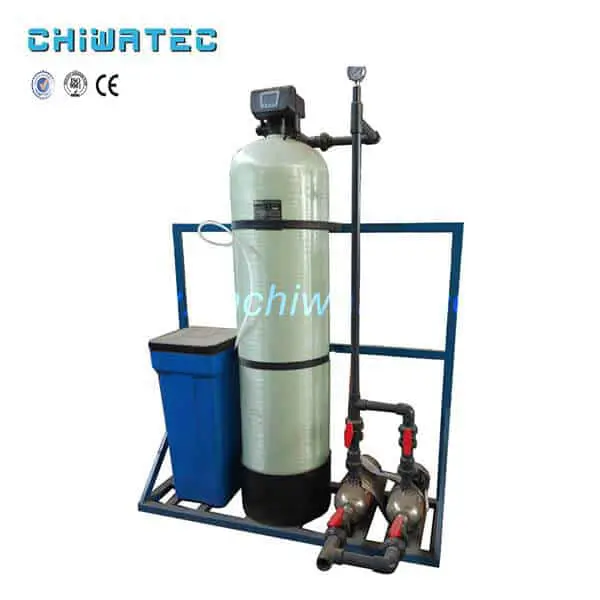
Modern water softening equipment features simple structure and compact footprint, minimizing special installation requirements. However, attention to key installation points ensures reliable operation.
Site Preparation Requirements
Foundation Requirements: Equipment requires simple level horizontal foundation. Concrete pad or reinforced flooring sufficient for most installations.
Clearance Specifications:
- Minimum distance from walls: 250-450mm for maintenance access
- Corner placement acceptable based on site conditions
- Adequate overhead clearance for resin loading and component removal
- Ensure proper ventilation in enclosed spaces
Load Considerations: Equipment itself relatively lightweight. Primary structural concerns involve resin and water weight when tank is full. Calculate total loaded weight for floor loading verification.
Plumbing Connection Requirements
Inlet/Outlet Piping:
- Standard flange or threaded connections per equipment specifications
- Pipes must be independently fixed and supported
- Never rely on valve body for pipe support—prevents stress damage
- Install isolation valves for maintenance convenience
- Include bypass loop for continuous water supply during service
Pressure Monitoring: Install water pressure gauge on inlet pipe for operational monitoring and troubleshooting.
Drainage Requirements:
- Floor drain or drainage ditch required near equipment for regeneration discharge
- Adequate slope for proper drainage flow
Brine System Installation
Brine Tank Placement: Position brine tank as close as possible to softening tank. Minimize brine pipe length for optimal suction performance and reduced priming issues.
Brine Line Specifications:
- Use rigid or reinforced tubing to prevent collapse under vacuum
- Minimize elbows and fittings
- Ensure airtight connections to prevent air leaks
- Install brine valve per manufacturer specifications
Drain Line Requirements
Critical Drain Specifications:
- Maximum Length: Drain pipe should not exceed 6 meters
- No Shut-off Valves: Never install valves on drain line—prevents backpressure damage
- Height Restriction: Drain outlet must not be higher than valve body drain port
- Open Terminal: Drain must terminate with air gap to prevent siphoning
- Minimal Elbows: Use fewest possible elbows to reduce flow restriction
- Pipe Sizing: Match or exceed valve drain port diameter (typically ¾” or 1″)
Electrical Requirements
Power Supply Installation:
- Install grounded electrical outlet on wall near equipment
- Circuit should include appropriate fuse or circuit breaker protection
- Avoid switches that could be accidentally turned off
- Ensure proper grounding per local electrical codes
- Consider dedicated circuit for larger commercial systems
- GFCI protection recommended for wet locations
Scope of Supply and Component Overview
Understanding equipment supply scope clarifies installation responsibilities and required materials.
Standard Equipment Supply Includes:
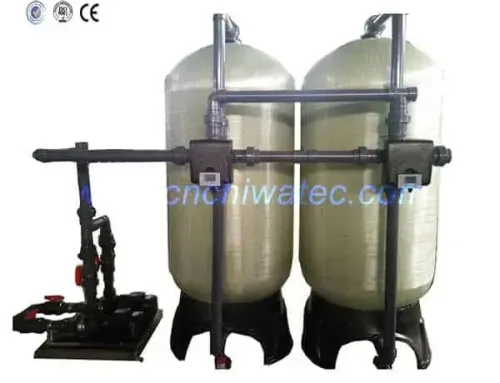
- Multi-way Valve Body: Autotrol, Fleck, or Runxin professional control valves
- Electronic Controller: Programmable timer or demand-initiated regeneration (DIR) controller
- Solenoid Valves: For automated flow control (some models exclude outlet solenoid)
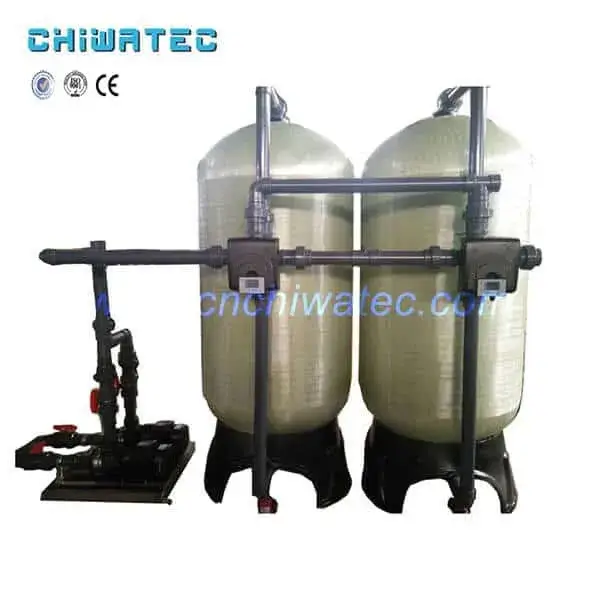
- Resin Tank: Fiberglass or stainless steel pressure vessel
- Brine Tank: Salt storage and brine preparation vessel
- Brine Well & Salt Valve: Internal brine system components
- Main Pipe Fittings: Connection hardware for installation
Note: Standard equipment typically excludes ion exchange resin. Resin must be ordered separately based on water quality and capacity requirements. Refer to installation manual drawings for complete assembly details.
On-Site Installation Requirements and User Responsibilities
Automatic water softening equipment features simple system architecture requiring minimal on-site assembly. However, successful installation requires cooperation between installer and facility owner.
User/Installer Responsibilities:
Water Supply Requirements:
- Ensure adequate and consistent water pressure (0.2-0.5 MPa)
- Install inlet pressure gauge for monitoring
- Verify suspended solids content meets water softener requirements (<5 NTU)
- Install pre-filter if inlet water has high suspended solids or sediment
Power Supply: Provide appropriate electrical supply matching equipment voltage requirements (typically 220V/50Hz or 110V/60Hz).
Foundation: Prepare level horizontal foundation capable of supporting fully loaded equipment weight.
Drainage: Ensure adequate floor drainage capacity for regeneration discharge volumes.
2026 Installation Trends and Best Practices
The water softening equipment installation industry continues evolving with enhanced standards and technologies:
- Smart Installation: IoT-enabled systems with remote commissioning, automatic configuration, and cloud-based performance monitoring
- Quick-Connect Fittings: Push-fit connections reducing installation time by 40%
- Compact Designs: Cabinet-style systems requiring 50% less floor space
- High-Efficiency Valves: Next-generation control valves with 30% reduced water consumption during regeneration
- Professional Certification: 2025 WQA (Water Quality Association) installation certification now required in many jurisdictions
Industry data shows professionally installed water softener systems achieve 95% customer satisfaction versus 67% for DIY installations, with 60% fewer service calls in first two years.
Conclusion
Proper water softening equipment installation is fundamental to achieving reliable water treatment performance, regulatory compliance, and long-term operational efficiency. From understanding technical indicators and equipment selection to executing precise plumbing connections and electrical wiring, each installation requirement serves a critical purpose in ensuring system reliability and water quality.
Whether installing water softening equipment for residential, commercial, or industrial applications, following these comprehensive installation requirements enables optimal system performance, minimizes maintenance needs, and maximizes equipment lifespan. Professional installation by certified technicians remains recommended for complex applications and jurisdictions requiring compliance certification.
As water softening technology advances with smart features and improved efficiency, staying current with installation requirements and best practices remains essential for optimal water treatment outcomes.
FAQ
1. What water pressure is required for water softening equipment installation?
Optimal working water pressure ranges from 0.20-0.5 MPa (2-5 bar or 29-73 PSI). Pressures below 0.2 MPa may cause inadequate regeneration and poor performance. Pressures exceeding 0.5 MPa require pressure-reducing valves to protect equipment components.
2. How close must the brine tank be to the softening tank?
Position brine tank as close as possible to softening tank—ideally within 1-2 meters. Shorter brine lines improve suction performance, reduce priming issues, and minimize potential air leaks. Maximum recommended distance is 5 meters with proper tubing sizing.
3. What are the drain line requirements for water softeners?
Drain lines must not exceed 6 meters in length, cannot include shut-off valves, must not rise above valve body drain port, and must terminate with an air gap to prevent siphoning. Use minimal elbows and match pipe diameter to valve drain port (typically ¾” or 1″).
4. When is multi-stage water softening treatment required?
Multi-stage treatment becomes mandatory when raw water hardness exceeds 10 mmol/L. For hardness 8-10 mmol/L, multi-level systems are recommended. Two-stage treatment generally meets requirements for most high-hardness applications, producing outlet hardness <0.03 mmol/L.
5. What electrical requirements apply to water softener installation?
Standard systems require AC 220V/50Hz (or 110V/60Hz in North America) with proper grounding. Install grounded outlet near equipment with fuse or circuit breaker protection. Avoid switches that could be accidentally turned off. GFCI protection recommended for wet locations per electrical codes.
Do you have a water treatment project we can help with
* Designing,machining,installing,commissioning, customize and one-stop service

 English
  Spanish
  Portuguese