

Industrial Wastewater Treatment Operating Conditions 2026: 4 Key Operational Guidelines
Proper operation of industrial wastewater treatment equipment is essential for maintaining treatment efficiency, protecting equipment, and ensuring regulatory compliance. The industrial wastewater treatment operating conditions — including pumping volume balance, sump water level management, start/stop frequency control, and uniform equipment operation — directly affect system reliability and energy consumption. This article outlines four critical operating conditions that every operator should follow to maximize equipment lifespan, minimize energy costs, and prevent system upsets in industrial wastewater treatment plants.
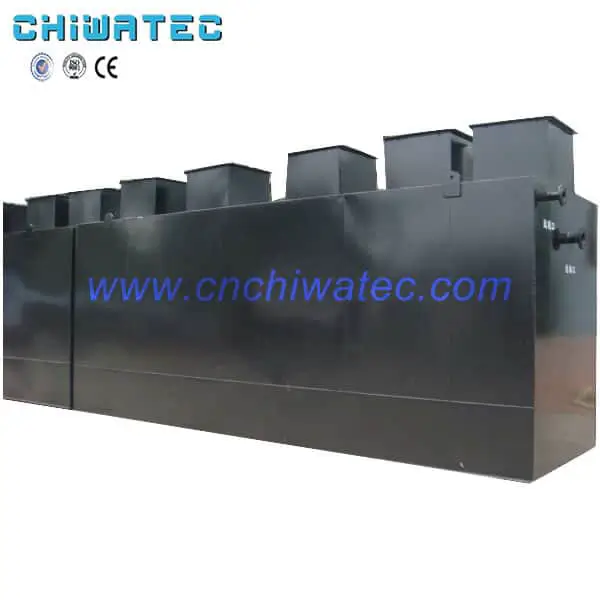
Key Industrial Wastewater Treatment Operating Conditions
| Operating Condition | Requirement | Consequence of Non-Compliance |
| Inflow vs. Pumping Balance | Incoming water volume ≤ pumping capacity | Flooding, sewer backflow, equipment damage |
| Sump Water Level | Maintain high operating level | Reduced pump efficiency, increased energy consumption |
| Start/Stop Frequency | Minimize frequent cycling | Motor overheating, reduced service life |
| Equipment Run Time Uniformity | Balance runtime across all units | Uneven wear, reduced system reliability |
Maintaining Inflow and Pumping Balance in Industrial Wastewater Treatment
The most fundamental industrial wastewater treatment operating condition is ensuring that the incoming water volume matches the pumping capacity. When inflow exceeds pumping capacity without adequate overflow measures upstream, several problems can occur:
- Flooding of bubble grids and aeration systems, which can cause mechanical damage and biological treatment upsets
- Sewer backflow in low-lying urban areas, creating sanitary hazards and potential fines
- Equipment damage from operating under submerged or overloaded conditions
To prevent these issues, install flow monitoring at the inlet and use adjustable-frequency drive (AFD) pumps that can match variable inflow rates. Equally important, ensure that upstream bypass or overflow systems are functional and properly maintained for high-flow events.
Sump Water Level Management for Optimal Industrial Wastewater Treatment
The sump (wet well) should be maintained at a high operating water level whenever possible. This industrial wastewater treatment operating condition provides two key benefits:
- Reduced pump lift: A higher sump water level means the pump has less vertical distance to lift the wastewater, directly reducing energy consumption.
- Improved pump efficiency: Pumps operating at lower total dynamic head (TDH) consume less power and experience less mechanical stress.
The high water level strategy must be balanced against the need for adequate wet well volume to buffer peak flows. A level sensor with multiple set points can automatically adjust pump operation to maintain the optimal balance between energy efficiency and hydraulic capacity.
Practical guideline: Program the pump start level at 70-80% of sump height and the stop level at 20-30%, leaving sufficient volume for peak flow buffering.
Start/Stop Frequency Control for Industrial Wastewater Treatment Equipment
Frequent starting and stopping of pumps and other rotating equipment is a common cause of premature failure in industrial wastewater treatment systems. Each start cycle subjects motors to:
- Inrush current — up to 6-8 times the running current, causing thermal stress on windings
- Mechanical shock — to bearings, couplings, and seals
- Accelerated wear — on contactors, circuit breakers, and motor starters
This industrial wastewater treatment operating condition requires operators to:
- Limit starts to no more than 4-6 per hour for standard induction motors (consult manufacturer specifications)
- Use soft starters or variable frequency drives (VFDs) to reduce inrush current during startup
- Adjust sump level set points to increase the volume between start and stop levels, reducing cycling frequency
Uniform Equipment Operation in Industrial Wastewater Treatment
Finally, the operation time of each treatment unit should be distributed as evenly as possible. This industrial wastewater treatment operating condition is based on the fact that each pump’s suction port corresponds to a specific volume zone within the sump.
Benefits of balanced operation:
- Even wear distribution: All units experience similar operating hours, preventing one unit from failing prematurely
- Consistent solids handling: Each zone of the sump receives adequate mixing and prevents solids accumulation in dead zones
- Redundancy preservation: If one unit requires maintenance, the others have been exercised regularly and are ready to handle the load
Implement a lead/lag rotation strategy in the control system that alternates which pump starts first on each cycle. Most modern PLC-based control systems support automatic pump rotation based on run-time hours.
Frequently Asked Questions
Why is it important to balance inflow and pumping in industrial wastewater treatment?
Imbalance can cause flooding of treatment units, sewer backflow, and equipment damage. It also reduces treatment efficiency by causing hydraulic surges that disrupt biological and physical treatment processes.
What is the optimal sump water level for energy efficiency?
Maintain the sump at 70-80% of its height during normal operation. This minimizes pump lift and energy consumption while retaining sufficient volume for peak flow buffering.
How often should industrial wastewater pumps start and stop?
Limit starts to 4-6 per hour for standard motors. More frequent cycling causes motor overheating and mechanical wear. Use VFDs or soft starters to reduce start-up stress.
What is pump lead/lag rotation and why does it matter?
Lead/lag rotation alternates which pump starts first on each cycle, ensuring all pumps accumulate similar operating hours. This prevents uneven wear and extends the overall system life.
How can I monitor industrial wastewater treatment operating conditions?
Install flow meters, level sensors, run-time meters, and current monitors on each pump. Connect these to a PLC or SCADA system that logs data and alerts operators when parameters deviate from set points.
Conclusion and Call to Action
Following proper industrial wastewater treatment operating conditions — inflow-pumping balance, high sump water level, controlled start/stop frequency, and uniform equipment runtime — is essential for reliable and cost-effective wastewater treatment. These four operating principles reduce energy consumption, extend equipment life, and prevent system upsets that can lead to environmental violations and costly repairs. CHIWATEC designs and supplies industrial wastewater treatment equipment with intelligent control systems that automatically maintain optimal operating conditions.
For expert assistance with industrial wastewater treatment equipment selection, installation, or operation, contact us at [email protected] or [email protected]. Let CHIWATEC help you optimize your wastewater treatment plant performance.
Do you have a water treatment project we can help with
* Designing,machining,installing,commissioning, customize and one-stop service






 English
  Spanish
  Portuguese




