Lead-Containing Wastewater Treatment: Common Methods for Industrial Water Filters 2026
Lead is a toxic heavy metal widely used in battery manufacturing, electroplating, paint, rubber, pesticides, lead glass, and explosives production. Lead-containing wastewater — with concentrations ranging from 20 to 200+ mg/L and pH as low as <3 — poses severe environmental and health risks if discharged untreated. Effective lead-containing wastewater treatment requires a combination of chemical precipitation, coagulation, adsorption, electrochemical oxidation, and biological methods. This guide covers each method’s principles, operating parameters, advantages, and limitations for industrial applications.
Sources and Characteristics of Lead-Containing Wastewater
Lead enters industrial wastewater from multiple sources, each with distinct characteristics that influence treatment selection:
| Industry | Lead Source | Typical Concentration | pH Range |
| Battery manufacturing | Lead plate production, paste mixing | 50–200 mg/L | <3 (acidic) |
| Electroplating | Plating bath dumping, rinse water | 20–100 mg/L | 2–5 |
| Paint and pigment | Lead-based pigment washing | 10–50 mg/L | 5–8 |
| Lead glass manufacturing | Polishing and cutting wastewater | 5–30 mg/L | 6–8 |
| Tetraethyl lead production | Organic lead compound processing | 10–100 mg/L (organic Pb) | 4–7 |
Most industrial lead exists in inorganic form (Pb²⁺), but the tetraethyl lead industry produces high concentrations of organic lead compounds, which are significantly more difficult to treat using conventional precipitation methods.
Chemical Precipitation for Lead-Containing Wastewater Treatment
Chemical precipitation is the most widely used method for lead-containing wastewater treatment. Lead ions (Pb²⁺) are converted to insoluble lead hydroxide, carbonate, or sulfide precipitates by adjusting pH and adding specific reagents:
Hydroxide Precipitation
Adding lime (Ca(OH)₂) or caustic soda (NaOH) raises the pH to 9.0–10.5, where Pb²⁺ precipitates as Pb(OH)₂ (solubility product Ksp = 1.2×10⁻¹⁵). At pH 9.5, residual lead concentration can be reduced to <0.5 mg/L. However, if the wastewater contains complexing agents (ammonia, EDTA, citrate), higher pH or alternative methods may be required.
Sulfide Precipitation
Sodium sulfide (Na₂S) or ferrous sulfide (FeS) precipitates lead as PbS (Ksp = 8×10⁻²⁸), which is several orders of magnitude less soluble than Pb(OH)₂. Sulfide precipitation achieves lower residual lead levels (<0.05 mg/L) and is effective across a wider pH range (3–10). However, excess sulfide must be carefully controlled to avoid H₂S gas generation at low pH.
Carbonate Precipitation
Adding sodium carbonate (Na₂CO₃) forms PbCO₃ (cerussite). This method is less common but useful when the recovered lead carbonate can be recycled back to the manufacturing process.
Coagulation and Flocculation for Lead Removal
Coagulation is often used as a pretreatment or polishing step. Aluminum sulfate (alum) or ferric chloride (FeCl₃) is added at dosages of 20–100 mg/L, forming metal hydroxide flocs that adsorb and enmesh colloidal lead particles. The process is most effective at pH 7–9 for alum and pH 5–8 for ferric salts. Non-ionic or anionic polyacrylamide (PAM at 0.5–2 mg/L) enhances floc size and settling velocity.
In co-precipitation with iron or aluminum hydroxide, the freshly formed amorphous hydroxide flocs provide a large surface area (200–500 m²/g) for lead adsorption — achieving up to 99% removal efficiency for lead concentrations up to 50 mg/L. This method is particularly effective when lead is present as fine particulates or bound to colloidal organic matter.
Adsorption, Ion Exchange, and Electrochemical Methods
Adsorption
Activated carbon is the most widely used adsorbent for lead removal, with typical adsorption capacities of 10–50 mg Pb/g. The adsorption follows the Langmuir isotherm and is most effective at pH 5–7. Other adsorbents include zeolites (natural and synthetic), silica gel, and agricultural waste-derived biochars. Activated carbon adsorption is ideal for polishing low-concentration lead wastewater (<10 mg/L) to meet stringent discharge standards.
Ion Exchange
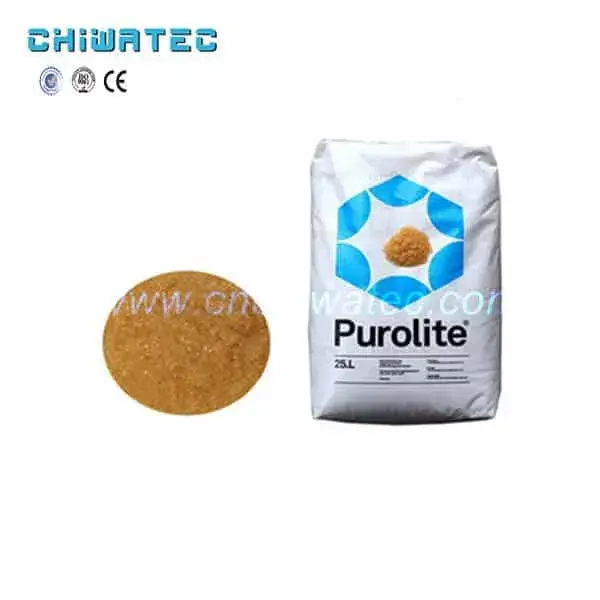
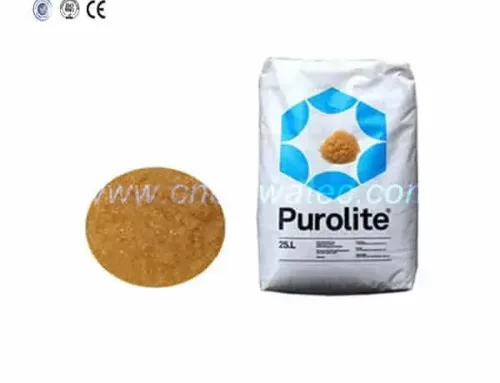
Cation exchange resins (strong acid, sulfonated styrene-divinylbenzene) remove Pb²⁺ by exchanging with Na⁺ or H⁺ ions. Lead has a high selectivity coefficient on most cation resins (>2 compared to Ca²⁺ and Mg²⁺), making it possible to treat lead-containing wastewater even in the presence of high background hardness. Regeneration is performed with 4–8% HCl or 5–10% NaCl solution. Typical operating capacity: 20–40 g Pb/L of resin.
Electrochemical Treatment (Galvanic Iron Oxidation)
The galvanic iron oxidation method (also called iron cementation or electrocoagulation) uses zero-valent iron (Fe⁰) to reduce and precipitate lead. The galvanic cell reaction: Pb²⁺ + Fe⁰ → Pb⁰ + Fe²⁺, deposits metallic lead onto the iron surface. This method is simple, requires no chemical addition, and can achieve >99% lead removal from wastewater with initial concentrations of 50–200 mg/L. The process is most effective at pH 3–6 and requires a contact time of 20–60 minutes.
Biological Treatment for Lead Removal
Biological methods have gained attention for treating low-to-moderate concentrations of lead in wastewater. Key approaches include:
- Activated sludge biosorption — The activated sludge process can remove lead extremely rapidly. Studies show approximately 80% of total lead removal occurs within the first 0–5 hours of contact, reaching equilibrium within 1–2 hours. The removal rate for low-concentration lead (<10 mg/L) is significantly higher than for high-concentration lead, indicating that sludge's adsorption capacity is finite (typically 5–20 mg Pb/g MLSS)
- Biogenic sulfide precipitation — Sulfate-reducing bacteria (SRB) produce H₂S under anaerobic conditions, precipitating lead as PbS. This is particularly effective for acidic lead mine drainage
- Biosorption on biomass — Non-living biomass (bacterial, fungal, algal cell walls) can adsorb lead through ion exchange and complexation with carboxyl, phosphate, and amine functional groups. Capacities range from 30–200 mg Pb/g biomass
Frequently Asked Questions
What is the best method for lead-containing wastewater treatment?
Chemical precipitation with lime or caustic soda at pH 9–10.5 is the most common and cost-effective method for high-concentration lead wastewater (>50 mg/L). For polishing to ultra-low levels (<0.05 mg/L), sulfide precipitation or ion exchange is recommended. For organic lead compounds (tetraethyl lead), advanced oxidation (Fenton, ozonation) is required before conventional treatment.
What is the discharge standard for lead in industrial wastewater?
In China, the Integrated Wastewater Discharge Standard (GB 8978-1996) limits total lead to ≤1.0 mg/L for existing facilities. The more stringent Table 3 standard requires ≤0.1 mg/L. The US EPA Clean Water Act limits lead to 0.69 mg/L for electroplating point sources.
Can activated carbon remove lead from wastewater?
Yes. Activated carbon effectively adsorbs lead ions through surface complexation and ion exchange. GAC adsorbs 10–50 mg Pb/g at optimal pH 5–7. However, for high-concentration lead wastewater, precipitation should precede carbon adsorption to avoid rapid saturation of the carbon bed.
What is the galvanic iron oxidation method for lead removal?
Galvanic iron oxidation uses zero-valent iron (Fe⁰) to reduce dissolved Pb²⁺ to metallic lead (Pb⁰), which deposits on the iron surface. It is a simple, chemical-free method effective at pH 3–6, achieving >99% removal. The main limitation is the consumption of iron and the need for periodic replacement of the iron bed.
How does activated sludge remove lead from wastewater?
Activated sludge removes lead primarily through biosorption — the adsorption of Pb²⁺ onto the extracellular polymeric substances (EPS) and cell wall components of the bacterial floc. Removal is rapid (80% within 0–5 hours) but finite. Low-concentration lead (<10 mg/L) is removed more efficiently than high-concentration lead on a percentage basis.
Conclusion and Call to Action
Effective lead-containing wastewater treatment demands a multi-technology approach — chemical precipitation for bulk removal, coagulation for colloidal lead, adsorption or ion exchange for polishing, and biological methods for low-concentration streams. Selecting the right combination depends on lead concentration, chemical form (inorganic vs. organic), wastewater pH, discharge limits, and economic factors. CHIWATEC provides custom-engineered wastewater treatment systems for lead- and heavy-metal-containing industrial wastewater — including chemical dosing, precipitation, ion exchange, and membrane filtration solutions for compliance with the strictest discharge standards. Contact our engineering team: [email protected] or [email protected].
Related Resources and Further Reading
- Process Flow of Electroplating Wastewater Treatment Project
- Electroplating Wastewater Treatment Technologies: Membrane Separation, Ion Exchange, and Biological Methods (Part 3)
- Electroplating Wastewater Treatment Equipment: Complete System Guide 2026
- Mercury-Containing Wastewater Treatment Methods: Complete Technology Guide 2026
- CHIWATEC Wastewater Treatment Systems
Do you have a water treatment project we can help with
* Designing,machining,installing,commissioning, customize and one-stop service
 English
  Spanish
  Portuguese