

Water Treatment Methods and Principles (2)
5. Ultraviolet Disinfection Method – Water Treatment Principles
Ultraviolet (UV) disinfection is one of the most widely used water treatment methods today. It works by destroying the genetic material (DNA/RNA) of microorganisms, preventing them from reproducing. The most critical mechanism is the formation of pyrimidine dimers in microbial nucleic acids, which renders bacteria and viruses inactive.
How UV Disinfection Works
- UV treatment typically uses low-pressure mercury lamps that emit UV energy at a wavelength of 253.7 nm, which is the most effective germicidal range.
- UV lamps resemble fluorescent lamps but lack the internal fluorescent coating.
- The lamp housing is made of high-transmission quartz glass to allow maximum UV penetration.
Types of UV Disinfection Systems
- Irradiation type – water is exposed to UV radiation from outside.
- Immersion type – UV lamps are immersed in the water chamber.
- Flow-through type – water flows continuously around UV lamps.
In hemodialysis systems, UV units are typically installed between the storage tank and the dialysis machine, ensuring all water is disinfected immediately before use.
Bacterial Sensitivity
- Highly sensitive: Pseudomonas aeruginosa, Escherichia coli
- More resistant: Bacillus subtilis spores
Advantages of UV Water Treatment
- No chemical additions
- No change in water taste or quality
- Broad-spectrum disinfection
- Low operating cost
Because of these advantages, UV disinfection is widely used in drinking water systems, ships, laboratories, and medical water systems.
6. Distillation Method – Water Treatment Principles
Distillation is one of the oldest, most reliable methods of water purification. It removes all non-volatile impurities, including salts, heavy metals, particulates, and microorganisms.
How Distillation Works
- Water is boiled.
- Pure vapor rises and is directed into a condenser.
- Vapor cools and turns back into purified water.
- Non-volatile contaminants remain in the boiling chamber.
Advantages
- Produces extremely pure water
- Removes inorganic contaminants thoroughly
Limitations
- Cannot remove volatile organic compounds (VOCs) that vaporize with water
- Requires significant energy
- Needs large storage tanks, which can become contamination sources
Due to cost and operational challenges, distillation is no longer widely used in modern hemodialysis water treatment, but it remains common in laboratories and pharmaceutical production.
7. Ultrafiltration Method – Water Treatment Principles
Ultrafiltration (UF) uses a semi-permeable membrane with pore sizes of 10–200 Å, larger than reverse osmosis (RO) membranes. Unlike RO, UF cannot remove dissolved ions, but it is excellent at removing:
- Bacteria
- Viruses
- Pyrogens
- Suspended particulates
Role of Ultrafiltration in Water Treatment
- As pretreatment before RO, UF reduces microbial and particulate load, protecting the RO membrane from fouling.
- As a final polishing step after RO, UF prevents bacterial contamination from pipes or storage tanks.
System Monitoring
Effectiveness is evaluated by measuring:
- Pressure drop across the membrane (inlet vs. outlet)
- Flow rate reduction
Similar to activated carbon filters, UF membranes require regular backwashing to remove accumulated impurities.
8. Reverse Osmosis Method – Water Treatment Principles
Reverse osmosis is the core process in modern water purification, especially for hemodialysis, laboratory water, and ultrapure industrial applications.
Understanding Osmosis and Reverse Osmosis
- Osmosis: Water naturally moves from low solute concentration to high concentration across a semi-permeable membrane.
- Osmotic Pressure: The pressure needed to stop this natural movement.
- Reverse Osmosis (RO): When applied pressure exceeds osmotic pressure, water is forced from high solute concentration to low, leaving impurities behind.
RO Purification Performance
RO membranes can remove:
- 90%–98% of monovalent ions (Na⁺, Cl⁻)
- 95%–99% of divalent ions (Ca²⁺, Mg²⁺)
- Organic molecules > 200 Daltons
- Bacteria, viruses, endotoxins, pyrogens, particulates
RO Membrane Materials
Common semi-permeable membranes include:
- Cellulosic membranes – high chlorine tolerance but short life under alkaline or bacteria-rich conditions
- Aromatic polyamide membranes – excellent performance but low chlorine resistance
- Polyimide / Polyfuran membranes – specialized applications
Membrane designs:
- Spiral wound (most common)
- Hollow fiber
- Tubular
Importance of Pretreatment
If pretreatment is inadequate:
- Scaling from calcium, magnesium, and iron will reduce membrane efficiency.
- Activated carbon is required to remove chlorine and chloramines (which damage polyamide membranes).
- Softening reduces hardness and prevents fouling.
Even though RO is costly, its ability to remove both dissolved and undissolved contaminants to near-ultrapure levels makes it the essential purification step in dialysis water production.
Conclusion
Understanding the principles behind different water treatment methods—UV disinfection, distillation, ultrafiltration, and reverse osmosis—is crucial for designing effective purification systems. Each method has its own strengths and limitations, and they are often used in combination to achieve high-purity water for medical, industrial, and drinking purposes. Among them, reverse osmosis remains the most effective and indispensable technology in modern water treatment, especially in hemodialysis water preparation.
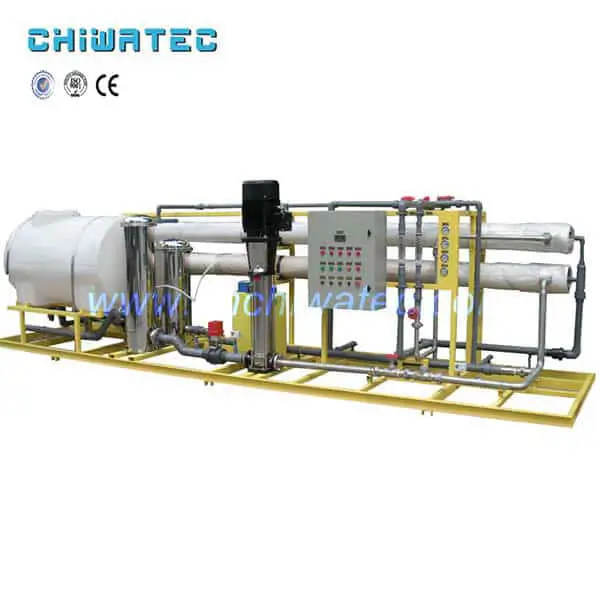
For advanced RO and pretreatment systems, explore CHIWATEC’s full product range:
👉 CHIWATEC Water Treatment Equipment & Solutions
FAQ – Water Treatment Principles
1. Which water treatment method is most effective for hemodialysis?
Reverse osmosis, combined with ultrafiltration and UV disinfection, provides the purity levels required for medical applications.
2. Does UV disinfection remove chemicals from water?
No. UV only inactivates microorganisms but does not remove chemicals, heavy metals, or dissolved solids.
3. Is distilled water the purest form of water?
Distillation removes most non-volatile impurities, but RO + UF systems usually produce purer water, especially for medical use.
4. What is the difference between ultrafiltration and reverse osmosis?
- UF removes bacteria, viruses, and particles.
- RO removes ions, organics, and microscopic contaminants, achieving much higher purity.
5. Why is pretreatment essential before reverse osmosis?
Pretreatment prevents scaling, fouling, and chemical damage to the RO membrane, prolonging system lifespan and maintaining efficiency.
Xi’an CHIWATEC Water Treatment Technology is a high-tech enterprise specialized in various water processing devices. Aside from these individual products, which cover a number of types and series, we can also help with related comprehensive engineering projects. Thanks to our hard work and dedication upon our founding, we are now one of the fastest-developing water treatment equipment manufacturers in Western China.
Further reading:
FOLLOW US
Do you have a water treatment project we can help with
* Designing,machining,installing,commissioning, customize and one-stop service






 English
  Spanish
  Portuguese




