Bipolar Reverse Osmosis and EDI Ultrapure Water System: Process and Applications for Electronics Industry 2026
The electronics industry demands the highest water purity standards — resistivity above 18 MOhm-cm, total organic carbon (TOC) below 5 ppb, and particle counts near zero. A bipolar reverse osmosis EDI ultrapure water system is the established solution, combining double-pass RO with electrodeionization (EDI) to meet these specifications. This bipolar reverse osmosis EDI ultrapure water system guide covers the process flow, key equipment configuration, and operational advantages for semiconductor, LCD, and PCB manufacturing applications.
Bipolar Reverse Osmosis EDI Ultrapure Water System: Process Overview for Electronics
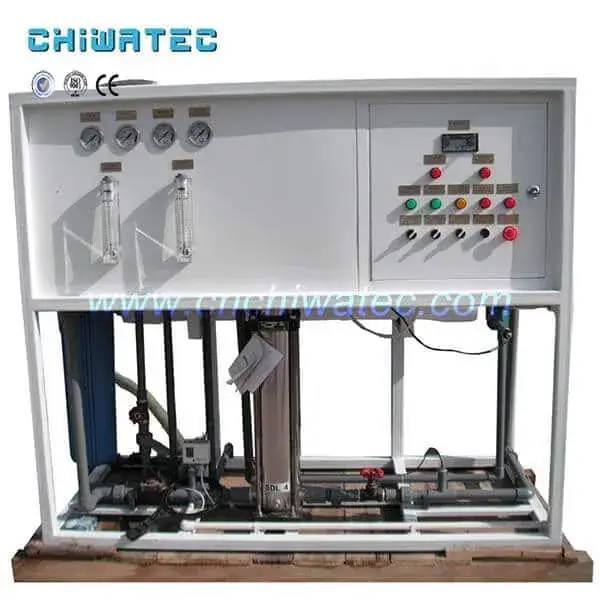
A bipolar reverse osmosis EDI ultrapure water system integrates two reverse osmosis stages (primary RO and secondary RO) followed by electrodeionization (EDI) as the final polishing step. The primary RO reduces feed water TDS by 95-98%, the secondary RO further polishes the permeate to below 10 uS/cm, and the EDI module removes residual ions to achieve resistivity exceeding 18 MOhm-cm. Unlike traditional mixed-bed ion exchange, EDI operates continuously without chemical regeneration, making it ideal for 24/7 electronics manufacturing environments.
This three-stage configuration eliminates the need for acid and caustic regeneration chemicals, reduces labor costs, and produces consistent water quality regardless of feed water fluctuations. The bipolar designation refers to the two-stage RO arrangement where permeate from the first RO becomes the feed for the second RO.
Process Flow: From Raw Water to 18 MOhm-cm Ultrapure Water
The complete ultrapure water preparation process for the electronics industry follows these stages:
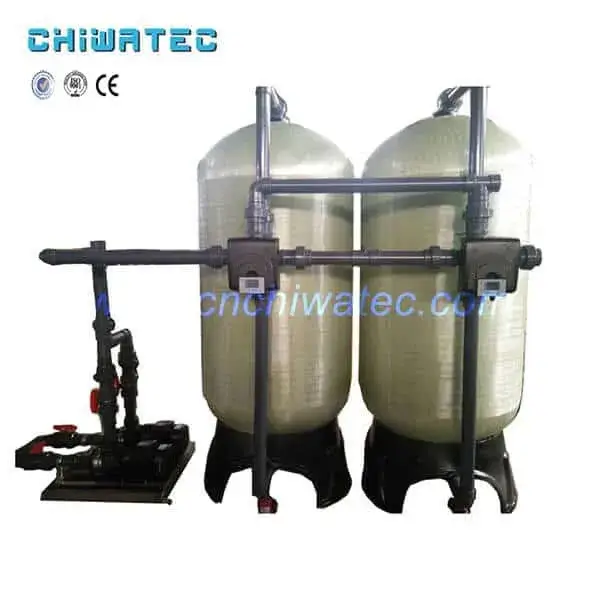
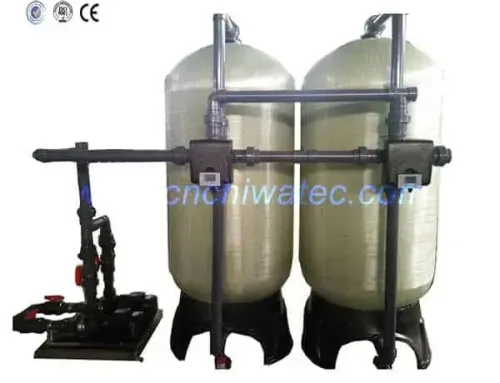
- Pretreatment: Raw water passes through multimedia filtration, activated carbon dechlorination, and antiscalant dosing to protect downstream RO membranes. SDI below 3 and chlorine below 0.1 ppm are critical.
- Primary RO (first pass): Feed water at 10-15 bar passes through TFC polyamide membranes. Salt rejection of 99.0-99.5% reduces conductivity from 200-800 uS/cm to 10-40 uS/cm.
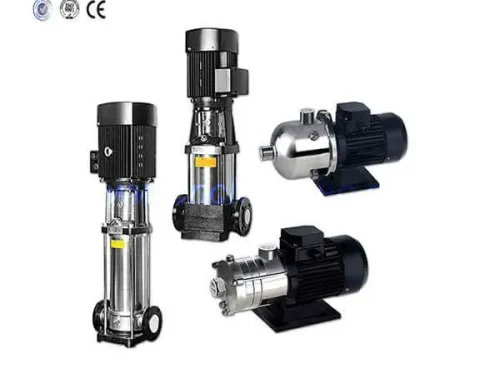
- Secondary RO (second pass): Permeate from the primary RO enters the second-stage high-pressure pump. Product water conductivity drops to 0.5-5 uS/cm.
- Degasification: A membrane degasifier or forced-draft tower removes dissolved CO2 from 10-30 ppm to below 2 ppm, preventing EDI performance loss.
- EDI polishing: Ion-exchange resins are continuously regenerated by the applied DC electric field. Product water resistivity exceeds 18 MOhm-cm with silica below 1 ppb.
- Polishing loop: Ultrapure water circulates through UV TOC reduction (185 nm), final mixed-bed polisher, and 0.1-micron filtration before point-of-use.
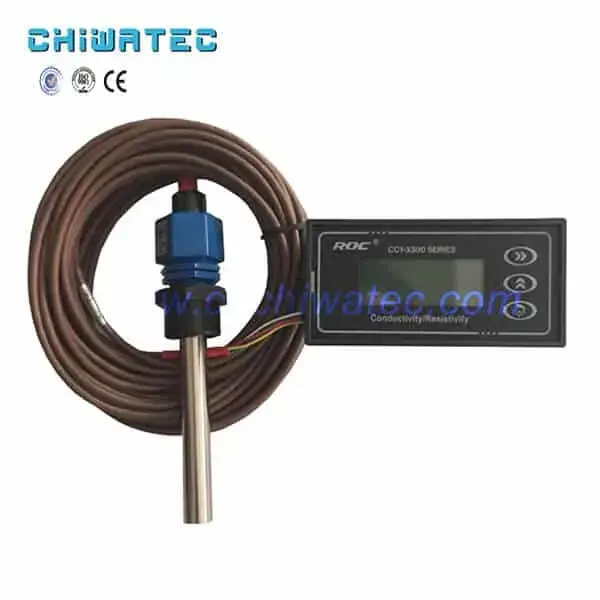
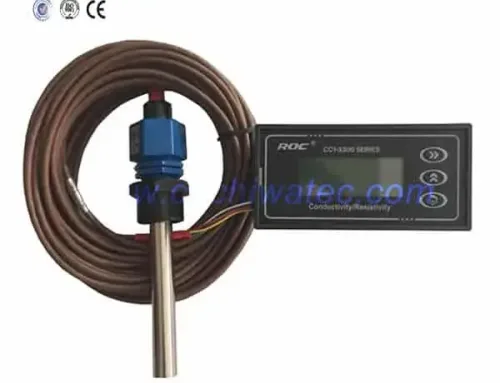
The entire process is monitored by online conductivity/resistivity meters, TOC analyzers, and particle counters at each stage.
Key Equipment in a Bipolar RO Plus EDI Ultrapure Water System
| Equipment | Specification Range | Function |
| Primary RO membranes | 8-inch spiral-wound TFC, 4-6 vessels | Initial desalination, 99%+ rejection |
| Secondary RO membranes | 8-inch low-pressure TFC, 2-4 vessels | Polishing after first pass |
| CO2 degasifier | Membrane contactor or forced-draft tower | Removes dissolved CO2 before EDI |
| EDI module | Ionpure, E-Cell, or equivalent stacks | Continuous deionization without chemicals |
| UV TOC reduction | 185 nm low-pressure mercury lamp | Oxidizes organic carbon to CO2 |
| Final polishing mixed bed | Down-flow or UP core design | Polishing to 18.2 MOhm-cm |
| 0.1 micron final filter | Pleated cartridge or hollow-fiber UF | Removes particles above 0.1 um |
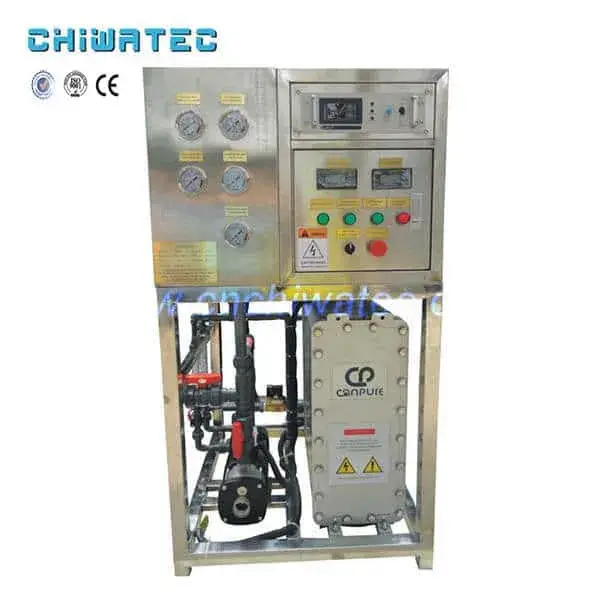
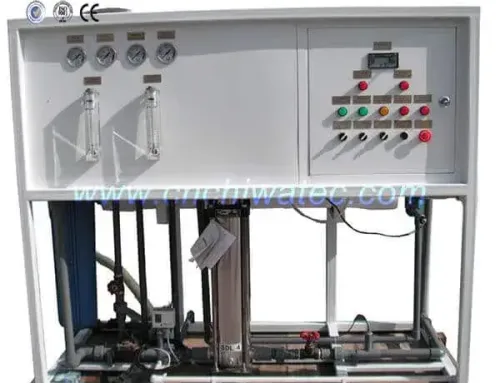
Smaller systems (1-10 m3/h) combine both RO stages on a single skid. Larger systems (20-100+ m3/h) use separate skids with dedicated high-pressure pumps.
Bipolar RO Plus EDI vs. Traditional Ion Exchange for Electronics
For electronics ultrapure water production, the bipolar RO + EDI configuration offers clear advantages over conventional mixed-bed ion exchange:
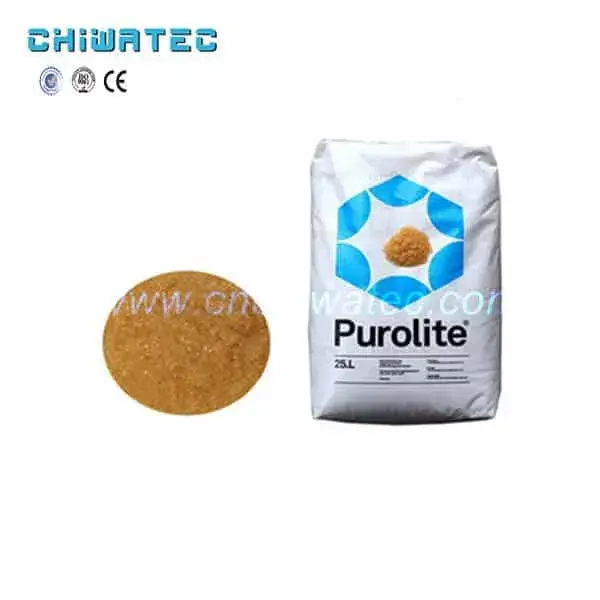
- No chemical regeneration: Mixed-bed systems require periodic acid and caustic regeneration generating hazardous waste. EDI regenerates electrically.
- Continuous operation: Mixed beds need offline regeneration every 8-24 hours. EDI operates continuously with consistent effluent quality.
- Lower operating cost: 30-50% lower annual operating cost by eliminating chemical purchases and waste neutralization.
- Smaller footprint: EDI modules occupy approximately 60% less floor space than equivalent mixed-bed systems.
- Better water quality: EDI consistently produces 18+ MOhm-cm water, while mixed-bed quality declines between regenerations.
For new installations, bipolar RO + EDI has become the electronics industry standard.
Applications Across Electronics Manufacturing
Bipolar RO plus EDI ultrapure water systems serve critical applications across electronics manufacturing:
- Semiconductor wafer fabrication: Wafer rinsing requires 18+ MOhm-cm water with TOC below 5 ppb. Each fabrication plant consumes 2,000-8,000 m3/day.
- LCD panel manufacturing: Substrate cleaning and chemical dilution in generation 8+ fabs. Typical consumption: 500-3,000 m3/day.
- PCB and FPC board production: Plating bath makeup and board rinsing at 50-500 m3/day capacities.
- Solar cell manufacturing: Silicon wafer cleaning requiring resistivity above 12 MOhm-cm and TOC below 20 ppb.
Each application has specific quality targets, but all benefit from the chemical-free, continuous operation of bipolar RO plus EDI systems.
Five Critical Design Considerations for Electronics Ultrapure Water Systems
- Feed water variability: Seasonal temperature changes affect RO output by up to 30%. Include 20% design margin and consider feed water heating.
- Membrane array configuration: Primary RO typically uses a 2:1 or 3:2 staged array. Secondary RO may use single-stage or 2:1. Proper design prevents concentration polarization.
- EDI feed water quality: EDI manufacturers specify maximum feed conductivity (usually below 20 uS/cm). The secondary RO must deliver within these limits at all operating conditions.
- UV TOC reduction sizing: 30-50 J/cm2 for TOC reduction from 50 ppb to below 5 ppb. Undersizing UV is a common design error.
- Distribution loop design: Minimum velocity of 1.5-2.0 m/s with zero dead legs. PVC or PVDF piping with orbital-welded joints is standard.
Frequently Asked Questions
Q1: What is the difference between bipolar RO and single-pass RO?
Single-pass RO uses one membrane stage reducing TDS by 95-99%. Bipolar RO (two-pass) uses two RO stages in series achieving total TDS reduction of 99.75-99.99%. The second RO treats permeate from the first, producing water with conductivity below 5 uS/cm suitable as EDI feed.
Q2: How often do EDI modules need replacement?
EDI modules typically last 5-10 years in electronics ultrapure water service. The ion-exchange resins inside gradually degrade and DC power supply efficiency decreases. Replacement is indicated when the module can no longer achieve target resistivity at rated flow.
Q3: Can bipolar RO plus EDI produce pharmaceutical-grade water?
Yes, with appropriate materials (316L stainless steel or PVDF), sanitary connections, and online TOC monitoring. The EDI module must be certified for WFI production to meet USP and EP standards.
Q4: What is the typical recovery rate?
Primary RO: 65-75%. Secondary RO: 85-90%. Combined system recovery: approximately 55-67%. Overall recovery can be increased by recycling secondary RO concentrate back to the primary RO feed tank.
Q5: How does EDI regenerate without chemicals?
The applied DC electric field splits water molecules into H+ and OH- ions within the ion-exchange resin. H+ regenerates the cation resin and OH- regenerates the anion resin continuously during operation, eliminating chemical regeneration.
Conclusion and Call to Action
The bipolar reverse osmosis EDI ultrapure water system represents the current standard for electronics industry ultrapure water production. By combining double-pass RO with electrodeionization, manufacturers achieve 18+ MOhm-cm water quality without chemical regeneration, lower operating costs, and a smaller footprint than traditional ion exchange. Proper design of pretreatment, RO staging, degasification, and polishing is essential for semiconductor, LCD, PCB, and solar applications.
CHIWATEC designs and manufactures complete bipolar RO plus EDI ultrapure water systems from 1 m3/h laboratory units to 100+ m3/h production plants. For project inquiries, email [email protected] or [email protected] with your capacity requirements and feed water analysis.
Related Resources and Further Reading
- Ultrapure Water System Process Flow — Complete guide to UPW treatment equipment and technology
- Comprehensive Guide to Ultrapure Water Equipment Process Flow — Detailed process stages for ultrapure water production
- Design Process for RO Desalination in Ultrapure Water Systems — Engineering parameters and design methodology
- EDI Ultrapure Water System Characteristics and Applications — EDI technology features and suitable applications
- Chiwatec Ultrapure Water Purification Systems — Browse our range of ultrapure water equipment
Do you have a water treatment project we can help with
* Designing,machining,installing,commissioning, customize and one-stop service

 English
  Spanish
  Portuguese