Fully Automatic Water Softening Equipment: Standard Work Flow and Performance Guide 2026
Looking for a comprehensive guide to fully automatic water softening equipment? Understanding the standard work flow and performance characteristics is essential for selecting, operating, and maintaining an automatic water softener that meets your facility’s needs. CHIWATEC has been engineering automatic water softening solutions for industrial and commercial applications worldwide, delivering systems that combine reliability with operational efficiency.
Last Updated: January 2026 | Industry-Verified Data | Technical Specifications Information
Why This Guide Matters for Your Water Softening Project
Fully automatic water softening equipment is critical for protecting boilers, cooling systems, and industrial process equipment from scale buildup caused by hard water. The standard work flow of these systems directly impacts their efficiency, salt consumption, and operational costs. With the global water softener market projected to reach USD 13.6 billion by 2034 and automatic systems accounting for over 65% of new installations, understanding the standard workflow and performance characteristics is essential for making informed equipment decisions.
Key Industry Trends (2026 Update)
- Demand-Initiated Regeneration: Modern automatic water softeners use real-time flow and conductivity sensors to trigger regeneration only when needed, reducing salt usage by 30-40% compared to time-clock systems
- IoT-Enabled Monitoring: Cloud-connected softeners provide remote performance tracking, predictive maintenance alerts, and automated salt level monitoring
- High-Efficiency Brine Systems: New brine recovery technology reduces water consumption during regeneration by 50% while maintaining resin exchange capacity
- Compact Modular Designs: Skid-mounted automatic systems with pre-plumbed components reduce installation time by 60% compared to traditional field-assembled systems
1. What Is Fully Automatic Water Softening Equipment?
Definition and Core Function
Fully automatic water softening equipment is an ion exchange system that automatically performs the complete softening and regeneration cycle without manual intervention. Unlike manual or semi-automatic systems that require operator action to initiate regeneration, fully automatic systems use program-controlled controllers to manage the entire process based on time, flow volume, or water quality sensors.
Key Components
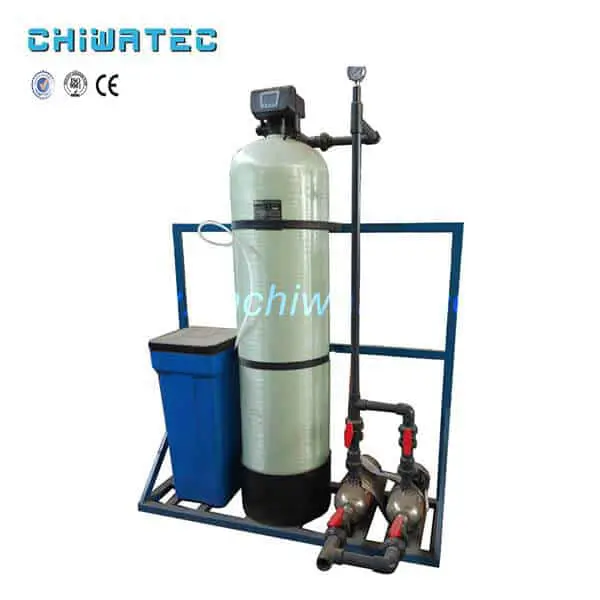
- Control Valve: The central component that directs water flow through service, backwash, brine, rinse, and bypass cycles
- Resin Tank: Contains the cation exchange resin bed where hardness removal occurs
- Brine Tank: Stores concentrated sodium chloride solution used for resin regeneration
- Controller: Programmable logic device that automates cycle sequencing based on programming parameters
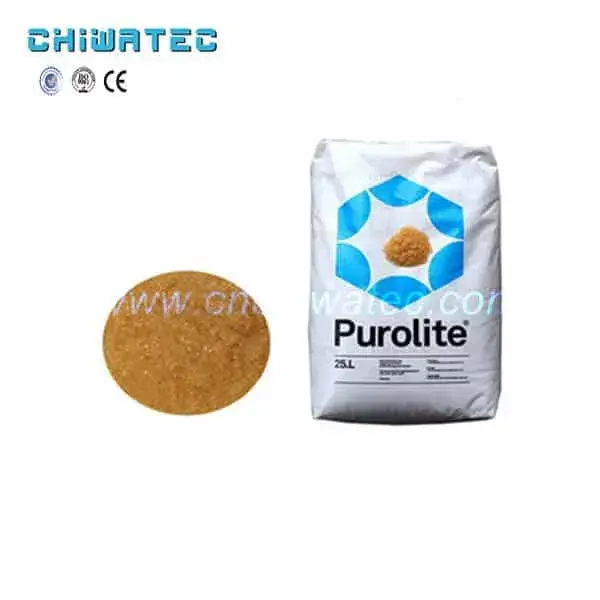
- Resin Bed: High-capacity cation exchange beads that capture calcium and magnesium ions
Learn More: Ion Exchange Method in Water Softening: Principles and Technology
2. What Are the Five Standard Work Flow Processes?
Complete Cycle Overview
The standard work flow of fully automatic water softening equipment consists of five sequential processes:
- Work (Service/Water Production): Hard water flows through the resin bed for hardness removal
- Backwash: Reverse flow cleans and expands the resin bed
- Salt Absorption (Regeneration): Brine solution displaces accumulated hardness ions
- Slow Flush (Replacement): Gradual rinse removes displaced hardness and excess brine
- Fast Flush: Final rapid rinse prepares the system to return to service
All processes of different fully automatic water softening equipment are very similar in sequence, but actual timing, flow rates, and brine concentrations are adjusted based on system size, resin volume, and raw water hardness.
3. How Does the Work (Service) Cycle Function?
The Service Cycle in Detail
During the work cycle, hard water enters the top of the resin tank and flows downward through the cation exchange resin bed. Calcium (Ca2+) and magnesium (Mg2+) ions are captured by the resin beads while sodium ions (Na+) are released into the effluent. The softened water exits through the bottom distributor and is delivered to the service lines.
Service Cycle Parameters
- Flow Rate: Typically 8-12 GPM per square foot of resin bed area
- Hardness Removal: 99%+ during the service cycle, effluent below 0.03 mmol/L
- Service Duration: Determined by resin capacity, flow rate, and raw water hardness
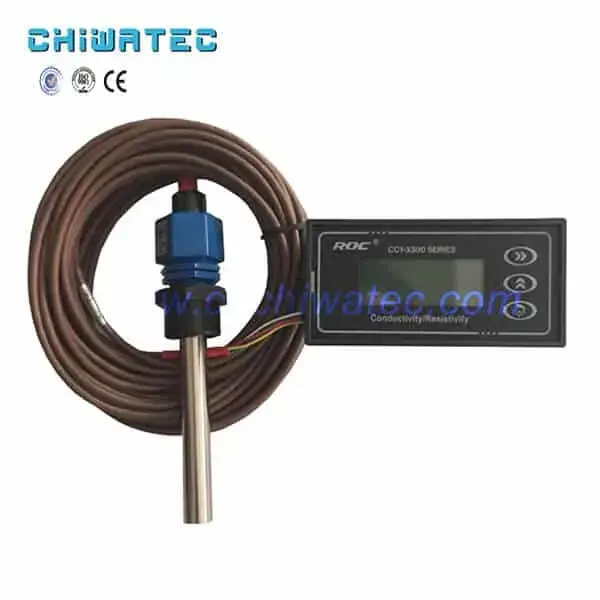
- Breakthrough Detection: Some advanced systems monitor effluent conductivity to detect resin exhaustion
4. How Does Backwashing Work in Automatic Water Softeners?
Purpose and Process
Backwashing is the first regeneration step where water flows upward through the resin bed at a controlled rate. This process serves three critical functions: removing accumulated suspended solids and particulate matter trapped in the resin bed, reclassifying and expanding the resin bed to prevent channeling, and redistributing resin beads to ensure uniform flow distribution during the next service cycle.
Backwash Parameters
- Flow Rate: 6-10 GPM per square foot (sufficient to expand resin bed by 50-75%)
- Duration: 10-20 minutes, depending on resin volume and fouling level
- Water Quality: Backwash water should be filtered to prevent introducing additional solids
5. What Happens During the Salt Absorption (Regeneration) Process?
The Regeneration Chemistry
During salt absorption, a concentrated brine solution (typically 8-12% sodium chloride) is drawn from the brine tank and passed through the resin bed. The high sodium ion concentration displaces the accumulated calcium and magnesium ions from the resin exchange sites, restoring the resin to its sodium form. The chemical reaction is: R2-Ca + 2NaCl → 2R-Na + CaCl2.
Regeneration Optimization
- Salt Dosage: Typically 6-15 pounds of salt per cubic foot of resin, depending on resin type
- Brine Concentration: 8-12% NaCl for optimal exchange efficiency
- Contact Time: 30-60 minutes for complete regeneration
- Brine Recovery: Some modern systems recover excess brine for reuse, reducing salt consumption by 15-25%
6. What Is the Slow Flush (Replacement) Stage?
Purpose and Function
The slow flush or replacement stage follows salt absorption and involves passing water slowly through the resin bed at the same flow rate and direction as regeneration. This gradual rinse displaces the spent brine containing displaced calcium and magnesium chlorides from the resin tank while preventing channeling. The slow flush ensures all regenerant is fully utilized and displaced hardness is completely removed from the system.
Slow Flush Parameters
- Flow Rate: Same as regeneration flow rate (0.5-2 GPM per cubic foot of resin)
- Duration: 30-60 minutes, depending on resin volume
- End Point: Completed when effluent conductivity drops below a preset threshold
7. What Is the Fast Flush Stage and Why Is It Important?
The Final Rinse
Fast flush is the final stage of the regeneration cycle, where water flows at service flow rate through the resin bed to remove any remaining brine traces and ensure the effluent meets quality specifications. The fast flush typically lasts 5-15 minutes, after which the system automatically returns to the service cycle.
Quality Verification
Advanced automatic water softeners include an effluent quality verification step during the fast flush cycle. If hardness levels exceed acceptable limits, the system can automatically extend the rinse cycle or initiate a repeat regeneration before returning to service, ensuring consistent water quality.
Related: Optimizing Parameters for Fully Automatic Water Softening Equipment
8. What Are the Key Performance Characteristics of Automatic Water Softeners?
Performance Metrics
Fully automatic water softening equipment offers several distinct performance advantages:
- High Automation: Advanced program control devices provide accurate and reliable operation, replacing manual operation with fully automatic conversion of each water treatment step
- Stable Operating Conditions: Consistent flow rates and regeneration schedules ensure predictable effluent quality
- High Efficiency: Optimized resin bed design and automated regeneration timing minimize salt and water waste
- Low Energy Consumption: Minimal power requirements (typically 10-50W for controllers)
- Minimal Operator Attention: Automatic systems require only periodic salt refilling and routine maintenance
Performance Comparison
Compared to manual water softeners, automatic systems reduce salt consumption by 20-30%, water usage during regeneration by 15-25%, and operator labor by 90% or more. The higher initial investment is typically recovered within 12-24 months through operational savings.
9. What Control Types Are Available for Fully Automatic Water Softening Equipment?
Time Control vs. Flow Control vs. Sensor-Based
- Time Control: Regeneration is initiated at preset time intervals (e.g., every 2-3 days). Simple and reliable but may regenerate when not needed or fail to regenerate during high-usage periods
- Flow Control: Regeneration is triggered after a preset volume of water has been treated. More efficient than time control, ideal for variable-demand applications
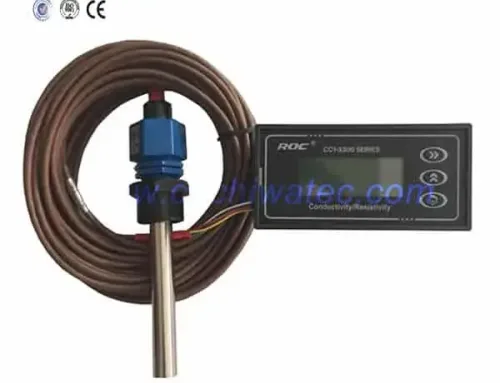
- Sensor-Based (Demand-Initiated): Uses conductivity or hardness sensors to detect resin exhaustion and trigger regeneration only when needed. Most efficient option, reduces salt usage by 30-40%
System Configurations
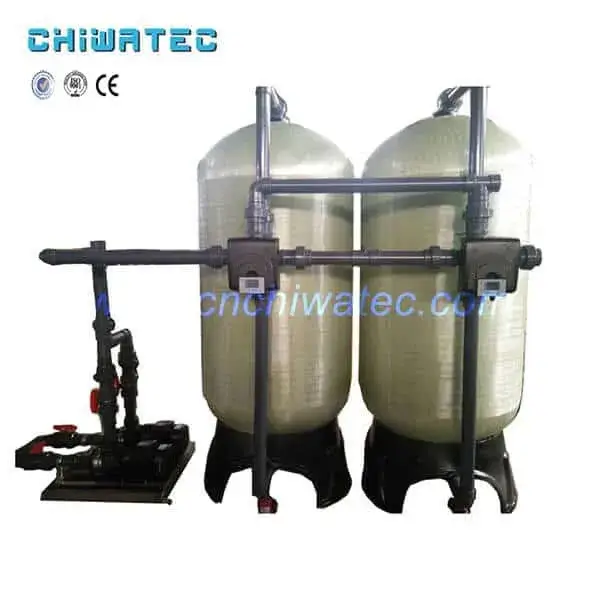
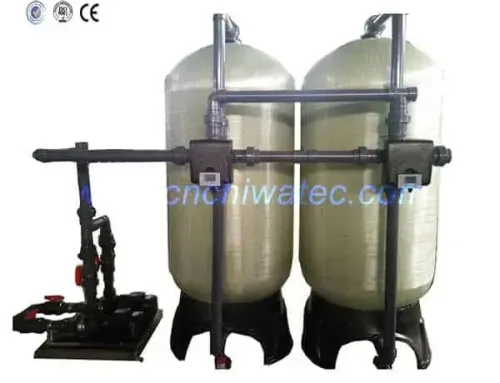
Automatic water softeners are available in multiple configurations: single valve single tank (intermittent operation), single valve double tank (alternating service with continuous soft water output), double valve double tank in parallel (high-flow continuous operation), and multi-tank systems for large industrial applications requiring redundant capacity.
10. How to Choose the Right Fully Automatic Water Softener for Your Application?
Selection Criteria
- Water Analysis: Determine raw water hardness, iron content, pH, and TDS levels
- Flow Requirements: Peak and average flow rates determine tank size and configuration
- Regeneration Frequency: Balance resin capacity with acceptable regeneration frequency (typically every 2-4 days)
- Control Type: Match controller sophistication to operational requirements and budget
- Space Constraints: Available footprint, ceiling height for resin loading, and drain access
- Future Expansion: Consider modular systems that can be expanded as production grows
Custom Solutions for Your Application
CHIWATEC offers a complete range of fully automatic water softening equipment, from compact single-tank systems for small commercial applications to large industrial multi-tank configurations with advanced sensor-based control. Each system is custom-designed based on your specific water analysis and operational requirements.
Conclusion
Fully automatic water softening equipment provides reliable, efficient hardness removal with minimal operator intervention. The standard five-process work flow (service, backwash, salt absorption, slow flush, fast flush) ensures consistent performance and optimal resin utilization. With modern control options ranging from simple time-clock to advanced demand-initiated regeneration, today’s automatic water softeners can be tailored to virtually any industrial or commercial application. As water quality standards tighten and operational efficiency becomes increasingly important, investing in properly designed automatic water softening equipment delivers long-term operational and economic benefits.
Contact CHIWATEC today at [email protected] or +86 18292684865 (WhatsApp) to discuss your water softening requirements. Our team of water treatment engineers is ready to recommend the optimal fully automatic water softening equipment for your specific application.
Frequently Asked Questions
Q1: How often should a fully automatic water softener regenerate?
Regeneration frequency depends on raw water hardness, daily water usage, and resin capacity. For most industrial applications, the system should regenerate every 2-4 days. More frequent regeneration wastes salt and water, while less frequent regeneration risks hardness breakthrough. Most automatic controllers allow adjustment of regeneration frequency based on actual operating conditions.
Q2: What type of salt should be used in automatic water softening equipment?
High-purity sodium chloride (NaCl) is recommended, available as solar salt, evaporated salt, or rock salt. Evaporated salt (99.9% purity) is preferred for automatic systems as it contains minimal insoluble impurities that can foul the brine tank and control valve. Salt pellets specifically manufactured for water softeners are the most common and recommended option.
Q3: Can automatic water softeners handle variable flow rates?
Yes, fully automatic water softening equipment is designed to handle variable flow rates within its rated capacity range. Flow-controlled systems are particularly well-suited for variable-demand applications as they trigger regeneration based on actual water volume treated rather than elapsed time. However, instantaneous flow rates exceeding the system design capacity can cause hardness leakage, so proper sizing is essential.
Q4: What is the typical lifespan of fully automatic water softening equipment?
With proper maintenance, fully automatic water softening equipment typically operates for 15-20 years. The resin bed should be replaced every 3-5 years depending on feed water quality and chlorine exposure. Control valves and controllers typically last 10-15 years before requiring replacement or major overhaul. Regular maintenance including annual resin inspection and valve service extends system life.
Q5: How is fully automatic water softening equipment different from manual systems?
Automatic systems use program-controlled controllers to initiate and manage all regeneration steps without operator intervention, while manual systems require an operator to manually open and close valves for each regeneration step. Automatic systems provide consistent regeneration timing, reduce labor costs by 90% or more, and optimize salt and water usage through intelligent control. The higher initial cost is typically recovered within 12-24 months through operational savings.
Related Resources and Further Reading
Do you have a water treatment project we can help with
* Designing,machining,installing,commissioning, customize and one-stop service
 English
  Spanish
  Portuguese